· retrotech · 6 min read
The Rise and Fall of Ask Jeeves: Lessons for Modern Search Engines
Ask Jeeves began as a charming experiment in natural-language search - a valet who answered questions. It rose quickly, suffered the consequences of misplaced bets, and disappeared into a rebrand. Its story offers sharp lessons about focus, product-market fit, algorithmic rigor, and the human side of search that modern engines still overlook.

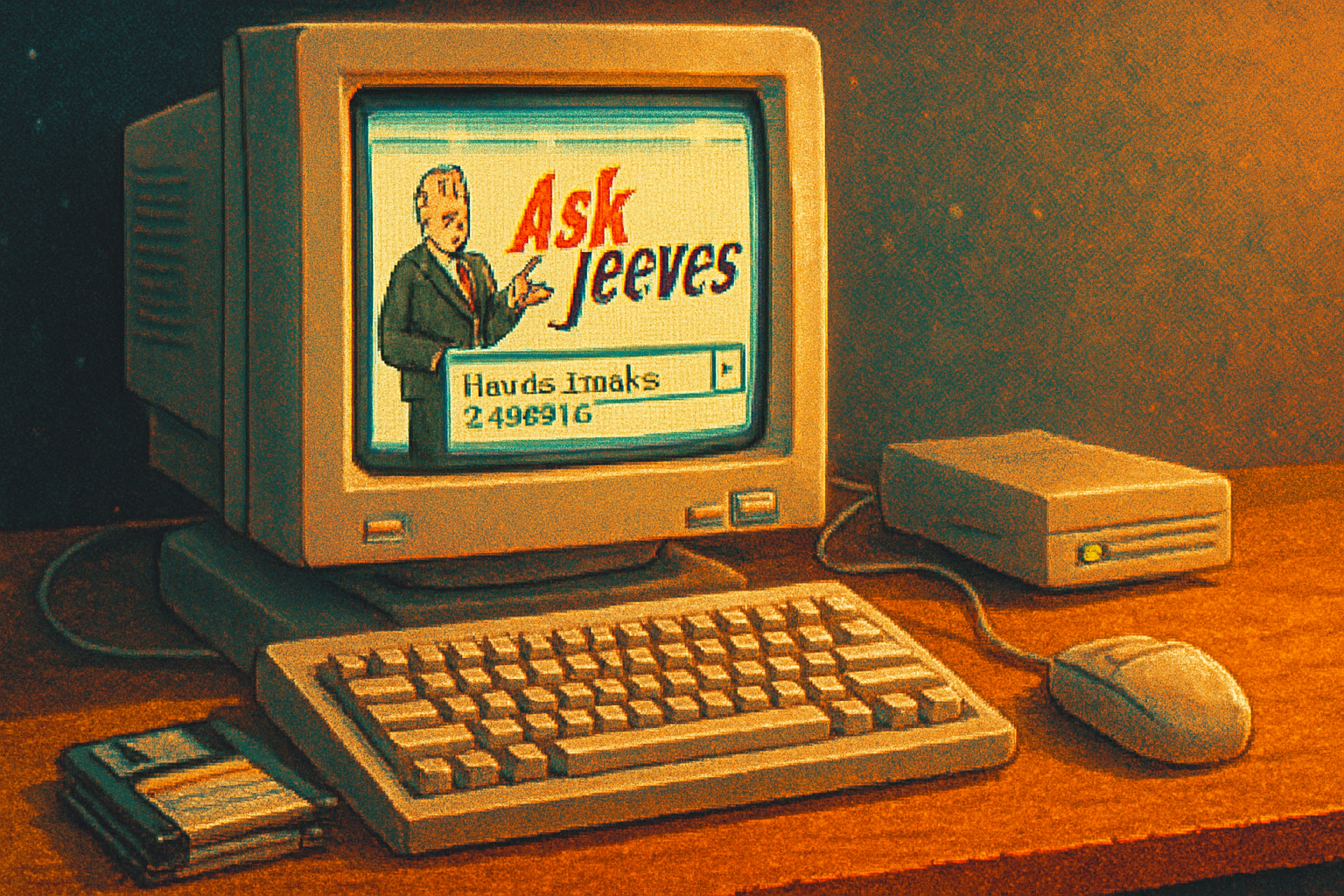
One night in 1998, a college student typed “How do I tie a Windsor knot?” into a newly fashionable site and got back a friendly, human-sounding answer. The search box felt less like a command line and more like a conversation. The mascot, a tweedy valet named Jeeves, winked from the corner of the page as if to say: “At your service.”
That moment-equal parts novelty and reassurance-was Ask Jeeves’ genius. The company sold an elegant lie: search could be polite. You could be ordinary, natural, even lazy, and the internet’s butler would fetch the right answer.
A brief chronology (the useful bits)
- Ask Jeeves launched in the late 1990s as a natural-language, question-answering search engine built to let people type full questions instead of keywords. Ask.com (Wikipedia)
- Early growth was real - people loved asking full questions. It cut through the clumsy keyword era and felt human.
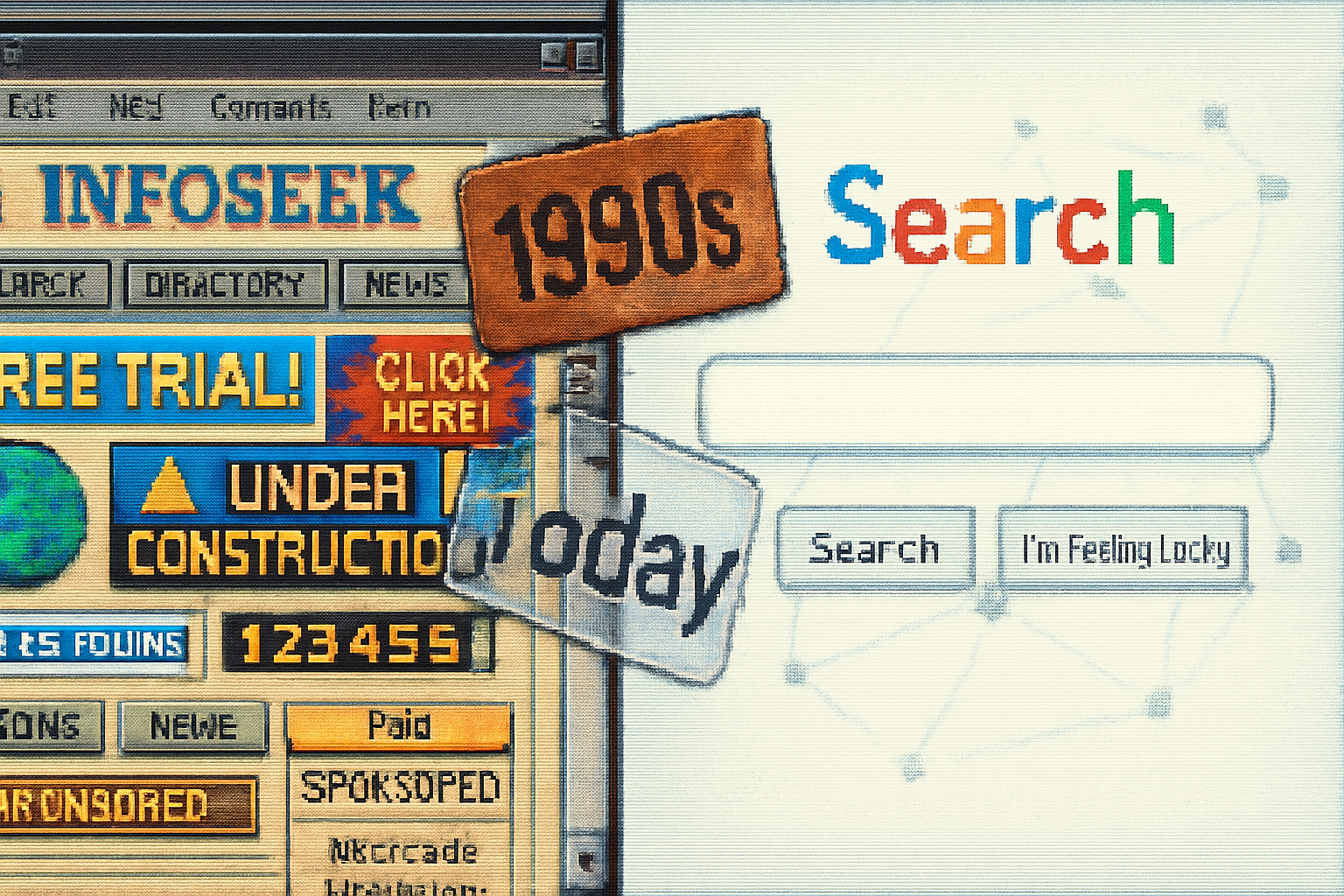
- Competition intensified. Google, founded in 1998, prioritized relevance, scale, and algorithmic rigor over persona.
- By the mid-2000s Ask was losing share, and in 2006 it rebranded to Ask.com, dropping most of the Jeeves branding and pivoting multiple times toward Q&A and vertical products. Ask.com (Wikipedia)
- Over time Ask’s market share dwindled; it became a niche player and a case study in how a charming idea can be outgunned by ruthless engineering and network effects.
Why Ask Jeeves rose: a short list of uncomfortably sensible choices
- Focus on the human question - At a time when search boxes asked for keywords, Ask accepted sentences. That lowered the cognitive burden for less technical users.
- Differentiated branding - Jeeves the valet was more than a logo; he was a product persona that communicated trustworthiness and friendliness.
- Simplicity and promise - “Just ask” was a clear call to action-comfort sells.
Why Ask Jeeves fell: the mistakes that look obvious in hindsight
Overreliance on novelty, underinvestment in core ranking
Natural language input is an interface improvement, not a search algorithm. You can let people ask in complete sentences, but if your relevance ranking isn’t world-class, the experience collapses. Google doubled down on signals-links, user behavior, freshness, semantics-and built ranking systems that were hard to replicate.
Identity crisis - mascot ≠ moat
Jeeves made Ask lovable. But love isn’t a defensible technical advantage. Branding attracts first visits; relevance and speed keep them.
Strategic whiplash - too many pivots
Ask experimented with community Q&A, vertical portals, and advertising models. Each pivot cost focus and engineering effort. Companies that win in search tend to optimize a single hypothesis relentlessly.
Network effects and data advantage
Search engines are data machines. The more queries you process, the more you can refine models and detect spam. Ask ceded query volume and the accompanying training signal to competitors.
Underestimating the economics of advertising and platform control
Google built an ad model tightly coupled with search, optimizing monetization without killing relevance. Ask never established a comparable, scalable monetization structure that didn’t dilute product quality.
Community answers as a double-edged sword
Crowd-sourced Q&A looks appealing-human answers, low marginal cost-but scales poorly in quality management and moderation, and often surfaces low-value content that harms long-term trust.
What modern search engines should learn from Jeeves’ rise and fall
Think of Ask as a parable. It’s cute. It’s instructive. Here are the lessons, translated for 2025-era problems (voice assistants, generative AI, privacy-first search):
Prioritize intent and outcome, not just interface
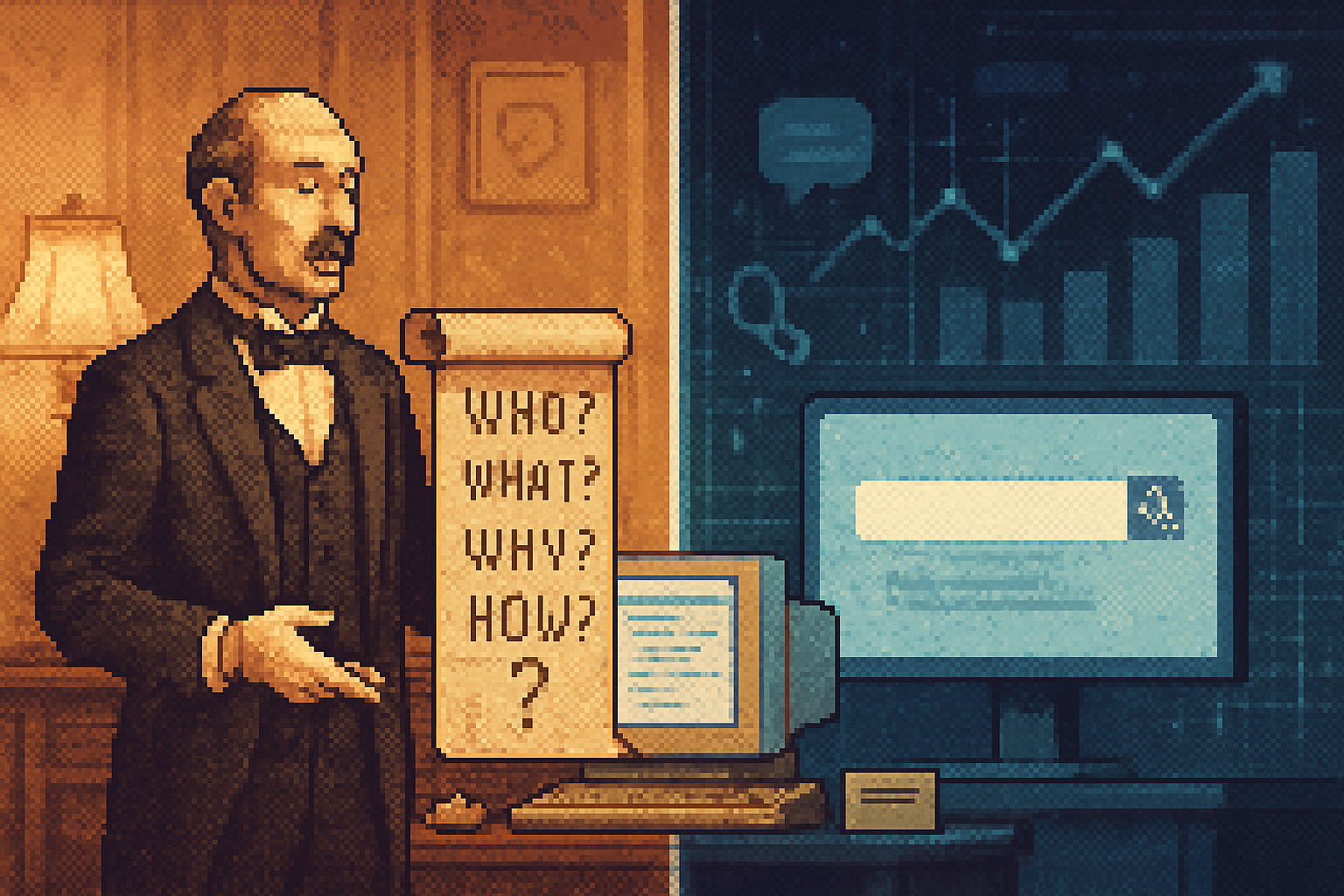
Natural-language entry points (voice, chat) are now table stakes. But the real battleground is interpreting intent precisely and producing reliably actionable outcomes. A polished persona or an elegant chat UI won’t save poor relevance.
Build a defensible data moat ethically
Volume matters for model quality. But the modern constraint is privacy and regulation. The lesson: collect signals in ways that respect consent and that you can legally use to improve models. Succeeding means designing data pipelines that are both privacy-aware and analytically rich.
Treat branding like a door, not the house
A memorable voice or mascot attracts users. But it must lead to actual product value. The brand opens the relationship; performance sustains it.
Invest in adversarial robustness and spam fighting early
As soon as you have queries, you’ll get manipulation attempts. Ask’s pivot to community Q&A was stymied by low-quality, SEO-gamed answers. Modern engines must bake in spam-resistance and provenance signals from day one.
Monetize without sacrificing trust
Users will accept ads if they still get helpful, fast answers. The balance is technical and ethical: prioritize ad relevance and transparency. Avoid incentives that reward clickbait or obvious bias.
Be careful with community-first strategies
Communities can supply great training data but scale unevenly. If you lean on user-generated content, invest heavily in moderation, reputation systems, and quality curation.
Relevance beats novelty over the long run
A charming feature will pull curiosity visits. Relevance pulls retention. Relevance compounds; novelty doesn’t.
Plan for long tails and rare queries
Ask’s original promise to handle odd questions was powerful. Modern systems should marry that ambition with strong long-tail strategies: structured knowledge, high-quality crawl, expert-verified content, and retrieval-augmented generation for hard queries.
How that maps to today’s tech stack (practical signals)
Retrieval + ranking + generative guardrails
- Retrieval systems should be fast and extensive. Then apply a ranking layer that prioritizes relevance, freshness, and trust signals. For generative answers, use provenance and confidence indicators-don’t pretend the answer is ground truth.
Rich provenance UI
- Users should see where an answer came from - a reputable source, an aggregate, or a machine synthesis. That transparency builds long-term trust.
Intent detection with fallbacks
- When intent is unclear, ask a clarifying question. When stakes are high, prefer source citation over hallucination.
Feedback loops and small bets
- Launch features to a slice of users, measure downstream satisfaction, and iterate fast. Ask’s big, noisy pivots would have benefited from incremental experiments.
Concrete product moves inspired by Jeeves (for CEOs and PMs)
- Ship a “Why this answer” card whenever you surface a generative or aggregated response.
- Offer users an easy toggle - want concise answer vs. full-sourced dossier? Respect user context-mobile users often want brevity; researchers want depth.
- Build an early adversarial spam lab that models likely manipulations of new features (e.g., answer farms tailored to prompt-injected generative models).
- Tie monetization to quality metrics - ad placement must be constrained by relevance thresholds.
- Preserve the friendly interface but bake in measurable output metrics - NPS, task completion rate, time-to-satisfaction.
A final, slightly uncomfortable truth
Jeeves failed not because being human-friendly was a bad idea, but because that friendliness remained cosmetic when the heavy lifting-ranking, data, trust-systems-was outsourced or neglected. People will tolerate a little attitude from a product if it helps them accomplish what they came for.
Search is still a morality play between convenience and truth, between charm and competence. Ask Jeeves was ahead of its time in asking the right question-can search be conversational?-and behind the curve in answering the necessary one-can it be reliably correct at scale?
If your search product today adopts Jeeves’ best instincts (politeness, accessibility, plain-language input) and learns from its sins (shallow differentiation, poor investments in core tech, and a chaotic product strategy), you’ll be better positioned for a very old and very new kind of success: being useful, consistently.
References
- Ask.com (history): https://en.wikipedia.org/wiki/Ask.com
- Search engines (overview): https://en.wikipedia.org/wiki/Search_engine