· retrotech · 7 min read
Xanga vs. Today's Social Media: A Comparative Study
A nostalgic, evidence-backed comparison of early-2000s blogging site Xanga and today's platforms (Instagram, TikTok). We examine user experience, formats, community dynamics, discoverability, moderation, and what was gained-and lost-when the internet swapped long-form diaries for scrollable dopamine loops.
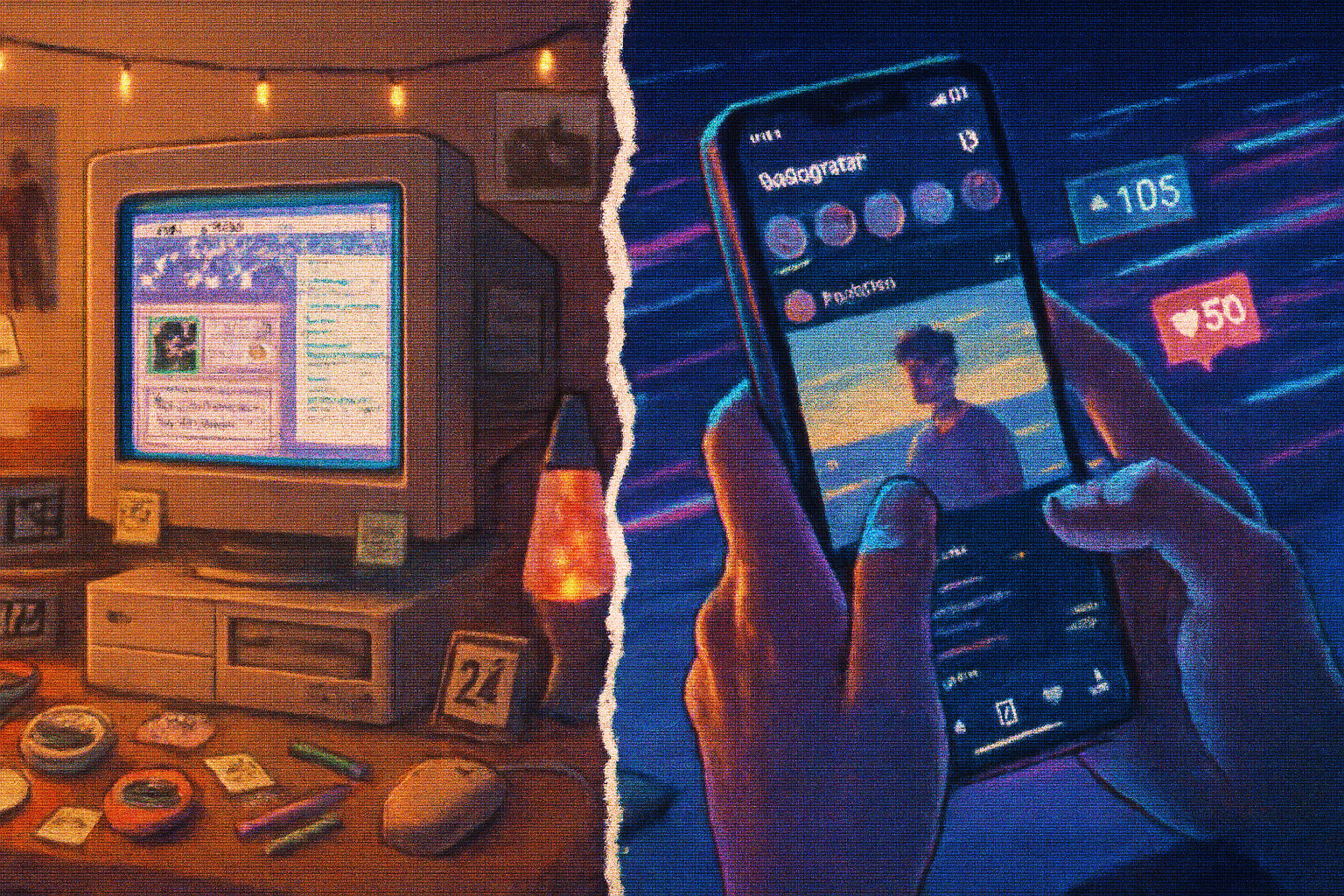
I remember a Saturday night in 2003: the glow of a CRT, a clumsy HTML editor open, glitter GIFs queued, and the trembling thrill of hitting “Post” on a Xanga entry titled something melodramatic like “He Looked At Me.” You wrote a paragraph, maybe a manifesto; people you actually knew - or thought you knew - left (often earnest, sometimes savage) comments. The page felt like your room. It smelled like adolescent perfume and printer ink.
That warm, awkward intimacy is the simplest way to frame what made Xanga different. It was less a network and more a collection of private rooms strung together into a neighborhood. Fast-forward twenty years: those rooms have been gutted, painted bright, and converted into glass-front stores where attention is the currency. Instagram and TikTok are not bad copies of Xanga. They’re a different species entirely.
This comparative study walks through the differences and lingering similarities across user experience, content creation, and community engagement - and ends with a few hard-won lessons for anyone nostalgic for the old web or building communities today.
Quick primer: what were we even talking about?
- Xanga - an early blogging/social networking site known for long-form diary-style posts, profile customization, friend lists and comment threads. It launched in the late 1990s/early 2000s and became emblematic of personal blogging culture. See
- Instagram - image-first, mobile-native social network focused on photos, short videos, and Stories; heavy on aesthetics and curated identity. See
- TikTok - short-form, algorithmic video platform designed for rapid discovery, replication (trends), and virality; optimized for vertical video. See
For social media usage context, the Pew Research Center is a useful snapshot of how people distribute their time across platforms today: Pew Research Center: Social Media Fact Sheet.
How they feel: UX and the psychology of place
Xanga: your room. You designed it. You controlled the furniture.
- Layouts were customizable with HTML/CSS. That meant personality spilled into the visuals - backgrounds, song widgets, animated cursors.
- Posting was deliberate. Entries were longer; publishing felt like leaving a note on a corkboard.
- Consumption was slow and local - visiting a friend’s page, reading their latest entry, leaving a comment.
Instagram/TikTok: the mall and the arcade.
- Mobile-first, polished, and slick. Templates and UX guardrails enforce visual standards.
- Content is designed for rapid consumption and immediate reaction - likes, hearts, shares, duet chains, and comments in rapid-fire.
- The feed is often algorithmically curated rather than strictly chronological, prioritizing engagement metrics over the simple act of showing you what your friends posted.
Psychologically, Xanga rewarded introspection and continuity; modern platforms reward attention acquisition and modular consumption. One is a slow conversation. The other is a relentless audition.
Content creation: long-form diaries vs. micro-optimized media
Xanga’s strengths
- Depth - posts were long-form, narrative-driven, and episodic. You could tell a story across multiple posts.
- Ownership - custom HTML and a consistent permalink system encouraged archiving and personal identity.
- Ritual - writing was a practice - more diary than broadcast.
Instagram/TikTok’s strengths
- Production tools - in-app editing, filters, music libraries, and templates make content creation fast and polished.
- Viral mechanics - trends, sounds, and algorithmic recommendation make distribution exponential.
- Format optimization - vertical video and short loops are tuned for snackable, repeatable attention.
Trade-offs
- Quality vs. quantity - Xanga favored depth and attention to prose; modern platforms favor velocity and visual or auditory hooks.
- Control vs. amplification - Xanga gave you more control over presentation and context; Instagram/TikTok give reach - often at the cost of context.
Community engagement: intimacy vs. scale
Xanga communities were garden parties: small, noisy, and familiar.
- Social graph - friend lists encouraged reciprocal interactions. You mostly connected with people you recognized.
- Comments were the currency of conversation, often winding and public.
- Fandoms and cliques still formed, but they were anchored in personal identity (school, region, shared journals).
Instagram and TikTok bake scale into the platform psychology.
- Asymmetric following - you follow celebrities and creators who don’t follow you back; parasocial relationships are normal.
- Comment sections can be both cheerleading squad and witch hunt; moderation is inconsistent.
- Communities form around hashtags, sounds, and algorithmic clusters rather than explicit friend lists.
Similarity: both systems produce social validation loops. Xanga did it slowly (comments over days); modern platforms do it instantaneously (likes and views in minutes).
Discoverability and serendipity: neighborhood vs. bazaar
- Xanga - discovery happened offline (friends linked each other, or you stumbled into a post via someone’s blogroll). Serendipity was social and slow.
- Instagram/TikTok - discovery is algorithmic and immediate. The “For You” page or Explore tab is engineered to keep you watching.
Algorithms solved a problem - how to surface content you don’t already know about - but they introduced new problems: attention hoarding, trend monopolies, and feedback loops that privilege certain formats (short clips, high-contrast thumbnails, catchy music).
Moderation, safety, and permanence
- Xanga - moderation was lighter and often community-driven. The cost of harm was lower because reach was limited. That intimacy could protect against mass harassment but also allowed echo chambers.
- Modern platforms - scale forces industrial moderation. Content can be removed en masse, shadowbanned, or amplified by mistake. Harms (doxing, mass harassment, misinformation) can scale rapidly.
Permanence is tricky. Xanga’s posts felt permanent in a personal way; entire diaries were archived and, in some cases, lost when companies shifted priorities. Today’s posts can go viral and then vanish into the algorithmic rubbish heap. Archiving culture shifted from individual responsibility (save your HTML) to platform-dependent backups (if the platform goes, the content often goes with it).
Monetization and attention economics
- Xanga - not primarily designed for monetization at the user level. The ego-reward system was social capital (comments, clout within your friend group), not dollars.
- Instagram/TikTok - creator economies are baked in - sponsorships, in-app monetization, shopping. Attention becomes directly convertible to income.
That converts a rite of passage (writing in your room) into a market behavior (optimizing posts for CPM, affiliate conversion, or brand deals). Some creators thrive. Many more learn to contort their identity into a marketplace-friendly persona.
What modern platforms learned (and unlearned) from Xanga
Lessons absorbed
- Authenticity still sells. The curated authenticity trend - intimate, confessional content - is a direct descendant of blogging’s tone.
- Community features (close friends, private stories, groups) are attempts to recreate the private rooms of the early web.
Lessons ignored
- Persistent context - platforms trade context for velocity. The nuance of a multi-paragraph post is hard to capture in 60 seconds of video.
- Personal design - the ability to shape a space with HTML/CSS gave people identity tools beyond a profile picture. That freedom diminished as platforms standardized presentation.
Concrete examples
- A Xanga post might be a 600-word diary that triggers a three-day thread of comments - slow, engaged, contextual.
- A TikTok version would be a 15-second clip of the same anecdote, punctuated by a trending sound; it might amass millions of views without any real conversation.
Both forms create social meaning. One preserves context; the other fragments it for reach.
Who wins and who loses?
Winners
- Professional creators and brands that can master format and frequency.
- Audiences who prioritize convenience and entertainment.
Losers
- People who want quiet, contextual community and long-form archives.
- Cultural nuance - fast formats flatten complexity and incentivize sensationalism.
Practical takeaways (for readers who miss Xanga or want better communities)
- If you miss writing - platforms like Substack, Ghost, and even Tumblr (in parts) recreate the longer-form, archival feel.
- If you miss the privacy of friend-lists - use private groups, Discord servers, or platform features like Instagram’s Close Friends or private TikTok accounts.
- If you’re building community - prioritize frictionless recurring rituals (weekly posts, comment prompts) over chasing viral mechanics.
Final diagnosis: not nostalgia, but perspective
Xanga wasn’t objectively better. It was smaller, slower, and more private - which made interpersonal mistakes feel local and personal successes feel intimately validating. Instagram and TikTok did not so much replace Xanga as repurpose its emotional architecture for a different economy: one of attention, speed, and scale.
If the internet were a house, Xanga was the cluttered attic with handwritten notes and crooning mixtapes. Instagram and TikTok are the glass-fronted living room with a neon sign and a checkout counter. Both are homes. Only one charges admission.
For anyone tempted to romanticize the old web, remember this: the attic smelled like freedom and secrets - and also mildew. The tidy, curated mall sells convenience. Neither is a utopia. Both teach the same lesson: communities are made by people, not platforms. Platforms merely set the table, and increasingly, they decide the menu.
References
- Xanga - Wikipedia: https://en.wikipedia.org/wiki/Xanga
- Instagram - Wikipedia: https://en.wikipedia.org/wiki/Instagram
- TikTok - Wikipedia: https://en.wikipedia.org/wiki/TikTok
- Pew Research Center, Social Media Fact Sheet: https://www.pewresearch.org/internet/fact-sheet/social-media/