· retrotech · 6 min read
From Followers to Friends: The Evolution of Online Connections Since Xanga
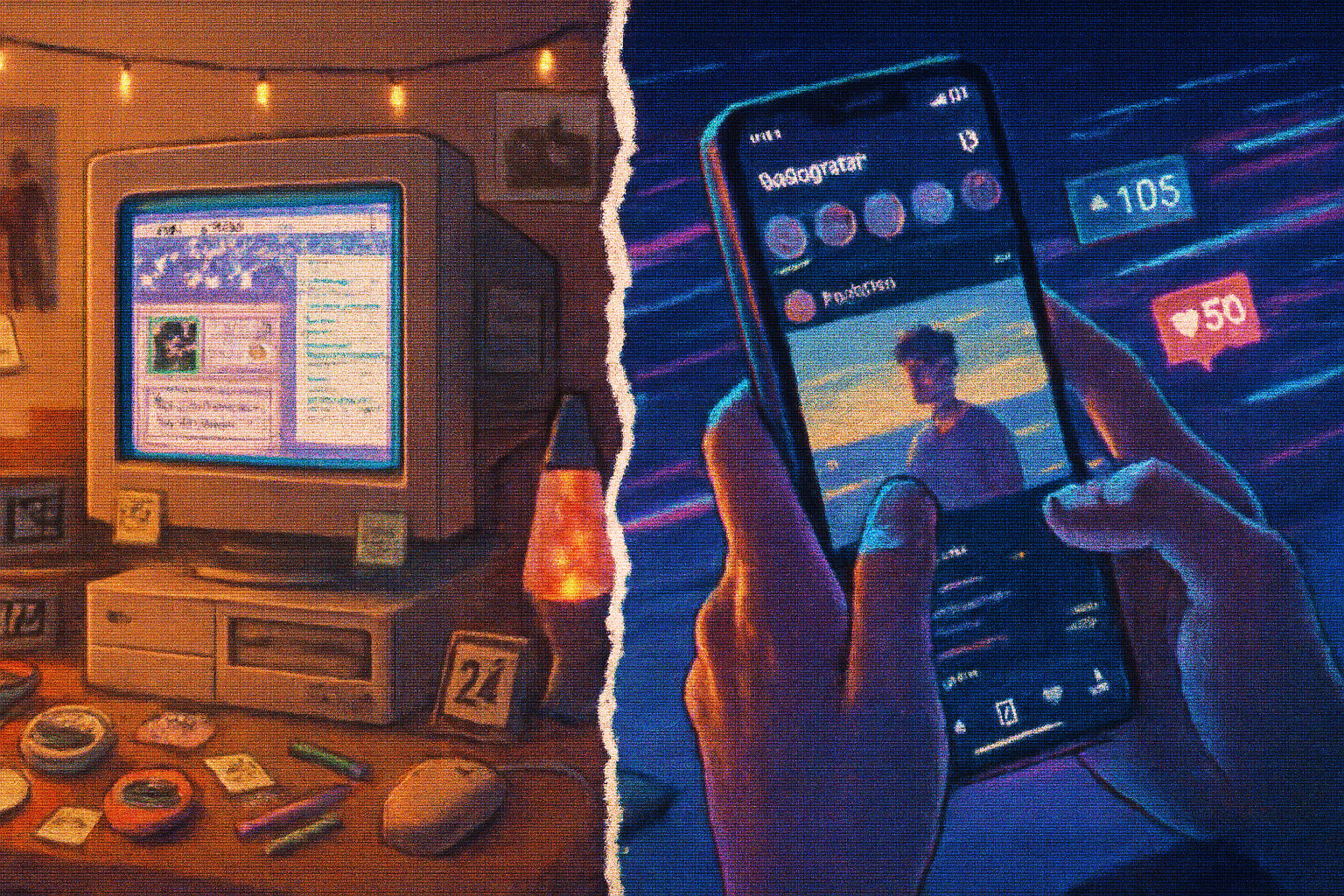
A look back at the slow, text-heavy world of Xanga and LiveJournal and how those patchwork friendships differed from the fast, algorithmic, performative ties of today's social platforms - and what that shift means for our social skills and capacity for real connection.
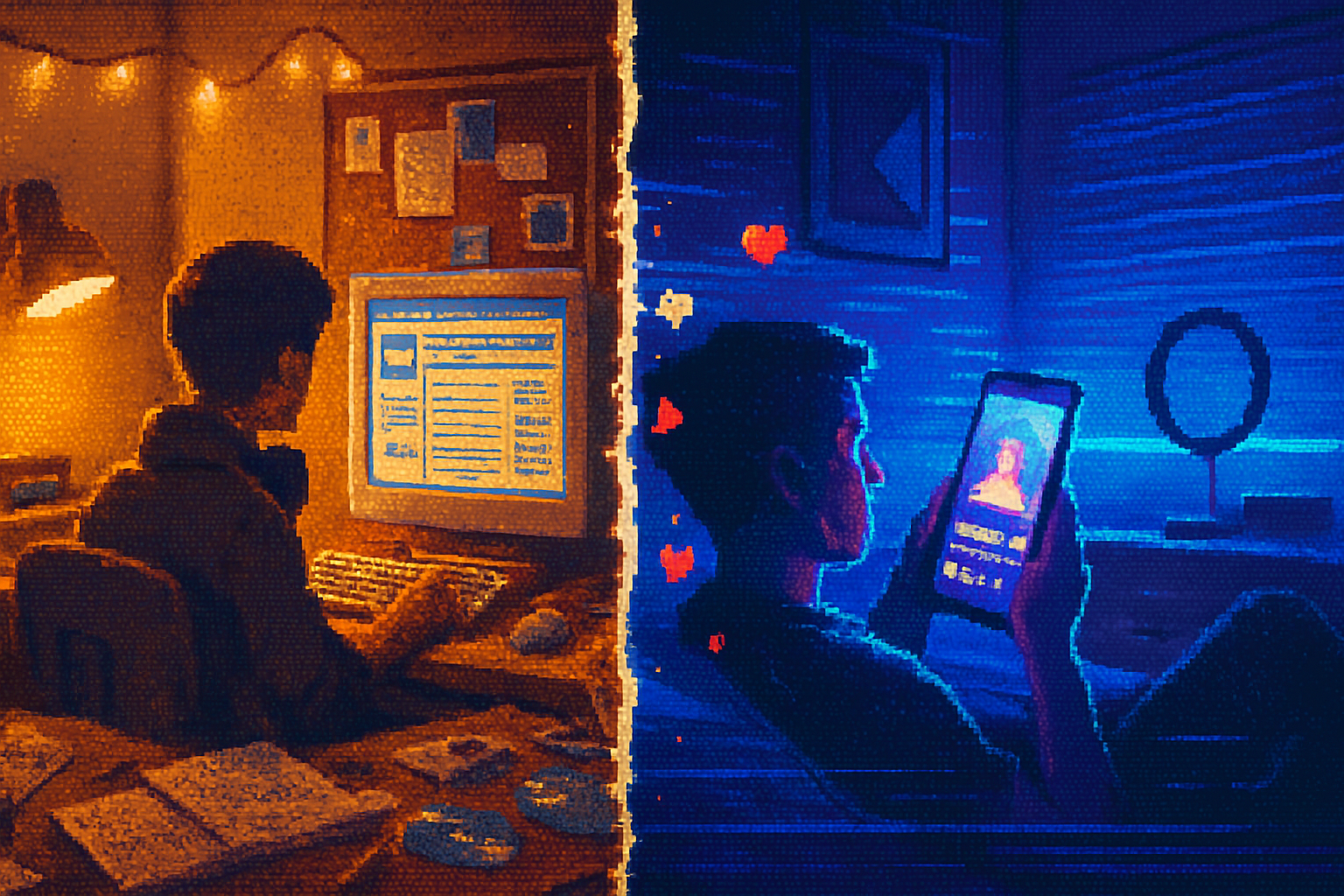
I remember the thrill: it was 2 a.m., my LED clock strobing 2004, and a classmate I barely spoke to in real life had just left a fourteen-paragraph comment beneath my Xanga entry about a terrible midterm. It read like a letter. It corrected one of my jokes, added a memory, and ended with an awkwardly sincere, “we should talk sometime.” I saved the comment. I printed it once. I felt known.
That slow, literate recognition is the baseline against which we should measure today’s friendships formed online. The contrast isn’t just nostalgic. It’s structural. It shapes how we talk, how we trust, and how we learn to be human together.
The Xanga era: intimacy by accumulation
Blogging platforms like Xanga, LiveJournal, and early MySpace were built for essays and replies, not for scrolling. The features mattered: long posts, threaded comments, “friends-only” posts, and lists of people you actually read. That produced a distinct social ecology.
Key features and social effects of that era
- Long-form expression - People wrote paragraphs. Not captions. Not 280 characters. You had to assemble a thought.
- Slow feedback loops - Comments trickled in over hours or days. The delay created room to reflect and to craft a response.
- Friend-lists as curation - Adding someone to your friends list often meant you wanted to read them regularly - a low-tech subscription.
- Shared rituals - Meme chains, tag games, and “friends-only” weeks were small but meaningful rituals that built trust.
What it produced
- Depth over breadth - A handful of regular correspondents rather than thousands of acquaintances.
- Identity play with safety - Pseudonyms and selective privacy let people try on selves without a market for likes.
- Conversational muscles - Arguing in comment threads taught nuance - how to disagree and return the next day.
For a cultural primer on these practices, see the history of Xanga and contemporaries like LiveJournal.
Today’s platforms: speed, scale, and the cult of engagement
Fast forward. The architecture has flipped. Social platforms are optimized for attention, velocity, and measurable engagement.
Hallmarks of modern social media
- Algorithmic feeds - What you see is decided by opaque ranking systems that reward immediate engagement.
- Short-form, ephemeral content - Stories, Reels, tweets - brevity and transience rule.
- Metrics as currency - Likes, followers, views become shorthand for validation.
- Publicness by default - Private circles exist, but broadcast is the baseline.
Effects on relationships
- Breadth wins - You can know thousands without being known by any.
- Performative connection - Conversations are optimized for shareability and applause.
- Parasocial relationships bloom - Celebrities and influencers feel intimate from a distance - classic
Pew Research and cultural critics have documented how these shifts change social life. For a readable investigation into the psychological effects, consider Sherry Turkle’s work, including her TED talks and book Alone Together.
How relationship formation actually differs: five contrasts
- Depth vs. breadth
- Then - A blog post invited a thirty-minute read and a thoughtful comment. Relationships accrued through substantive exchange.
- Now - Quick reactions and likes substitute for conversation. The social reward system favors many shallow touches over a few deep ones.
- Asynchronous patience vs. instant presence
- Then - Waiting a day to reply was normal - it taught tolerance and deliberation.
- Now - The expectation of immediate response enforces urgency, often at the expense of reflection.
- Intentional curation vs. algorithmic discovery
- Then - You chose who to follow and why.
- Now - Algorithms choose for you, nudging you toward content that hooks rather than nourishes.
- Mutual construction of identity vs. broadcast persona
- Then - Identity often emerged dialogically; others’ comments shaped how you understood yourself.
- Now - Identity is a polished broadcast. The audience is imagined rather than actual.
- Community boundaries vs. perpetual openness
- Then - Communities had membership rituals - the friend list, the invite-only community.
- Now - Openness aids discovery but erodes the safety needed for vulnerability.
The cost to social skills (and the surprising gains)
Let’s be clear: platforms don’t merely reflect human weakness - they shape it. But the story is not binary.
The costs
- Thinner conversational habits - Short replies and reaction-only responses atrophy the muscles for argument, nuance, and repair.
- Reduced conflict practice - Block, mute, swipe - avoidance replaces messy reconciliation.
- Attention fragmentation - Rapid context-switching undermines deep listening and memory for people’s histories.
- Performance anxiety - When friendship is performative, authenticity becomes risky. People self-censor or over-edit.
The gains
- Broader networks - For marginalized people or niche interests, today’s platforms accelerate meeting kindred spirits.
- Real-time mobilization - Activism, information-sharing, and support networks can scale quickly.
- New literacies - Embracing visual storytelling, memetic communication, and fast empathy can be adaptive skills.
If you want an accessible cultural diagnosis of how digital life reshapes our interiority, Jean Twenge’s essay in The Atlantic, “Have Smartphones Destroyed a Generation?”, is a provocative starting point: https://www.theatlantic.com/magazine/archive/2017/09/has-the-smartphone-destroyed-a-generation/534198/.
A small anatomy of trust: why Xanga-style ties felt sturdier
Trust online doesn’t appear from nowhere. It accrues through ritualized acts:
- Repeated attention - You read one another’s pages consistently.
- Public witness plus private follow-through - Comments were public; DMs (or emails) followed if the thread deepened.
- Shared temporal markers - People remembered dates, jokes, and early posts. Memory is social glue.
Modern platforms can replicate these, but their incentives often work against them. Algorithms reward novelty, not continuity.
Practical habits to reclaim depth (without rejecting the modern web)
If you miss substantive online friendships, you don’t have to exile yourself to a vintage HTML server. Try these pragmatic moves:
- Slow posts - Write longer captions. Add a question. Invite real replies.
- Curate intentionally - Use friend lists, close-friends features, or private groups for sustained conversation.
- Create rituals - Weekly threads, themed prompts, or a rotating “fan-mail” post reintroduce expectation and continuity.
- Practice threaded replies - Reply to replies. Close loops. Acknowledge past comments.
- Protect attention - Turn off nonessential notifications; allocate blocks of time for reading others without interrupting.
For community builders: prioritize discoverability that leads to depth. Reward repeat interactions. Don’t optimize everything for virality.
What’s gained by knowing both eras
Nostalgia is not a strategy. But history is instructive. The Xanga era teaches that architecture matters: platform features sculpt the social skills available to a generation. Today’s platforms teach different skills - rapid sense-making, visual rhetoric, mobilization - but they are weaker teachers in patience, depth, and repair.
You can be both: fluent in short-form performance and practiced in long-form companionship. Many of us already live in both modes. The task is to keep the muscles active.
Remember that 2 a.m. comment that read like a letter. It wasn’t magic. It was design: slow, public, attentive spaces that rewarded writing and return visits. We can rebuild versions of that design - not by ignoring feeds and metrics, but by choosing rituals and structures that privilege being known.
Final thought: followers feel like applause. Friends feel like weather - predictable, sometimes inconvenient, but always present. Choose the climate you want to live in.