· retrotech · 6 min read
IMDb Fan Communities: The Nostalgic Digital Forums of Yesteryears
A look back at the distinctive fandom ecosystems that grew on IMDb's message boards, why people miss them, and what modern platforms could learn from those slower, stranger digital third places.
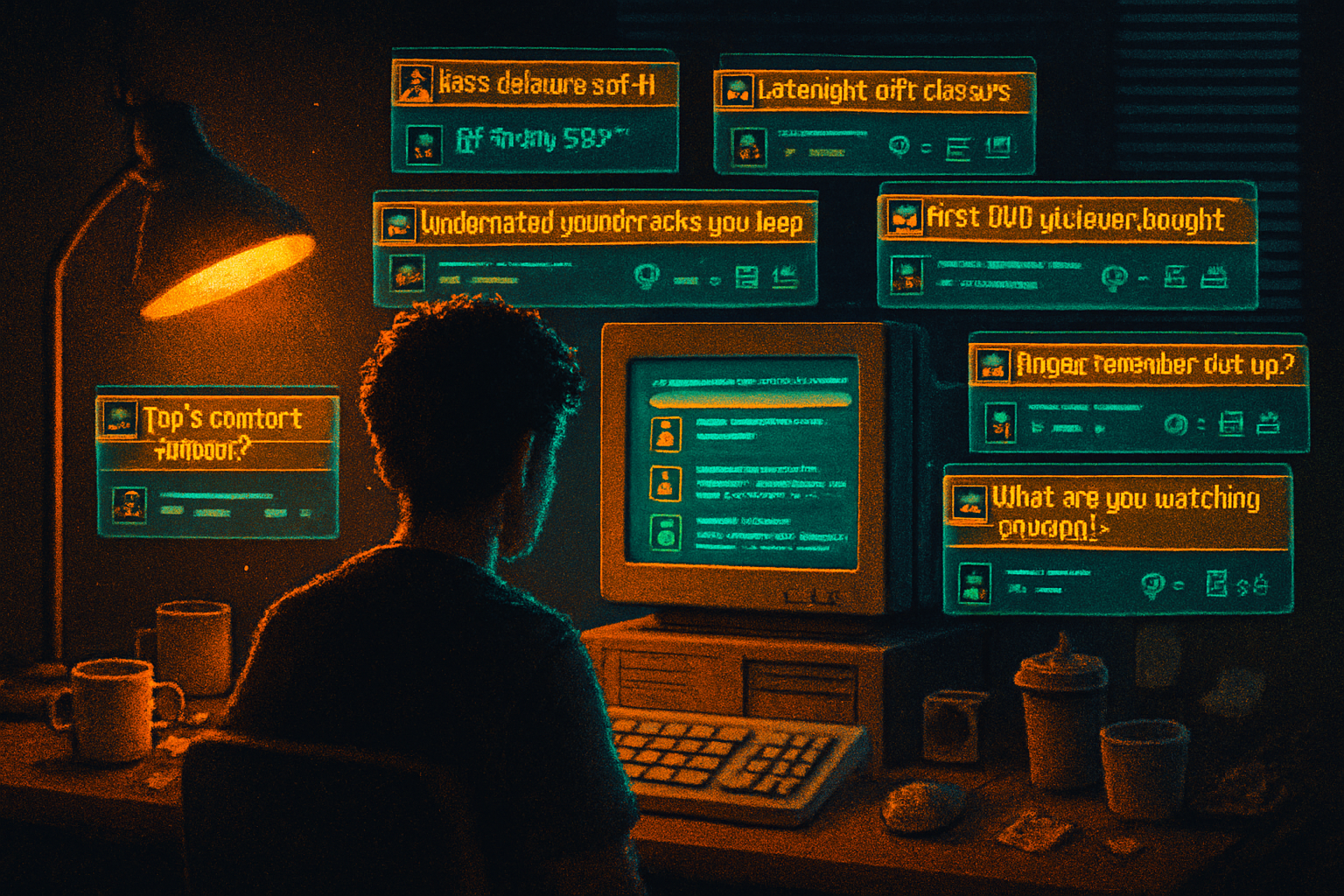
I remember one winter night in 2006 - too late, two cups of coffee too many - arguing on an IMDb thread about who really killed Laura Palmer. The thread had 167 pages, veteran posters who signsigned their posts with tiny icons, and a newcomer who insisted Twin Peaks was a misunderstood romantic comedy. It was messy. It was petty. It was alive.
Those late-night arguments, the long-running in-jokes, the slow accumulation of reputations and grudges - that is the IMDb message-board memory people are nostalgic for. They were not just comment streams; they were neighborhoods. And when IMDb pulled the plug on its message boards in 2017, a small ecosystem of belonging was erased in a single, corporate-sobered move.
What the IMDb boards actually were
In the early internet era, IMDb was more than a database of credits and trivia. It hosted thousands of message-board threads where fans of films, TV shows, actors, and genres debated, trolled, theorized, and comforted one another. Threads could be decades-long. Regulars developed reputations - the reliable spoiler-warners, the conspiracy theorists, the chronic hecklers.
The boards’ affordances mattered:
- Thread permanence - a URL that led back to the same sprawling conversation months or years later.
- Pseudonymity - you could be a handle; continuity came from persona, not legal name.
- Low friction - almost anyone could start a thread and get a reply.
- Variety - from hyper-specific fandom threads to broad, apocryphal film-lore discussions.
These features produced a distinct culture: slow, intermittent, deep. Arguments unfolded like soaps. Opinions hardened and softened. People learned the local vocabulary. It felt - for better or worse - like a neighborhood bar where everyone could see your face.
Why people miss them (and why the nostalgia isn’t just wistful)
Nostalgia can be sentimental. But the yearning around IMDb boards points to tangible qualities that many modern platforms lack:
- A sense of continuity. On Reddit and Twitter, identities and threads feel disposable. On those boards, your thread history was a living archive of your taste and grudges.
- Rituals and micro-culture. Regulars kept ritualized behaviors - rules-of-thumb about spoilers, snarky salutations, signature memes. Rituals build belonging.
- Slow conversation. You could write long posts and read long replies. The pace allowed nuance.
- Cross-topic serendipity. You’d wander from a thread about a supporting actor’s filmography into a heated debate about cinema ethics. The site’s architecture encouraged wandering.
This isn’t to sanctify everything. Boards could be rancid: cliquish, toxic, and frequently unmoderated. They replicated the worst internet behaviors alongside the best.
Why IMDb shut the boards (and how that shaped the afterlife)
In January 2017 IMDb announced it would close its message boards the following month. The reasons were mundane and corporate: moderation costs, low usage relative to new products, and a strategic focus elsewhere. Tech press covered the decision as emblematic of a broader shift away from distributed, user-run conversations toward algorithmic, platform-owned ones [The Verge].
The removal of those archives also created a cultural wound. Long conversations, inside jokes, and arguments simply vanished or were stranded in screenshots. For many fans, it wasn’t just losing discussion - it was losing the memory-traces of a shared cultural life.
Reference: see The Verge’s coverage of the shutdown for contemporary reporting: https://www.theverge.com/2017/1/31/14451884/imdb-message-boards-shut-down-february-2017
What replaced them - and how different it feels
After the boards came the splintering.
- Reddit offered topic-focused subcommunities with upvote mechanics and moderator lists. It encouraged specialization and tidy rule sets. Conversations can be intense, but the communal memory is distributed across many subreddits.
- Facebook Groups rides on real-name ethos and networked friend graphs; it prioritizes the people you already know and the algorithmic feed.
- Twitter/X magnified bite-sized performance and virality - quick, public, and often performative.
- Discord created real-time rooms with persistent channels - intimate and active, but often gated and ephemeral in tone.
Each of these platforms reproduces some virtues of the old boards while cutting others. Reddit preserves topic-focus but prizes novelty (and vote-driven visibility). Discord gives the intimate “bar” feeling but is more fragmented and private. The web we have now is faster, more moderated in certain ways, and often more ephemeral.
The social mechanics that mattered (and still matter)
If you want to understand why IMDb boards felt special, look at the small, structural features that scaffolded belonging:
- Persistent thread URLs (archival memory)
- Low-commitment identity (pseudonyms that still accrued reputation)
- Ritualized roles (regulars, moderators, newcomers)
- Slow cadence (long-form posts; gaps between replies)
- Open discovery (one click to wander into a stranger’s obsession)
Strip any one of these away and the neighborhood changes. Remove archival memory and the community loses its family album. Remove pseudonymity and the conversational daring evaporates. Remove ritual and you get noise instead of culture.
The dark side: why nostalgia can whitewash toxicity
Let’s be frank. Many message boards were terrible. They fostered echo chambers, harassment, misogyny, and conspiratorial hot-housing. Moderation was frequently ad hoc, biased, or absent. Part of why companies move away from open message boards is because unmanaged spaces can produce reputational and legal risk.
So nostalgia sometimes acts as a filter. We remember the warm nights and forget the verbal fights, the doxxing threats, the harassment campaigns. Any design lesson must keep anti-abuse architecture front and center.
Design lessons for modern communities (practical takeaways)
If you run a fandom space - or want to revive some of that old IMDb magic - there are concrete design ideas worth stealing:
- Support persistent, discoverable archives. Let conversations be a public memory, not ephemeral noise.
- Encourage ritualized onboarding. Micro-ceremonies (intro threads, pinned FAQs, recurring events) help newcomers learn norms.
- Balance identity affordances. Allow pseudonymous identity but pair it with accountability tools and consistent moderation.
- Build slow lanes. Threaded, long-form spaces insulated from algorithmic virality encourage nuance.
- Invest in community norms and distributed moderation. Train and empower veteran users with clear powers and appeals processes.
- Provide graceful exits and exports. When change happens, give users tools to archive and move their content.
These are not panaceas. They are design choices that emphasize memory, belonging, and durability over scale and instant virality.
A last, unromantic thought
We miss the old IMDb boards because they were a messy, human thing - uneven, occasionally cruel, often brilliant. The nostalgia is equal parts longing for better conversation and frustration at what replaced it: speed, algorithm, and scatter.
But platforms learn. Modern tools like Reddit, Discord, and newer federated networks carry pieces of that old culture and can be shaped to hold more of what fandom communities need: a place to argue properly, mourn publicly, celebrate privately, and archive collectively.
So when you scroll past a thousand hot takes today, remember: the neighborhood bar used to be here, with a flickering neon sign, a floor sticky with unread theories, and a chair with your name almost carved into it. Rebuilding it will take more than engineering. It will take patience, rituals, and a stubborn insistence that memory matters.