· retrotech · 6 min read
IMDb vs. Social Media: The Battle for the Modern Moviegoer's Attention
In a world where a trailer can explode across Twitter in minutes and Reddit threads can turn into full-blown campaigns, where does a staid database like IMDb fit? This piece unpacks who shapes modern movie discourse - the authoritative archive or the chaotic agora - and which medium actually captures, holds, and converts audience attention.
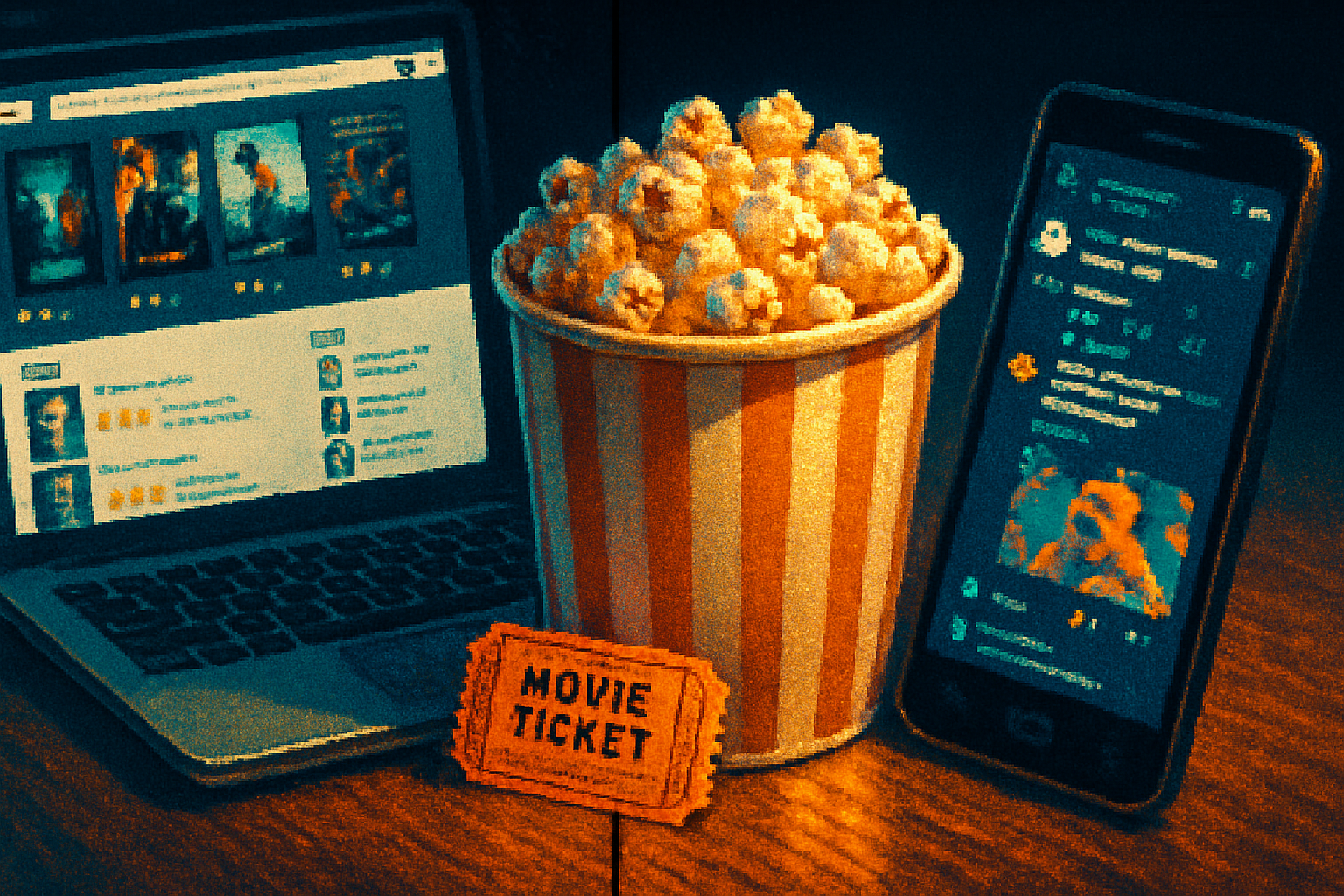
It begins the way most modern revelations do: with a notification. A trailer drops. Your feed ignites. Hashtags bloom. Within an hour there are memes, hot takes, a furious scatter of one-liners and a three‑minute breakdown video that will haunt your recommended list for weeks.
And yet - when it comes time to buy the ticket - many of us reflexively open a different app, the sedate, brittle oracle of the internet: IMDb. We glance at a star, read a few user reviews, check cast lists like a nervous gourmand scanning a menu.
This tug-of-war - the noisy, immediate chatter of social media versus the slow, encyclopedic authority of IMDb - is not just a UX quirk. It’s the battle that determines how films are discovered, discussed, and ultimately remembered.
The attention economy, on a cinema scale
Attention is the currency of film marketing. Trailers and teasers buy the first glance. Social media auctions those first glances for a premium: influencers, jokes, controversy, swift outrage, and even manufactured “mystery” fuel viral cycles.
IMDb sells a different product: certainty. It’s less about the moment and more about the record. Cast? Here. Release dates? Here. Ratings and user reviews? Here. It is the equivalent of asking a friend who’s seen the film for a sober take and then writing it down in a ledger.
Think of social media as the fireworks that announce a film’s arrival; IMDb is the museum plaque that catalogues it afterward.
What IMDb brings to the table (and why that matters)
- Authoritative metadata - release dates, full cast and crew, technical specs, international titles. This is the archival backbone that press, theaters, and fans use when they want facts.
- Consolidated ratings and user reviews - the single-number IMDb score still functions as a heuristic - a mental shortcut for whether something is “worth it.”
- Evergreen discoverability - when someone searches a film title, an IMDb result is more likely to appear in search engine results and remain accessible long after social trends fade.
- Industry utility - trade publications, festival programmers, and professionals use IMDb Pro and Box Office links to make decisions and track careers.
Weaknesses: slow reflexes (updates can lag), limited nuance in user ratings, and a reputation for being gamed - review-bombing and coordinated manipulation have occasionally dented its credibility.
(Official IMDb background: https://www.imdb.com/press-room/about/)
What social media does better - violently and quickly
- Speed - a viral clip, a hot take, or a celebrity tweet can explode in minutes and force headlines.
- Narrative control (or the illusion of it) - fandom campaigns, grassroots movements, and influencer pushes can rewrite a film’s public profile - think extended cuts, recut petitions, or boycott calls.
- Layered conversation - replies, threads, videos, memes, and long-form subreddit posts let fans debate, dissect, and remake meaning around a film in real time.
- Discovery through personality - people don’t discover movies; they discover people who tell them what to watch. Influencers and critics on Twitter/X, creators on TikTok, and long-form debaters on Reddit each shepherd audiences differently.
Relevant hubs: Twitter/X (real-time pulse) https://twitter.com and Reddit (forum-depth) https://www.reddit.com
Three functions that decide victory: discovery, conversation, and conversion
Discovery - Social media wins. Trailers trending on Twitter or clips on TikTok bring eyeballs that wouldn’t otherwise look. A trending hashtag is an invitation; a banner on IMDb is a sign on a door.
Conversation (quality) - Reddit often wins. Subreddits like r/movies or r/TrueFilm allow threaded, sourced, and archival discussions where nuance can live. Twitter often favors speed over depth; it is brilliant for temperature checks and lousy for exegesis.
Conversion (ticket sales/streaming choices) - mixed. Social media drives top-of-funnel interest; IMDb (and aggregator sites) influence the decision to convert by offering a quick credibility check. People see a trailer on social, then confirm on IMDb before handing over cash or clicking “play.”
Case studies (short and unvarnished)
The fan campaign as force multiplier - The movement that pushed for a director’s cut or special edition (commonly dubbed the “Snyder Cut” example) shows social media’s ability to organize fandoms into tangible leverage - petitions, trending tags, and sustained pressure changed studio calculus.
Review-bombing and trust erosion - coordinated low scores remain a problem for all rating platforms. When social outrage migrates to rating sites, the authority of those aggregates is damaged. IMDb and others have had to adjust filters and moderation to counteract manipulation.
Trailer ecosystem - studios now tease exclusively on social platforms knowing that clips will be re-shared, memed, and explained by creators. The first 24 hours on social often determine a film’s cultural framing.
Why the relationship is more parasitic than competitive
It would be naive to pretend IMDb and social platforms are engaged in a zero-sum war. In practice, they feed each other:
- Social media creates demand; IMDb records it.
- A viral thread drives searches; IMDb shows up in those searches and consolidates sentiment into a single, shareable figure.
- Studios seed both channels differently - exclusives and micro-content for social feeds; full credits, press kits, and technical details for IMDb.
The modern moviegoer doesn’t choose one camp; she samples both. She feels the high of social buzz and reaches for the ledger when she needs to decide.
Who wins, finally?
If the question is “Which medium captures attention first?” - social media. It is the town crier, megaphone, and rumor mill in one.
If the question is “Which medium shapes long-term perception and helps people make concrete decisions?” - IMDb and other reference sites. They are slower, but they endure and gatekeep a different kind of trust.
The true victor is the ecosystem that orchestrates both - the campaign that seeds social virality while ensuring the canonical pages (IMDb, press kits, Box Office listings) are pristine. That hybrid wins attention, shapes discourse, and converts it into revenue.
Practical takeaways for filmmakers, marketers, and cinephiles
For studios and marketers:
- Start loud on social, but finish clean on reference sites. Populate IMDb pages early and accurately.
- Monitor social trends and be ready to engage quickly - but avoid amplifying toxic cycles.
For filmmakers and D.I.Y. distributors:
- Use Reddit for long-form engagement (AMAs, targeted community outreach) and Twitter/X or short-form video for mass awareness.
- Treat IMDb and Box Office pages as part of your press kit. They’re often the most-cited sources by journalists.
For moviegoers:
- Use social media for context and first impressions; use IMDb for facts and to corroborate claims.
- Be skeptical of rating spikes that coincide with political controversies or fandom wars.
The last take - an honest verdict
Cinema has always been about shared experience and collective myth-making. The platform that captures your attention first may decide whether you know a film exists; the platform that shapes the record will help determine whether it is remembered kindly.
Social media is brilliant at making things feel urgent. IMDb is boringly excellent at making things stick. In the battle for the modern moviegoer’s attention, urgency gets you in the theater; trust gets you the repeat ticket and the archival footnote.
If you want both, play both. If you can only pick one, choose how you love cinema: for its rush, or for its record. Neither choice is shameful. Both are, in their way, essential.