· retrotech · 5 min read
The Best AIM Screen Names: A Trip Down Memory Lane
A nostalgic deep-dive into AOL Instant Messenger screen names - why they were witty, awful, aspirational and unforgettable; the social mechanics that shaped them; and how they still echo in today's username culture.
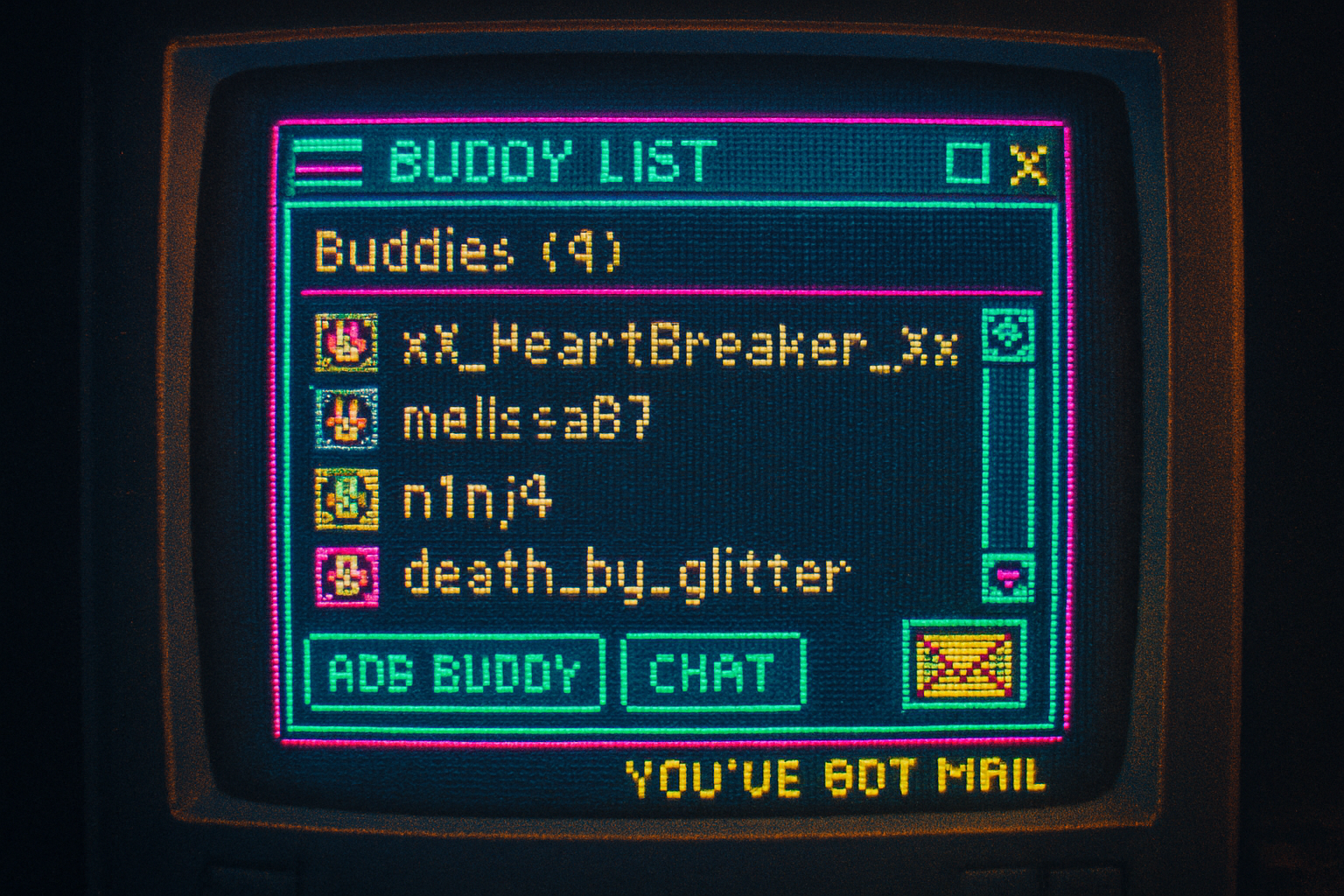
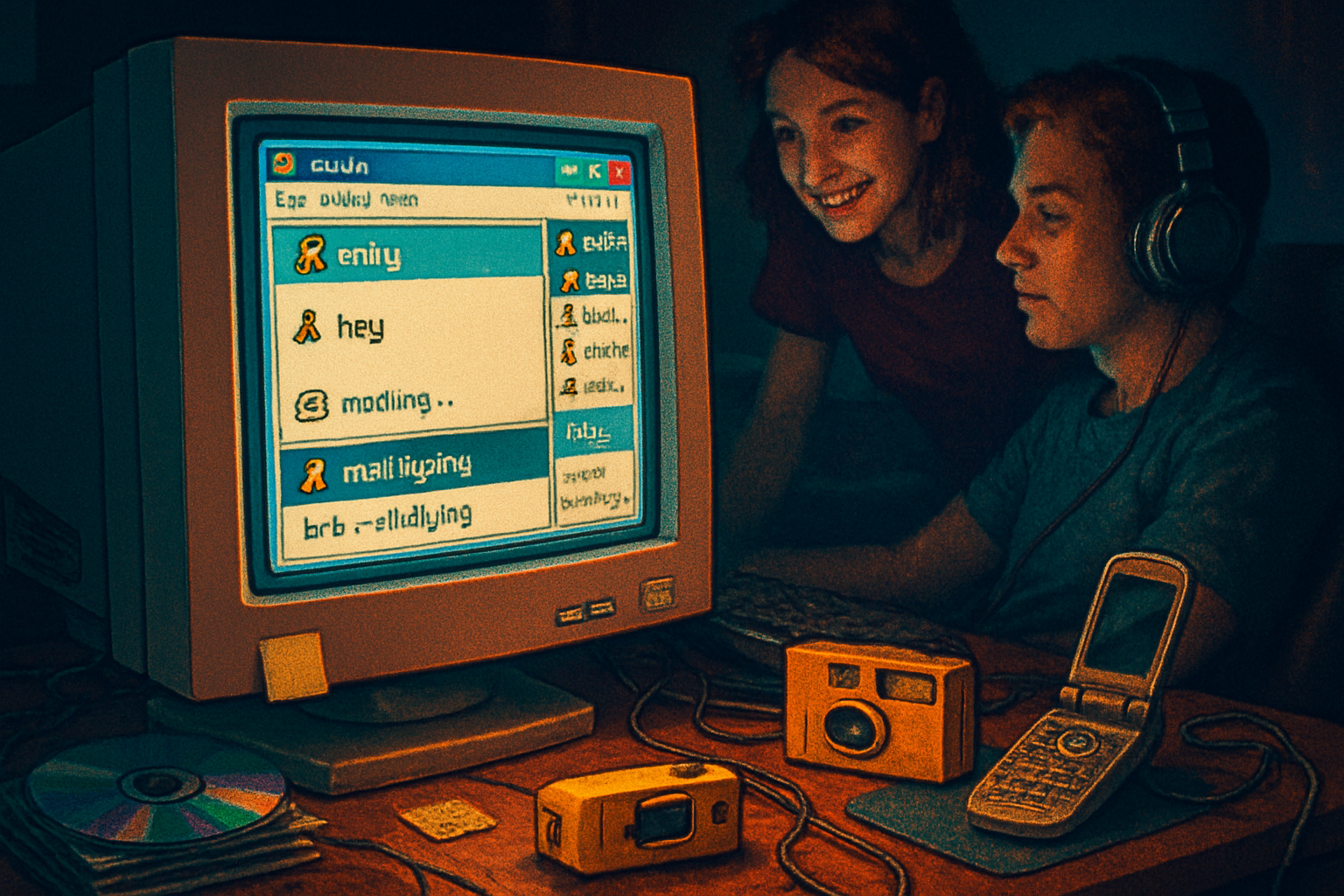
I still remember the tiny jolt when the AIM window blinked and a buddy’s handle appeared. Not the person - the handle. Because for a long stretch of the internet, your screen name was your first sentence, your neon billboard, and sometimes your entire personality.
That night my high school crush logged on as xX_HeartBreaker_Xx. I stared at that string of characters like it might tell me whether to say “hey” or “sup.” It didn’t. But it told me everything I needed to know about performance: the deliberate misspellings, the borrowed punctuation, the numeric sighs when your preferred handle had already been claimed.
Why screen names mattered
AIM wasn’t just a messaging app; it was a stage with terrible lighting. Your screen name performed six simultaneous jobs:
- Identity shorthand - a single line that signaled gender, age, humor, or fandom.
- Status marker - a string could imply coolness, tech-savviness, or financial aspiration.
- Privacy control - pseudonyms let people test selves safely.
- Social currency - a clever handle was a small ticket to early-internet fame among friends.
- Gatekeeping - if your handle was boring, you were (mercilessly) boring.
AOL Instant Messenger shaped a generation’s language. For a quick primer on AIM’s cultural footprint see this overview on Wikipedia and The Verge’s piece on its shutdown and legacy.
- https://en.wikipedia.org/wiki/AOL_Instant_Messenger
- https://www.theverge.com/2017/10/6/16436052/aim-aol-instant-messenger-shutting-down-history
The archetypes (with canonical examples)
Screen names weren’t random. They clustered into recognizable types. Below are archetypes you’ll recognize if you were online between roughly 1997 and 2008.
- The I’m-Still-Available/Real-Name Variant
- Examples - melissa87, john_smith, sarah.j
- Purpose - To be findable and normal. Often used by adults, teachers, or anyone who wanted to be recognized as a real person.
- The Glorified High School Nickname
- Examples - SkateR_B0y, LilRocker, BigMike88
- Purpose - To fake-bravado or preserve a childhood nickname into eternity.
- The Leet/Elite Spam
Examples - n1nj4, 3l1t3gamer, xXDarkAssassinXx
Purpose - To imply technical prowess or gaming cred. The whole ethos of “leet” (l33t) is documented here.
- The Emo / Scene Poem
- Examples - death_by_glitter, crying_roses, s0ul.misfit
- Purpose - Melody and misery bundled into punctuation.
- The Sexualized/Boastful
- Examples - CutiePie69, DaddyIssues, Hot4U
- Purpose - Flirting, trolling, or looking for attention. Often intentionally borderline in tone.
- The Mysterious / Cryptic
- Examples - anonymousghost, phantom_echo, whispering_dawn
- Purpose - To suggest depth or intrigue. Worked surprisingly well for a while.
- The Brand / DJ / Handle-as-Job
- Examples - DJ_Blaze, fashionistaNY, GamerLord
- Purpose - Self-branding before influencers. Often aspirational.
- The Numeric Sorrow
- Examples - jessica1234, mike_87_00, anna2001
- Purpose - The sad but ubiquitous result of your first choice being taken. The world’s most reliable cringe.
These categories overlapped. You could be a leet emo DJ named xX_s0ul.n1nj4_Xx.
What made a screen name “good”? (and “awful”)
Good screen names were short, evocative, and memorably performative. They hinted at an in-joke or a personality trait without requiring a two-hour backstory.
Bad screen names were long, self-consciously edgy, or relied on outdated trends. If your handle needed an explanation, it failed.
Signs of quality:
- Rhythm - easy to say and remember.
- Suggestion - implies more than it declares.
- Distinctiveness - not just name + year + number.
Telltale signs a handle was hopeless:
- Overloaded with punctuation (too many underscores, periods, and that one dotless_i trick).
- Numerical padding that says - I gave up.
- Obvious meme references that expired in 2003.
The rules and technical constraints that shaped creativity
Design and policy choices by AOL created the constraints that inspired creativity:
- Uniqueness requirement forced variations and numbers. If “sarah” was taken, invent “sarah_86” or “sarah.88” or a tortured leetspeak variant.
- Character sets and length limits meant people got clever with punctuation and case.
- Display names vs. screen names - some users could set a friendly display name while keeping an email-like or inscrutable screen name as their login. That allowed more experimentation.
Constraints are the mother of invention - and of many terrible usernames.
What screen names told you about someone
- Age - teenage handles skewed toward hyperbole and trend-chasing; adults preferred real-name variants.
- Social circle - if everyone in a buddy list uses leetspeak, you’re probably in a gaming clique.
- Intent - sexualized names invite different interactions than cryptic or professional ones.
Screen names were social shorthand - the quickest possible way to place someone on a small social map.
Why we remember them fondly (and why they were a little awful)
Nostalgia softens the rough edges. We recall the thrill of being seen and the minor cruelties of exclusion: handle availability could be a tiny rejection.
But AIM handles also signaled a willingness to perform. They were often performative in embarrassing, earnest ways - which is beautiful and also a little mortifying when you find your old log files.
The legacy: usernames today
Modern platforms took lessons from AIM and rewrote others:
- Twitter/Instagram - still limited, but verification and real names reduced some of the wild creativity.
- Gaming platforms - mayhem continues - tags, clans, suffixes, and numbers reign.
- Discord/Slack - hybrid spaces where display names and nicknames let you be both yourself and a persona.
If AIM taught us anything, it’s that constraints plus social stakes produce artful and ridiculous identity bricolage.
How to make an AIM-style screen name today (for kicks)
If you want to recapture the era without being painfully dated, follow this short recipe:
- Start with a kernel - your real name, a hobby, or an aspiration (e.g., Claire, bass, coder).
- Add a mood or gesture (e.g., moon, riot, echo).
- Consider a modifier - a tasteful leet swap, a meaningful number (not 1234), or a punctuation flourish.
- Say it out loud. If it sounds like a band name, you’re close.
Examples:
- claire.moon (clean, slightly bohemian)
- bass_riot (edgy, musical)
- coder_404 (clever, nerdy)
Avoid: pointless strings of numbers, cringe memes, or trying to be shockingly obscene. Subtlety ages better.
A final, cantankerous thought
The best AIM screen names were tiny acts of self-theater - equal parts aspirational and absurd. They told us how we wanted to be perceived: cool, mysterious, funny, desirable, real. They were also, often, a little mendacious. But that was the point. We were practicing ourselves.
If you ever dig up an old buddy list and see your teenage alias blinking back at you, don’t delete it immediately. Laugh. If possible, screenshot it. Then, with the same gentle cruelty you once reserved for other people’s handles, delete the digits and reclaim your dignity.
References
- AOL Instant Messenger - Wikipedia: https://en.wikipedia.org/wiki/AOL_Instant_Messenger
- “AIM is dead. Long live AIM” - The Verge: https://www.theverge.com/2017/10/6/16436052/aim-aol-instant-messenger-shutting-down-history
- Leet - Wikipedia: https://en.wikipedia.org/wiki/Leet