· retrotech · 6 min read
Beyond Nostalgia: The Impact of GeoCities on Today's Web Design Trends
GeoCities was the web’s messy nursery - glitter GIFs, tiled backgrounds, and earnest homepages. Its DIY spirit didn't die with Yahoo’s shutdown; it mutated. This essay traces how the chaotic creativity of GeoCities seeded modern minimalism, personalized branding, and the 90s revival in contemporary web design.
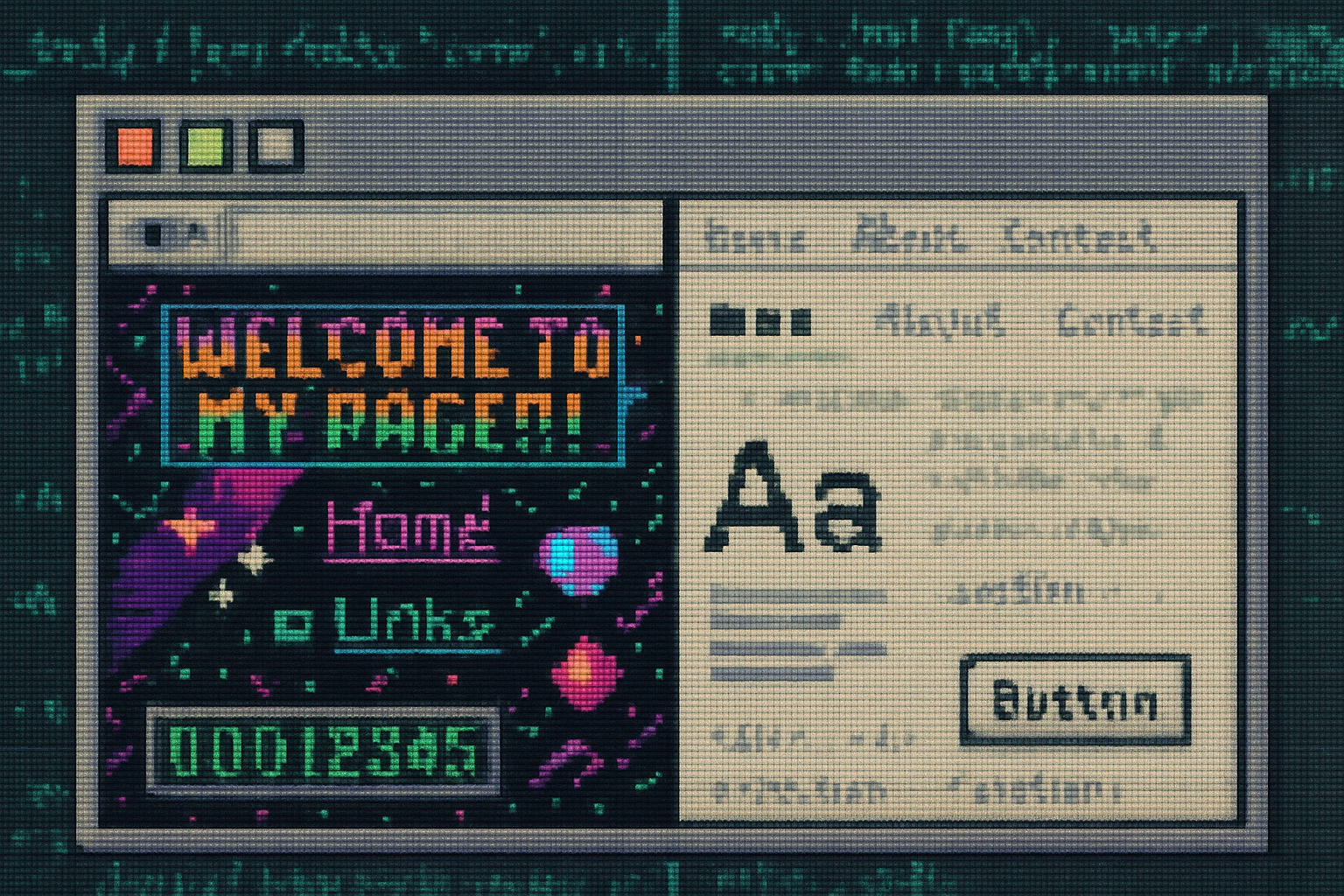
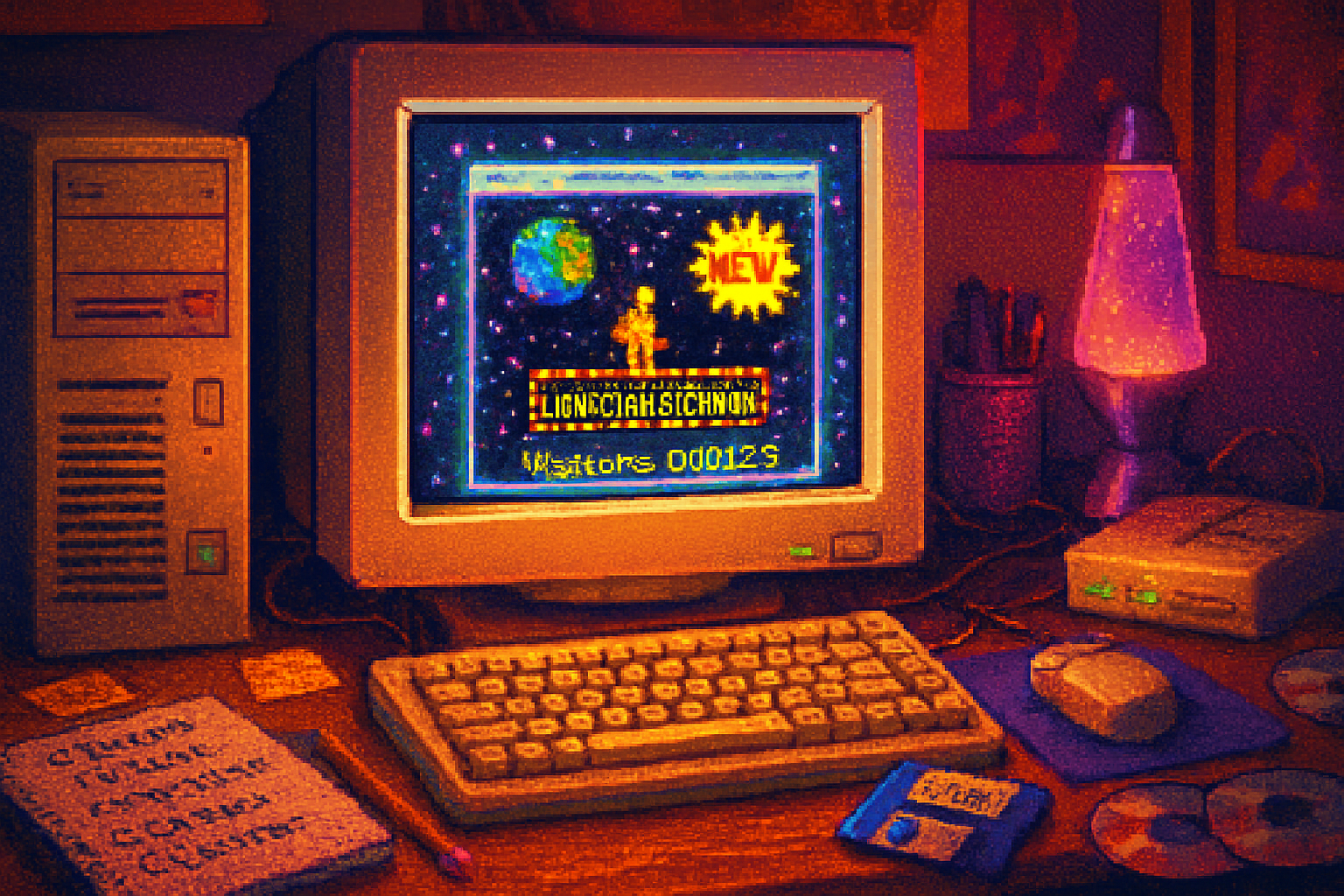
A teenage me once spent an entire Saturday building a homepage with a dancing GIF, an autoplaying MIDI, and a visitor counter that declared my worth to the internet. It was magnificent. It was unreadable. It was mine.
That small, ridiculous homepage - poor taste, enormous personality - is the honest origin story for much of what we now call user-centered branding and indie web design. GeoCities didn’t invent the web, but it colonized the parts of the internet that most people remember fondly: the personal, the idiosyncratic, the hand-built. And although the polished, user-friendly web we use today looks nothing like a GeoCities neighborhood, echoes of that DIY spirit are everywhere.
The GeoCities moment: chaotic creativity, low barriers, big feelings
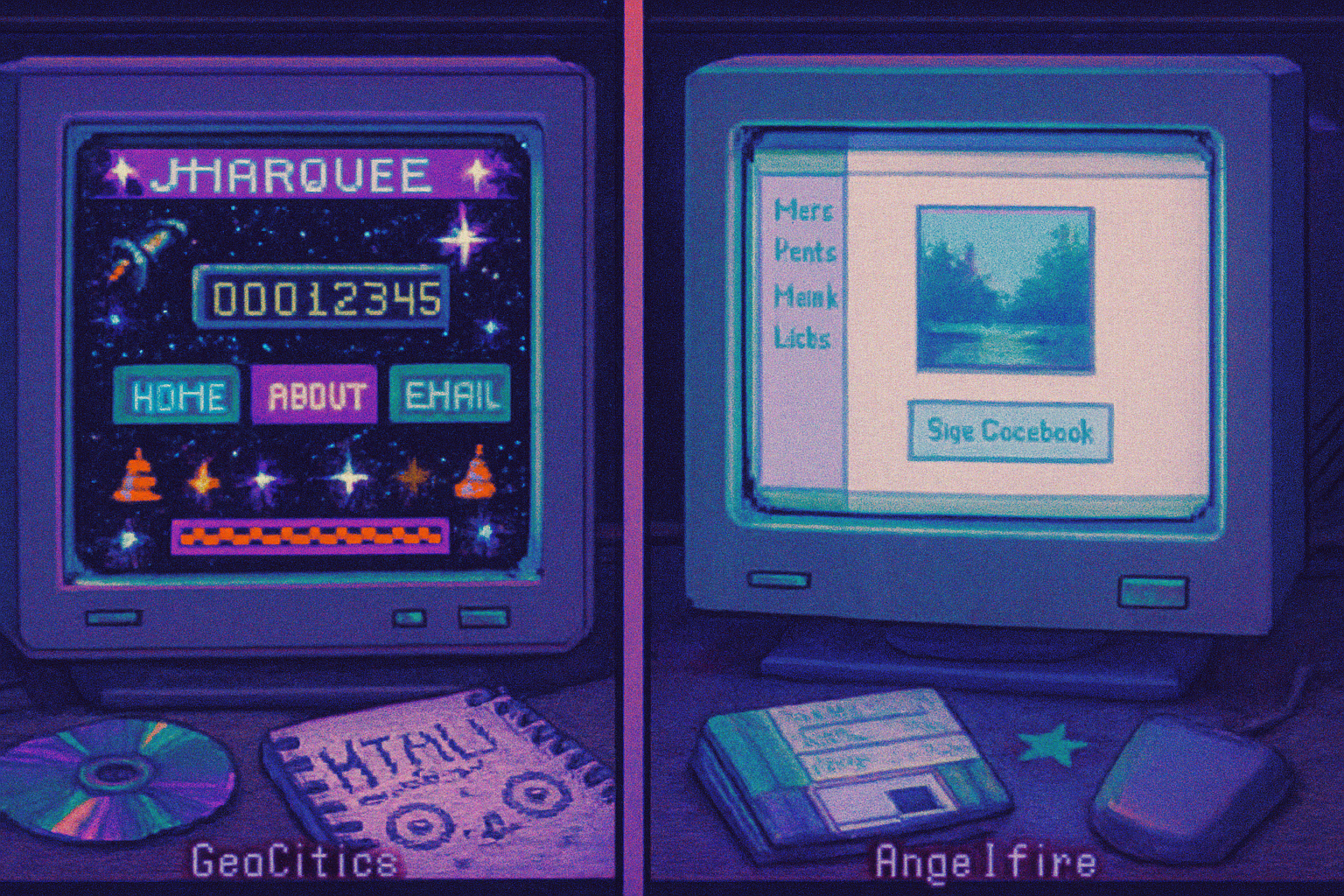
GeoCities (1994–2009) gave anyone with an idea, a credit card for dial-up, and a desperate desire for self-expression a place on the web. The architecture of the service - neighborhoods, template pages, counters, guestbooks - encouraged personality over polish. The results were frequently tasteless, often hilarious, and always sincere.
Why should designers care about a fragmentary, now-dead service that hosted spinning GIFs and tiled backgrounds? Because GeoCities taught three lessons that still matter:
- Agency - people want to own a corner of the web and make it their own.
- Vocals over polish - voice often matters more than visual perfection.
- Experimentation - low-friction tools spur bold, risk-taking aesthetics.
You can trace these lessons forward into today’s design culture.
From clutter to clarity: how GeoCities helped catalyze minimalism
At first glance, modern minimalism - spare layouts, muted palettes, generous white space - seems the exact opposite of GeoCities’ maximalist mess. But that’s a superficial reading.
Minimalism in web design is not an aesthetic born from taste alone. It is a cultural reaction. Designers and users tired of cognitive overload and slow pages. They wanted faster load times, clearer information architecture, and interfaces that respected attention. The proliferation of handheld devices made simplicity mandatory.
Here’s the twist: many of the values that fueled minimalism were seeded by GeoCities’ opposite.
- Negation breeds refinement. When you stare at an overstuffed page, the solution is subtraction. The chaotic personal pages taught designers which elements were essential to personality (voice, imagery, signature quirks) and which were gratuitous.
- Personality without noise. Minimalism learned to preserve individuality while removing friction. A minimalist About page with a single, candid photo and a concise bio inherits GeoCities’ emphasis on personhood - just without the neon background.
- Performance as respect. GeoCities sites were slow for unrelated technical reasons, but the resulting frustration primed designers towards performance-minded minimalism - fewer assets, clearer hierarchy, faster interactions.
So minimalism borrowed GeoCities’ heart and taught it manners.
The comeback: 90s nostalgia, brutalism, and intentional awkwardness
Nostalgia moves in cycles. The silliness of GeoCities spawned a reactionary aesthetic in the 2010s: web brutalism. The movement celebrates raw HTML, brutally honest layouts, and a proud disregard for design polish. Brutalist sites often feel like reanimated early web pages - utilitarian, stubbornly functional, and disarmingly human.
This 90s revival manifests in a few clear trends:
- Brutalist Websites - intentionally rough layouts, monospace fonts, visible code-like elements. See projects cataloguing the movement at
- Retro micro-design - pixel art, low-res GIFs, and intentionally clunky scroll behaviors as deliberate nostalgia.
- “Anti-design” portfolios - designers who use 90s motifs and quirks to position themselves as contrarian and authentic.
But nostalgia isn’t a regress. Designers borrow the 90s language to communicate sincerity, imperfection, and handcrafted authenticity - qualities that mass-market templates often lack.
Personal branding: the GeoCities lineage in the era of creators
GeoCities made identity visible. Your homepage was a manifesto: your hobbies, your tastes, your guestbook scribbles. Today’s creator economy replays that structure with better typography and an analytics dashboard.
How GeoCities-style personalization shows up today:
- Personal homepages and link-in-bio pages are modern guestbooks - compact, intentional, and fully curated.
- Indie platforms like Neocities explicitly revive GeoCities’ ethos, offering free hosting and encouraging handcrafted pages.
- Brand websites increasingly include founder stories, behind-the-scenes photos, and candid copy - digital personality as product differentiation.
The takeaway: personalization is not mere decoration. It’s a brand asset. A human voice on a landing page converts because it simulates a handshake.
Concrete echoes in modern interfaces
Let’s be specific. Where do you see GeoCities’ fingerprints in contemporary design patterns?
- Easter eggs and micro-interactions - small personality-driven animations or sounds (used sparingly) echo the surprise-and-delight of early homepages.
- Asymmetric layouts and collage aesthetics - early table-based asymmetry lives on in modern CSS grid experiments.
- Handcrafted typography and pixel-art icons - bespoke elements are used to convey authenticity in a template-driven world.
- Personal “About” pages that read like short stories - storytelling took the place of a resume.
Designers cherry-pick the playful, human-first details of GeoCities and graft them onto modern constraints like accessibility, performance, and mobile-first UX.
Why this matters for product and UX designers
There’s a pragmatic reason to study GeoCities beyond quaint nostalgia: it teaches empathy at scale.
- Make room for personality. Users respond to human touches; removing all personality risks homogenization and brand invisibility.
- Build tools that empower non-designers. GeoCities thrived because it lowered the barrier to entry. Modern CMS and site builders that prioritize easy expression outperform sterile corporate templates.
- Maintain discipline. The GeoCities lesson is not “more glitter,” it’s “make your personality visible and legible.” Modern design must balance flair with clarity.
How to borrow the GeoCities spirit without inheriting the mess
If you want to incorporate GeoCities’ virtues into a modern site, follow this checklist:
- Keep voice, lose noise. Preserve candid copy and founder anecdotes, but avoid autoplay audio and unreadable color contrasts.
- Use quirks as accents. A single micro-interaction, a tiny animated badge, or a hand-drawn avatar will read as authentic rather than amateurish.
- Prioritize accessibility and performance. GeoCities never had these as goals. You should.
- Let users opt into nostalgia. Offer an Easter-egg theme toggle rather than forcing 90s styling on everyone.
Final thought: sincerity outlives style
A GeoCities page was never elegant. It was earnest. That earnestness is the core contribution: a model of the web as a place to show who you are, not only what you sell. Minimalism learned to respect attention. Brutalism reclaimed honesty. The creator economy rediscovered the demand for personality. Those are not accidents. They are the cultural descendants of an internet that allowed anyone to build, fail, and be adored for trying.
A good modern site, then, is less about imitating a decade’s design and more about inheriting a value system: give people tools to express themselves, make that expression legible, and treat imperfection as character, not a bug.
References
- GeoCities (Wikipedia): https://en.wikipedia.org/wiki/GeoCities
- Neocities - modern revival and community: https://neocities.org
- Brutalist Websites directory: https://brutalistwebsites.com
- Internet Archive GeoCities captures: https://web.archive.org/web/*/geocities.com