· retrotech · 6 min read
The X68000's Secret Legacy: How a Japanese Computer Shaped Modern Gaming
How a Japan-only powerhouse - the Sharp X68000 - became the secret bridge between arcade hardware and home development practices that still echo in modern game design, tools, and preservation culture.
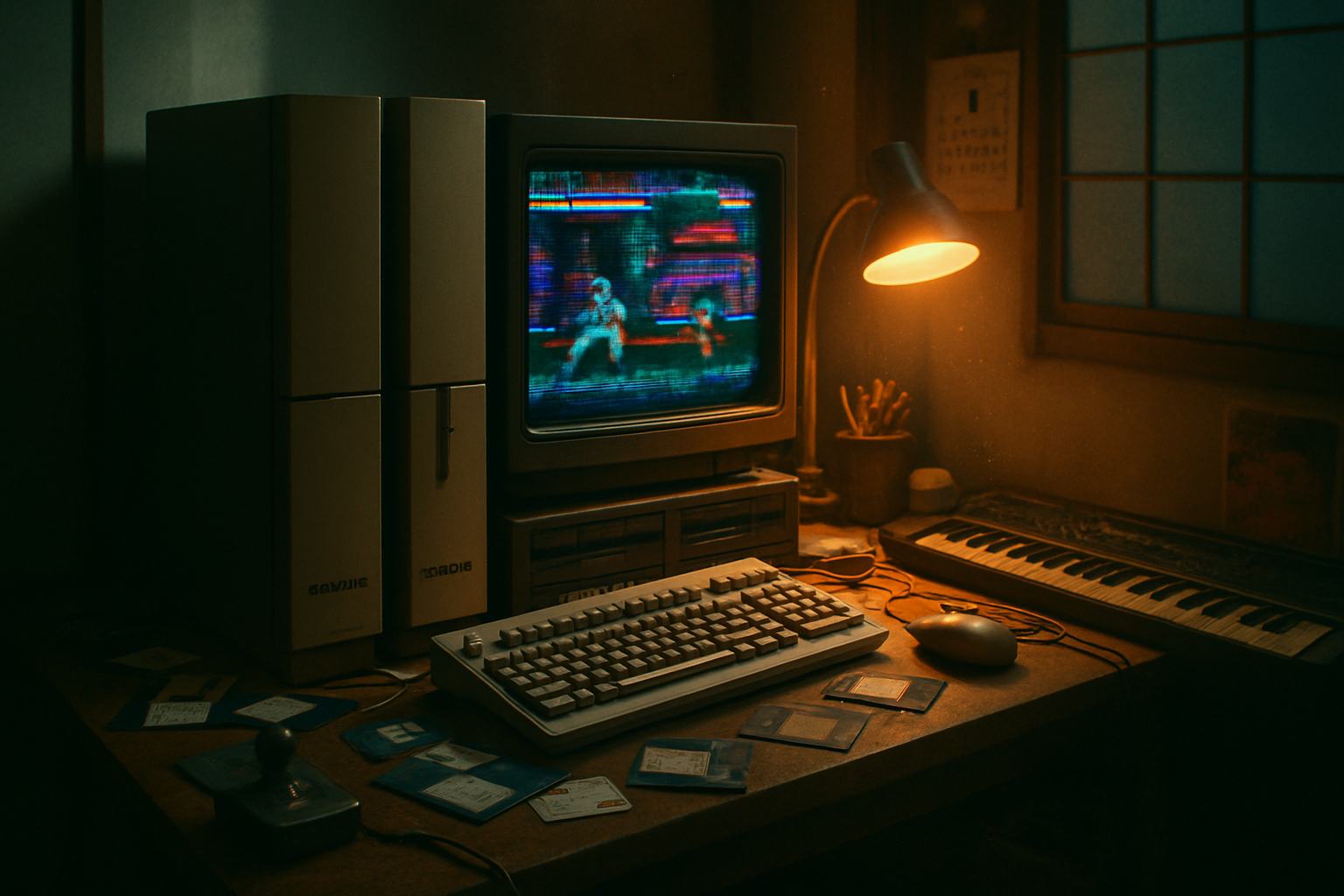
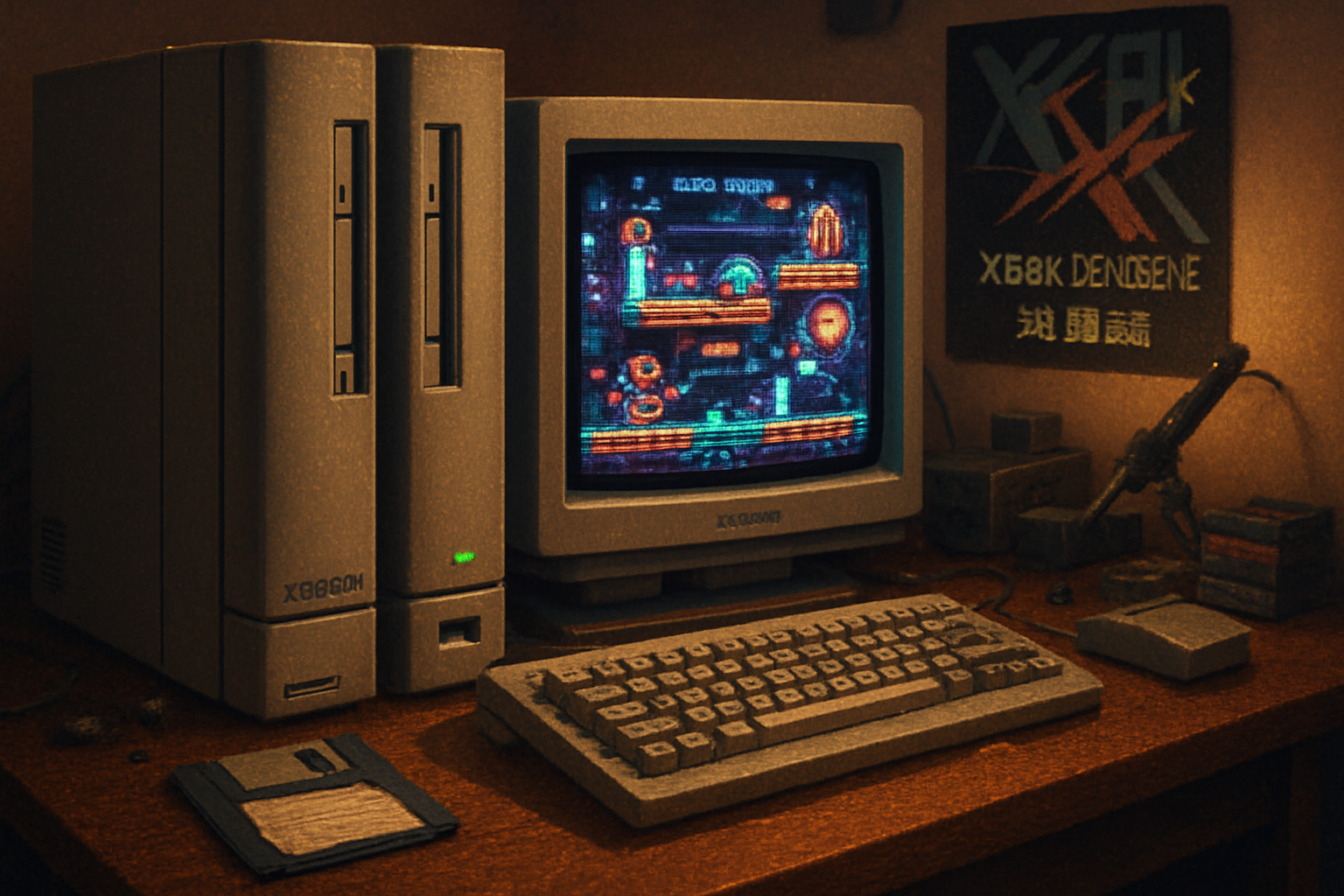
In the late 1980s, while the West argued about whether 16-bit meant better graphics or just bigger cartridges, a hulking beige machine in Japan quietly did what arcades promised but consoles rarely delivered: it ran arcade games exactly as they were meant to be run.
That machine was the Sharp X68000. It never left Japan and it never sat on anyone’s Christmas wishlist in Cleveland. But for developers, musicians, and obsessive porters inside Japan it was a laboratory - the place where arcade fidelity, unusual development tools, and a do-it-yourself culture met. The result: a string of conversions and experiments that quietly informed how developers thought about fidelity, tools, and iteration. And those ideas travelled, mutated, and re-emerged in modern game development in ways few people credit.
The hook: a home computer that said ‘make it arcade-perfect’
If consoles were family-friendly promises of fun, the X68000 was a stubborn, accurate mimic of the noisy, flashing arcade cabinet. Built around a Motorola 68000 CPU, equipped with powerful custom video hardware and capable sound chips, it was designed not as a toy but as an engineering answer to a simple, dangerous question: what if home hardware didn’t compromise?
The X68000 became famous in Japan for home conversions of arcade games that were - by contemporary standards - astonishingly faithful. Developers used it to reproduce timing, palette, and sound with a level of precision most consoles couldn’t approach. That fidelity wasn’t an aesthetic fetish; it was a practical asset. It taught a generation of developers that the ‘feel’ of a game could be preserved across platforms if you respected timing, input response, and audio-visual detail.
(For a technical overview and list of the X68000’s capabilities, see the Sharp X68000 entry on Wikipedia.) [https://en.wikipedia.org/wiki/Sharp_X68000]
Why the X68000 mattered - three technical and cultural levers
Arcade-accurate hardware parity
- The X68000’s architecture - a 68000-family CPU and strong custom graphics/sound subsystems - made it a natural match for the arcade boards of the era. That compatibility meant ports could be faithful, not facsimiles.
A developer-focused machine
- The X68000 environment was open and familiar to programmers. It was less a closed console and more a workstation with a floppy drive and a permissive ecosystem. That made it a favored platform for experimenting with new game engines, rendering tricks, and development tools.
A thriving local scene and culture
- Because it was Japan-only and relatively expensive, the X68000 created a concentrated community - hobbyists, demo-makers, and small studios who shared patches, tools, and tricks. That culture propagated ideas about iteration, tooling, and sound design that would outlive the hardware.
Notable outcomes: the kinds of games and ports the X68000 nurtured
Rather than being a factory for one hit, the X68000 was a workshop that produced three kinds of influential outputs:
Near-arcade-perfect ports
- Major arcade companies entrusted the X68000 with faithful home conversions. These conversions became reference points for how close home systems could come to arcade behavior when developers prioritized timing and input accuracy.
Experimental and niche originals
- Because the platform attracted skilled hobbyists, unusual PC-style or hybrid arcade/PC games found a home there. Those titles often experimented with control mapping, higher-resolution artwork, and soundtrack approaches that later informed console and PC design patterns.
A proving ground for tools and music composition
- The X68000’s sound hardware and MIDI-friendly environment let composers and audio engineers experiment with FM synthesis and sample playback in ways that would feed into later tracker and middleware practices.
All of this created a cross-pollination: arcade companies learned how to bring cabinet fidelity into the home, small teams learned rapid iteration and porting techniques, and composers learned studio-style workflows on a machine you could actually afford (if you lived in Japan and had spare yen).
Concrete echoes in modern development
The X68000’s influence is not a single straight line you can trace, like “this game copied that pixel.” It’s quieter and more insidious: it lives in practices and expectations.
Expectation of fidelity
- Today’s players expect rhythm and responsiveness to survive the jump between platforms. The X68000 taught developers to treat timing and frame fidelity as design elements, not optional nice-to-haves.
Tool-first development
- The X68000 era normalized building quick in-house tools, creating editors, map converters, and debug systems that accelerated iteration. That mindset is exactly what modern studios call ‘pipeline’ work.
Music and audio pipelines
- Composers who worked on FM chips and sample hardware on machines like the X68000 carried lessons about sequencing, looping, and sample economy into the tracker/middleware era - influences you can trace to the widespread adoption of software instruments and middleware like FMOD/Wwise.
Preservation and emulation culture
- Because the X68000 hosted both commercial conversions and hobbyist releases with niche audiences, it’s been central to preservationists’ arguments - if important work exists on a niche platform, it must be archived and emulated. The waves of emulation work and fan translation we see on so many retro platforms owes a debt to that ethic.
Why this matters beyond nostalgia
There’s a moral here, and it’s not sentimental. The X68000 reminds us that hardware choices shape what developers value. When you give creators precise timing, powerful sound tools, and a culture that prizes fidelity, they build habits: respect for input latency, insistence on audio detail, and a willingness to invent bespoke tooling.
Those habits don’t vanish when the machine does. They travel - in the CVs of developers, in the design documents of studios, in the open-source tools enthusiasts carry forward. Modern indie studios that obsess over ‘feel’ and sound designers who squeeze character out of limited samples are heirs of that moment.
Quick reading list and sources
- Sharp X68000 (general overview and technical specs) - Wikipedia: https://en.wikipedia.org/wiki/Sharp_X68000
(If you want a deeper, archival dive, look for contemporary Japanese magazines, Retro Gamer features, and preservation projects focused on Japanese personal computers from the late 1980s and early 1990s.)
Final thought - the X68000’s quiet arrogance
Consoles sold simplicity. Arcades sold spectacle. The X68000 sold a different promise: ‘don’t dumb down art because it’s for the home.’ That public stubbornness - the insistence that home releases could be the real thing - shaped an attitude among developers that survives today: build the game with honesty to its timing and sound, or don’t bother.
It’s a small lesson. But it’s why, when you play a perfectly tight 2D action game today - pixel-perfect hitboxes, crisp audio cues, zero floaty input - part of that discipline likely traces back to a noisy, beige, Japan-only computer that refused to compromise.