· retrotech · 6 min read
IBM PC AT vs. Modern PCs: A Battle of Generations
A spirited comparison between the 1984 IBM PC AT and today's PCs - measuring raw speed, everyday usability, repairability and the strange, stubborn romance of retro machines.

It was summer 1992 and my uncle-who still believed the internet was a fad-fired up an IBM PC AT in the garage with the kind of ceremony usually reserved for small engines. The beige box hummed, a drive clacked, and MS‑DOS sighed into being. A machine that cost a fortune in the 1980s now felt like a shrine: slow, stubborn, and defiantly useful in the very narrow ways it allowed itself to be.
That scene captures the paradox of comparing an IBM PC AT (1984) to a modern PC. On the one hand you have a piece of engineering that helped define the personal computing industry. On the other, you have machines that render high-resolution video, train neural networks, and fold proteins in hours rather than years. Both are computers. Both are stubborn in their own ways.
Quick primer: what the AT actually was
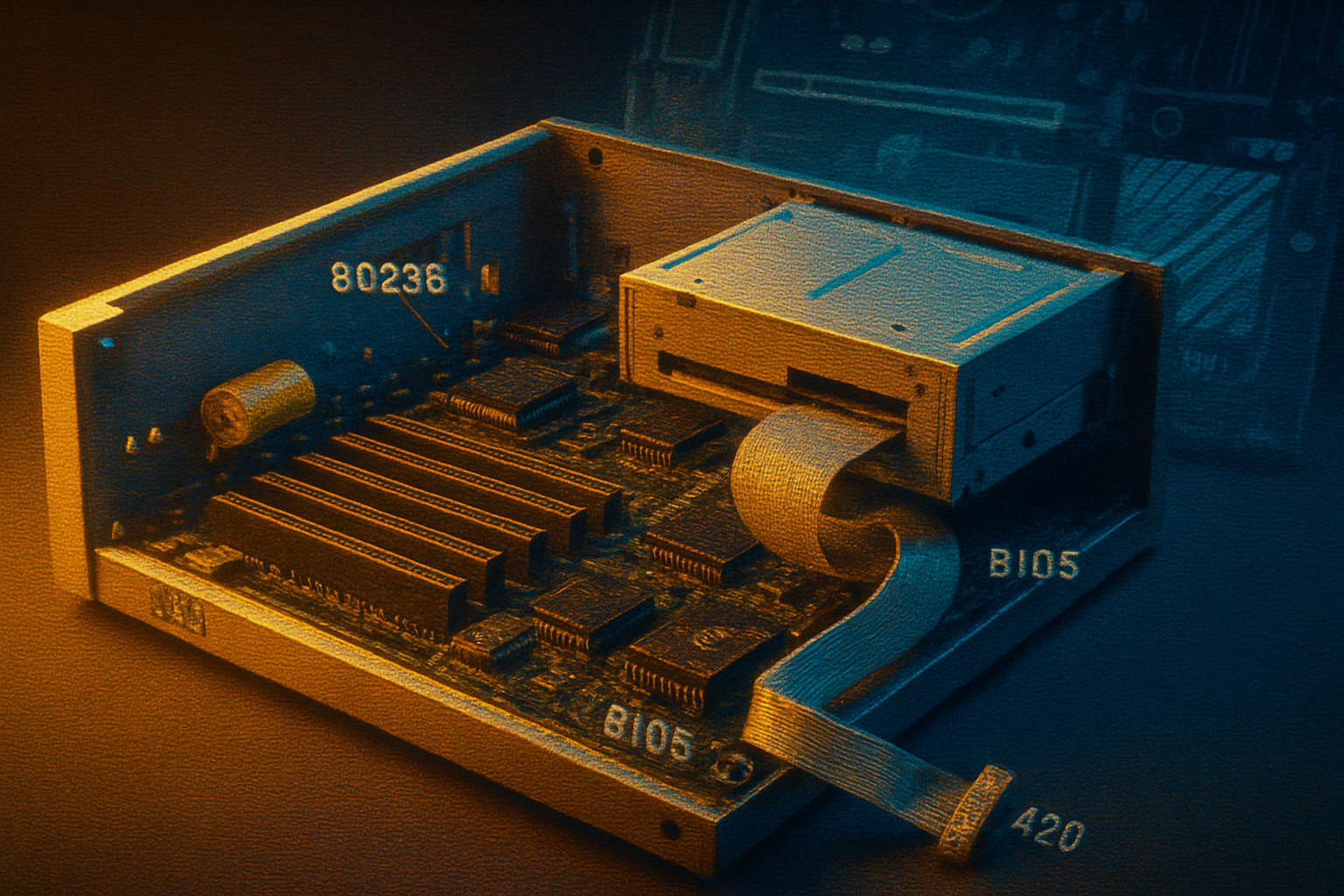
The IBM Personal Computer AT (Model 5170) introduced in 1984 used the Intel 80286 CPU (6 or 8 MHz), a 16‑bit ISA bus, support for 1.2 MB floppy drives, and common hard drives in the tens of megabytes. It popularized the “AT” form factor and pushed personal machines a step closer to business workloads.12
- CPU - Intel 80286 (6–8 MHz) - 16‑bit internal architecture, 24‑bit physical addressing (16 MB maximum memory)
- Storage - floppy drives (1.2 MB), hard drives typically measured in tens of megabytes
- Bus - 16‑bit ISA (the beginning of the legacy expansion era)
(If you want a deeper technical read, start with the IBM PC AT page or the 80286 entry.)12
Performance: times have changed, angrily
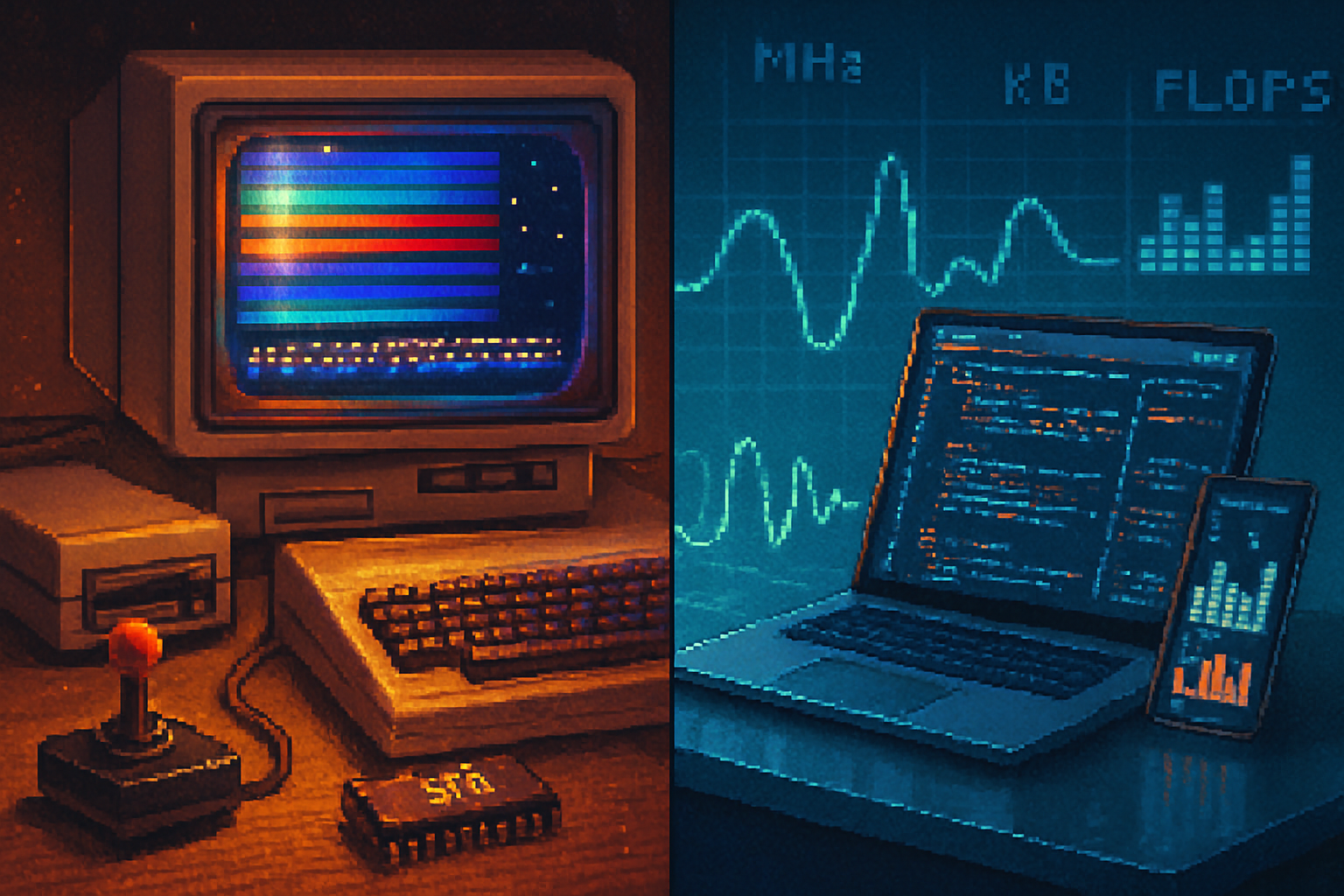
Put bluntly: the PC AT would feel like a typewriter with an attitude next to a modern PC. But let’s be specific.
- CPU - 6–8 MHz 80286 vs. multi‑GHz multi‑core 64‑bit CPUs. Single‑thread integer throughput on a modern CPU is thousands of times higher.
- Memory - AT addressing topped out at 16 MB; modern machines commonly have 8–64 GB (that’s 500–4,000× more).
- Storage I/O - 20–30 MB spinning disks vs NVMe SSDs with gigabytes per second throughput and microsecond latency - a difference measured in orders of magnitude.
- Graphics - CGA/EGA-era video vs GPUs capable of trillions of floating‑point operations per second.
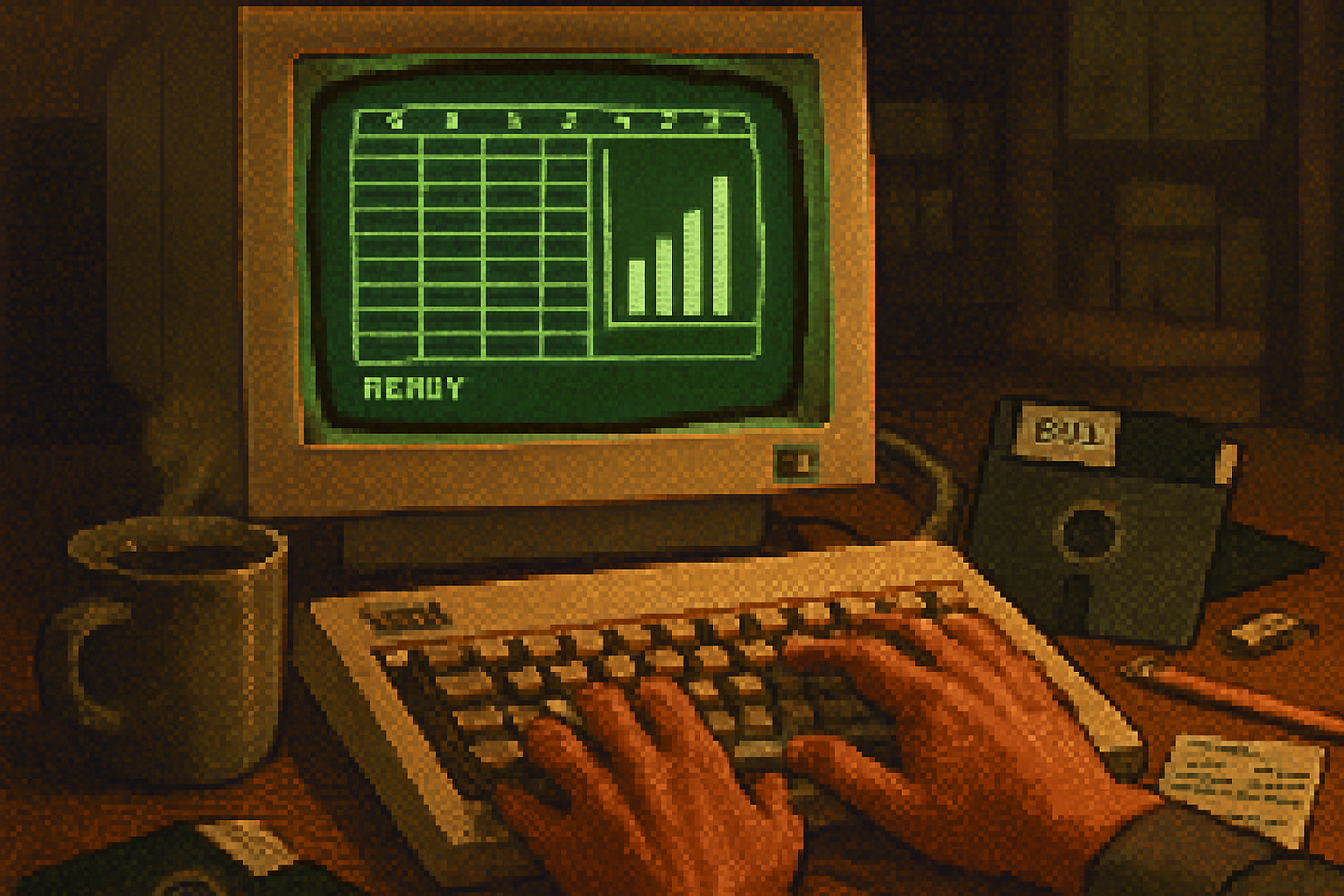
In real terms: tasks like web browsing, video playback, multitasking, or modern development environments are impossible on an AT without heavy mediation. You could run text editors, spreadsheets, and early databases; you cannot render 4K video, run modern browsers, or train machine learning models.
Usability: OS, UI, and the gentle tyranny of expectation
The PC AT lives in a world of MS‑DOS or early DOS extensions. Context switches were manual, drivers were hand‑tuned, and there was no concept of plug‑and‑play. Modern PCs are expected to be invisible servants:
- Boot times - Modern devices boot in seconds thanks to SSDs, optimized firmware (UEFI), and parallelized drivers. The AT takes minutes and will happily clack while it does.
- Networking - The AT predates ubiquitous Ethernet and Wi‑Fi. Modern machines ship with complex, secure networking stack and effortless internet access.
- Peripherals - USB, Bluetooth, and platform drivers make modern peripherals near‑instantaneous. The AT requires expansion cards, sometimes BIOS juggling, and often, prayer.
User experience is a landslide: for everyday productivity, multimedia, and web services, modern PCs are simply on a different continent.
Repairability and longevity: the romantic edge of retro
Here’s where the AT earns grudging admiration.
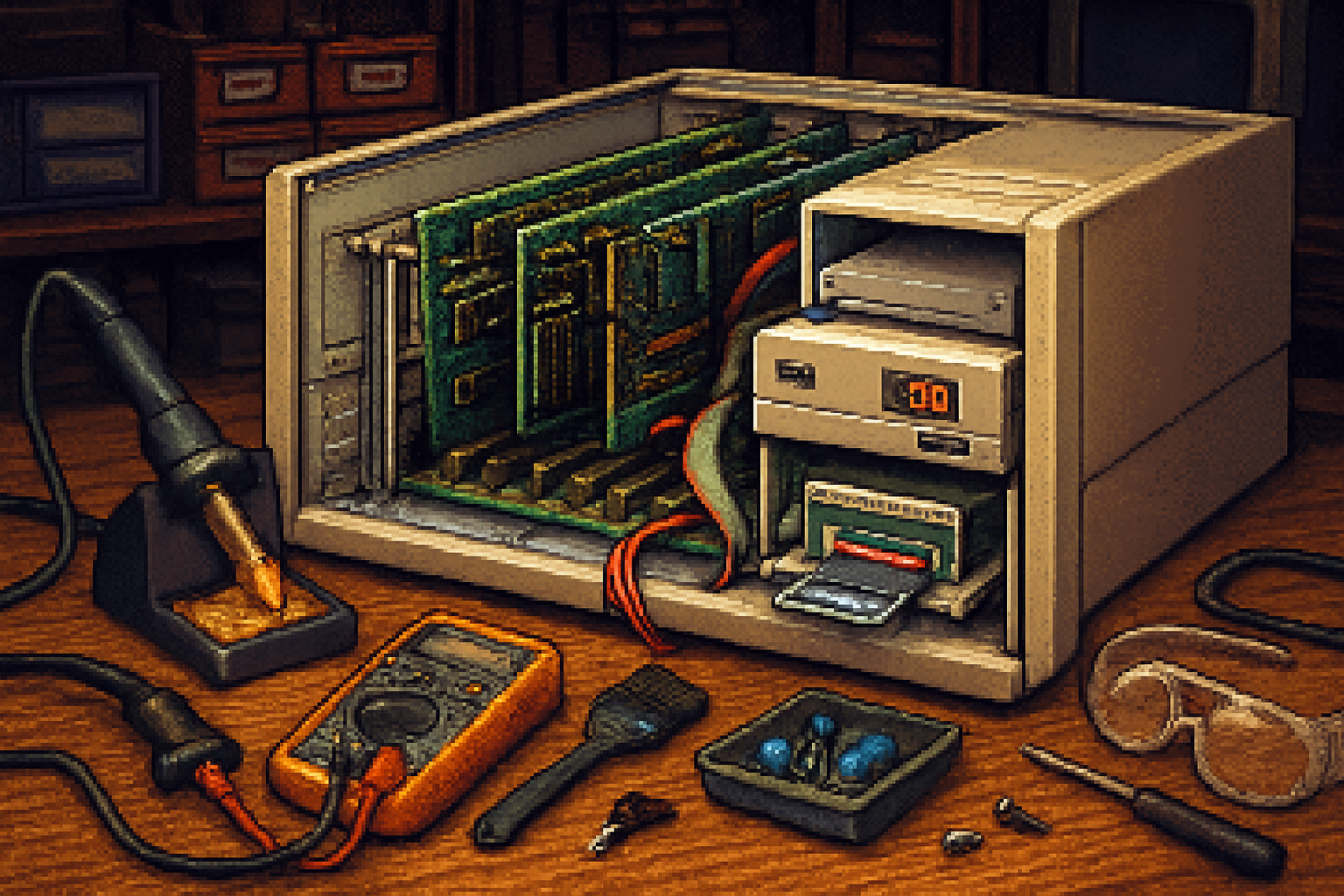
- Simplicity - Discrete chips, DIP components, and through‑hole parts make diagnosing faults more approachable. You can probe signals with a multimeter, swap cards, or replace capacitors without specialty tools.
- Determinism - No opaque firmware updates. What boots is what you installed. No telemetry. No silent background updates that quietly change behavior.
- Durability - Many AT components were overengineered by modern consumer standards; metal cases, simple power supplies, connectors that can be repaired.
But vintage hardware has its own fragility: aging capacitors, failing battery-backed CMOS, and scarce replacement parts. Repairability is real, but it’s also a hobbyist’s commitment.
Energy, environment, and economic reality
Modern CPUs are far more energy efficient per unit of work. A smartphone today performs orders of magnitude more computation per joule than an AT. Running a 1984 machine as a daily driver is inefficient and environmentally silly - except when you’re using it as a low‑power embedded controller or a display piece.
Economics are similar: acquiring an AT in working condition can be cheap (or pretentiously expensive in collector circles), but running one as a primary machine is a non‑starter for most people.
The romance of retro computing: why people keep ATs alive
This is the part where we get sentimental, and with good reason.
- Tactile feedback - mechanical switches, clacky keyboards, and the physicality of drives matter. There is pleasure in a machine that you can feel.
- Educational value - An AT is a perfect physical textbook for how the PC ecosystem assembled itself. Buses, IRQs, DMA channels - you can see and touch them.
- Authenticity - Running software on original hardware is a different experience than emulation. Games and early applications had timing tied to hardware; authenticity preserves that.
Retro computing is not nostalgia alone. It’s a form of resistance to disposable hardware culture and a hands‑on way to learn engineering fundamentals.
When an AT makes sense today (rare but real)
- Museum exhibits, education, and demonstrations of computing history.
- Running legacy industrial control systems where original hardware and software are certifiably required.
- Hobbyist projects, where the point is the experience, not efficiency.
When it absolutely doesn’t make sense
- Any modern productivity stack (cloud apps, video conferencing, modern IDEs).
- Casual web browsing, streaming, or online collaboration.
- Gaming beyond the era the AT was built for.
Verdict: who “wins”? The wrong question
If you measure by raw performance, compatibility, energy efficiency and general usefulness, modern PCs annihilate the IBM PC AT. That’s not even a contest - it’s fiat arithmetic. But the AT wasn’t designed to beat modern machines; it was designed to start a platform. It did that spectacularly.
If you measure by repairability, transparency, and educational value, the AT still teaches lessons that modern sealed systems obscure. There is something morally clarifying about a machine you can open, fix, and fully understand.
So call it a draw in cultural terms: modern PCs win every practical contest; the AT wins the argument about why personal computing matters as a craft, not merely a service. The AT is a museum piece that keeps telling engineers and tinkerers how the scaffolding of modern computing was put together. It lost the speed war generations ago, but it still wins at storytelling - and stories are a currency computers cannot measure.
Footnotes
IBM Personal Computer AT - https://en.wikipedia.org/wiki/IBM_Personal_Computer_AT ↩ ↩2
Intel 80286 - https://en.wikipedia.org/wiki/Intel_80286 ↩ ↩2