· retrotech · 7 min read
Forgotten Innovations: The Unseen Legacy of the TI-99/4A
The TI-99/4A looked like a beige toy. Under the lid it was quietly ambitious: a 16‑bit CPU, a discrete video co‑processor, ROM‑based GROMs and a speech module that made machines talk. This post traces the machine's lesser-known innovations and how they quietly shaped later hardware and the modern retro‑dev renaissance.
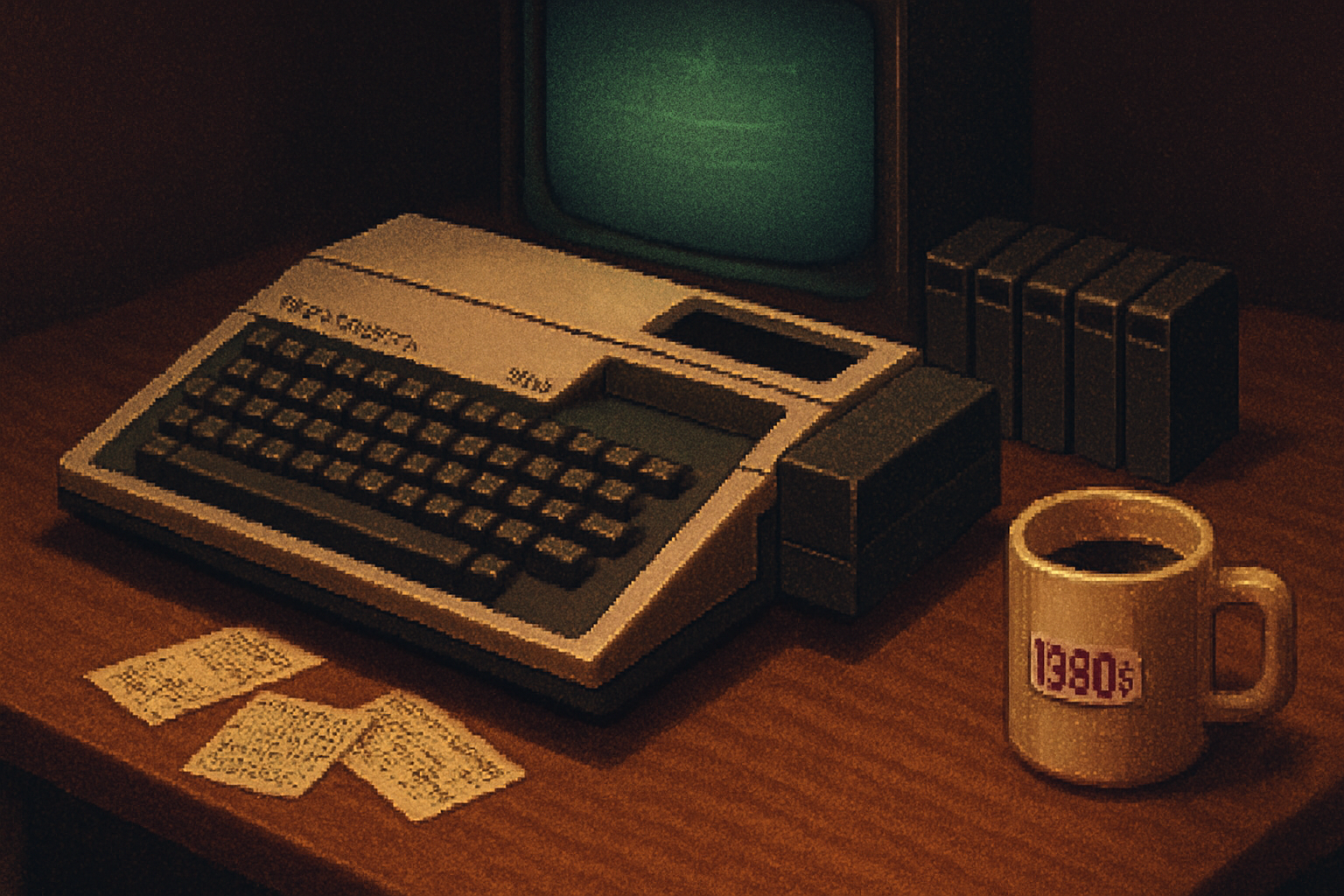
I remember the first time I heard a computer talk and thought it was a magic trick. It wasn’t a sleek AI demo - it was a clunky, charming, mechanical voice from a black plastic module clipped onto a beige box: the TI‑99/4A’s speech synthesizer. The sound was thin, jagged, and somehow, unforgettable. By the time most people spotted the 4A on store shelves they saw only price wars and plastic keyboards. Few noticed the hardware peculiarities underneath, the engineering choices that would quietly echo through the next three decades of computing.
The story you weren’t told: a 16‑bit brain in an 8‑bit world
The headline fact is almost a joke: the TI‑99/4A was marketed as a home computer with a 16‑bit CPU - the TMS9900 - at a time when most contemporaries used 8‑bit processors. That fact alone should have made it the flagship of a new generation. It didn’t. Why? Because the system’s designers let the video chip act as a gatekeeper between CPU and memory. The TMS9900 had to speak to video RAM through an 8‑bit bottleneck, blunting the advantage of a 16‑bit instruction set.
That paradox - advanced internal capability defeated by a narrow external channel - is a lesson engineers keep forgetting. It’s a reminder that raw specs mean little without system harmony.
- See the machine overview on Wikipedia for the headline specs: TI‑99/4A.
The invisible co‑processor: the TMS9918 VDP and the birth of the video subsystem idea
Where the 4A really showed imagination was in its video design. The system offloaded graphics to a dedicated Video Display Processor (TMS9918 family), giving the machine capabilities - sprites, hardware scrolling, tile maps - that felt far ahead for the home market. This approach laid groundwork that later videogame consoles and home micros reused: put the graphics work into silicon designed for that purpose, and free the CPU for logic.
The lineage is literal: the same VDP family turned up in MSX machines and consoles like ColecoVision. Offloading graphics wasn’t a novel idea, but the TI’s particular combination of VDP and separate video RAM became one of the clearer early examples of co‑processor thinking in consumer gear. Read more about the VDP family here: TMS9918.
GROMs, cartridges, and the semantics of permanence
The TI used an oddball memory architecture: aside from the CPU ROM and RAM, much of its software lived in GROM (Graphics ROM) chips - banks of ROM with their own addressing scheme and access semantics. Cartridges plugged into the system and could expose routines that felt more like firmware than file‑based software.
That cartridge/ROM mindset anticipated several future realities:
- Instant boot and protected code - a precursor to embedded firmware where the software is inseparable from the hardware.
- Banked memory ideas that show up in consoles and later handhelds where ROM is paged to work around address space limits.
It was a practicality then - and for modern retro‑devs it remains a creative affordance. GROMs forced programmers to think like firmware authors, not file writers.
Speak, and maybe they will listen: add‑on speech synthesis
The TI speech synthesizer module turned heads. It used dedicated hardware (the same family of speech chips used elsewhere) to render phonemes into a robotic human voice. The public loved the novelty - kids and marketers loved it more than reviewers - but the deeper legacy is that TI normalized plug‑in modularity for peripheral ideas that once would have required a full chassis redesign.
Speech on a consumer machine in the early 1980s didn’t just sell toys. It seeded the notion that functionality could be an optional hardware module - an idea that lives on in modular embedded platforms and accessory ecosystems.
(Technical detail: the speech functionality built on contemporary TI speech codecs; see the speech chip family: TMS5220.)
The expansion bay and the illusion of infinite upgradeability
The TI‑99/4A had an expansion port that invited third‑party hardware: disk controllers, RS‑232 interfaces, memory expansions and more. TI’s peripheral expansion box could add floppy drives and real storage to a machine that otherwise would have drifted into cassette limbo.
What’s often forgotten is how this expectation of modular add‑ons anticipated modern device ecosystems: the idea that a baseline product is a platform, not a finished appliance.
How the 4A’s failures became seeds
If you judge influence by market share, the TI‑99/4A was a footnote. But influence is not only market domination - it is the set of ideas that survive and reappear.
Concrete echoes:
- The use of a dedicated VDP family carried into consoles and home computers (MSX, ColecoVision).
- Cartridge and ROM‑centric distribution foreshadowed console and embedded patterns.
- Modular peripherals and speech synthesis nudged the industry toward accessory ecosystems.
- The 16‑bit CPU in a home machine anticipated the inexorable push beyond 8‑bit limits.
In short: the 4A doesn’t look like a founder. It behaves like one.
Resurrection: how a cult of hardware fetishists turned memory into motion
You can judge a machine by its sales or by the stubbornness of its fans. The TI‑99/4A community chose the latter.
- Emulators like Classic99 let software and obscure hardware modules live on in modern OSes: Classic99 emulator.
- The Myarc Geneve 9640 (a third‑party upgrade board) became famous for turning the 4A into a Swiss‑army knife of expanded memory, faster CPU clocks and modern interfaces - a testament to how a clever expansion can re‑imagine an architecture: Geneve 9640.
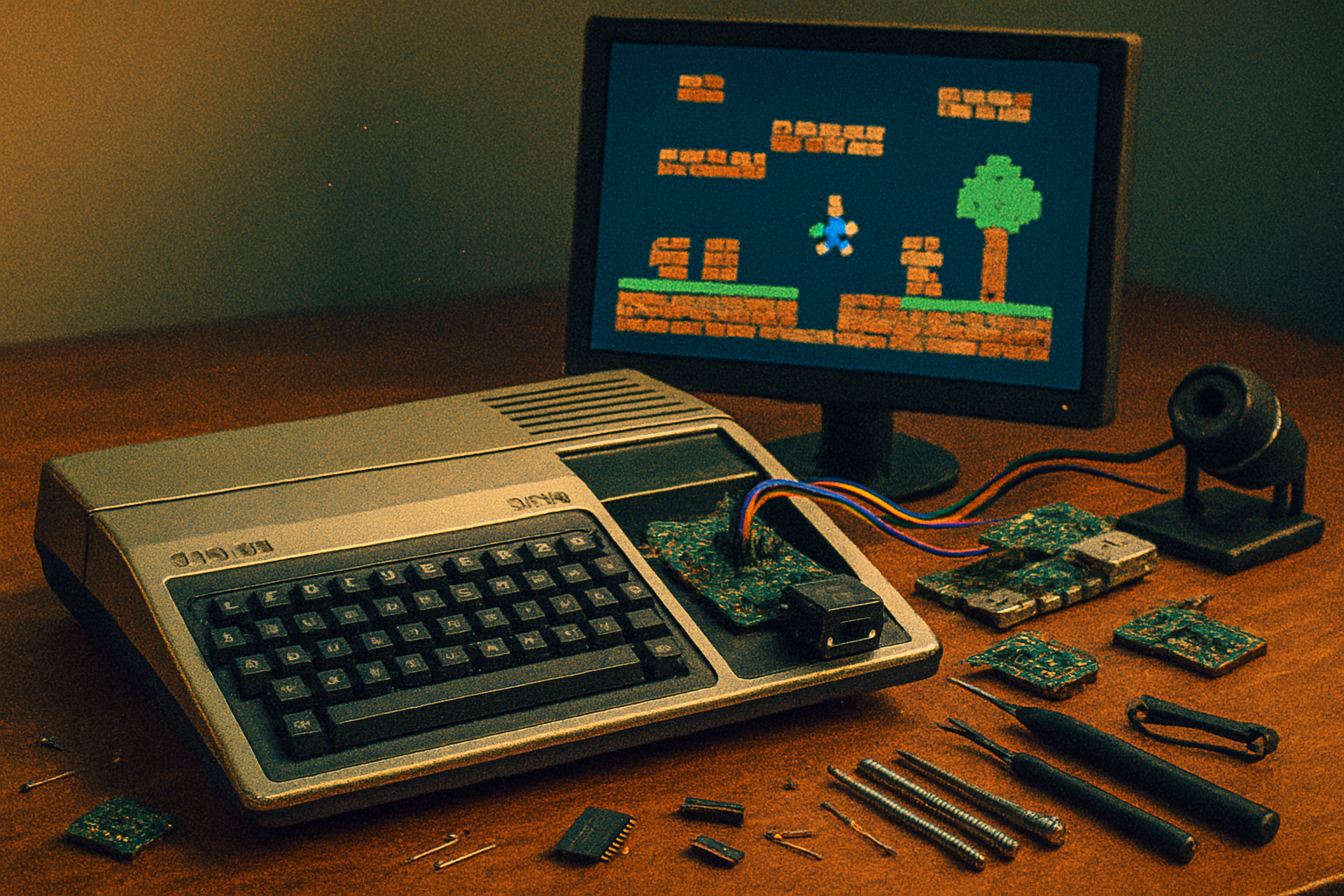
- Hobbyists produce CF/SD disk emulators, modern keyboard interfaces, and even FPGA recreations of video processors. These projects reveal the machine as a playground - limited hardware invites cleverness.
What transforms nostalgia into innovation is not affection for the beige box but the willingness to ask: what would this machine do if its constraints were suddenly lifted?
Hacks and stories worth telling
Here are a few representative community achievements that show the 4A’s continued relevance:
- Replacing slow tape and floppy workflows with solid‑state storage via disk emulators.
- Reimplementing VDP behavior on FPGA boards to support higher resolutions and refresh features in old software.
- Writing cross‑platform development tools that compile modern code into cartridge images or ROMs - turning the 4A into a target for contemporary toolchains.
These are not museum pieces. They’re experiments in what low‑resource computation can still teach us about efficiency and clever engineering.
Design lessons the modern engineer should steal
If you work in hardware or systems design, the 4A offers a small book of bitter, useful parables:
- Never let your bus strangle your CPU. A fast brain with a slow throat is wasted.
- Modular peripherals extend product life and invite communities of practice (and revenue models you didn’t budget for).
- Commoditizing co‑processors (graphics, sound, speech) accelerates ecosystem development - and creates clear upgrade paths.
- Constraints force creativity. Locked ROMs and tiny memories are not failures; they’re laboratories.
The moral: the visible market tells one story; the design DNA tells another
When TI folded its consumer computer line in the mid‑1980s, pundits scribbled obituaries. But design choices - some clever, others flawed - radiated outward. The blueprints of co‑processing, cartridge firmware, and modular add‑ons filtered into later consoles, embedded systems and the hacker ethos. Today, when you buy an FPGA board, slap an SD card into a retro‑adapter or hear a robot voice emulated on your laptop, you’re interacting with descendants of the thinking that went into a beige machine that few modern pundits remember kindly.
Software lives on disks; ideas live on in people. The TI‑99/4A’s visible life was short and stormy. Its invisible life - the engineering riffs it offered to future builders - is long and quietly ferocious.
Further reading and resources
- General overview: TI‑99/4A - Wikipedia
- CPU background: TMS9900 - Wikipedia
- VDP background: TMS9918 - Wikipedia
- Speech codec used in many early modules: TMS5220 - Wikipedia
- Community upgrade: Geneve 9640 - Wikipedia
- A modern emulator to try your own software: Classic99 emulator
If you keep one thought from the 4A, let it be this: the market measures success in sales; engineers measure it in leverage. The TI‑99/4A may have bombed in the marketplace, but some of its quiet choices - and the people who loved to squeeze them - pushed ideas forward. That’s a different kind of success, and a far more interesting legacy.