· retrotech · 8 min read
Top 10 Retro Tech Items You Can Still Find on eBay: A Journey Through Time
A curated tour of ten iconic retro tech items you can still find on eBay today - with pricing trends, condition ratings, buyer stories, and pragmatic tips for hunting down genuine treasures without getting scammed.
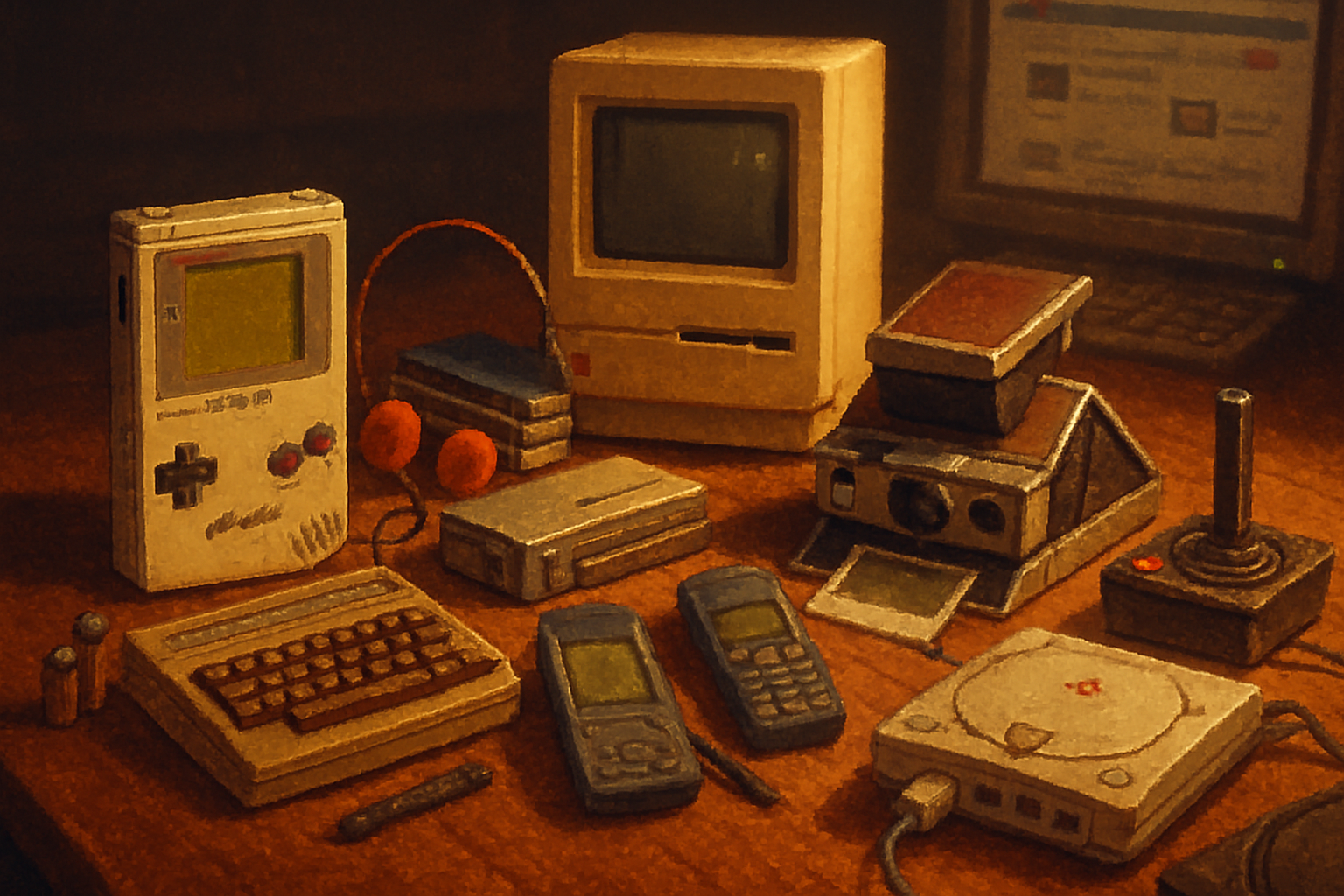
I was in a damp garage in November when I bought a Game Boy for twelve dollars and a handful of dried-out AA batteries. It blinked to life on the first press of the power button and played Tetris as if nothing in the world had changed. For ten minutes I forgot about my phone, my email, the things that chase us in modern life. That is the alchemy of retro tech: it’s not just a gadget, it’s a memory you can plug in.
Why this list matters: because eBay is still the modern-day bazaar for old electronics - equal parts archaeological dig and flea-market theater. You can find pristine, boxed artifacts; hacked, lovable Franken-gadgets; or obviously dead things sold “for parts.” This guide helps you tell them apart, understand the pricing winds, and buy with the confidence of someone who knows the smell of old plastic and the right questions to ask.
How to read this list
Each entry includes:
- A snapshot (what it is and why it matters)
- Pricing trends on eBay (general ranges and direction, as of mid-2024)
- Typical condition categories and what to expect
- A real-feeling buyer story to illustrate the experience
- Quick buying tips
Condition shorthand I’ll use:
- Mint/CIB - Complete in box, rarely found, commands a premium
- Excellent/Working - Fully functional, clean cosmetic condition
- Fair/Functional - Works but shows wear or needs minor repairs
- For parts/Not working - Useful only for parts or restoration
(For more on eBay’s official condition categories, see eBay’s seller guide.)
1) Nintendo Game Boy (DMG-01)
Why it matters: The original handheld that made portable gaming possible for a generation. Its gray shell is the smell of childhood.
Pricing trends
- Mint/CIB - $300–$800 depending on box and manuals
- Excellent/Working - $50–$150
- For parts - $15–$40
Trend: Prices have been slowly climbing for boxed units and rare color variants. Loose but working units remain affordable.
Condition notes: Check for dead pixels, screen ghosting, and battery contact corrosion. Replacements and mods (backlights) are common - ask if it’s original or modified.
Buyer story: A buyer in Ohio snagged a yellowed-but-working unit for $35, paid for a screen refurb and a new lens, and ended up with a Game Boy that looks better than one he owned in 1991.
Buying tips
- Ask for a photo of the unit powered on with a clear game screen.
- Be wary of sellers who mislabel backlit mods as “original”.
References: Nintendo Game Boy on Wikipedia.
2) Sony Walkman (TPS-L2 and early models)
Why it matters: The Walkman turned music into a private, portable ritual and defined an era’s cool.
Pricing trends
- TPS-L2 (first model) Mint/CIB - $1,000–$3,000
- Common models (WM-EX, WM-FS) Working - $40–$300
- For parts - $20–$60
Trend: Early TPS-L2 units are fetching collector money; mid-80s models are stable and sought by audiophiles when serviced.
Condition notes: Belt wear, oxide buildup on contacts, and sticky buttons are common. Capstan motor health matters for cassette transport speed.
Buyer story: A reader paid $120 for a cleaned, serviced Walkman and described the experience as “hearing mixtapes like they were live performances again.”
Buying tips
- Ask whether belts and pinch rollers were replaced.
- Request audio sample or video of the cassette playing.
References: Sony Walkman on Wikipedia.
3) Polaroid SX-70 (folding instant camera)
Why it matters: A design icon and the machine that made instant photography an art form.
Pricing trends
- Mint/CIB - $400–$1,200
- Excellent/Working - $150–$400
- For parts - $40–$120
Trend: Popular among artists and hipster-photographers; film scarcity can push prices of functioning cameras up.
Condition notes: Light seals, film ejection rollers, and leaf shutter mechanisms are the usual failure points.
Buyer story: A Brooklyn artist bought an SX-70 for $200 and sold the first Polaroids she shot at a weekend market for $25 each - the camera paid for itself.
Buying tips
- Ensure seller confirms viewfinder focus and that the film door mechanism works.
- Check availability of compatible film (see Polaroid Originals/Land camera film suppliers).
References: Polaroid SX-70 on Wikipedia.
4) Apple Macintosh Classic / SE series
Why it matters: These machines shaped the personal computing aesthetic and the myth of the Mac.
Pricing trends
- Complete systems (with monitor) - $150–$600
- Bare motherboards or parts - $20–$150
Trend: Collectors prize working models with original CRTs; prices tick up when a machine is externally pristine and includes software disks.
Condition notes: CRT failure, leaking capacitors, and dead backup batteries are common. Power supplies can smoke if neglected.
Buyer story: A vintage-computing hobbyist in Vermont bought an SE/30 for $275, replaced capacitors and a hard-to-find ribbon cable, then used it to run a classic desktop publishing program - nostalgia therapy.
Buying tips
- Ask if it powers on and boots to the system disk.
- Request photos of the capacitors and internal board if possible.
References: Macintosh Classic on Wikipedia.
5) Commodore 64
Why it matters: The best-selling single computer model of its era and the gateway to home programming for millions.
Pricing trends
- Mint/CIB - $400–$1,200
- Working unit (tested) - $80–$250
- For parts - $20–$80
Trend: Stable collector market; boxed units and rare variants (C64C in certain colors) are rising slightly.
Condition notes: Keyboard foam/fiberglass corrosion, bad RAM chips, and cartridge port issues.
Buyer story: An amateur dev bought a C64 for $100, got it to run classic demos, and posted videos that resurrected a niche online fanbase.
Buying tips
- Ask if it outputs video and audio cleanly.
- Look for pictures with a test program or demo running.
References: Commodore 64 on Wikipedia.
6) Atari 2600
Why it matters: The archetype of the home video game console and an icon of early gaming culture.
Pricing trends
- Boxed/Complete - $300–$2,000 (rare boxed sets)
- Working unit - $60–$250
- For parts - $20–$60
Trend: Core model prices are steady; boxed rarities can spike when a celebrity seller lists them.
Condition notes: Joystick wear, cartridge connector oxidation, and RF modulator failure.
Buyer story: A small-town teacher bought an Atari 2600 for $80, brought it to class, and the kids were mesmerized by the clunky simplicity of the games.
Buying tips
- Request photos of cartridge connector and a screenshot of a game running (or a video).
- Beware sellers who misrepresent non-working units as “vintage charm.”
References: Atari 2600 on Wikipedia.
7) Nokia 3310 (classic)
Why it matters: Indestructible phones and the source of many SMS-era memories.
Pricing trends
- Mint/CIB - $80–$250
- Working unit - $20–$70
- For parts - $10–$30
Trend: Nostalgia sales spike when manufacturers release modern reboots; original units are stable and affordable.
Condition notes: Battery caps, SIM trays, and keypad wear are typical issues.
Buyer story: A commuter bought a 3310 for $45 and kept it as a ‘weekend phone’ - reliable battery life and enough distance from notifications to feel liberating.
Buying tips
- Ask whether the phone can accept a modern SIM or needs an adapter.
- Check if the seller includes the battery (older batteries may be dead).
References: Nokia 3310 on Wikipedia.
8) PalmPilot / Palm III
Why it matters: The ancestor of modern mobile productivity - calendars, memos, and stylus-based interaction.
Pricing trends
- Excellent/Working - $40–$150
- For parts - $10–$40
Trend: Modest collector interest; demand rises among niche productivity enthusiasts and developers curious about early mobile UX.
Condition notes: Dead batteries, corrosion in battery compartment, and cracked screens.
Buyer story: A designer bought a PalmPilot for $60 and used it as inspiration for a retro UI side project that gained traction online.
Buying tips
- Request a photo of the unit showing the date/time and an app open.
- Expect to replace rechargeable batteries (Nickel-Metal Hydride cells were used in some models).
References: PalmPilot on Wikipedia.
9) Sega Dreamcast
Why it matters: A cult darling with early online console features and a strangely resilient fanbase.
Pricing trends
- Complete boxed systems - $200–$500
- Working loose consoles - $50–$150
- Controllers and VMUs vary widely
Trend: Prices spiked briefly when indie developers released Dreamcast-compatible indie titles; interest remains steady.
Condition notes: Laser lens wear, dead capacitors, and sticky disc trays.
Buyer story: A collector bought a Dreamcast with an odd library of import games for $120 and fell into an evening-long rabbit hole of late-90s arcade ports.
Buying tips
- Ask whether the seller has tested the GD-ROM drive.
- Request photos of the VMU screen and controller ports.
References: Sega Dreamcast on Wikipedia.
10) Technics SL-1200 (Direct-drive turntable)
Why it matters: The turntable that DJs and audiophiles swear by. It’s both tool and talisman.
Pricing trends
- Refurbished/Serviced units - $350–$900
- For parts - $80–$300
Trend: Demand among DJs and home audiophiles keeps prices buoyant; serviced units hold value best.
Condition notes: Pitch control, platter bearings, and tonearm health are key. Motors can be rebuilt.
Buyer story: A DJ turned a $400 eBay buy into a daily-mix workhorse after a professional service; the sound and torque were worth every cent.
Buying tips
- Prefer listings that state service history or recent belt/motor work.
- Ask for a video of the platter spinning at different pitches.
References: Technics SL-1200 on Wikipedia.
Practical checklist before you click “Buy”
- Photos - Demand clear photos from multiple angles, inside and out.
- Power on evidence - A photo or video of the device powered on and running a known program is invaluable.
- Shipping and returns - Vintage electronics break in transit. Prefer sellers with returns or decent packaging notes.
- Seller feedback - Not just the percentage - read recent comments for any pattern of misrepresentation.
- Ask specific questions - Has it been serviced? Are there replacement parts? Is any functionality disabled?
Final thoughts: buying with empathy (and a little ruthlessness)
Retro tech is a mirror. Sometimes you buy it to relive an old joy. Sometimes you buy it to fix something broken because you like the work. Sometimes you buy it as an investment. In every case: be skeptical, be curious, and be kind to sellers who are clearly enthusiasts rather than kleptomaniacal profiteers.
eBay remains the best practical marketplace for these objects because of its breadth - but that breadth includes tricks: mislabeling, optimistic descriptions, and the occasional time capsule that needs a tender restorative touch. Bring your questions. Bring patience. And when a machine powers on in your hands and the screen glows, remember why you started looking at these things in the first place.
Further reading and sources
- eBay condition categories and seller guide: https://www.ebay.com/help/selling/setting-price-items/listing-items/description-condition-10-categories?id=4146
- Game Boy - https://en.wikipedia.org/wiki/Game_Boy
- Walkman - https://en.wikipedia.org/wiki/Walkman
- Polaroid SX-70 - https://en.wikipedia.org/wiki/Polaroid_SX-70
- Macintosh Classic - https://en.wikipedia.org/wiki/Macintosh_Classic
- Commodore 64 - https://en.wikipedia.org/wiki/Commodore_64
- Atari 2600 - https://en.wikipedia.org/wiki/Atari_2600
- Nokia 3310 - https://en.wikipedia.org/wiki/Nokia_3310
- PalmPilot - https://en.wikipedia.org/wiki/PalmPilot
- Dreamcast - https://en.wikipedia.org/wiki/Dreamcast
- Technics SL-1200 - https://en.wikipedia.org/wiki/Technics_SL-1200