· retrotech · 7 min read
Retro Tech Fashion: How Vintage Gadgets Shape Today's Style Trends
From cassette-tape necklaces to Game Boy-inspired streetwear, vintage gadgets aren't just museum pieces - they're active ingredients in contemporary style. This article traces how retro technology became fashion shorthand, why it resonates psychologically, and how brands and consumers turn nostalgia into profit, identity, and oddly sincere aesthetics.

It started with a girl at a coffee shop wearing a necklace made from a real cassette tape. She wasn’t being ironic in the way people are ironic at coffee shops; she was proud, like someone wearing a talisman. Passersby took pictures. A few weeks later a luxury brand released a runway bag patterned with cassette graphics and editors nodding sagely called it “a revival.”
That moment-cheap plastic meeting couture-captures the odd, irresistible alchemy of retro tech fashion. Old gadgets, once obsolete, are now shorthand: for authenticity, for playfulness, for a particular kind of curated memory. They’re charismatic relics that insist you remember when things felt simpler, clunkier, and somehow cooler.
Why vintage gadgets matter in fashion
Think of gadgets like cultural fossils. They carry an era’s look, sound, and social habits in a handful of plastic and metal. Fashion loves fossils because they tell a story without words. Pulling a cassette pendant over a silk blouse is shorthand: you like music sincerely, perhaps you reject streaming’s ephemeral algorithmic taste, or you simply enjoy the aesthetics of neon labels and chunky plastic.
There are three big reasons retro tech keeps resurfacing in wardrobes and window displays:
- Nostalgia as emotional shorthand. Nostalgia is not just sentimentality; it’s a psychological tool that comforts and connects us across generations. The Atlantic explains how nostalgia functions as both personal memory and social glue. The Atlantic on nostalgia.
- Tactile pleasure and analog authenticity. Analog artifacts promise touch - clicking a cassette, peeling a Polaroid strip, the heft of a chunky flip phone. In a world of glass screens, that physical friction feels honest.
- Visual distinctiveness. Retro tech comes with instantly recognizable silhouettes-cassettes, Game Boys, VHS boxes-that translate effortlessly into repeatable motifs for prints, jewelry, and embroidery.
Familiar faces: the gadgets showing up in fashion
Here are the recurring motifs and why they work:
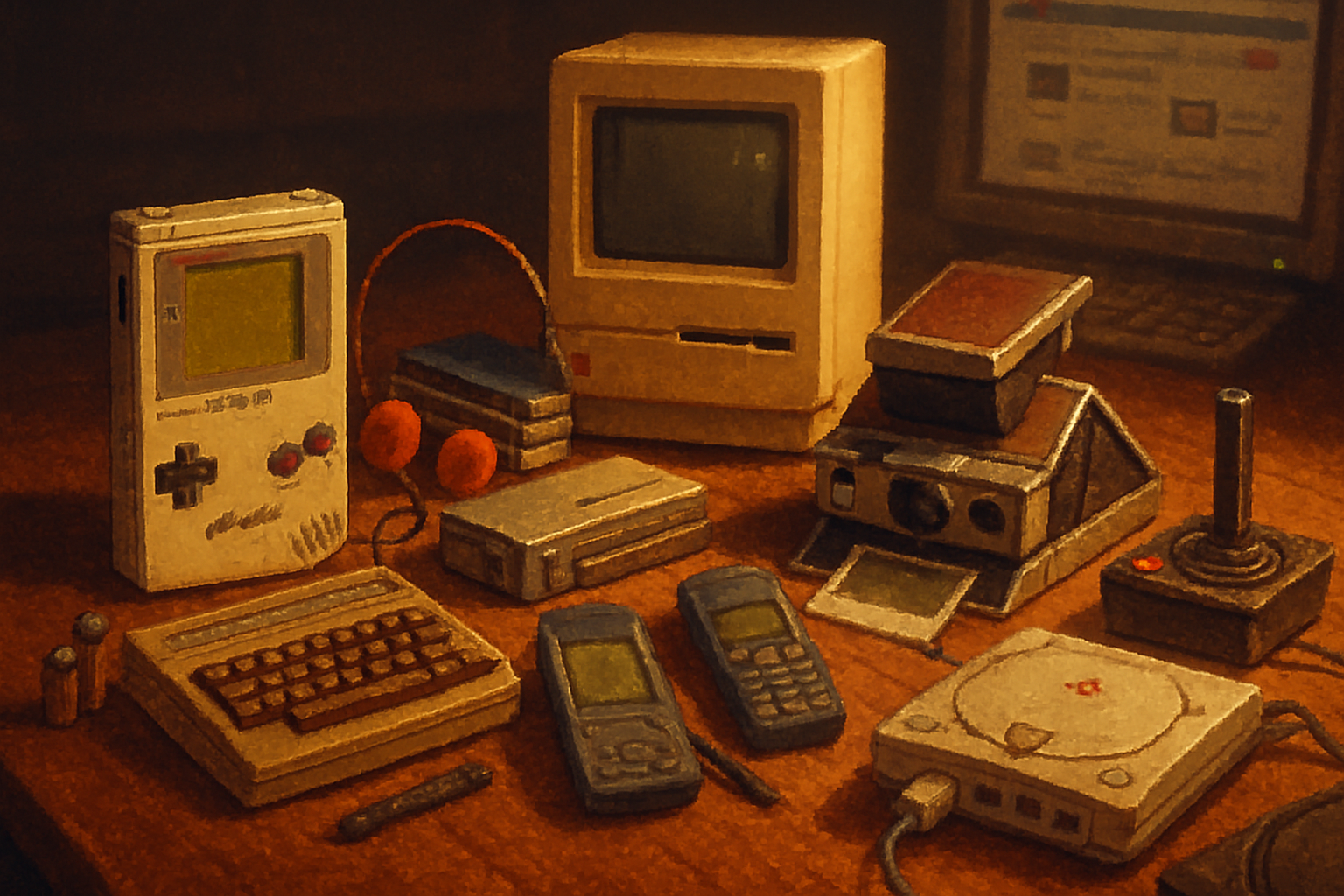
Cassette tapes - Tiny rectangles that read as both musical seriousness and thrift-store chic. Designers and streetwear labels have turned cassette motifs into jewelry, bag prints, and runway jewelry. There’s also a small but loud market for DIY cassette accessories on platforms like Etsy.
Polaroid and instant cameras - The aesthetic of a square white border is now a symbol of candidness and authenticity. The tactile joy of instant film helped revive interest in analog photography. Companies and communities around instant film have played a big role in keeping the look alive.
Arcade and 8-bit graphics - Video-game iconography-pixelated hearts, joysticks, and sprites-has migrated into high fashion and streetwear alike. The 8-bit look reads as both retro and modern: minimal, geometric, and easy to remix.
Flip phones and early cellphones - The chunky silhouettes of early mobile phones (we’re looking at you, Nokia 3310) have been stylized into phone-shaped clutches, belt-bags, and prints.
VHS and CRT motifs - The fuzzy, tracking-line aesthetic of old video signals shows up in prints and color grading for fashion campaigns that want to look gloriously imperfect.
If you want a compact read on revival cycles more broadly, Vogue’s reporting on the Y2K resurgence shows how these visual cues come back into fashion with surprising force. Vogue on Y2K fashion.
How designers and brands use retro tech
There are three common playbooks brands use when they bring retro tech into fashion:
Literal reuse. Actual gadgets are repurposed into jewelry, bag hardware, pins, and upcycled garments. This is the most literal and sometimes the most compelling route because the object keeps its history.
Graphic appropriation. Designers print cassette tapes or pixel art onto silk or knitwear. It’s safer and scalable - a cassette pattern is easier to sell at scale than a bag made from an actual cassette.
Collaboration and licensing. Brands partner with legacy tech companies-think vintage gaming companies or camera makers-to make co-branded drops that lean into both authenticity and IP nostalgia.
Streetwear and luxury converge here. Streetwear borrows instantly recognisable gadget iconography for kitsch and joy; luxury brands borrow the same motifs to add irony and cultural capital. Both are selling identity. Both are profiting from memory.
The consumer mechanics: why people buy retro-tech looks
This isn’t just about liking old things. There are measurable economic and behavioral forces:
- Nostalgia sells. Marketers have known this for years - emotional connections lead to stronger purchase intent and willingness to pay.
- Scarcity and drops. Limited runs of retro-inspired pieces feel like artifacts-rare, collectible, and social-media-ready. Scarcity transforms nostalgia into status.
- Resale and circular markets. Vintage gadgets and retro clothing propagate through resale platforms. The secondary market turns random old tech into sought-after commodities.
- Sustainability theater (sometimes). Repurposing old gadgets or using vintage visuals allows brands to hint at sustainability and craft. Sometimes that’s earnest. Sometimes it’s just good PR.
Statista’s data on the resurgence of analog formats (like vinyl) demonstrates that people are willing to spend real money on physical media and experiences in a digital age. Statista on vinyl and analog trends.
Cultural currents: why now?
Fashion doesn’t revive old things randomly. Context matters:
- Generational cycles. Younger consumers-Gen Z in particular-adopt retro tech symbols as an aesthetic and an act of rebellion against seamless digital life.
- Pandemic nostalgia. Isolation amplified the desire for simple, sensory pleasures - instant film, mixtapes, and tactile objects felt emotionally safer.
- The meme economy. Retro tech is highly memetic. Pixel art and cassette graphics are easy to remix into memes, stickers, and profile pictures-free propagation.
These currents mean that the resurgence isn’t only sentimental; it’s tactical. Retro tech is a language young people use to signal belonging while being playful about the past.
How to wear retro tech without looking like a prop
If you want the vibe without the costume, here are practical rules:
- Pick one true relic per outfit. Let one honest object (a real Polaroid camera, a borrowed cassette necklace) be the focal point.
- Balance the scales. Pair kitsch tech with quality basics-tailored blazers, clean denim-so the look reads intentional, not juvenile.
- Use graphics sparingly. A Game Boy print on a tee works. A head-to-toe 8-bit suit does not-unless you’re performing.
- Honor function. Use real, working pieces when possible. A working instant camera is more convincing than a faux prop.
Business implications for brands
For brands, retro tech offers a low-risk route to novelty. It allows legacy, emerging, and fast fashion labels to tap into emotion quickly. But it can backfire:
- Overuse dilutes meaning. If every brand is slapping cassette motifs on hoodies, the aesthetic loses its charm.
- Performative sustainability. Reuse and upcycling must be real; consumers are increasingly skeptical.
- Risk of exploitation. Mining nostalgia without acknowledging cultural context can feel hollow and predatory.
Smart brands do three things well: craft a believable story, include authentic references (collaborations with legacy tech makers help), and respect the tactile legacy of the gadgets they repurpose.
Where the trend goes next
Retro tech will not disappear; it will evolve. Expect:
- Micro-genres. Sub-trends like ”80s arcade chic,” “late-90s phone minimalism,” and “lo-fi VHS goth” will proliferate.
- Deeper collaborations. More official partnerships between fashion houses and legacy tech brands, creating pieces that feel both nostalgic and legitimately collectible.
- Hybrid artifacts. Functional fashion-bags that are also working retro radios, for instance-will appear as novelty and statement.
One certainty: as long as screens dominate our lives, objects that resist the screen-objects that click, eject, snap, or print-will feel desirable.
Final note
Retro tech fashion is not a straightforward return to the past. It’s a cultural remix: memory, commerce, identity, and play, pressed together until they sing. The cassette necklace at the coffee shop? It was not a joke. It was a tiny manifesto: memory as accessory, the past as personal branding. Fashion noticed, and then fashion did the only thing it knows how to do-sell us the idea that buying back our memories is an upgrade.
References
- The Atlantic - “Nostalgia Isn’t What It Used to Be”: https://www.theatlantic.com/entertainment/archive/2014/01/nostalgia-isnt-what-it-used-to-be/282675/
- Vogue - Y2K fashion resurgence coverage: https://www.vogue.com/article/y2k-fashion-trend
- Statista - Vinyl and analog media: https://www.statista.com/topics/2729/vinyl/
- BBC - coverage of cassette and analog resurgence: https://www.bbc.com/news/entertainment-arts-36049313