· retrotech · 6 min read
Is Nostalgia a Good Business Model? Lessons from the IBM 5150's Legacy
Vintage computers sell not just because they were useful - because they are anchors for memory. This article analyzes whether nostalgia can be a durable, profitable business model, using the IBM 5150 as a lens and retro product case studies to draw practical lessons.
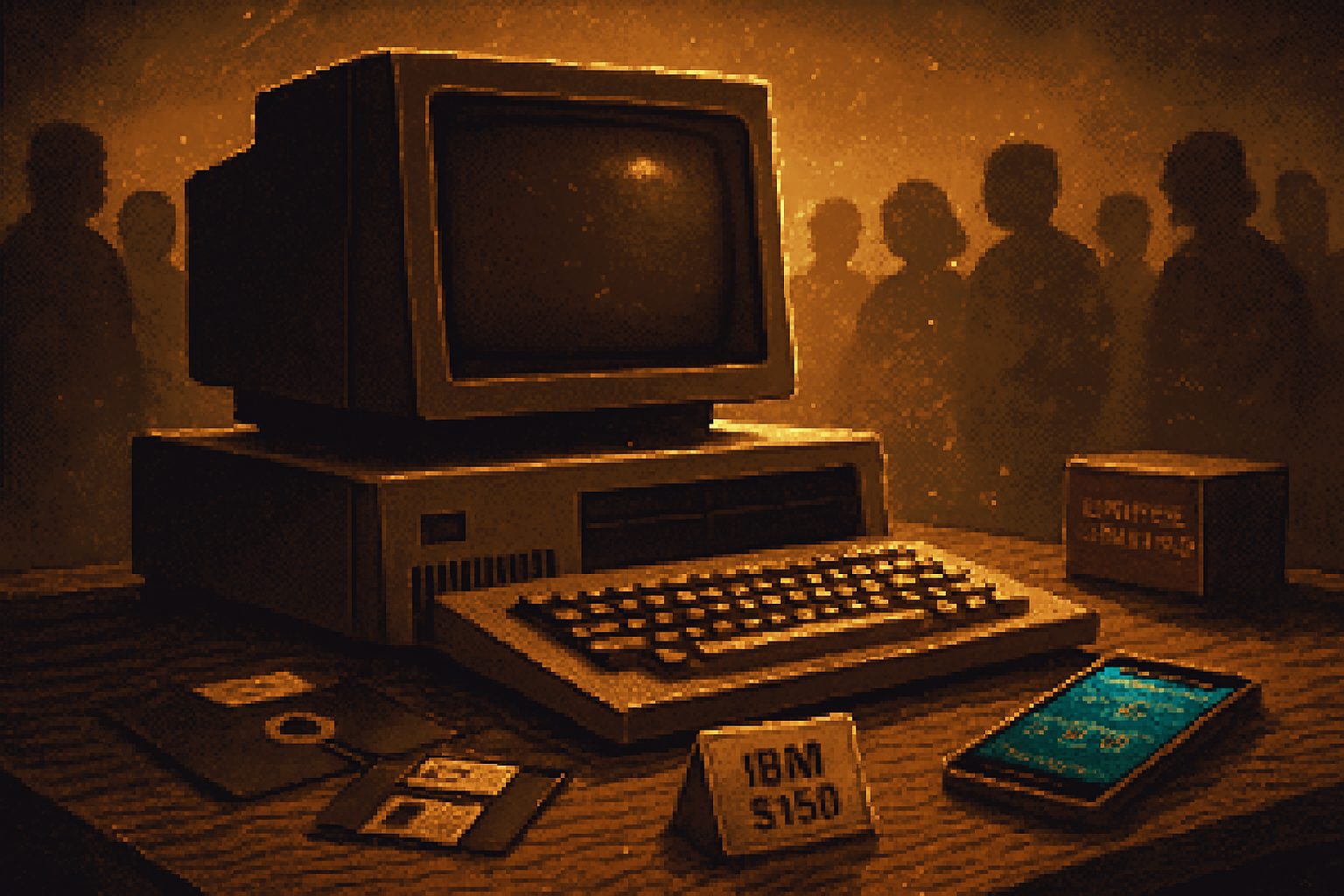
A man at a weekend market asked €1,200 for an IBM 5150 motherboard. His pitch was simple: “People want the original.” He was not wrong. He was also not running a scalable business.
Nostalgia is a curious currency. It buys irrational premium prices on eBay. It fuels crowded Kickstarter campaigns. It sells out consoles overnight and also produces flops that gather dust in warehouses. The question for companies - especially one with the gravitas of IBM - is not whether nostalgia can move units. It’s whether nostalgia can reliably produce profit, brand lift, and sustainable revenue.
Why the IBM 5150 matters (and why it smells like money)
The IBM 5150, launched in 1981, was the archetype of the modern personal computer: off-the-shelf components, an open architecture, and the imprimatur of a trusted corporate name. It became the standard against which dozens of clones were built [¹]. That history is branding gold. The 5150 is like oxygen to a certain generation: you don’t notice it until it’s missing from the conversation.
But nostalgia is not a product - it’s demand. Companies can package it, but they can’t manufacture the original memory.
A quick tour of retro-success and retro-failure
Look at the headline acts in the revival economy.
Nintendo’s NES Classic Edition - a smash. Nintendo repackaged original games in a tiny, modern console. It sold out repeatedly and created headline scarcity [²]. What worked: true-to-form experience (emulation + curated games), strong brand, and a tight product-market fit.
The C64 Mini / THEC64 - Retro Games Ltd leveraged the emotional heft of the Commodore 64 with a small, affordable plug-and-play device [³]. It catered to hobbyists and newcomers. Result: respectable sales and goodwill.
Sega Genesis / Mega Drive Mini - another measured win. Low risk, reasonably priced, and faithful to expectations [⁴].
Atari VCS (2021) - a cautionary tale. Marketed on nostalgia but launched as an uncertain modern console hybrid. Strong hype. Weak execution. Missed promises and slow developer support hamstrung uptake [⁵].
The Impossible Project → Polaroid Originals - arguably the commercial archetype beyond games. A near-dead film format was revived by passionate engineers, later rebranded and monetized through limited film runs and new cameras. It proved that nostalgia plus real product engineering can make a living [⁶].
These examples teach a simple rule: nostalgia helps the opening salvo. It does not win the war for repeat buyers unless the product actually delivers.
What nostalgia sells (and what it doesn’t)
Nostalgia reliably sells three things:
- Ritualized experience - the look, sound, and tactile feedback of the past.
- Memory signalling - owning the item signals membership in a cultural tribe.
- Story - every retro product comes with a narrative - “I grew up on this” - that marketers can use.
Nostalgia is weak at selling:
- Function-first value (replacement hardware for everyday use).
- Mass-market, low-margin fixtures. It stalls where economies of scale meet high BOM and compliance costs.
Commercial mechanics: margins, costs, and scarcity
If nostalgia were oxygen, pricing would be altitude. Limited runs at premium prices = high margin and low operational risk. Mass-market resets require substantial investment in tooling, certification (FCC/CE), after-sales support, and supply chains. The math matters.
Consider the split:
- Low-volume, high-price (collectors’ editions, limited reissues) - attractive margins, marketing buzz, controllable warranty/service costs.
- High-volume, low-price (general consumer hardware) - thin margins, inventory risk, hard-to-justify tooling costs unless you can scale.
Licensing also matters. Owning the brand (or controlling game IP) lowers friction. Nintendo can sell classic ROMs because it owns IP and controls distribution. A company that must license dozens of titles faces friction and margin erosion.
Brand-fit and identity: why IBM is a strange-but interesting-player
IBM is not Nintendo. It does not sell lifestyle products. Its brand is enterprise, services, and trust. That makes nostalgia a different beast for IBM:
- Advantage - The IBM logo carries engineering credibility and historical weight. There’s authenticity in an “official” IBM 5150 reissue that a third-party replica lacks.
- Disadvantage - IBM’s core distribution channels, pricing expectations, and customer relationships don’t match the typical retro buyer (collectors, hobbyists, nostalgic millennials).
For IBM, there are three sensible strategic postures:
- Curator-licensor - license the 5150 name and visual IP to trusted partners who handle manufacturing, while IBM provides authenticity certification and brand.
- Microscale premium - produce very limited, high-price reissues or museum-quality replicas targeted at collectors.
- Experience & services - build exhibits, traveling museums, digital archives, or paid emulation services with official ROMs and documentation.
Mass-market re-entry into consumer electronics? Not sensible. Not for IBM.
Case-study takeaways - what worked, what didn’t
- Provide a complete, polished experience. NES Classic shipped games that just worked. Atari VCS promised a platform and delivered half-baked hardware-software alignment.
- Control IP tightly. Licensing battles or missing rights can hollow out profit (and make the product illegal to sell in some markets).
- Match cost structure to demand. Limited runs avoid the trap of heavy tooling, long warranty tails, and low margins.
- Keep the audience in mind. Retro-enthusiasts value authenticity and repairability. Casual buyers want plug-and-play simplicity.
- Community matters. A strong aftermarket (mods, enthusiast forums, YouTube coverage) extends product life and adds earned marketing.
A simple playbook for a company like IBM
If IBM decided to monetize the 5150 aura, here is a practical sequence that balances brand, profit, and risk:
- Audit IP and assets - catalog logos, schematics, marketing assets, and software rights.
- License partners - pick one or two specialist hardware partners with proven supply chains (Retro Games, Analogue-like craftsmen, boutique builders).
- Launch limited editions - museum-grade 5150 replicas (metal badge, real-size keyboard, numbered runs), priced as collectibles.
- Offer digital bundles - official emulator images, annotated manuals, and “history packs” sold via a storefront or museum membership model.
- Build experiences - traveling exhibitions, corporate-heritage talks, B2B packages for tech museums and universities.
- Maintain scarcity - staggered editions, numbered releases, and certificate-of-authenticity keep secondary market prices healthy and prevent inventory rot.
Costs to budget: certification (safety, radio), small-batch manufacturing, quality control, shipping logistics for fragile units, and legal clearance for bundled software.
Revenue levers: unit price, limited-run scarcity, licensing fees, digital content, and experiential ticketing.
Risks - and how to hedge them
- Brand dilution - too many cheap reissues cheapen the legend. Hedge by strict product tiers.
- Legal exposure - unlicensed ROMs are a legal landmine. Hedge by licensing or offering developer tools that run legitimate user-loading workflows.
- Execution mismatch - nostalgia buyers are unforgiving about authenticity. Hedge with prototypes, influencer test groups, and community vetting.
Verdict: Is nostalgia a good business model?
Short answer: Nostalgia is a powerful accelerant. It can reduce customer-acquisition cost and create premium pricing windows. But it is not a substitute for product-market fit, supply-chain competence, or good strategy.
Applied to IBM and the 5150 specifically: the smartest move is not to become a consumer-electronics mill. It is to curate, license, and sell scarcity. Limited, beautifully executed reissues, combined with official digital archives and paid experiences, will monetize the 5150’s aura while protecting IBM’s brand.
The final irony: many companies chase the warm glow of memory as if it were evergreen. It isn’t. Nostalgia is seasonal, tribal, and capricious. Use it. Don’t worship it.
References
[¹] IBM Personal Computer (IBM 5150) - https://en.wikipedia.org/wiki/IBM_Personal_Computer
[²] Nintendo Entertainment System: NES Classic Edition - https://en.wikipedia.org/wiki/Nintendo_Entertainment_System#Nintendo_Entertainment_System:_NES_Classic_Edition
[³] The C64 Mini - https://en.wikipedia.org/wiki/The_C64_Mini
[⁴] Sega Genesis Mini - https://en.wikipedia.org/wiki/Sega_Genesis_Mini
[⁵] Atari VCS (2021 video game console) - https://en.wikipedia.org/wiki/Atari_VCS_(2021_video_game_console)
[⁶] Impossible Project / revival of Polaroid film - https://en.wikipedia.org/wiki/Impossible_Project