· retrotech · 7 min read
Remembering Amazon Prime: The Unforgettable Launch that Changed Shopping Forever
A retrospective on Amazon Prime’s 2005 launch, the instant behavioral shift it triggered, and whether the warm glow of Prime nostalgia can withstand modern subscription fatigue and pricing pressures.
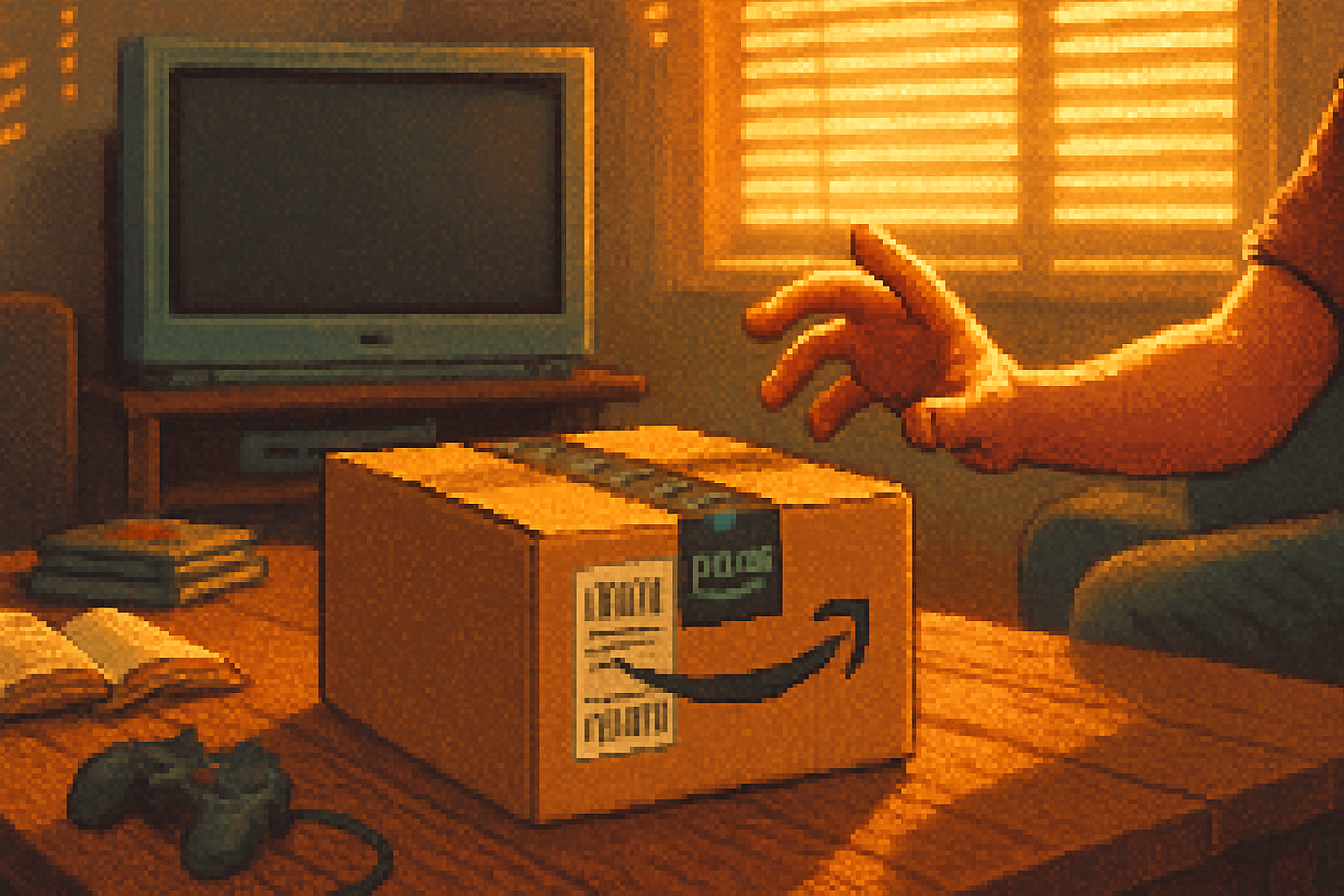
They shipped a book in two days and everyone assumed it was magic.
I still remember the small shock of opening a box and realizing waiting was optional. In 2005 Amazon quietly rolled out something that seemed, at first blush, merely convenient: a $79-a-year membership that promised free two‑day shipping. It felt like an indulgence and a revelation at the same time - like someone had shortened time at the postal office and sent it straight to your couch.
The quiet launch that grew loud
Amazon Prime debuted in February 2005 as a simple proposition: pay once a year, get unlimited two‑day shipping on eligible items. That bargain - and the illusion that speed was a human right rather than a premium service - was the spark. The original offering is documented in Amazon’s own release and summarized in public histories of the program [^1][^2].
It is important not to confuse the modesty of the launch with modest ambitions. Prime wasn’t launched as a shipping perk. It was a behavioral experiment with membership as the unit of analysis. The insight was seismic: customers who felt like members buy more, more often, and forgive a lot.
Why Prime rewired how we shop
Prime did three things with ruthless elegance:
- It reset expectations. Two‑day delivery became the baseline. Overnight or free? Consumers began to treat fast shipping like a public utility instead of a store feature.
- It lowered friction. When the mental accounting of shipping fees disappeared, the math of impulse changed. A $4 gadget seemed fine when the extra $6 shipping evaporated.
- It bundled loyalty into a pre‑paid contract. Membership meant you wanted that vendor to be your vendor for a year.
Concrete outcomes followed quickly. Members bought more of Amazon’s categories, returned less frequently, and-crucially-were sticky. Buy-in came before you needed it. Prime was an anti‑coupon: instead of chasing discounts, customers paid to stop being nagged by friction.
The slow accretion of an ecosystem
Prime didn’t stay a shipping promise. It recruited services to its cause: Prime Video, Prime Music, Prime Pantry, Prime Now, gaming perks, and of course the algorithmic nudges and exclusive sales that reinforce member behavior. The program evolved from a logistics advantage into a membership ecosystem with cross‑product lock‑in.
That evolution is visible in the numbers. Prime grew from a niche experiment into a global behemoth, with tens of millions of members in the U.S. and more than 100–200 million worldwide in later years [^3]. Each added service was another tentacle that made the ecosystem harder to leave.
The cultural effect: speed as entitlement
The cultural fallout is underrated. Prime taught us to expect gratification on demand. The world reshaped itself around that expectation: distributors optimized warehouses, delivery networks matured, and competing retailers either matched the promise or whispered the word “membership.” The social script changed. People began to ask, almost reflexively, “Will it be here tomorrow?”
There are deeper consequences too. Fast shipping encouraged smaller, more frequent purchases, increasing packaging waste and return logistics. The behavioral economics are simple: reduce the psychological cost of buying, and buying grows.
The nostalgia factor: why Prime feels ‘golden’ to many
Nostalgia is a curious currency. We remember a simpler bargain: pay $79 and watch speed and joy roll in. Early adopters recall Prime as a small, almost secret advantage. That memory ages well because the initial promise was experienced as a delight - surprise two‑day delivery has more emotional impact than predictable convenience.
This nostalgia is real, and it’s powerful. It is the smell of cardboard on a rainy afternoon, the small domestic drama of a new gadget appearing at a doorstep. Those micro‑moments create bonds that are hard to quantify but easy to feel.
Subscription fatigue knocks on the door
But the world has changed. The subscription economy has metastasized: streaming services, meal kits, cloud backups, two coffee subscriptions, three software tools, and a membership for a curated sock box. Consumers report fatigue. People feel watched by a ledger of monthly charges. Companies like Zuora and consulting firms track the rise of recurring revenue and the equal rise of churn sensitivity [^4].
So the honest question: can the nostalgic halo of Prime outlast subscription fatigue? Or, more bluntly, will Prime be another fond memory - a delightful relic of a cheaper, simpler world - once wallets tighten and choices multiply?
Why Prime is more resilient than a single subscription
There are three reasons Prime has staying power.
- Scale and household spread. Prime is often paid by the household rather than an individual. When a family pays one membership, its perceived cost per person plummets.
- Ecosystem lock‑in. Prime is not just shipping. It’s video nights, music for the kitchen, grocery deliveries, and the convenience of a pre‑checked vendor at checkout. Disentangling all that value is messy.
- Behavioral sunk cost. Consumers who alter habits around a service - buying from Amazon first, installing Alexa, sharing Prime Video passwords - face switching costs that are cognitive and practical, not merely financial.
These factors mean Prime behaves less like a standalone subscription and more like an embedded platform.
But Prime isn’t bulletproof
That said, vulnerabilities exist.
- Price sensitivity. Amazon has raised Prime’s price multiple times. Each increase forces re‑evaluation. The ritual delight becomes a fiscal choice.
- Regulatory and competitive pressure. Antitrust scrutiny and rivals bundling compelling alternatives could erode the exclusivity of Prime’s benefits.
- Perception of value. If Prime becomes synonymous with mediocre streaming, higher fees, and delayed shipments (because costs are being squeezed), nostalgia turns into resentment.
Prime’s nostalgia buys it time, not immunity.
Where Prime must adapt to survive the fatigue era
If Prime wants to remain more comforting relic than obsolete relic, it will need to evolve in ways that are almost invisible to the user but obvious in effect:
- Personalization without creepiness - make the membership feel tailored, not bloated. Smart curation keeps the promise of value visible.
- Modular tiers - let households choose simpler, cheaper bundles if they aren’t using video or grocery delivery. Unbundling carefully can stop cancellations.
- Demonstrable savings - make yearly statements that show members how much they saved in shipping and deals. The human brain loves a ledger.
- Community and emotion - nostalgia is an advantage-lean into it. Exclusive events, early sales, and real emotional moments keep Prime from feeling transactional.
So - will Prime’s nostalgia outlast subscription fatigue?
Short answer: probably yes, but with caveats.
Prime’s original launch rewired expectations in a way few retail experiments have. That cultural shift created durable habits and home‑level bargains that are harder to unwind than a streaming app. Nostalgia gives Prime a runway: people remember the magic and, just as importantly, they remember the convenience that followed.
But nostalgia is not a strategy. If Prime becomes expensive, bloated, or visibly lower quality, the very emotion that once held members will sour into regret. The future looks less like a single inevitable winner and more like a family of membership experiences where Prime needs to remain the most obvious default.
In the end, Prime’s lasting power depends on a simple test: does it still feel like an indulgence that pays for itself? If so, nostalgia will keep customers forgiving and loyal. If it feels like another bill, sentimental memories will not be enough.
Stay skeptical of companies that promise magic. But remember this: when a box arrives sooner than expected, you will forgive them a lot.
References
- Amazon press release - “Amazon.com Launches Amazon Prime” -
- Amazon Prime - Wikipedia - https://en.wikipedia.org/wiki/Amazon_Prime
- Statista - Number of Amazon Prime members worldwide - https://www.statista.com/statistics/266282/number-of-amazon-prime-members/
- Zuora - Subscription Economy Index - https://www.zuora.com/resource/subscription-economy-index/