· retrotech · 7 min read
The Evolution of Amazon: From Bookstore to Everything Store
From a Bellevue garage selling a single paperback to a global behemoth reshaping commerce, cloud computing and logistics-track Amazon’s improbable arc, the decisions that mattered, and the questions it still forces on modern capitalism.
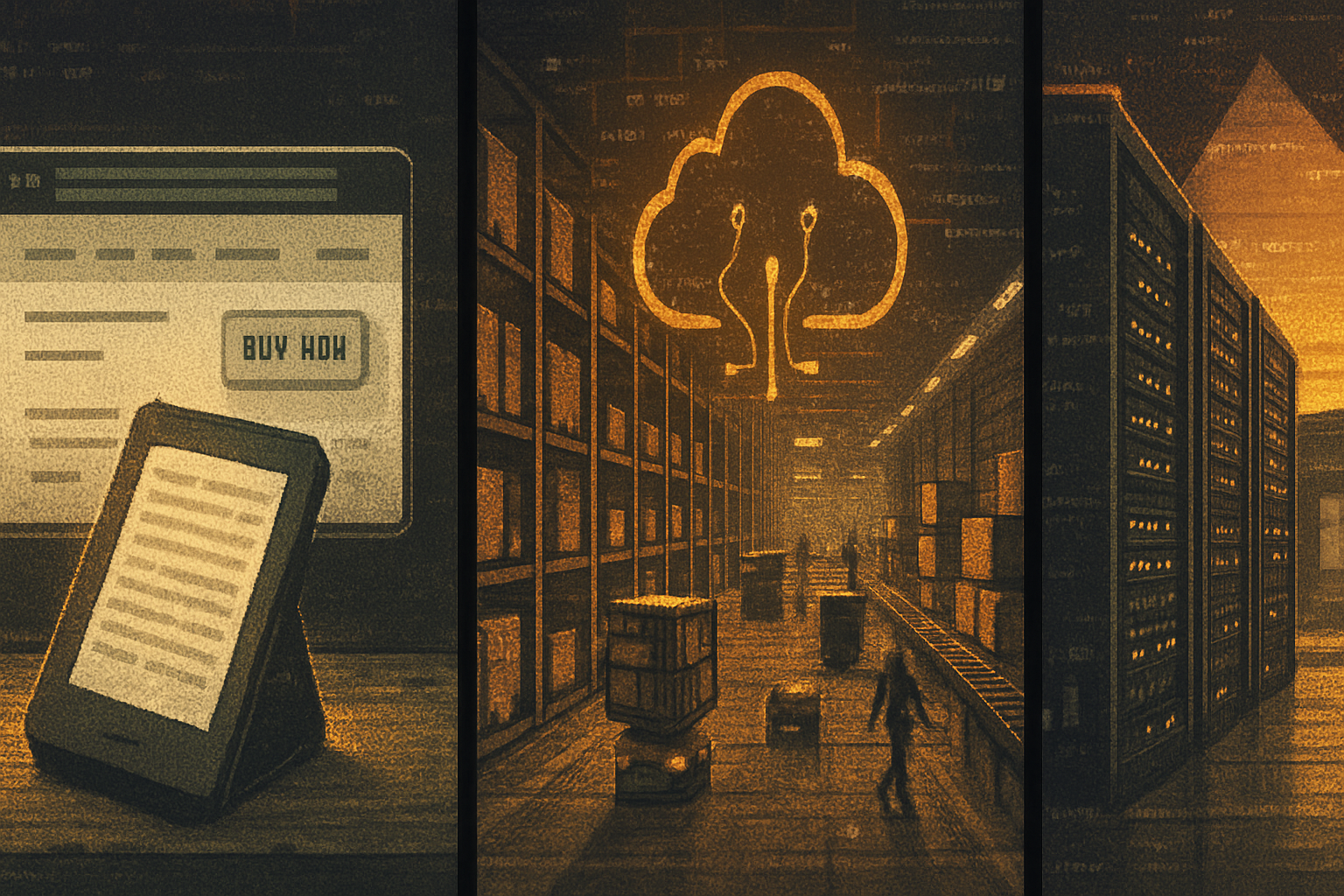
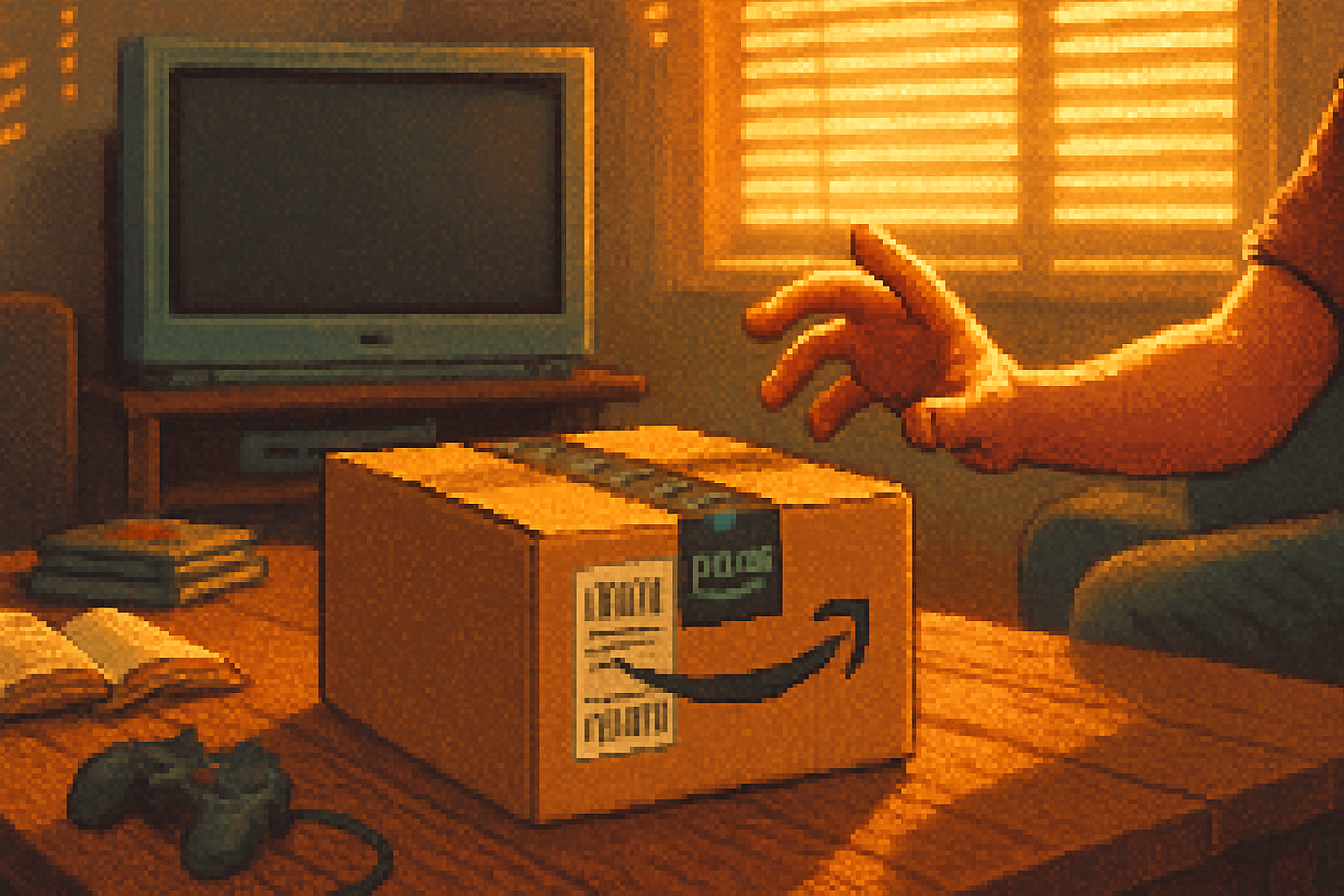
When I first ordered a book online, I remember thinking how oddly efficient it felt: choose, click, wait. No fluorescent bookstore lights, no politely indifferent clerk. That small thrill-buying a book from a company run out of a garage in Bellevue-was the proof-of-concept of something far larger. Amazon didn’t just sell books. It learned how to sell everything.
This is a story about escalation. About how a single-minded experiment in catalog convenience became a platform architecture, a logistics grid, an advertising machine, and a cloud that powers competitors. It’s an American origin story with venture capital, charisma, hubris, and consequences.
The bookstore that taught itself to scale
In 1994 Jeff Bezos left a lucrative Wall Street job and opened an online bookstore. The choice was deliberately narrow-books were standardized, catalogable, abundant, and demanded by millions. That made them ideal for testing the mechanics of online retail. The first book sold by Amazon is often told as trivia: Douglas Hofstadter’s “Fluid Concepts and Creative Analogies”-small, obscure, emblematic of the moment when curiosity outwitted inertia (source).
Two early lessons mattered:
- Focus reduces risk. Start with one category you can master. Amazon began by optimizing catalog and inventory algorithms for books.
- Learn the unit economics. Every time a customer clicked, Amazon recorded what worked and what didn’t. The company’s early obsession with metrics-price, selection, delivery time-wasn’t glamorous but it was decisive.
By the late 1990s Amazon had a problem most startups crave: growth. The company IPO’ed in 1997 and began expanding categories. Music, video, toys-each addition multiplied complexity but also customer habits. Amazon learned how to be present where customers spent attention.
References: Amazon formation and early history are covered in broad strokes in corporate summaries and histories of the company (Amazon - Wikipedia).
Platform thinking: from merchant to marketplace
Around the turn of the century Amazon made a pivot that would define its future: it stopped merely competing with other sellers and instead invited them onto its platform. The third-party marketplace changed the economics of retail overnight. No longer was Amazon solely an inventory manager; it became an infrastructure provider.
Consequences were immediate and durable:
- Vast selection without proportional inventory risk. Other sellers supplied the goods; Amazon supplied customers.
- Network effects. More sellers attracted more buyers, which in turn attracted more sellers.
- New revenue streams. Fees, advertising, and fulfillment services created higher-margin income beyond the thin retail margin.
This phase created winners and losers. Independent retailers gained access to customers but also surrendered visibility and margin to platform rules.
Prime, personalization, and the tyranny of convenience
In 2005 Amazon launched Prime-an annual membership that bundled free shipping (and later video, music, and exclusive deals). Prime is the behavioral masterstroke: it turns occasional shoppers into habitual ones. The logic is simple and savage: reduce the friction to buy so much that alternatives feel like punishment.
Prime’s effects:
- Habit formation. Customers expect fast, cheap delivery and increasingly plan purchases around it.
- Lock-in. The sunk cost of membership raises the switching cost to competitors.
- Data accumulation. Prime members produce richer purchase histories, feeding better recommender systems and targeted promotions.
Prime Day, introduced in 2015, is both a marketing spectacle and a sales-engine: a holiday Amazon invented to focus spending on its platform.
The Kindle and the digitization of demand
If Amazon learned how to sell, the Kindle taught people to consume differently. Launched in 2007, the Kindle was not merely a device; it was a way to capture a larger share of reading time and to control pricing, distribution, and format for digital content.
Why this mattered:
- It shifted power over content distribution toward the platform.
- It created a dual business - hardware that subsidized a content ecosystem.
- It accelerated the long-term decline of physical bookstore economics-Amazon owned the convenience of discovery and delivery.
Amazon Web Services: the company that built the cloud
In one of the more audacious lateral moves in modern corporate history, Amazon transformed excess infrastructure into a new business: Amazon Web Services (AWS), launched publicly in 2006. AWS sold a lesson born of necessity-internal tools built to support Amazon’s scale were valuable to others.
AWS did more than diversify revenue. It rewired an entire industry. Startups that used to raise capital to buy servers could now rent compute cheaply and scale quickly. Paradoxically, Amazon became an indispensable supplier to competitors and partners alike.
The cloud changed the margin structure of the firm: high-margin services that funded losses in retail during Amazon’s aggressive expansion years. AWS also created a new axis of regulatory and strategic scrutiny-big tech wasn’t just about retail anymore.
Reference: Overview of AWS growth and history (Amazon Web Services - Wikipedia).
Logistics: warehouses, robots, and same‑day expectations
Amazon’s obsession with speed turned warehouses into factories of expectation. Fulfillment by Amazon (FBA), robotics integration, and an expanding last-mile footprint enabled two critical outcomes:
- Faster delivery at scale
- Greater control over customer experience
The result is visible everywhere: more distribution centers located closer to population centers, a fleet of trucks, planes, and the occasional stealth drone experiment. Logistics became a strategic moat-if you can deliver anything quickly and reliably, you also own an enormous piece of the purchasing decision.
Acquisitions, diversification, and the Everything Store
If the early metaphor was “a bookstore,” later strategy embraced the audacious label: an “everything store.” Mergers and acquisitions were the accelerant. Notable moves include:
- Zappos (shoes) - a culturally distinct online retailer that taught lessons in customer service.
- Twitch (live streaming) - an entry into gaming and live content.
- Whole Foods - a physical retail play into groceries and local distribution.
- Ring, PillPack and many more - moves into home, healthcare, and surveillance.
Brad Stone’s book The Everything Store popularized the phrase and gave readers an intimate (and at times brutal) portrait of leadership choices that steered the company’s expansion (The Everything Store - Wikipedia).
The social and regulatory cost of dominance
The flip side of convenience is concentration. Amazon’s rise exposed tensions that are now front-page politics:
- Market power. Small sellers depend on Amazon’s platform yet complain of opaque rules and sudden penalties.
- Labor and worker conditions. Fulfillment centers are sites of intense productivity pressure and scrutiny over safety and pay.
- Antitrust attention. Regulators in the U.S., EU and elsewhere question whether Amazon’s overlapping roles-as marketplace operator, seller, and platform provider-entail anti-competitive practices.
These are not peripheral criticisms. They strike at the governance of platforms that mediate vast swaths of economic life.
For further reading on corporate reporting and historical data, Amazon’s investor relations and annual reports provide a primary record (Amazon Investor Relations).
How Amazon changed markets-and what that teaches us
Amazon’s playbook rewrote retail:
- Price competition became algorithmic. Dynamic pricing and automated repricing are now table stakes.
- Selection and convenience replaced service as primary competitive axes.
- Platforms with logistics and payments can extract multiple revenue layers - product margins, seller fees, advertising, and services.
Analogy: if traditional retail was a set of brick-and-mortar rings in a circus, Amazon built the tent, the stage, and the concession stand-then sold tickets to everyone.
What’s next? AI, health, and the final mile
If the past two decades taught us anything, it’s that Amazon experiments broadly and learns obsessively. Current and plausible battlegrounds include:
- Generative AI for search, product discovery, and supply-chain optimization.
- Healthcare - pharmacy and primary care experiments could rewire an expensive sector.
- Logistics automation - drones, robotics, and predictive inventory to shave hours off delivery windows.
- Regulatory constraints - antitrust action could force business model changes or greater disclosure.
Amazon’s future will depend less on whether it can be big and more on whether societies accept the trade-offs that size imposes.
Final act: a judgment in four sentences
Amazon began as a tidy experiment in selling books. It grew by repeating one ruthless lesson: remove friction, then monetize the frictionless life. That growth produced extraordinary convenience and enormous concentration of power. The question going forward isn’t whether Amazon will keep expanding-it will-but whether democratic institutions, markets, and consumers will decide how expansion should be governed.
Further reading
- Amazon (company) - Wikipedia: https://en.wikipedia.org/wiki/Amazon_(company)
- The Everything Store (Brad Stone) - overview: https://en.wikipedia.org/wiki/The_Everything_Store
- Amazon Web Services - Wikipedia: https://en.wikipedia.org/wiki/Amazon_Web_Services
- Amazon investor relations (annual reports): https://ir.aboutamazon.com/annual-reports-proxy