· retrogaming · 7 min read
Legal vs. Illegal: The Controversial Landscape of Game Boy Color Emulation
Emulators let you play decades-old games on modern hardware - but the code on the screen is wrapped in a thicket of copyright law, DMCA anti-circumvention rules, and moral arguments about preservation vs. profit. This article unpacks what’s legally risky, what’s defensible, and what the gaming community still can’t agree on.
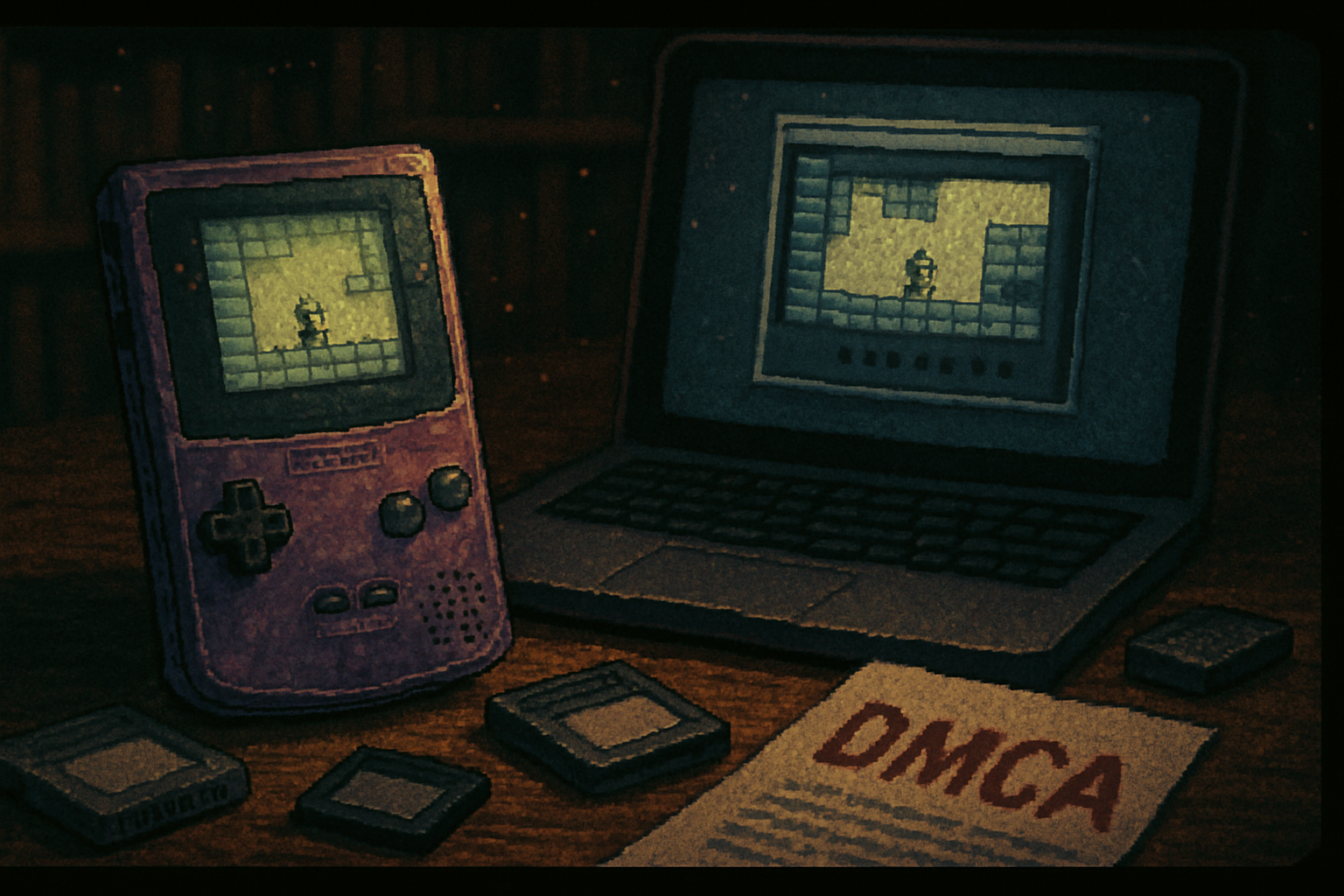
It began with a cramped dorm room and a laptop that wheezed like an old radiator. A kid named Marco wanted to replay Pokémon Gold but didn’t have the bulky cartridge-so he downloaded a small program that made his laptop pretend to be a Game Boy Color. One afternoon of nostalgia later, he learned two things: the sprite animation still looked beautiful, and the thing he’d installed lived in a legal gray zone thick enough to hide an entire release schedule.
Emulation has always been equal parts archaeological rescue mission, hobbyist engineering, and trespassing. For every tearful reunion with a childhood favorite there’s a copyright lawyer and a lobbyist sharpening pencils. Here’s how to think about the legal landscape instead of just following a forum link and crossing your fingers.
What an emulator actually is
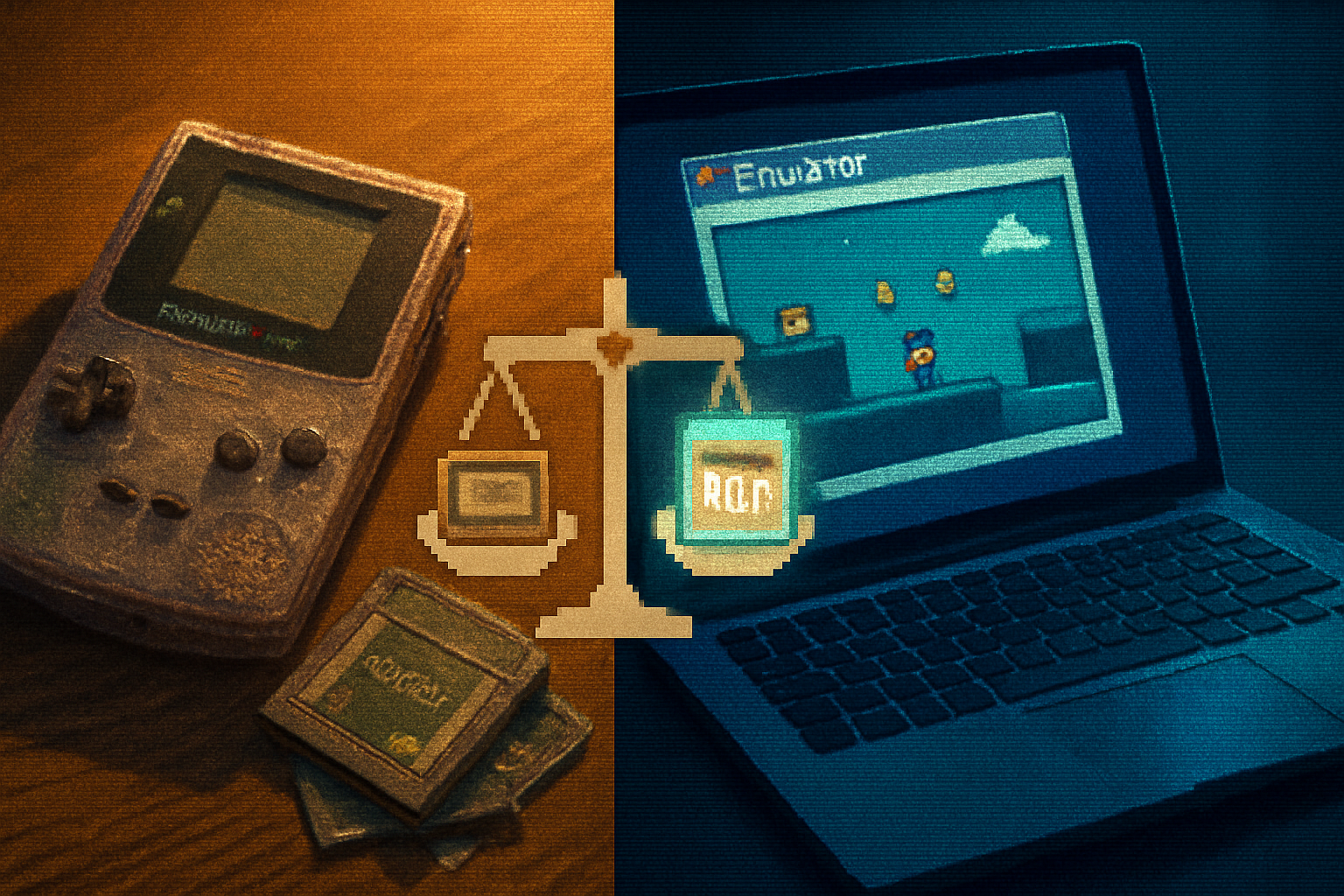
An emulator is software (or hardware) that imitates another system. It recreates the Game Boy Color’s CPU, GPU, sound chip, and input behavior so the same game data - the ROM - runs on your phone or PC. Like a translator, it doesn’t create new content; it provides a different way to read the original.
That difference matters. The emulator itself is usually legal. The copyrighted content it runs - the ROM - is the battleground.
Emulators: usually legal. BIOS, code copying, and the case law that matters
Let’s be direct: building an emulator is not inherently illegal. Several U.S. court cases have recognized that reverse engineering for compatibility can be lawful, and courts have sometimes treated intermediate copying as fair use when it’s necessary to understand how a system works.
- Sega v. Accolade (1992) found reverse engineering to achieve compatibility could be fair use; the Ninth Circuit protected Accolade’s intermediate copying of code for interoperability. Sega v. Accolade (summary)
- Sony Computer Entertainment America v. Connectix (2000) is often-cited - the court held that creating temporary copies in RAM to reverse-engineer the PlayStation BIOS for an emulator could be fair use, and that the emulator wasn’t necessarily infringing just because it ran PlayStation games.
Those decisions don’t give a free pass to emulation authors who copy proprietary BIOS or shipped code wholesale, but they show that courts can accept emulation as a legitimate technical activity grounded in interoperability and reverse engineering.
ROMs: where the law cuts most sharply
A ROM is a binary image of a cartridge or console game. Distributing or downloading ROMs of copyrighted games without permission is infringement in most jurisdictions. That’s the simple part.
Why people still do it:
- Many games are out of print and unobtainable except on legacy hardware.
- Preservationists argue companies should not control access to culturally important software that rots on shelves.
- Fans want to patch translations, run mods, or play on modern displays.
Why rights-holders fight back:
- A ROM is a direct copy of copyrighted expression. Selling or freely distributing that copy is a commercial injury to publishers.
- Large publishers like Nintendo have pursued site takedowns and civil suits against major ROM distributors. See coverage of Nintendo’s enforcement actions against ROM sites for an example of the industry response. The Verge: Nintendo sues ROM sites LoveROMS and LoveRETRO
Bottom line: downloading ROMs you don’t own is risky and unlawful in most places.
The DMCA and circumvention: legal traps
The DMCA’s anti-circumvention provisions make the practical act of getting a ROM trickier. It’s one thing to obtain a copy you own; it’s another to bypass a hardware lock or firmware that prevents copying. Circumventing technological protection measures (TPMs) can be a separate legal violation even when the underlying use might otherwise be fair.
There are limited exemptions. The U.S. Copyright Office issues triennial rulemaking that can create narrow exceptions to circumventing TPMs for preservation, research, or repair. For example, libraries and archives have sometimes been granted permissions to make archival copies for preservation under narrowly defined conditions. See the Copyright Office’s 1201 rulemaking materials for details. U.S. Copyright Office - Section 1201 rulemaking
Those exemptions are specific, technical, and not a general license to rip and distribute games.
Preservation, abandonware, and moral arguments
If copyright were a traffic light, preservationists would argue that sometimes the light is broken and the street needs clearing. There’s real cultural value in saving old games that live on fragile cartridges and decaying batteries.
Arguments preservationists make:
- Games are cultural artifacts and deserve archival treatment just like films and books.
- Publishers sometimes refuse to re-release older titles or shut down servers, making legal access impossible.
- Emulation can be the only practical preservation method for hardware that fails and spare parts that vanish.
Publishers respond that:
- Copyright grants them the right to control distribution and monetize re-releases.
- Uncontrolled ROM distribution can undercut legitimate reissues and harm creators.
Practical outcome: institutions (libraries, museums) have occasionally won narrow carve-outs for preservation; casual archiving by individuals remains legally and ethically fraught.
Community norms, homebrew, and the ethics of playing old games
The gaming community is fractured into camps:
- Purists - buy original cartridges and play on original hardware. Expensive, but undeniably clean ethically.
- Pragmatists - dump cartridges they own and run their own backups in emulators. This is defensible if you truly own the original media and don’t distribute the dump.
- Preservationists - prioritize cultural survival, sometimes pushing legal boundaries to archive rare titles.
- Pirates - download and share widely, usually without regard for legal or ethical nuances.
Also important: fan translations and ROM hacks. They’re labor of love, often illegal in strict terms, but many publishers tolerate or eventually legitimize them because they broaden interest and keep older franchises alive.
Practical, legally safer options
If you want to enjoy Game Boy Color games without a summons to federal court, consider these options:
- Buy legitimately reissued versions where available (Virtual Console, Nintendo Switch Online). They’re the clear legal path.
- Buy original cartridges and hardware. Then use a dumper to create a personal backup if you have the technical skills - and keep it private. Many argue (and some cases imply) that creating a backup of software you own is more defensible than downloading a copy, but it’s not universally protected.
- Use open-source emulators that don’t ship proprietary BIOS or code. Emulators themselves are lawful when they’re original code.
- Avoid downloading ROMs from internet dumps. They’re often illegal and frequently carry malware.
- If you’re a library or archive, consult the Copyright Office’s exemptions and seek legal counsel before circumvention or mass copying. U.S. Copyright Office - Section 1201 rulemaking
Risks beyond copyright: security and ethics
ROM sites are a plague for your computer’s health. Bundled malware, shady ad networks, and phishing are common on pirate repositories. Even if a legal argument can be made in specific cases, the pragmatic risk is real: identity theft, malware, and degraded devices.
From an ethical perspective, consider where the money goes. If you play a game and the publisher still supports the franchise, think whether distributing free copies is fair to developers and rights-holders who rely on revenue.
The future: clearer laws or more pressure on publishers?
Two plausible paths lie ahead:
- Lawmakers and courts could clarify the balance between preservation and IP, potentially widening exemptions for archival use and interoperability.
- Or publishers could be pushed (by public pressure) into more extensive re-releases and preservation programs, reducing the demand for unauthorized ROMs.
Neither outcome is guaranteed. For now, emulation lives in a practical middle ground: technically celebrated, legally contested, and socially complicated.
Bottom line
Emulators themselves are often lawful. ROMs usually aren’t - unless you own the original media and keep the copy private, and even then legal protection is not absolute. DMCA anti-circumvention rules make extracting or copying games another legal risk. Preservationists have compelling moral arguments, but the law is slow and narrow in granting exemptions.
If you care about both the games and the law, act like a conservator rather than a burglar: preserve responsibly, push for clearer preservation law, buy reissues, and when in doubt, don’t download that rom.zip you found on a sketchy site.
Legal note: this article explains general principles and sources but is not legal advice. Laws vary by country, and specific facts can change outcomes. If you have a potentially risky project, consult a qualified attorney.
References and further reading
- Electronic Frontier Foundation - Emulation and related resources: https://www.eff.org/issues/emulation
- U.S. Copyright Office - Section 1201 rulemakings and exemptions: https://www.copyright.gov/1201/
- Coverage of enforcement actions against ROM sites - The Verge - Nintendo sues LoveROMs and LoveRETRO:
- Case summaries - Sega v. Accolade and Sony v. Connectix - historical context for reverse engineering and emulation: