· retrogaming · 6 min read
Legal Gray Areas: The Ethics of Using Atari Lynx ROMs with Emulators
Is running an Atari Lynx ROM in an emulator theft, preservation, or something in between? This article untangles the legal and ethical knots around ROM use, copyright law, fair use, DMCA exemptions, and the arguments circulating in the retro-gaming community.
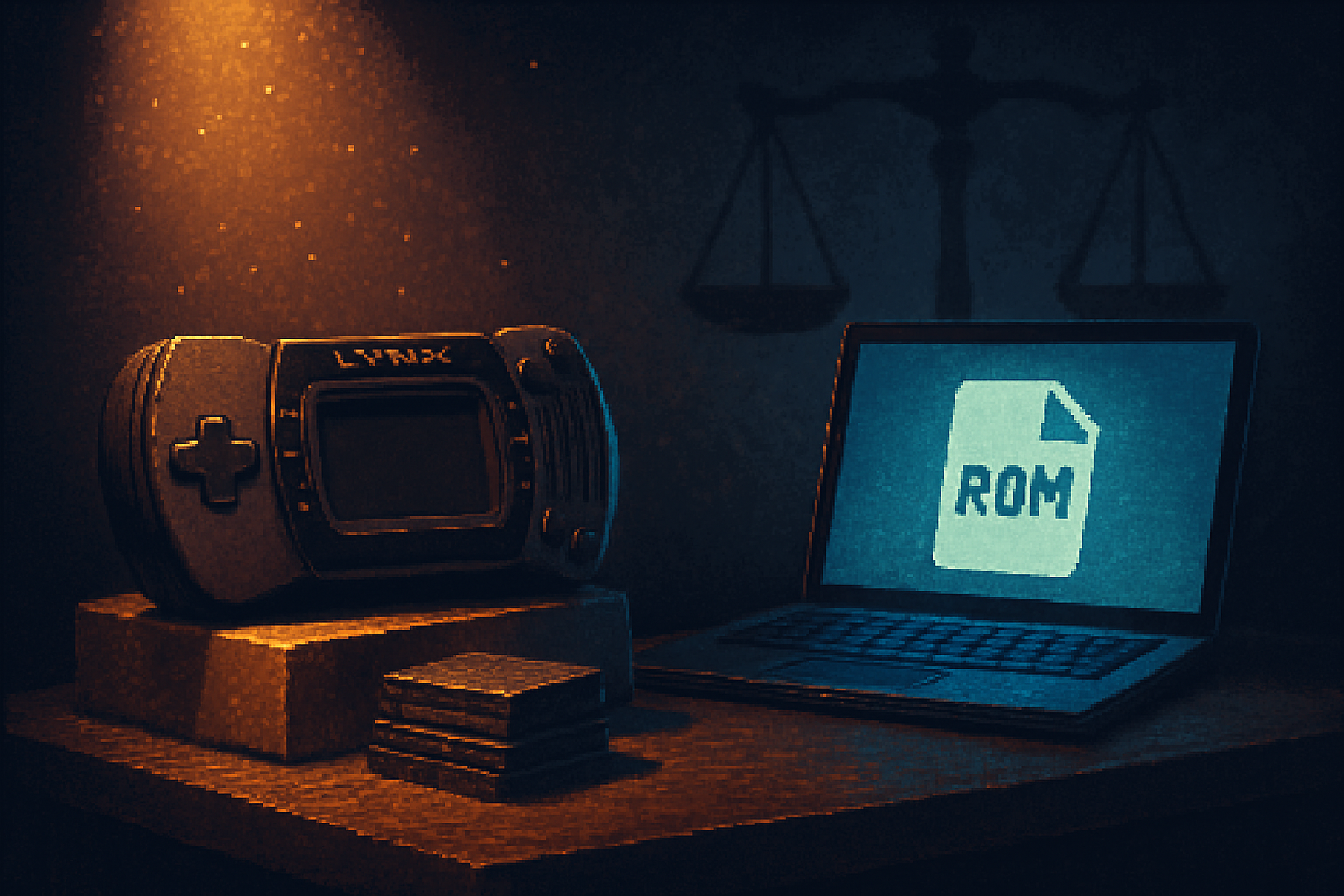
I once watched a 60-year-old archivist sit cross-legged on a convention floor and cradle an Atari Lynx like an ailing sparrow. “If these games die,” she said, “an entire language disappears.” It’s an oddly violent image for something pixelated and hand-held. But the point landed: retro games are cultural artifacts - and the tools we use to keep them alive (emulators, ROMs, disk images) live in a legal and ethical fog that smells faintly of mothballs and lawsuits.
The short, blunt version
- Downloading an Atari Lynx ROM from a public website is very likely copyright infringement. That’s true in most jurisdictions.
- Emulators themselves are generally legal. They’re just software that imitates hardware.
- The murk is in the copying - who made the ROM, whether you own the original cartridge, and whether any legal exceptions apply.
If you want nuance, strap in.
Emulators vs. ROMs: a useful metaphor
Think of an emulator as a piano and a ROM as sheet music. The piano is lawful to build and own; anyone can craft an instrument that plays the notes. But if the sheet music is still under copyright and you photocopy it from the composer’s locked desk without permission, you’ve probably committed an offense. The difference between playing a scanned photocopy and buying an authorized reprint matters.
This metaphor maps onto case law. Courts have protected intermediate, non-infringing acts like reverse-engineering for compatibility in some cases - but they haven’t given carte blanche to download copyrighted ROM images from pirate sites.
What the law actually says (in plain language)
- Copyright gives the owner exclusive rights to reproduce and distribute their work. That includes video games and the ROM images that contain their code.
- Fair use (in the U.S., codified at 17 U.S.C. §107 and explained by the U.S. Copyright Office) is a four-factor, case-by-case test. It can protect legitimate uses - commentary, criticism, research, and sometimes reverse engineering - but it is not an automatic shield for playing old games.
- The DMCA’s anti-circumvention rules add another layer. Even if copying a ROM might arguably be fair use, circumventing digital protections to extract or run that ROM can be separately prohibited.
Useful precedent:
- In Sega v. Accolade (9th Cir. 1992) the court allowed reverse engineering to achieve compatibility - a win for interoperability case text.
- In Sony v. Connectix (9th Cir. 2000) the court found that creating intermediate copies to develop an emulator could be fair use case text.
Those decisions protect some developer-side activity: engineers copying code temporarily to create interoperability or emulators. They do not bless downloading someone else’s copyrighted ROM off the internet and tossing it into your emulator.
“Abandonware” and the myth of moral free-for-all
The retro community loves the idea of “abandonware” - software abandoned by its maker, left to rot. Ethically, preservationists see value in rescuing those works. Legally, “abandonware” is not a recognized exception to copyright. The owners retain the rights until copyright expires, unless they explicitly release the game.
Groups such as the Electronic Frontier Foundation (EFF) and archival projects push for pragmatic solutions (and for exemptions to the DMCA). But the law is stubbornly black-letter: absence of active sales does not equal loss of rights.
Preservation vs. profit: two moral frames
- Preservationist ethic - Some argue that once commercial life is over - storefronts closed, manufacturer dissolved - preservation becomes a moral imperative. Games are historical documents. If legal barriers prevent archiving, cultural memory is lost.
- Rights-holder ethic - Publishers and IP owners counter that their IP funds future creativity. Unlicensed distribution undermines revenue streams and control over how a game is presented, packaged, or monetized.
Both sides have reasonable claims. The moral tug is between collective cultural stewardship and private property rights. The law currently tends to privilege the latter, though periodic DMCA exemptions nudge toward the former for limited purposes.
What retro gamers actually say (community views)
The retro community is not monolithic. Common positions include:
- “I dump my own cartridges and use those ROMs on emulators.” This is common and feels ethically defensible to many. Legally, it’s ambiguous - making a personal backup may reduce the moral sting, but it does not create a legal right in many jurisdictions.
- “If a game isn’t sold anymore, it’s okay to download it.” This is the abandonware rationalization. Emotionally persuasive, legally risky.
- “Support official re-releases whenever possible.” Many collectors favor purchasing reissues (e.g., mini-consoles, compilations, digital re-releases) when available - a legally clean approach that supports rights-holders and funds future preservation.
Forums, Discord servers, and retro conventions often reflect a pragmatic ethic: do what you must to preserve and play, but avoid needlessly stealing from small developers or actively supporting piracy sites.
DMCA exemptions and preservation workarounds
The U.S. Library of Congress periodically grants narrow exemptions to the DMCA’s anti-circumvention rules. These can allow museums, libraries, and sometimes researchers to extract and preserve games under specific conditions. See the DMCA Section 1201 rulemaking site for current exemptions.
Key point: these are limited carve-outs for preservation and research, not blanket permissions for gamers to download copyrighted ROMs off the net.
Practical, legal paths for ethically-minded retro fans
If you care about both your conscience and staying out of legal trouble, consider these approaches:
- Buy re-releases and licensed compilations when available - they are the cleanest option.
- Support publishers that release classic catalogs, or campaigns that fund official ports.
- If you own the original Lynx cartridge, look into lawful ways to back it up for personal use; be careful with anti-circumvention rules and local law. (Legal risk remains; some jurisdictions permit backups, some do not.)
- Encourage libraries, museums, and archives to seek DMCA exemptions to preserve at-risk works. Institutional preservation is the best long-term solution.
- Avoid downloading ROMs from pirate sites if you want to minimize legal and ethical exposure.
I’ll be explicit: I won’t tell you where to find pirated ROMs. Ethics and legality intersect here for a reason.
A few hard truths
- Sentiment doesn’t equal permission. Feeling that a game should be free doesn’t make it so.
- Legal precedent helps emulator development more than it helps random users downloading copyrighted images.
- Preservation is a moral good. But good intentions don’t erase copyright.
The tension - cultural preservation vs. IP law - isn’t going away. It’s worth pushing for pragmatic public policy (broader preservation exemptions, easier licensing for out-of-print works, and marketplaces for classic games) rather than normalizing piracy as an ethical solution.
Final stance (clear, slightly cruel but fair)
If your aim is purely to play and feel good about rescuing classics, start with the legal route: buy official re-releases, support archival projects, and, where appropriate, support libraries seeking exemptions. If you’re an engineer building an emulator or a conservator trying to rescue a lost game for posterity, legal doctrines like fair use and some DMCA carve-outs can help - but they’re narrow and contested.
Romanticizing abandonware feels noble until you realize it’s mostly people borrowing someone else’s paycheck to finance sentiment. That doesn’t make everyone who downloads a ROM a villain. It makes the situation complicated and urgently in need of smarter law and better archival funding.
Further reading
- U.S. Copyright Office - Fair Use: https://www.copyright.gov/fair-use/
- DMCA Section 1201 rulemaking (Library of Congress): https://www.copyright.gov/1201/
- EFF on Emulation: https://www.eff.org/issues/emulation
- Sega v. Accolade (9th Cir. 1992) [case text]: https://law.justia.com/cases/federal/appellate-courts/F2/977/1510/
- Sony v. Connectix (9th Cir. 2000) [case text]: https://law.justia.com/cases/federal/appellate-courts/F3/203/596/
(If you care about saving games for history, talk to a local library or museum. They might have more tools and legal avenues than you do solo.)