· retrogaming · 7 min read
Retro, But Not Forgotten: The Legal Gray Areas of Nintendo 64 Emulation
N64 emulation sits at the crossroads of nostalgia, preservation and copyright law. This article explains what’s legal, what’s risky, and practical ways to enjoy classic N64 games without stepping into obvious legal trouble.
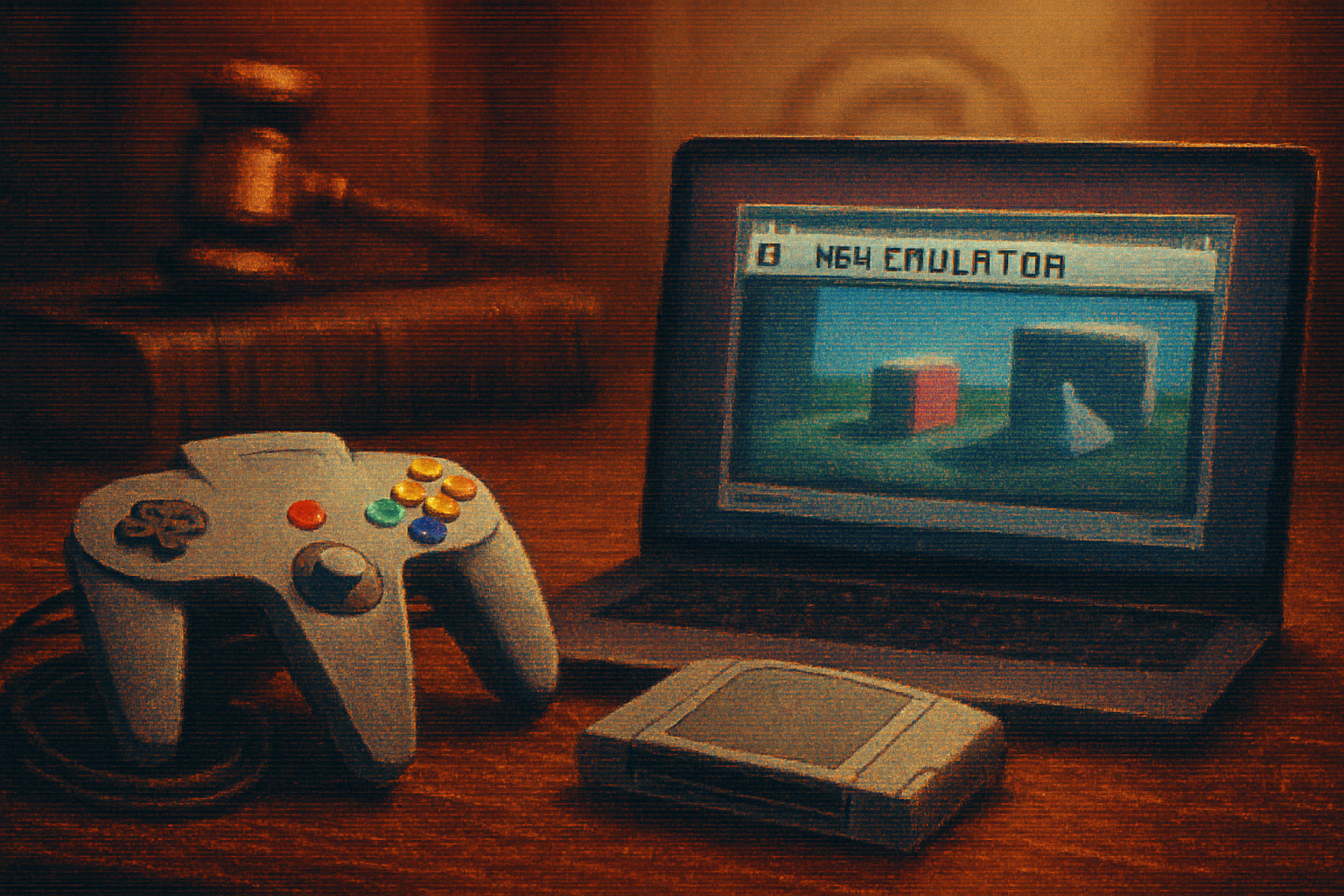
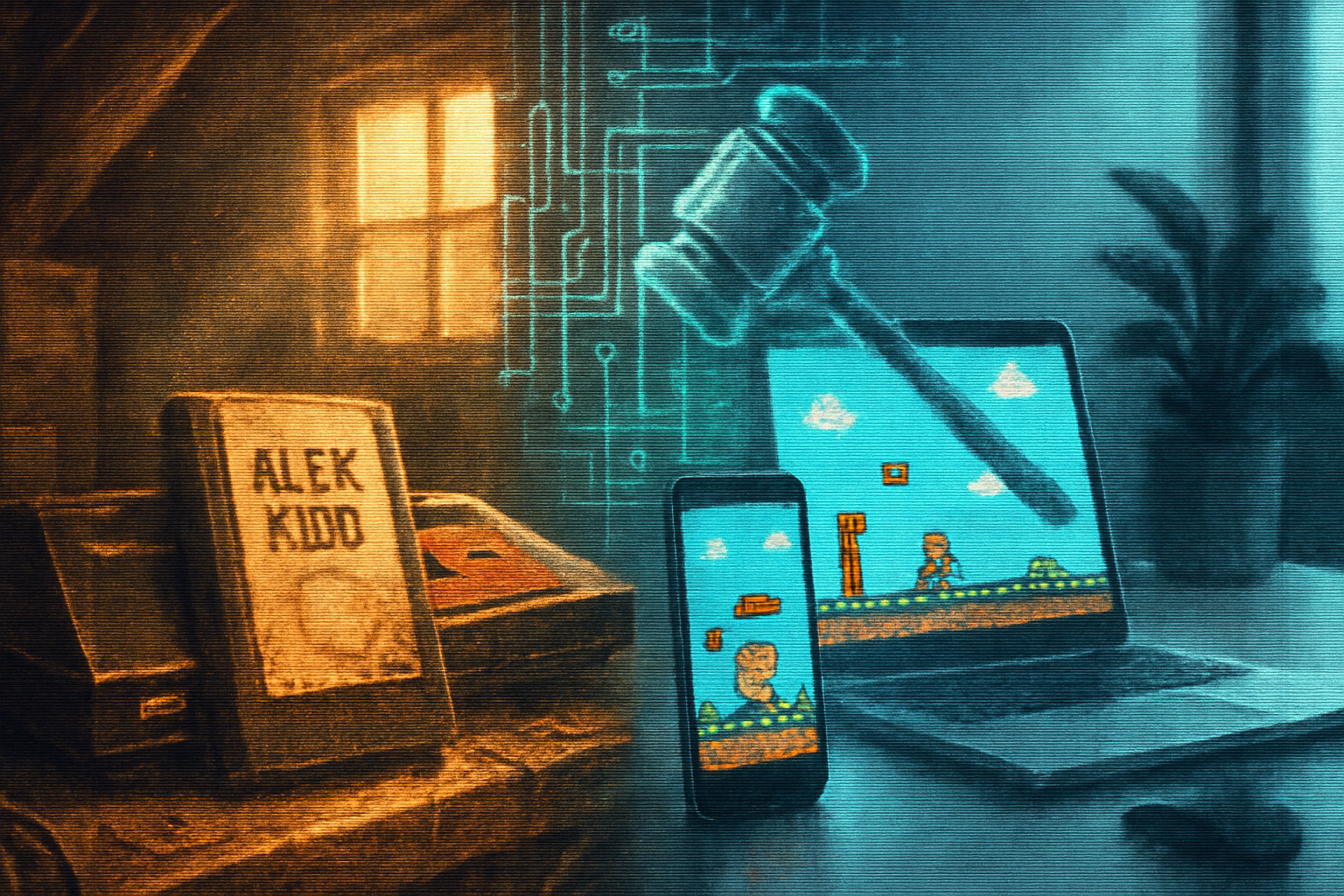
I remember the first time I found myself loading a Nintendo 64 ROM at 2 a.m. - not because I wanted to pirouette through a legal thesis, but because Zelda’s soundtrack is good at midnight and original cartridges were buried in a box labeled “misc.” Two clicks later I had a working copy of a childhood universe. Two weeks later a friend sent a DM: “Is that… legal?”
Short answer: complicated. Long answer: the law around emulation and ROMs is a messy, jurisdiction-dependent tangle of copyright, anti-circumvention rules, and corporate zealotry. This article walks through the landscape, explains the real risks, and gives practical, realistic ways to enjoy Nintendo 64 classics responsibly.
A quick primer: what we mean by “emulator” and “ROM”
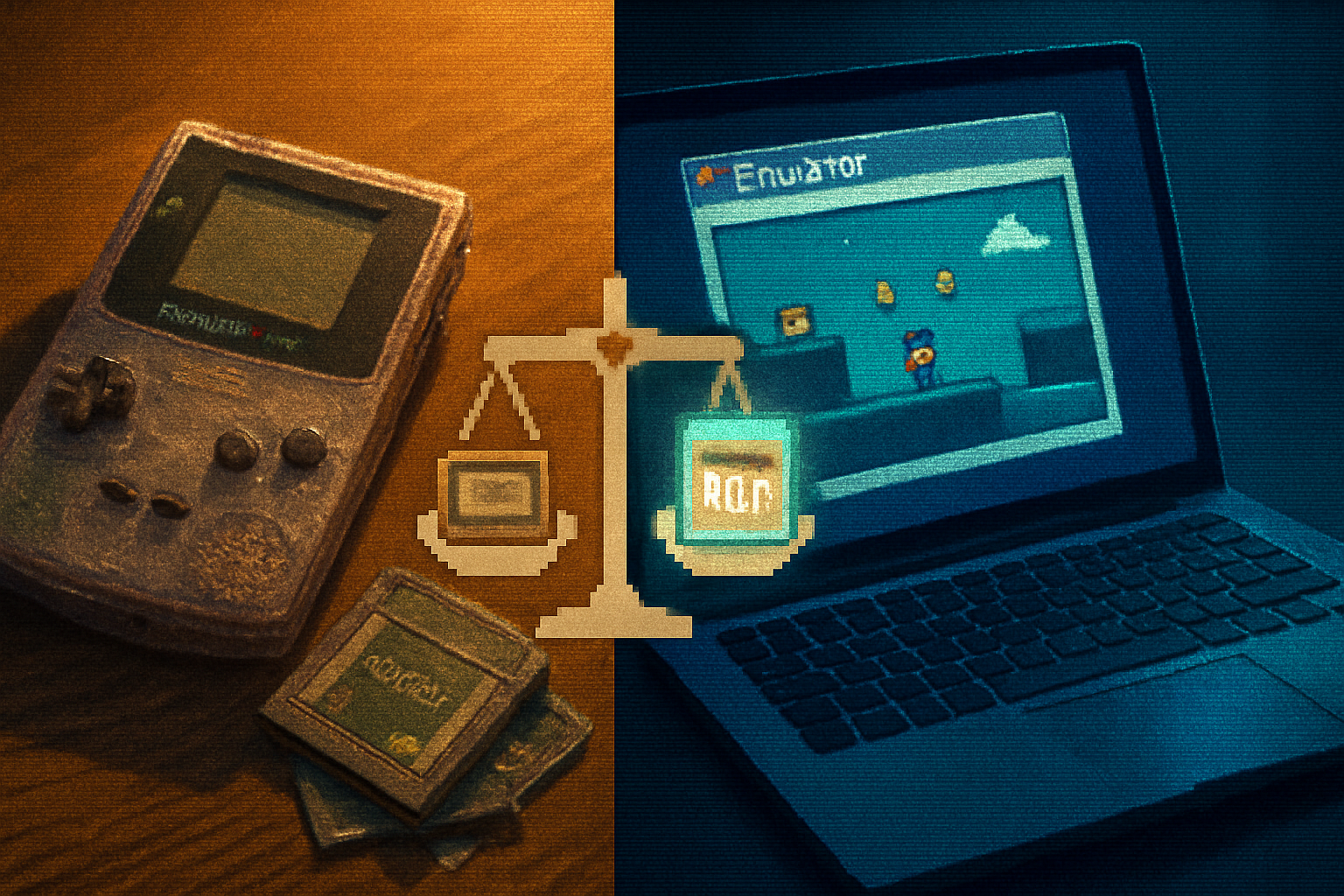
- Emulator - software that mimics console hardware so games can run on modern devices. Examples in N64 land include Project64 and Mupen64Plus.
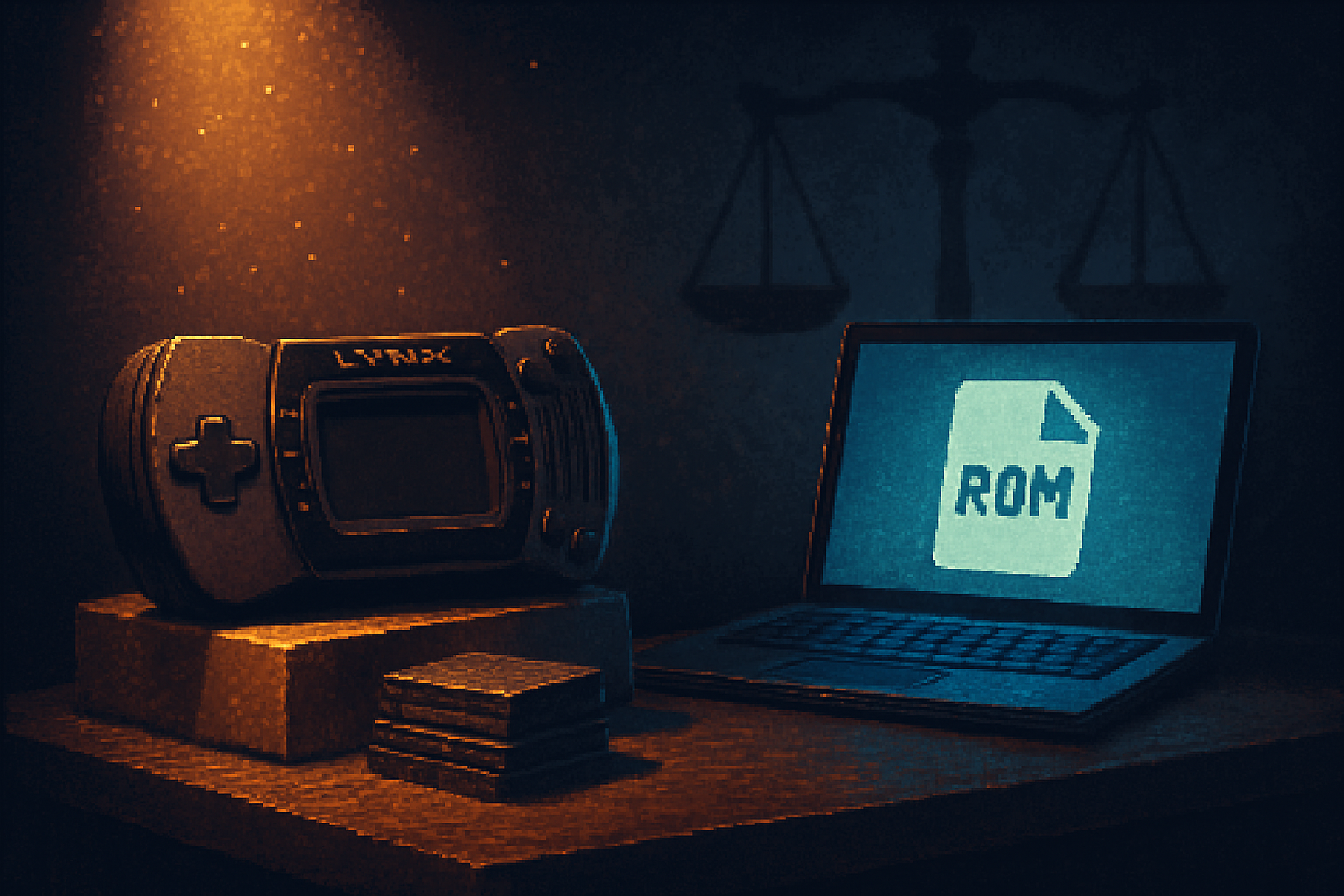
- ROM (or game image) - a digital copy of the cartridge’s contents. Technically called a ROM dump.
Emulators ≠ piracy. Emulators are legal when they’re created without copying copyrighted code from the console’s firmware or other proprietary binaries. ROMs, however, are copies of copyrighted works - and that’s where the law gets stingy.
The legal foundations (U.S.-centric, with general notes for other regions)
- Copyright law grants the rightsholder (usually the publisher) exclusive rights to make and distribute copies of a work. Downloading or distributing an unauthorized full copy of a game typically infringes that right.
- The DMCA’s anti-circumvention provisions (17 U.S.C. § 1201) make it illegal to bypass technological protection measures, or distribute tools that do so, even if the underlying copy might otherwise be legal. See the Copyright Office’s summary for details: https://www.copyright.gov/1201/
- Fair use is not a blanket shield. The four-factor test can sometimes protect transformative uses (commentary, criticism, research), but downloading a complete commercial ROM for personal play rarely qualifies. For a clear explainer on fair use, see Stanford’s guide: https://fairuse.stanford.edu/
If you’re outside the U.S., the principles are similar in many places, but details and enforcement differ. In Europe and other jurisdictions, there are often narrow exceptions for private copying or preservation, but they’re not universal.
Nintendo’s posture: litigation and deterrence
Nintendo has a long, well-publicized history of aggressively protecting its IP. In the last decade that posture has included lawsuits and takedown campaigns against ROM-hosting sites and individuals. Coverage of these enforcement actions is extensive - see reporting from The Verge and Polygon on major takedowns and suits: https://www.theverge.com and https://www.polygon.com (search “Nintendo ROM sites lawsuits”).
That aggression is not moral theater; it’s a practical barrier. Nintendo actively pursues sites that host ROMs and sometimes seeks financial damages. Even if criminal prosecution is rare, civil liability, account suspensions, and domain seizures are real risks for major ROM distributors and sometimes for individual uploaders.
The thin legal gray: emulators, BIOS/code, and clean-room implementations
- Clean-room emulators (re-implemented without copying proprietary code) are generally legal. Emulators like Mupen64Plus and other open-source projects are examples where developers wrote original code to replicate hardware behavior.
- Problems arise when an emulator includes copyrighted code from the original console or uses proprietary microcode blobs. If the emulator contains or relies on copyrighted code that was copied without permission, that copy can be infringing.
- Similarly, some “ROMs” contain not just game data but code extracted from the console or from other copyrighted firmware. That can make their distribution or use legally hazardous.
Preservation vs. piracy - a moral and legal tug-of-war
Archivists and some scholars argue that emulation is essential for preserving video game history. After all, hardware fails, cartridges degrade, and corporate interest in re-releases is inconsistent. Projects like the Internet Archive have tried to host playable collections for preservation and research, and those efforts provoke controversy and legal pushback.
The moral case for preservation is strong. The legal case is weaker - at least under current law. Courts have not created broad preservation exceptions that override a publisher’s reproduction rights, and companies like Nintendo are quick to defend their commercial interests.
Practical, low-risk ways to enjoy N64 games
If you’re a retro gamer who wants to avoid legal headaches, here are practical routes ranked from safest to riskiest:
- Buy and play legitimate re-releases. Nintendo periodically re-releases classic titles on modern platforms. The Nintendo Switch Online Expansion Pack, for example, offers an officially licensed N64 library for subscribers. Official emulation is legal because Nintendo controls distribution.
- Buy original cartridges and dump your own ROMs. Creating a personal backup of software you own is a common-sense approach. In the U.S., the legal status of private backups is murky but safer than downloading someone else’s copy. Tools and guides exist to dump cartridges legally for personal use.
- Use emulators with clean-room code. Running emulators that are not shipping copyrighted code reduces risk - though it doesn’t legalize using someone else’s pirated ROM.
- Seek out legally distributed ROMs and demos. Some indie studios and rights-holders occasionally release free images or allow downloads for preservation.
What to avoid:
- Downloading ROMs from unauthorized repositories. This is the highest-risk behavior for infringement claims and for morally funding piracy.
- Uploading or redistributing ROMs you own. Distribution is the primary target of copyright suits.
- Using patched or hacked firmware that circumvents DRM in a way that violates the DMCA anti-circumvention rules.
Common myths - busted
- “Emulators are illegal.” Not inherently. Clean-room emulators are legal. What’s illegal is unauthorized copying and distribution of games.
- “If I own the cartridge I can download the ROM anywhere.” Ownership of a cartridge doesn’t automatically make downloading someone else’s copy lawful. Dump your own cartridge if you want a defensible position.
- “It’s fair use if I just play it at home.” Playing a full commercial copy for entertainment does not fit the usual fair-use factors.
If you care about preservation, donate pressure, not piracy
If your motive is preservation, there are constructive alternatives to downloading questionable ROMs:
- Support museums, libraries, and initiatives that pursue legal avenues for archiving games.
- Pressure rights-holders and platforms to release classic libraries. Public demand has driven re-releases in the past.
- Contribute to or support legal documentation projects, oral histories, and code repositories that preserve development artifacts without infringing.
The future: will the law catch up?
The law lags technological reality. There are reasonable arguments for narrow preservation or private-use exceptions, and the DMCA’s triennial rulemaking sometimes provides small carve-outs. But as long as Nintendo and others profit from their back-catalog and enforce it zealously, broad legal refuge for downloading ROMs is unlikely.
That doesn’t make emulation illegitimate as a cultural practice - it makes it a practice that requires care, ethics, and often money. If you want to relive your N64 youth while sleeping well at night, buy the classics when possible, dump your own cartridges when you must, and celebrate emulators for the legitimate preservation and accessibility work they do rather than as a cover for casual piracy.
If you still want to walk the line - a final checklist
- Prefer official re-releases (Switch Online, Virtual Console archives).
- If you own a cartridge, consider dumping it yourself rather than downloading someone else’s dump.
- Use open-source, clean-room emulators.
- Don’t upload ROMs, or distribute them.
- Remember DMCA anti-circumvention rules - don’t use or distribute tools that bypass TPMs without understanding exemptions.
- When in doubt, consult a lawyer. This is not legal advice.
Further reading
- U.S. Copyright Office - DMCA info: https://www.copyright.gov/1201/
- Stanford University - Fair Use Overview: https://fairuse.stanford.edu/
- Electronic Frontier Foundation - coverage of emulation, preservation, and copyright (search their site): https://www.eff.org/
- Reporting on Nintendo enforcement actions - search The Verge and Polygon for recent coverage.
Nostalgia is oxygen for the modern gamer - you only notice it when it’s missing. Emulation keeps that oxygen flowing, but the pipes are sometimes illegal to touch. Know the law, play responsibly, and remember: the moral of every retro story is simple - if you loved it enough to want it again, consider paying for it where you can.