· retrogaming · 7 min read
Game Boy Emulators vs. Classic Hardware: The Great Debate
A spirited, practical look at choosing between Game Boy emulators and original Game Boy hardware. Covers play experience, accuracy, preservation, and the thorny legal and ethical landscape of ROMs - with concrete recommendations for collectors, casual players and archivists.
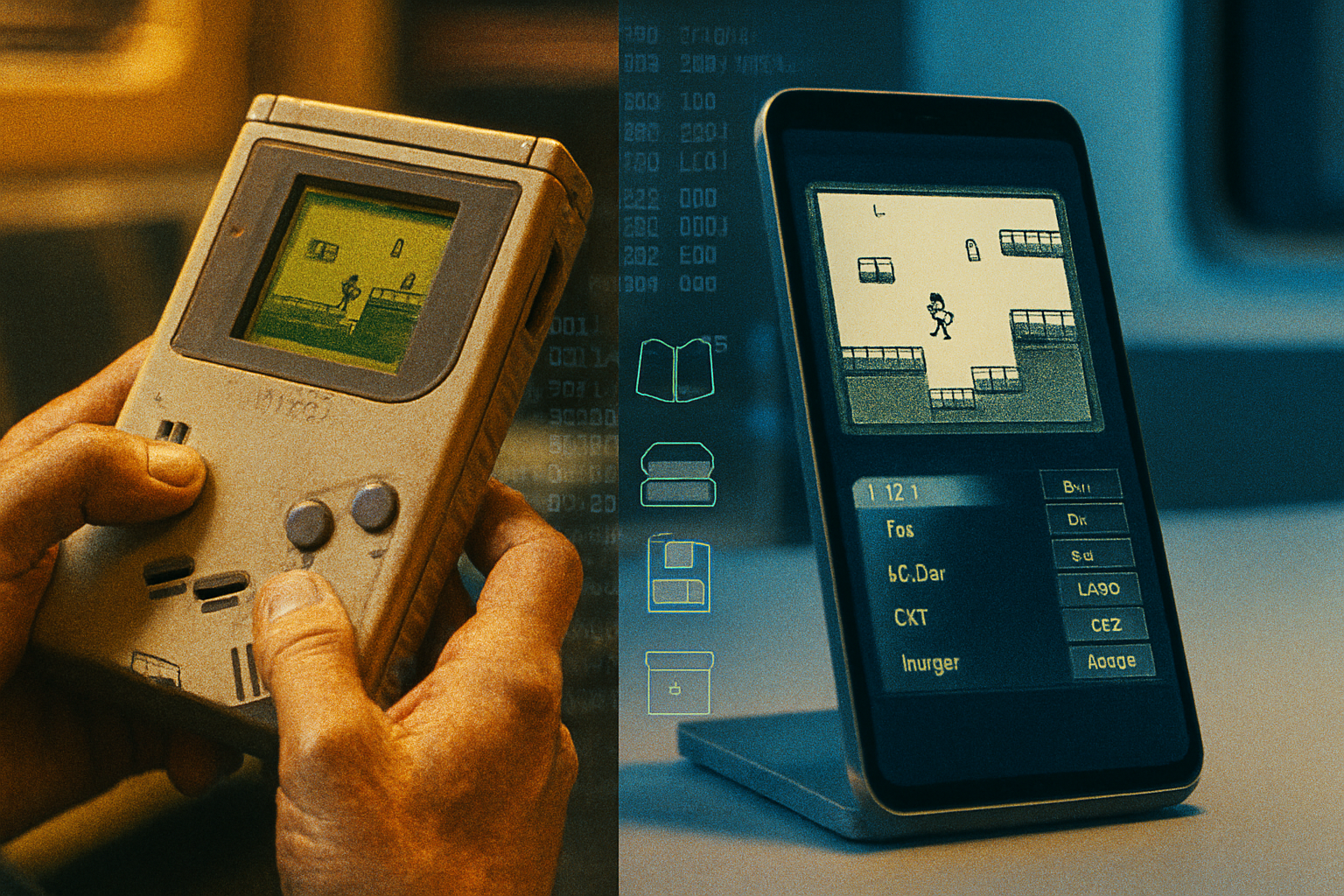
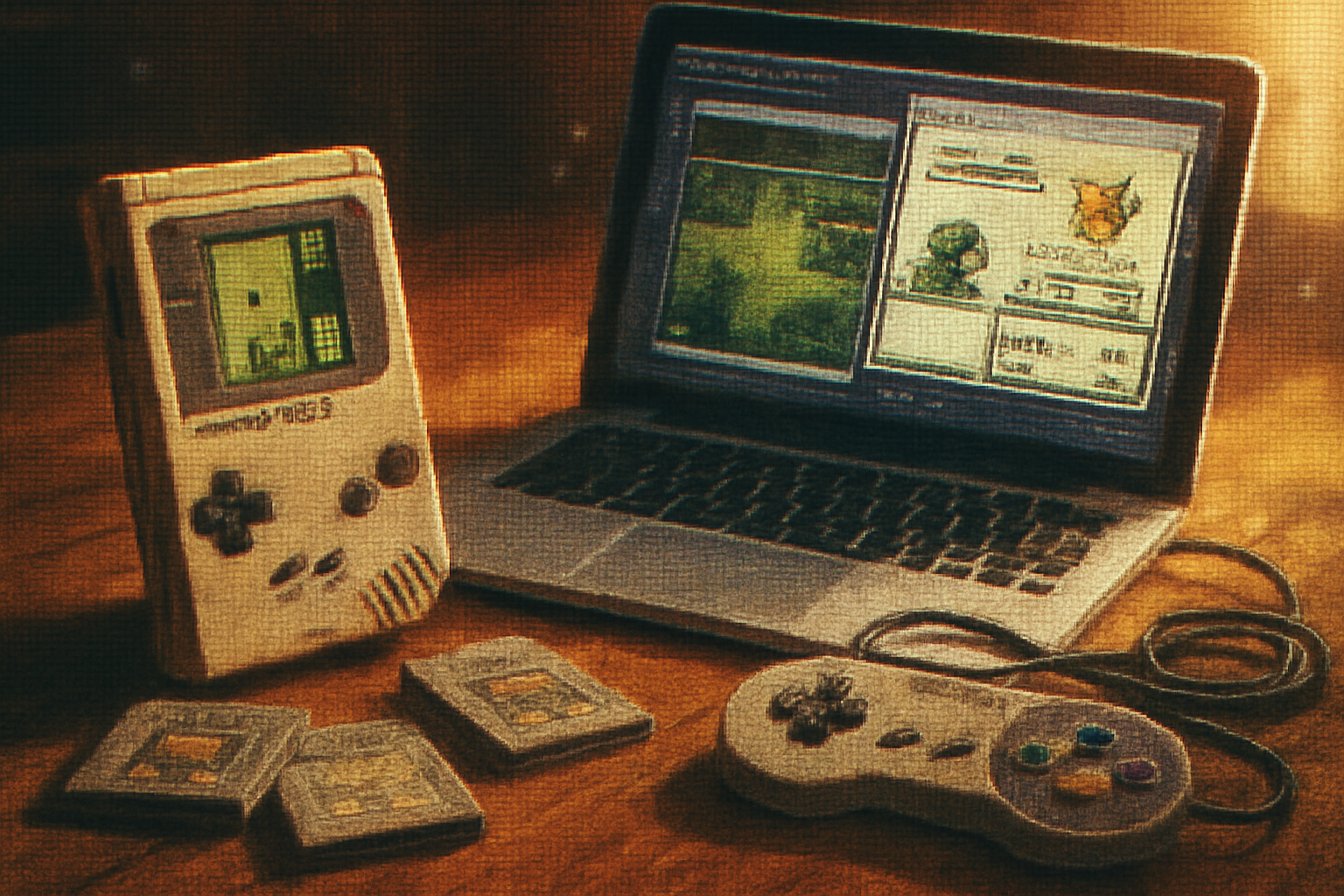
It was a rainy Tuesday and a commuter on the subway pulled out an original Game Boy. The greenish screen glowed, the plastic creaked, and a cartridge clicked home like a small confession. Across the aisle, someone else tapped a phone, launching a Game Boy emulator and loading the same game in half a second. Both smiled. Different rituals. Same joy.
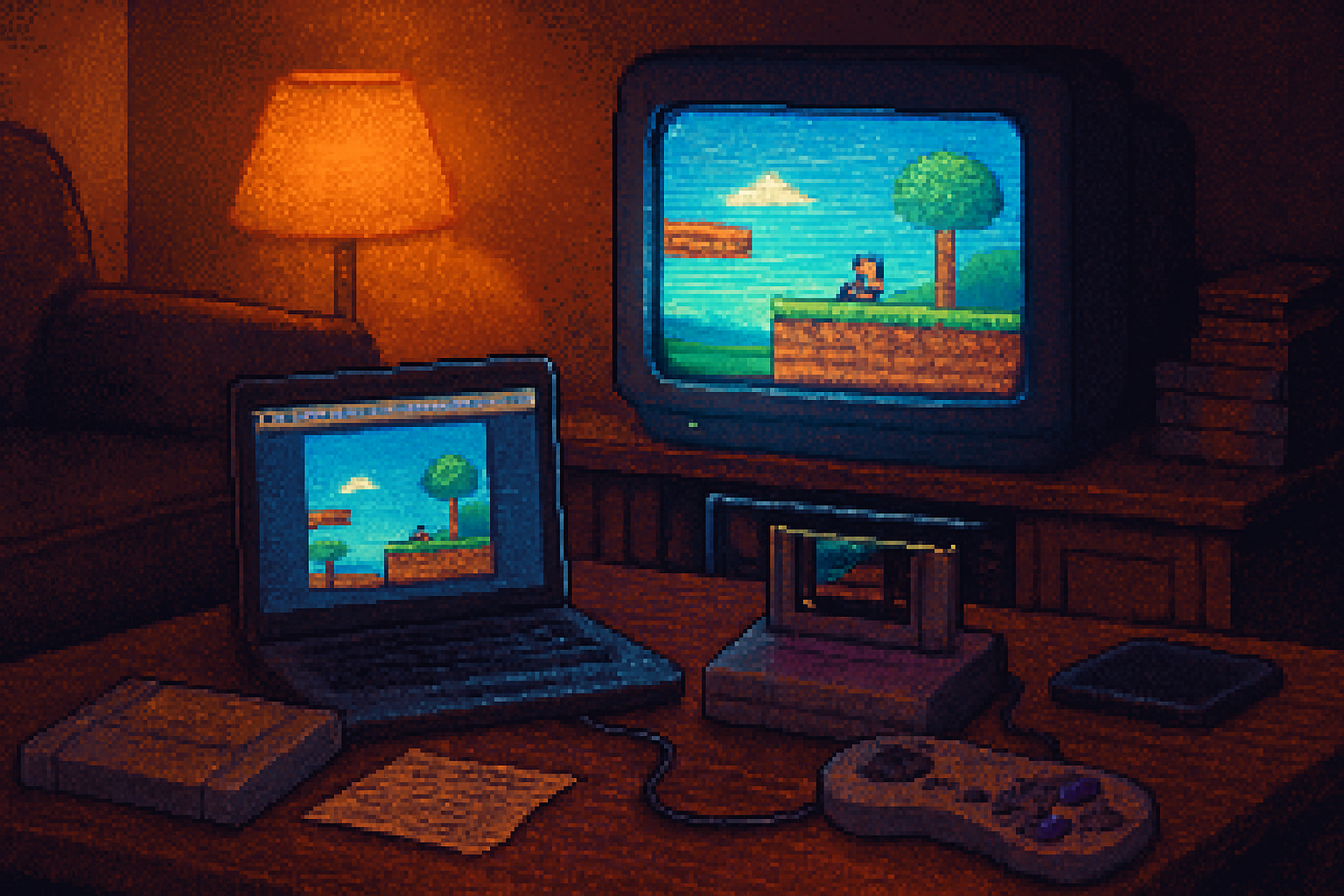
That moment - the tactile versus the instant - is the whole argument in microcosm. One side worships authenticity: the hardware, the smell of plastic, the tiny dead pixels. The other worships convenience, features, and accessibility. Neither side is entirely right. Nor are they entirely wrong.
The case for emulators: convenience, power, and possibility
If emulators were a person they’d be the friend who shows up with snacks and a Swiss Army knife. They do a dozen things the original cannot.
- Instant access and portability. Emulators run on phones, laptops, single-board computers, and tiny handhelds. You can carry hundreds of Game Boy ROMs in your pocket. No batteries required.
- Quality-of-life features. Save states, save-game backups, fast-forwarding, rewind, input remapping, and multiplayer over the internet are standard. They turn otherwise frustrating sessions (e.g., fiddly timing sequences) into approachable play.
- Visual and audio options. Pixel-perfect scaling, integer-multiple filters, CRT shaders, and audio equalizers let you replicate or stylize the look and sound.
- Preservation and archival tools. Accurate emulators allow researchers, speedrunners, and historians to inspect games deterministically, log inputs, and run automated tests.
- Development and hacking. ROM hacking, translation projects, and homebrew creation are far easier to test with emulators that support debugging and memory inspection.
Examples of high-quality Game Boy emulators include Gambatte and mGBA for accuracy, and RetroArch for convenience (see general background on emulation in: https://en.wikipedia.org/wiki/Emulator).
The case for original hardware: authenticity, feel, and cultural context
Original hardware offers an experience emulators can approximate but not fully replicate.
- Tactile authenticity. The resistance of buttons, the exact size and weight of the device, the click of a cartridge - these are not minor sensory facts. They shape how you play.
- Display and audio character. The original DMG-01 LCD, the pocket’s clearer contrast, and the Game Boy Color’s palette all have unique signatures. Emulators can mimic but rarely match the exact physical behavior of aging screens and speakers.
- Latency and timing quirks. Some games rely on hardware timing oddities. On real units, these quirks are part of the game’s identity. Emulators aim for correctness, but achieving cycle-accurate behavior across all titles is hard.
- Chain of ownership and legality. Playing on hardware is, in the simplest moral sense, playing on the item someone made you buy - you’ve supported the original market and the device’s creator.
- Social and ritual value. Trading cartridges, battery-backed saves, and collecting are cultural practices. Owning the cartridge is physical proof of a relationship to the game.
Game Boy hardware variations (DMG, Pocket, Color) each matter for authenticity; vintage displays and hardware mods (backlit screens, shell replacement) are part of the collector’s craft. Read a primer: https://en.wikipedia.org/wiki/Game_Boy
Preservation: where emulation becomes indispensable
If you care about games surviving past the obsolescence of their plastics, emulation is often the only realistic path.
- Hardware breaks. Capacitors leak, contrast fades, save batteries die. Some cartridges rely on volatile components that fail with time. Without dumps and emulation, many games will become unplayable.
- Reproducibility. Emulators let historians replicate a run, inspect memory, and run automated tests. That’s impossible with a single fragile cartridge.
- Institutional archiving. Libraries and museums increasingly rely on software images and emulators to preserve playable artifacts (see the Internet Archive’s broader preservation work: https://archive.org/).
This is why many preservationists argue: emulate first, repair and play physical hardware second. Not because they romanticize abstraction, but because emulation is the most reliable preservation medium.
ROMs and the ethical-legal thicket
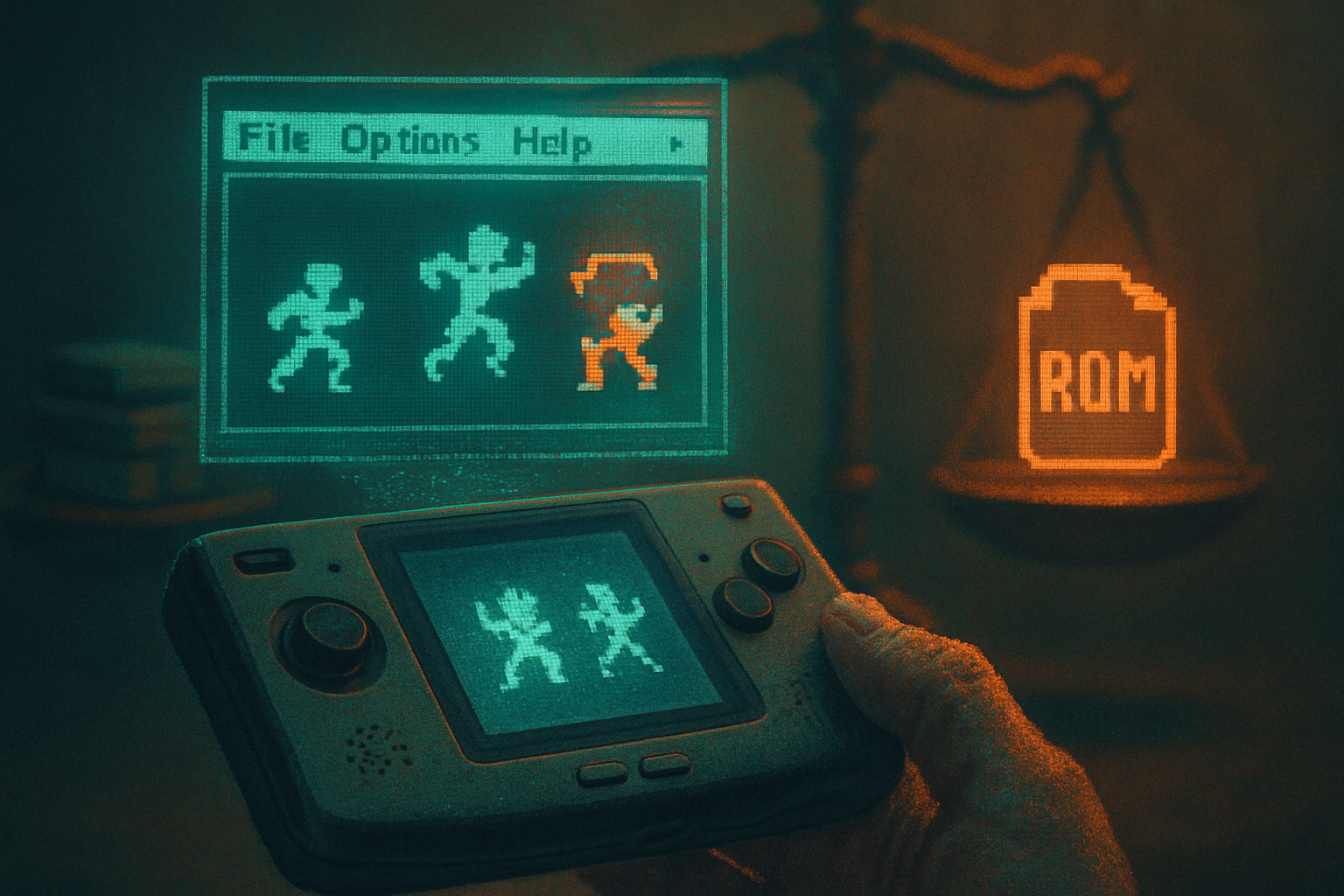
Here the debate gets noisy and moral. The blunt facts:
- ROMs are typically copyrighted works. Downloading or distributing a ROM without permission is usually infringement.
- Legal nuance exists. Ownership of a cartridge does not necessarily grant the legal right to a downloaded ROM, though many argue that making a personal backup of software you own is morally defensible - and some jurisdictions have exemptions under DMCA-like statutes.
- Law vs. ethics. Legal permissibility is not the whole ethical story. If a game is commercially available via legal re-release (Virtual Console, Switch Online, standalone collections), buying that re-release supports creators and rights holders in a way a downloaded ROM does not.
For the present legal landscape and exemptions, see the U.S. Copyright Office’s 1201 rulemaking archive (DMCA exemptions): https://www.copyright.gov/1201/
Practical ethical rules-of-thumb:
- If you own the physical cartridge and need a backup for preservation or convenience, prefer making your own dump (there are tools for this) rather than downloading a ROM. Archival dumps also preserve metadata and save formats.
- If a game is currently sold by rights holders, buy or use the legal channel. It supports the ecosystem.
- Use emulation for preservation, research, and accessibility - but don’t treat it as a free pass to strip rights from creators forever.
A related point: rights holders sometimes act ruthlessly (Nintendo is famous for takedowns) and sometimes responsibly (curating rereleases). The moral line is clearer than the legal one.
Accuracy: how close can emulators get?
The best emulators are astonishingly faithful. But there are categories of fidelity:
- Cycle-accurate emulation attempts to reproduce every clock tick. It’s the gold standard for the most finicky games, but it’s computationally heavier.
- Behaviorally accurate emulation reproduces the game’s behavior as observed, without simulating every cycle. It’s often sufficient for everyday play.
- Sound and analog quirks are the hardest to reproduce. Tiny analog imperfections in original hardware can define a game’s audio identity.
Testing matters. Projects like Blargg’s test ROMs and community-driven compatibility lists help determine which emulator best matches original hardware on a per-game basis.
Accessibility and inclusion
This is where emulators do social good that cannot be overstated.
- Physical disabilities can be accommodated with remappable controls, haptic feedback, and controller alternatives that original hardware cannot provide.
- Emulators make games accessible on modern platforms and allow features like save states, rewind, and adjustable speed - crucial for players who might otherwise be excluded by difficulty or limited play windows.
If your priority is making games playable for more people, emulators are not just convenient - they’re a moral good.
Practical recommendations (so you don’t fight this debate forever)
- For collectors and ritualists - Buy original hardware and cartridges. Keep them. Learn battery replacement, capacitor recapping, and prefer gently-modified backlit screens to full emulation if you want authenticity with playability.
- For preservationists and researchers - Dump your own cartridges, archive metadata, and use open, documented formats. Share findings with institutions when possible. Use emulators that emphasize accuracy.
- For casual players - Emulators give the best experience for convenience - but when a clean legal re-release exists, buy it.
- For accessibility-minded players or developers - Emulators are the default; champion them and push for legal frameworks that permit preservation and reasonable personal backups.
If you want a short decision tree:
- Want authenticity and ritual? Buy hardware.
- Want convenience, features, and accessibility? Use emulators.
- Want preservation and long-term survival of games? Emulate and archive responsibly.
A few caveats and technical tidbits
- Save batteries - Many cartridges used a tiny battery for SRAM saves; these die and can be replaced, but you should back up before replacing [hardware hacking communities have guides].
- Modding and repairs - Backlight mods and shell replacements are common. They change authenticity but preserve playability.
- Netplay and speedrunning - Emulators enable modern communities. Speedrunners need deterministic emulation; otherwise results aren’t reproducible.
Final verdict: both are right - and that’s the point
The debate collapses if you accept one simple thing: emulators and original hardware serve different values. The hardware is a cultural artifact that embodies a moment. Emulators are tools for access, preservation, and experimentation.
If you love the ritual and the physicality, buy the Game Boy and cherish the cartridge. If you want to play, share, preserve, or simply make games accessible, emulation is often the humane choice.
Both paths have responsibilities. Keep copies of what you own, support creators when you can, and use emulation as a bridge - not a justification for moral laziness.
In the end: keep the classic hardware on your shelf like an heirloom. Keep the emulator on your phone like a first-aid kit. Both make the game alive.
References and further reading
- Emulator (computing) - https://en.wikipedia.org/wiki/Emulator
- Game Boy - https://en.wikipedia.org/wiki/Game_Boy
- Internet Archive - https://archive.org/
- U.S. Copyright Office - Section 1201 rulemaking and exemptions - https://www.copyright.gov/1201/