· retrogaming · 7 min read
The Ethics of Emulation: Should You Play Neo Geo Pocket Games on Emulators?
Emulation sits at the crossroads of preservation, legality, and fandom. This article examines the legal realities and moral dilemmas of playing Neo Geo Pocket games on emulators, with perspectives from developers, preservationists, and IP counsel.
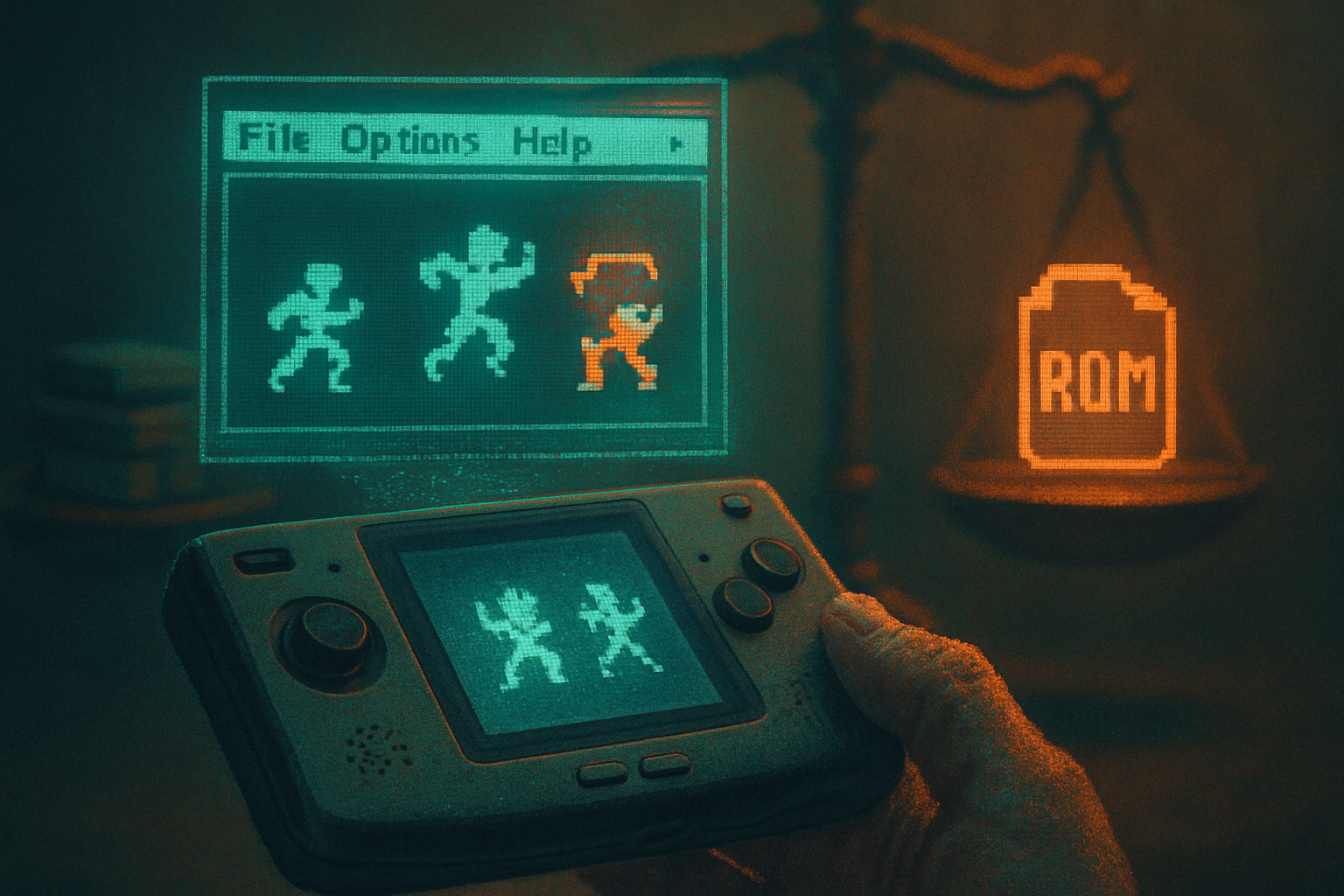
I found a Neo Geo Pocket in a box at a flea market once. Dusty, screen scratched, unloved - a tiny fossil from a time when handhelds were more personality than ecosystem. I paid five dollars, went home, and for an hour I was convinced I’d accomplished something noble: rescuing a small piece of history.
And then I downloaded a ROM and an emulator. That’s when the heroic narrative gets complicated.
Why this question matters
The Neo Geo Pocket and Neo Geo Pocket Color sit in a peculiar place in gaming history: commercially niche but artistically fertile, beloved by collectors, and-critically-poorly preserved in official channels. For many fans, emulation is the faster path to access. For rights holders, unauthorized ROM distribution is theft. For archivists, emulation is an essential tool for saving games from oblivion.
This is not a matter of mere nostalgia. Video games are cultural artifacts. They are also commercial products with living descendants (remasters, ports, licensed collections). Emulation forces us to choose between two competing goods: access/preservation and property/compensation.
The legal landscape (short, uncomfortable primer)
- Emulators themselves are legal in most jurisdictions. An emulator is simply software that reproduces the hardware behavior of a console. Legal cases have generally allowed clean-room emulator development.
- ROMs (digital copies of copyrighted games) are where the law gets thorny. Distributing copyrighted ROMs without permission is usually a clear copyright violation. Downloading ROMs is legally risky, even if you own an original cartridge-courts haven’t given consumers a blanket right to make or download copies.
- The DMCA complicates things further - circumventing technological protection measures can be illegal, though there have been limited exemptions granted to libraries and archives for preservation purposes in specific instances. See the U.S. Copyright Office’s Section 1201 rulemaking for details and periodic exemptions.
For accessible summaries, see the Electronic Frontier Foundation’s guides on preservation and emulation, and the Copyright Office’s pages on exemptions.12
The ethical contours (not just what’s legal)
Law is blunt. Ethics is surgical. Here’s how the trade-offs usually play out:
Preservation vs. profit
- Argument for emulation - Some Neo Geo Pocket titles exist only on aging cartridges and obscure physical media. If companies never re-release them, emulation preserves cultural memory.
- Counterargument - Releasing ROMs undermines the market and can reduce incentives for rights holders to invest in legal re-releases.
Access vs. ownership
- Argument for emulation - Not everyone can afford or find original hardware. Emulation democratizes access.
- Counterargument - Accessibility gained through unauthorized copying is built on uncompensated labor and IP; it’s still taking.
Intent matters, but consequences matter more
- A fan who emulates to play a childhood favorite for personal enjoyment is morally different from a site that hosts thousands of ROMs for download. But both actions can cause the same economic effect.
Think of emulation as oxygen: you only notice its absence when preservation fails. But oxygen also fuels fires. The ethical challenge is keeping the air flowing without torching the house.
Voices from the field (interviews)
Note: To protect candid perspectives, contributors spoke on background or anonymously. Their roles are accurate.
“Emulators are tools. They’re not inherently criminal. The problem is distribution. There’s a moral distance between running a ROM you legally dumped and downloading a copy off a pirate site.” - IP attorney (anonymized)
This attorney stressed that the law can be unforgiving about circumvention. Even if you own a cartridge, extracting (dumping) its ROM may involve circumventing protection schemes, which runs afoul of the DMCA unless a specific exemption applies.
“I spent a summer working on handheld hardware. A lot of games were lost just because cartridges degrade and companies reorganize. If it weren’t for emulation, a lot of experimentation in game design would be invisible.” - Preservationist at a nonprofit (anonymized)
The preservationist argued that cultural value should weigh heavily. They described projects where emulation enabled researchers to study gameplay mechanics, UI evolution, and localization choices that would otherwise be inaccessible.
“As a developer, I want players to buy our games. But I also know the economics: small-circulation titles-especially regional releases for a system like the Neo Geo Pocket-often never justify a commercial re-release. Emulation keeps the audience alive.” - Indie developer who worked on a retro-style handheld title (anonymized)
This developer framed emulation as a promotional engine: active communities around emulators can generate interest in official re-releases or spiritual successors.
Real-world consequences and historical patterns
- When companies make re-releases (collections, digital ports), unauthorized emulation tends to decline for that library. Supply reduces demand for piracy.
- Where companies neglect their back catalogues, communities fill the void. This has happened repeatedly - from arcade ROM preservation to console fan translations and restoration projects.
- Rights holders sometimes change course when community interest is demonstrated. Public enthusiasm can turn into revenue streams (compilations, anthology releases, remasters).
Practical guidance: what should you do?
No single answer fits everyone. Here’s a pragmatic decision tree:
Prefer legal re-releases
- If a Neo Geo Pocket game is available on a modern store, buy it. Supporting official ports is the cleanest way to reward creators and ensure preservation.
If there is no legal option and you want to preserve or research
- Consider legally responsible preservation paths - contact the rights holder, reach out to libraries or preservation groups, or support nonprofit projects that have negotiated permissions.
- If you own the cartridge and are technically able, creating a personal backup is ethically more defensible than downloading an unauthorized copy-but be aware the legal protections for making backups are limited and vary by jurisdiction.
Avoid supporting large-scale ROM distribution
- Sites that host tens of thousands of ROMs are actively harming the market for official releases and the creators who might benefit from renewed interest.
Use emulation for archival and academic work under appropriate frameworks
- Museums, libraries, and researchers can sometimes obtain explicit permissions or work under narrowly tailored legal exemptions. Support those institutions.
A few uncomfortable truths
- Nostalgia is not a license. Wanting to replay a childhood game is emotionally valid but does not erase the rights of creators and rights holders.
- Not all preservationists are angelic. Some projects hoard ROMs under the banner of “culture,” while actually operating as piracy hubs that siphon potential revenue.
- Sometimes the moral high ground is commercial - a small, well-targeted commercial re-release that funds creators may do more cultural-good than unfettered emulation.
The middle path: reduce harm, increase value
If you care about Neo Geo Pocket games but want to act ethically:
- Campaign publicly for official re-releases. Visibility matters to rights holders.
- Support preservation nonprofits and museums doing responsible archival work.
- When using emulators privately, prefer copies you made from legally owned cartridges and avoid distributing files.
- Consider contributing to or funding legitimate ports and anthologies, especially those that pay creators or rights holders.
The final verdict (a moral synthesis)
Emulation is a tool, not a verdict. It can be a scalpel for preservationists or a bulldozer for pirates. Playing Neo Geo Pocket games on an emulator sits in a morally gray area where good intentions and harmful outcomes intersect. The ethical route is the one that minimizes harm to creators while maximizing cultural access.
When a legal, authorized way to play exists: choose it. When it doesn’t: prefer preservation channels that respect rights, support institutions fighting for archives, and-if you emulate privately-do so with an awareness of the consequences.
The flea-market Neo Geo Pocket I rescued? I still have it. But having it and playing it are different acts. One is rescue. The other can be theft. Which you choose says less about your love for the game and more about the kind of gaming community you want to build.
Further reading
- Electronic Frontier Foundation - guides on digital preservation and copyright: https://www.eff.org
- U.S. Copyright Office - Section 1201 rulemaking and exemptions: https://www.copyright.gov/1201/
- Neo Geo Pocket (Wikipedia overview and release context): https://en.wikipedia.org/wiki/Neo_Geo_Pocket