· retrotech · 6 min read
From Windows Write to AI: How Technology Evolution Changed Writing
A brisk tour from the blocky simplicity of Windows Write to today's generative-AI assistants. How the tools changed what writing looks like, who writes, and what it means to be an author - with practical strategies for keeping your voice and agency intact.
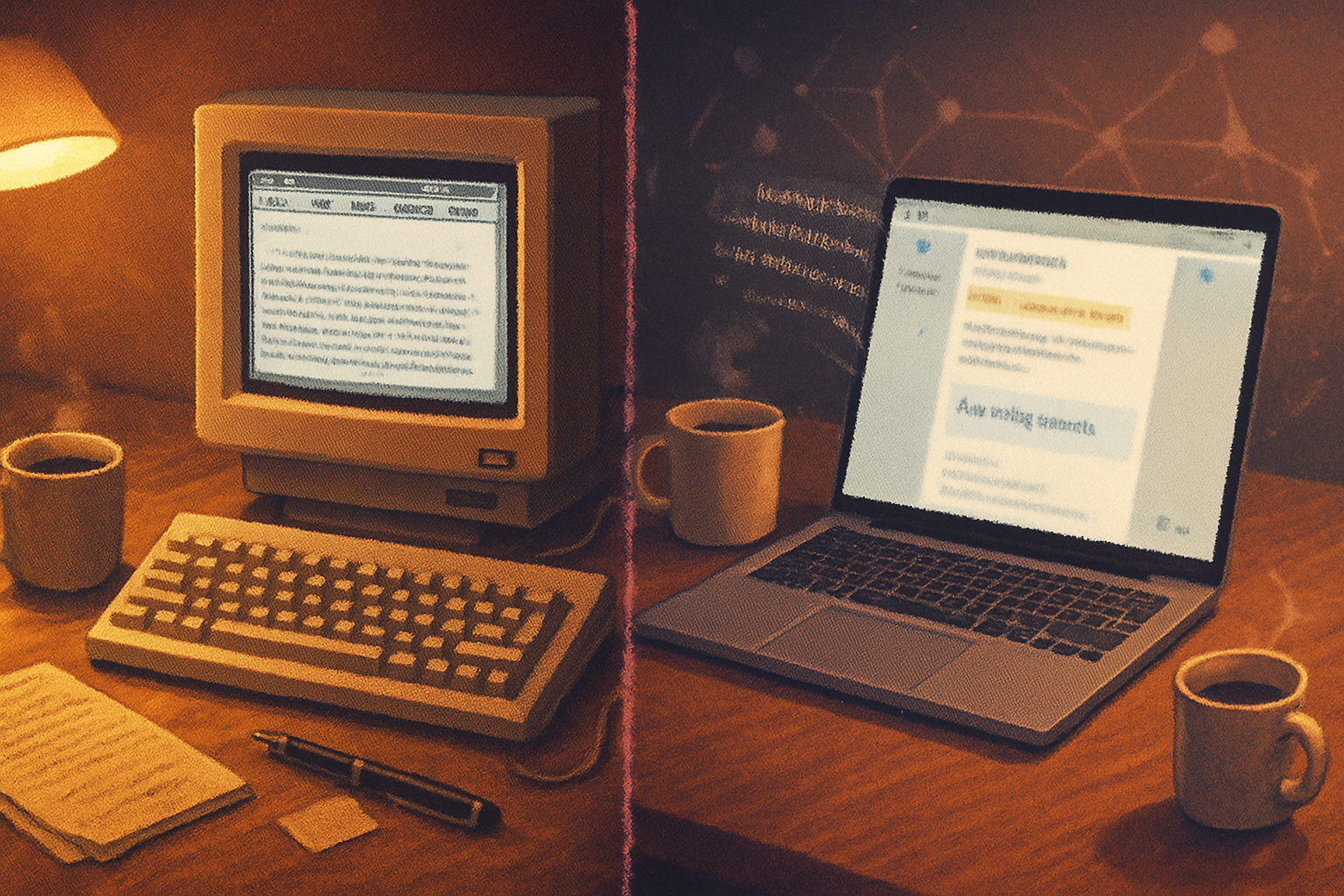
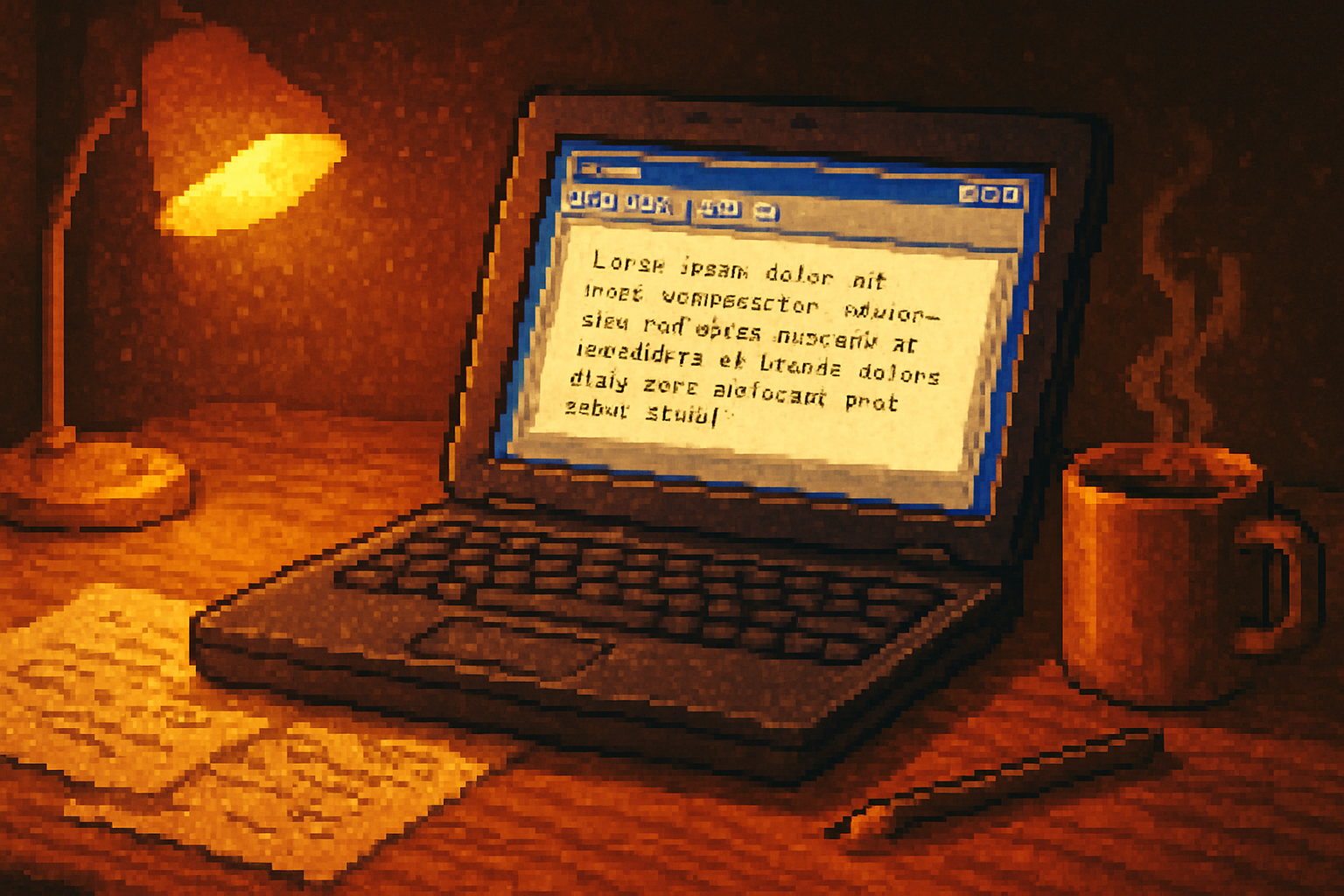
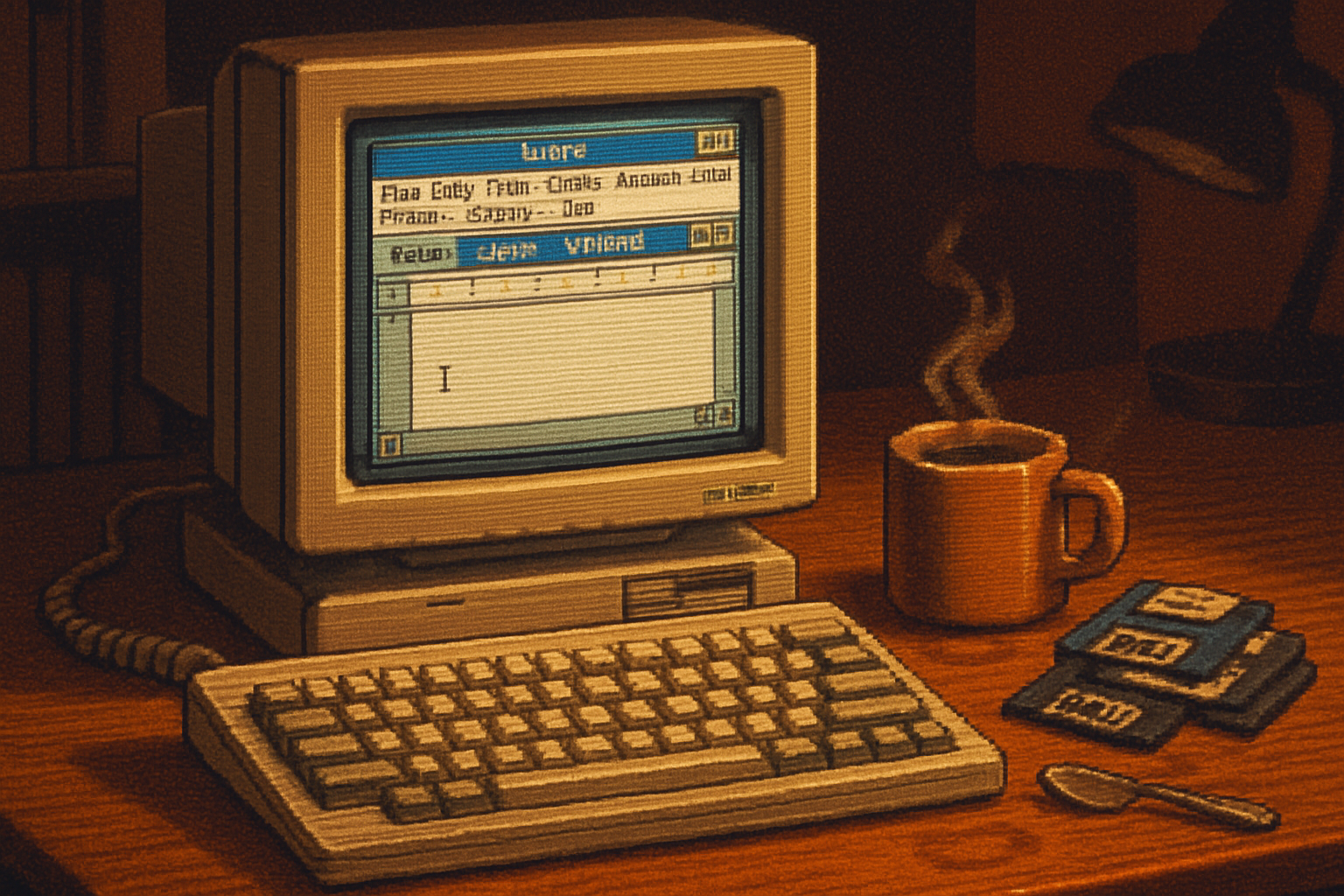
A short confession: I once opened Windows Write on a rented PC and felt strangely liberated by its ugliness. No ribbon, no font carousel, no notification badges - just a rectangular field of black text on gray. It forced me to stop fiddling and start saying something. That blunt, utilitarian constraint taught me more about structure and voice than a hundred hours with a limitless, prettified editor.
Fast-forward thirty years. The gray rectangle has been replaced by interfaces that offer you sentences, headlines, entire essays before you’ve typed a noun. The machine no longer just records thought; it proposes and composes. This is not merely a change in software. It’s a redefinition of what the act of writing is and who - or what - participates in it.
From stenography to suggestion: a short technology genealogy
- Word processors like WordStar and WordPerfect made editing and layout faster and portable https://en.wikipedia.org/wiki/WordStar https://en.wikipedia.org/wiki/WordPerfect.
- Windows Write offered a simple GUI-focused environment that encouraged production over distraction https://en.wikipedia.org/wiki/Windows_Write.
- Cloud editors (Google Docs) added collaboration and synchronous coauthoring https://en.wikipedia.org/wiki/Google_Docs.
- Algorithmic publishing - early automated journalism engines like Heliograf - introduced automated factual reporting at scale https://en.wikipedia.org/wiki/Heliograf_(software).
- Generative models (GPT-3 and successors) transformed assistance into authorship - models that can suggest, continue, translate, and invent language with startling fluency
Each step added a new affordance: typesetting, revision, collaboration, automation, and, finally, creative suggestion. The software changed from passive ledger to active collaborator.
Why tools change writing: a couple of frameworks
- Marshall McLuhan’s old chestnut - “the medium is the message” - still bites. The tool shapes attention and what gets valued https://en.wikipedia.org/wiki/Marshall_McLuhan.
- The “extended mind” hypothesis - tools are cognitive prostheses. A pen is memory; a spell-checker is attention. Adding an AI model is like adding a second brain that has taste, but a different set of biases and memory
Put plainly: the device or program you use does not just carry your prose - it edits the incentives and habits that produce prose.
What changed for writers - the good, the bad, and the awkward
Creativity: constraint vs. abundance
Constraint breeds invention. Windows Write’s paucity forced choices. Today’s models offer abundance: ten opening paragraphs in 10 seconds. Abundance can be intoxicating - and anesthetizing. Where the old tool forced a writer to invent every turn, the new tool offers invention on demand.
- Benefit - Staring at a blank page is less paralyzing. Generative models prime ideas, create variants, and test tonal moves rapidly.
- Risk - Over-reliance produces homogenized prose. When the first draft is machine-shaped, the author’s idiosyncrasies can be sanded away.
Autonomy: delegation and the illusion of control
Delegation is seductive. Ask an AI to “write a lead” and it will. But what are you delegating? Syntax? structure? conceptual framing? Delegation can free bandwidth for higher-order thinking - if you retain editorial authority.
If you treat AI output as final rather than raw material, you trade autonomy for efficiency. Editors at scale know this: delegating routine beats to machines allows human writers to focus on nuance. The trick is not to hand over the orchestra baton.
Craft: skill shift, not skill elimination
The craft has not disappeared; it has migrated.
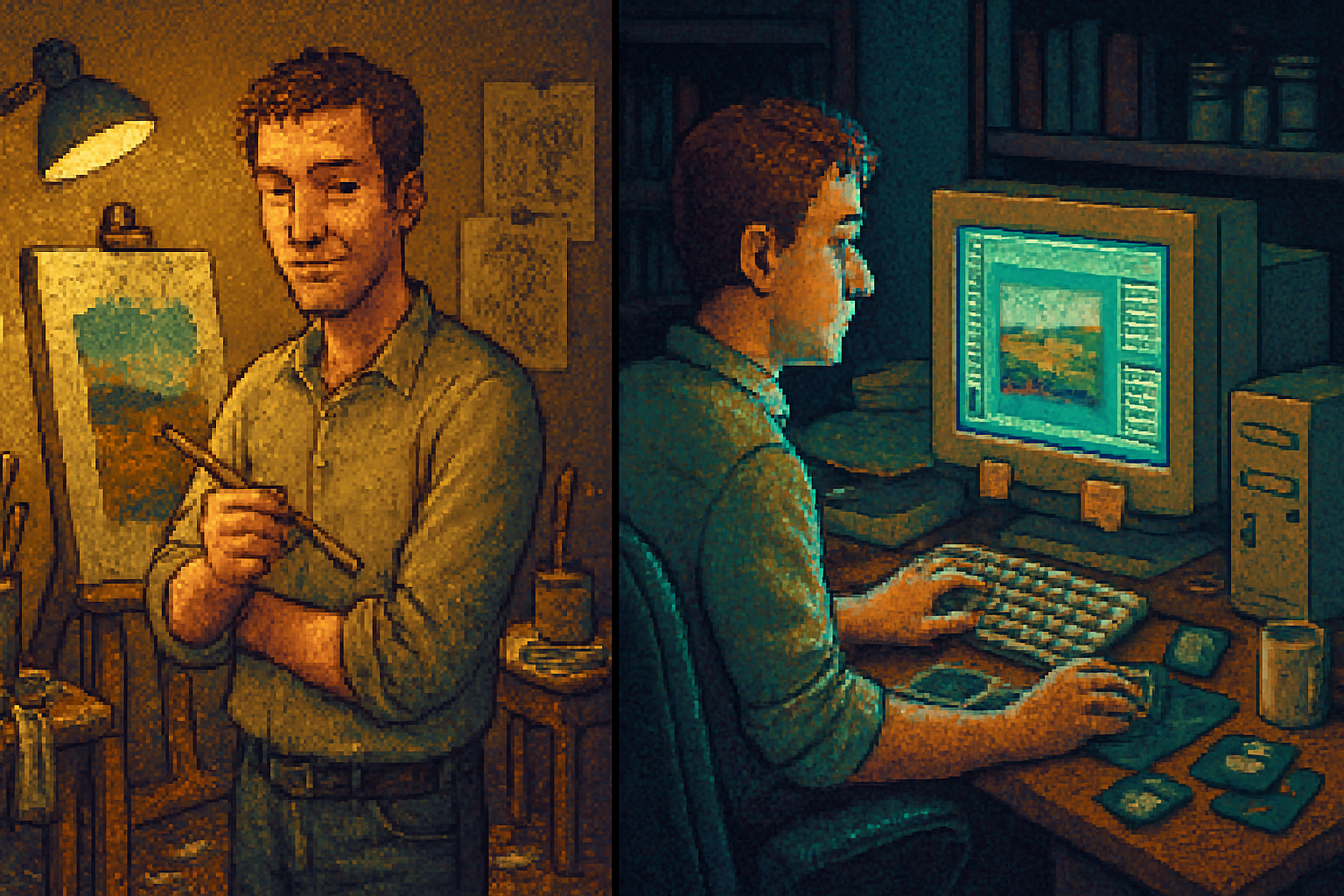
- Typing and mechanics -> Prompt design and judgment. Good prompts are to modern prose what tight handwriting once was to legal forms.
- Sentence shaping -> curatorial editing. You’ll spend more time choosing, pruning, and aligning the machine’s drafts to your voice.
This is akin to the transition from stone-carving to bronze-casting - mastery requires new tooling, but the aesthetic goals remain.
Ethics and authority
Generative models hallucinate, copy, and inherit biases from their training data. They can also obscure authorship. Who owns a paragraph suggested by a model? When a story is partly machine-generated, how honest must the byline be? Newsrooms and institutions are still figuring this out; automated reporting systems like Heliograf raised early versions of these questions https://en.wikipedia.org/wiki/Heliograf_(software).
Concrete examples: how this plays out in practice
- A novelist uses a model to break writer’s block by requesting a chapter outline. The outline gives unexpected plot turns - useful scaffolding - but the novelist discards or reshapes anything that feels clichéd.
- A content farm automates listicles, using AI to generate SEO hits. Volume rises; voice flattens; human writers are reduced to prompt-and-publish operators.
- A newsroom uses an automated story skeleton for sports and earnings reports and reserves investigative beats for humans. The result - efficient coverage of routine facts, preserved attention for human analysis.
These are not mutually exclusive futures; they coexist.
Practical rules for writers who want to stay human (and valuable)
- Think like an editor. Use AI to generate variations, but be ruthless about what you keep. Treat outputs as clay, not sculpture.
- Preserve voice deliberately. Collect phrases, metaphors, syntactic rhythms that define your prose. When the machine offers a sentence, run it through your voice filter.
- Log provenance. Keep a simple note of when an AI contributed. Not because regulators demand it (yet) but because your future self will want to know which ideas were yours.
- Learn prompt craft. A precise prompt saves revision time. Try iterative prompting - ask for a draft, then request targeted rewrites (tone, length, examples).
- Use constraints as instruments. Paradoxically, impose tighter constraints on AI (e.g., “Write a 120-word cold-open in the voice of Joan Didion about commuter trains”) to force creative trade-offs.
- Beware of over-optimization. If your work exists primarily to please algorithmic ranking systems (SEO, engagement metrics) you will drift toward the lowest-common-denominator content.
The long arc: what this means for the culture of writing
Technology repeatedly decouples effort from output. The printing press, the typewriter, the word processor - each cut friction and reshaped who could publish. Generative AI accelerates that trend but adds a new variable: authorship dilution.
We will see three durable effects:
- Proliferation of rough content. More words will chase attention - not all of them good. Quantity and noise will rise.
- Premium for distinctive voice. As cheap prose proliferates, voice, insight, and reputation become scarce commodities. Originality will pay more, not less.
- Expanded roles for writers. The skill set will broaden - storytelling, verification, curation, ethics, and prompt design will sit alongside sentence-level craft.
Final reckoning: tools are not destiny - practices are
Windows Write taught a generation to accept blunt constraints and to treasure clarity. Modern AI offers seductive abundance. Both teach a similar moral: the instrument you choose will seduce you into particular habits. If you let a tool define the terms of your craft, you will be reshaped by it.
But the inverse is true too. Tools are malleable. Used with intention, they can amplify curiosity and free human attention for the things machines cannot do: moral judgment, lived experience, and the strange, stubborn interiority that gives writing its authority.
We will not return to the gray rectangle of Windows Write. Nor should we. The task is not to reject new capability, but to develop practices - intellectual hygiene, attribution norms, craft rituals - that let writers use AI without being used by it.
References
- Windows Write - Wikipedia: https://en.wikipedia.org/wiki/Windows_Write
- WordStar - Wikipedia: https://en.wikipedia.org/wiki/WordStar
- WordPerfect - Wikipedia: https://en.wikipedia.org/wiki/WordPerfect
- Google Docs - Wikipedia: https://en.wikipedia.org/wiki/Google_Docs
- Heliograf (software) - Wikipedia: https://en.wikipedia.org/wiki/Heliograf_(software)
- GPT-3 - Wikipedia: https://en.wikipedia.org/wiki/GPT-3
- Marshall McLuhan - Wikipedia: https://en.wikipedia.org/wiki/Marshall_McLuhan
- Extended mind - Wikipedia: https://en.wikipedia.org/wiki/Extended_mind