· culture · 7 min read
From Pixels to Paper: How Kodak is Reinventing Its Legacy
Kodak is leaning into nostalgia while shipping new hybrid tools - instant-print cameras, mobile printers, film relaunches and cloud-to-print services - to shepherd a new generation from pixels back to paper. Here’s how the company is marrying its analog DNA with digital-first habits to court young creatives.

A street market in Brooklyn. A kid in a thrifted band tee buys an old camera for twenty dollars, hands trembling. They load a new roll of film - real cellulose, ribbon-scented - and for a week the world contracts and expands into rectangles of grain and light. The photos arrive late, imperfect, intimate. They feel like ownership.
That scene could be a thousand Instagram captions. But it also describes a commercial truth Kodak knows in its bones: people still crave the physical. The company that practically invented modern photography is no longer trying to be just a patent-holding lumbering giant or an ironically cool logo on hoodies. It’s quietly reshaping itself around a simple proposition - marry the tactile pleasures of film and print with the convenience and social-first instincts of contemporary digital tools.
Below: a guided look at how Kodak is doing that - not as sentimentality, but as strategy.
The paradox Kodak is betting on
Digital is ubiquitous; analog is scarce. Scarcity breeds value. Kodak’s bets are not on making film mainstream again in volume, but on making it meaningful in the cultural economy: limited, collectible, tactile. Like vinyl records in the music industry, analogue photography isn’t returning to dominance - it’s returning as a priced, curated experience.
Kodak’s strategy stitches together three things:
- Hardware that blends capture and instant physical output (instant-print cameras, portable photo printers).
- Film and chemistry for enthusiasts and professionals (revived film stocks, motion-picture film support).
- Cloud and retail services that let digital natives turn pixels into prints quickly (apps, kiosks, retail partnerships).
Each thread addresses a different friction point for young creatives: discovery, immediacy, and the finality of physical objects.
Hybrid hardware: nostalgia redesigned for immediacy
Kodak’s consumer-facing devices emphasize two ideas: simplicity and ceremony. A modern young photographer wants immediacy (post it now) and ceremony (hold something real). Kodak answers with products that do both.
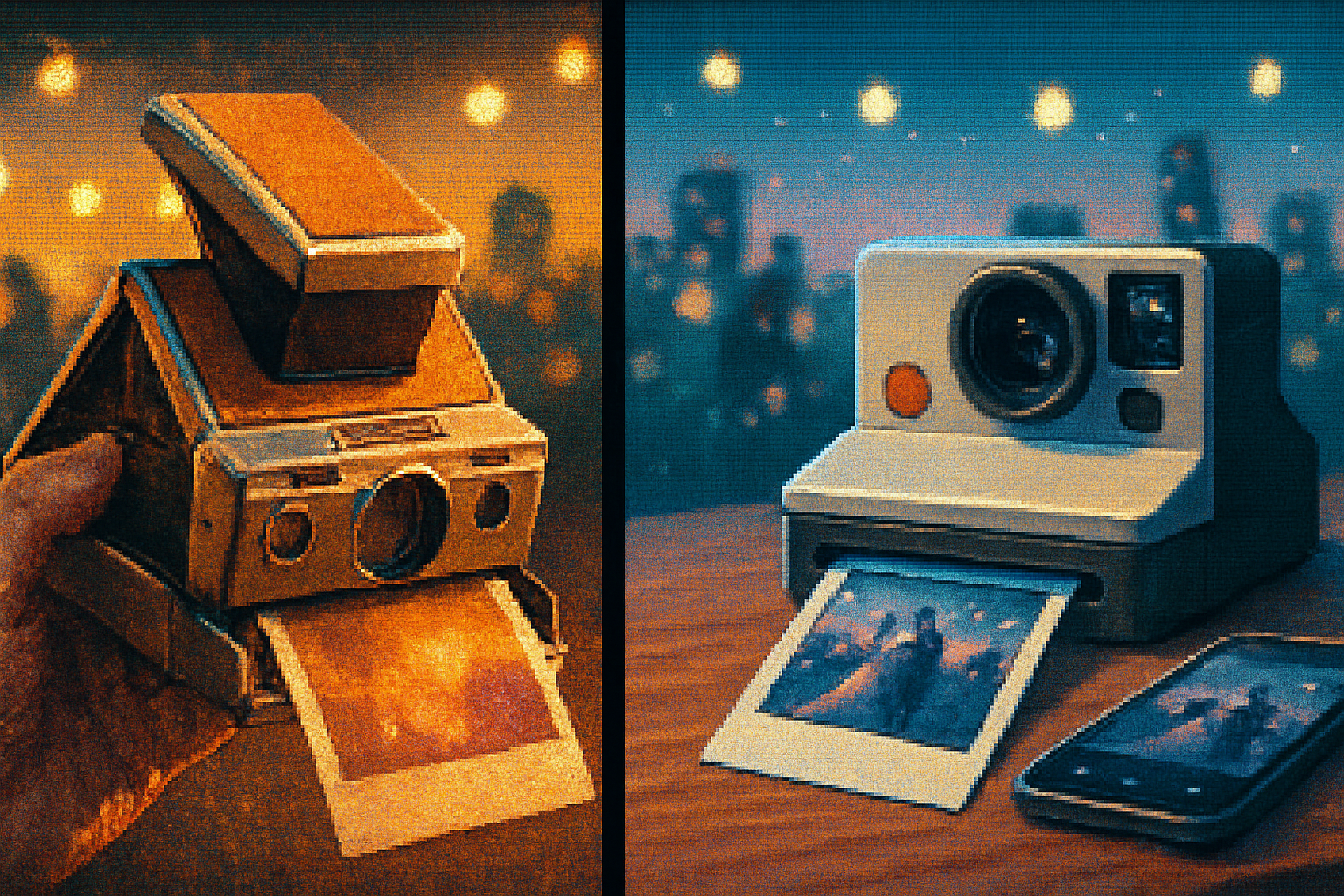
Instant print cameras and ZINK-based or dye-sublimation portable printers let you shoot and produce a small physical print in minutes. These devices are deliberately tactile - chunky bodies, slotted film, tactile shutter buttons - but they pair with smartphone-ready connectivity and companion apps so you can edit with familiar filters first.
Compact, affordable plug-and-play models (think pocketable printers and one-button instant cameras) let beginners bypass analog learning curves while still producing something analogue-adjacent - a physical keepsake you can stick in a journal or hand to a friend.
The point is subtle: Kodak isn’t trying to beat smartphones at pixels. It’s selling the output smartphones don’t give you - an object.
(For product context, see Kodak’s consumer device pages and recent coverage of their instant camera lineup.) Kodak product pages | The Verge on instant-print cameras
Film revival: scarcity, authenticity, and the professional pipeline
Kodak’s film relaunches - from color reversal stocks to specialty emulsions - are not an exercise in nostalgia for executives with sepia-filtered PowerPoints. They’re a commercial recognition that a segment of creators, from Instagram photographers to cinema houses, wants film’s aesthetic and workflow.
Film does three things a digital file rarely duplicates:
- It forces patience and deliberation. Shooting a roll changes behavior; that restraint creates different imagery.
- It embeds physical failure modes (light leaks, color shifts) that are often prized as “character.”
- It provides provenance - a negative, a scan, a print - an object that can be archived or exhibited.
Kodak has leaned into supplying stock for indie filmmakers and photographers while maintaining professional offerings for motion picture production. Reintroducing and sustaining film lines (Ektachrome and others) signals to the market that film is available and supported - a crucial move when creators depend on material availability.
(For background on film’s cultural comeback and Kodak’s role, read reportage on the Ektachrome re-release and industry trends.) Wired on film’s comeback
Digital services: turning swipes into prints
If film and instant hardware are the emotional hooks, Kodak’s digital services are the pragmatic connectors to everyday life. Young creatives live in cloud-first ecosystems: capture on a phone, edit in an app, share on socials. Kodak’s play is to make prints and products the natural next step in that pipeline rather than a separate hobby.
Tactics include:
- Mobile apps and web platforms that let users pull images from social accounts and create prints, photo books, or merch in minutes.
- Retail partnerships and in-store kiosks for immediate pickup - the same-day gratification loop that matches modern expectations.
- Branded templates, stickers, and layout options that speak visually to Gen Z aesthetics - Polaroid frames, bold typography, collage-friendly formats.
This isn’t mere commerce; it’s behavioral design. Kodak wants to convert a swipe into a keepsake without breaking the rhythm of how young people already make and share.
(See Kodak’s consumer print services and retail integrations for examples.) Kodak Moments and retail printing
Community, education, and cultural marketing
Products don’t sell themselves. Kodak is investing in the social infrastructure that makes analog matter to a new generation:
- Workshops, pop-up labs, and campus activations that teach film basics and make the analogue process accessible.
- Collaborations with emerging photographers, zine makers, and street artists who translate retro imagery into contemporary language.
- Contests, scholarships, and grant-backed residencies that place Kodak into creative origin stories rather than just shopping carts.
Young creatives often value posture and provenance: where did the photo come from, who taught the process, which community blessed the work? Kodak’s engagement plays like cultural underwriting.
Design and brand strategy: vintage as signal, not escape
A Kodak logo on a tote bag is shorthand: you value craft, you have a taste for analog authenticity, you enjoy irony without sacrificing sincerity. But Kodak’s reinvention isn’t just slapping a retro logo on modern products. They’re translating brand DNA into product cues:
- Warm color palettes and grain-forward presets in apps that echo film stocks.
- Controls and packaging that emphasize ritual (a satisfying click, the tactile removal of a print).
- Limited-edition film runs and co-branded product drops that create scarcity and a collectible economy.
The effect: owning a Kodak object signals membership in a culture that values the object as evidence of taste.
Risks and friction - what could go wrong
Several structural headwinds complicate Kodak’s project:
- Supply and manufacturing - film chemistry is specialized; any hiccup ripples through the community quickly and can sour trust.
- Brand dilution - heavy licensing or over-saturation on apparel risks turning Kodak into a meme rather than a maker.
- Competition - hobbyist film producers, boutique labs, and cheaper instant printers are all vying for the same discretionary spend.
- Demographic mismatch - converting fleeting nostalgia into sustained habit requires ongoing education and value beyond novelty.
The strategic answer is obvious but hard: keep product quality high, remain culturally present without being phony, and preserve the scarcity that makes analog valuable.
Why this matters to young creatives
There’s a pragmatic and a poetic argument for Kodak’s approach.
- Pragmatic - physical prints diversify a creator’s revenue and presentation channels. Zines, gallery prints, merch, and curated photobooks are tangible products you can sell or exhibit.
- Poetic - the constraints of film and the fixed nature of physical prints teach discipline. Errors become features; choices feel consequential. That tension often yields stronger work.
Put another way: pixels are breathable; paper makes you live with the consequences.
The last frame
Kodak’s reinvention is not a single product move; it’s a choreography. Instant-print cameras and pocket printers provide quick ritual. Film stocks supply texture and gravitas. Digital services convert social behavior into physical keepsakes. Community programs turn curious teenagers into practicing makers.
There’s no guarantee Kodak avoids the classic trap of legacy companies trying too hard to be “cool.” But the company’s present strategy - honor the material, embrace the digital, and design the middle ground where both feel inevitable - is the right bet. In a creative economy that fetishizes the authentic, Kodak is selling one thing that algorithms never will: an object you can hold, keep, and feel like a small, stubborn victory.
References
- Kodak official site and product pages: https://www.kodak.com
- The Verge - coverage of instant cameras and hybrid products: https://www.theverge.com
- Wired - reporting on the resurgence of film photography: https://www.wired.com