· culture · 7 min read
Not Just for Gamers: The CRT TV's Role in Modern Media Consumption
More than a nostalgia prop, CRT televisions are actively shaping contemporary media - from retro gaming fidelity to avant‑garde art, boutique branding, and cinematic authenticity. This piece explains why the old tube still matters, how it's used today, and what limits (and ethics) accompany its comeback.
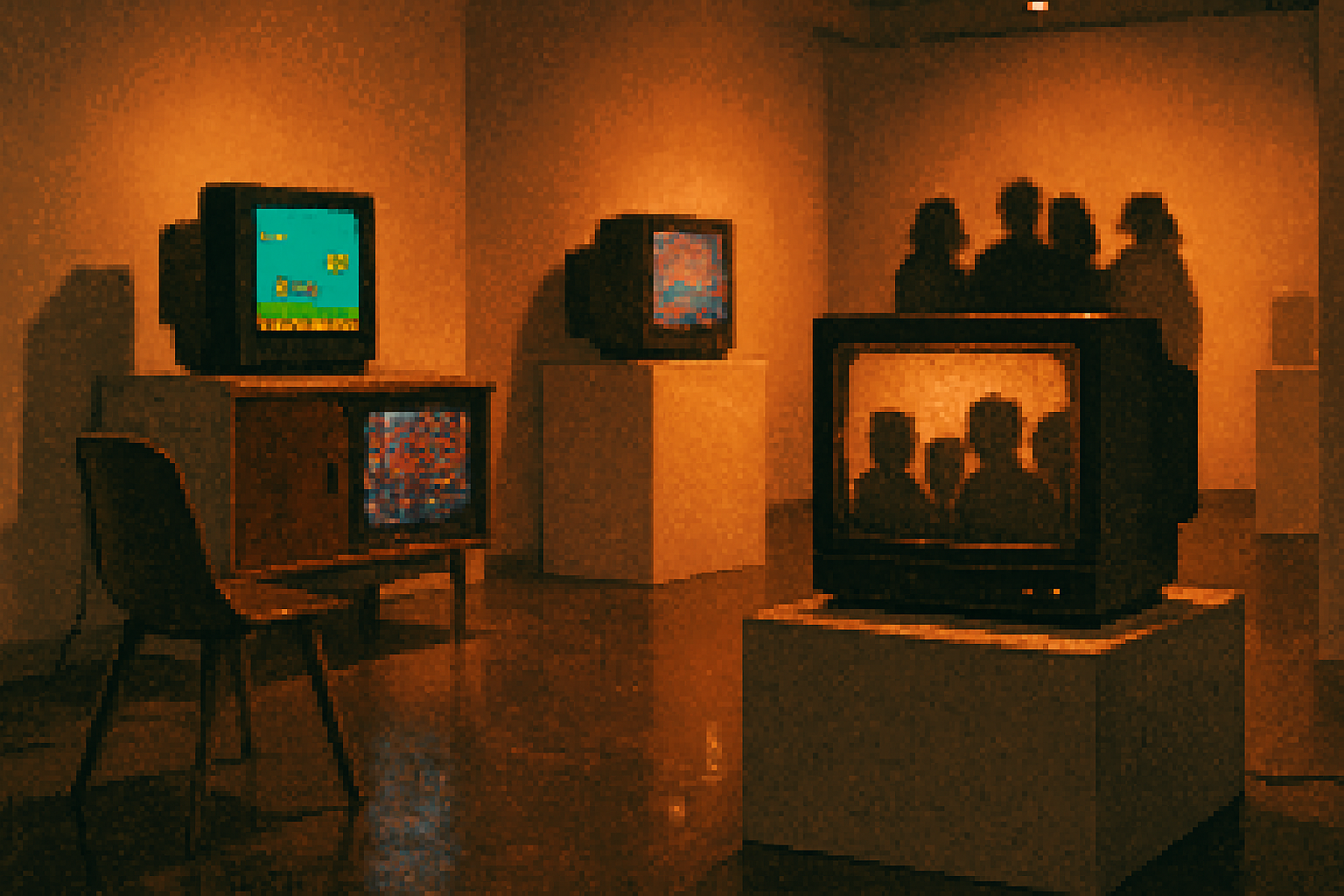
It was a Thursday night in a small London gallery. A crowd thicker than the wine wanted to see a single 1980s television set. The CRT hummed. On its screen, slow, milky scanlines sliced a handful of drifting glitch-clouds into something the room interpreted as sacred.
The joke writes itself: people used to throw these things away. Now they queue to stand in front of one.
Why a hulking 20th‑century box has become a 21st‑century cultural prop
The cathode‑ray tube (CRT) is the analog technology that powered television for decades before LCDs and OLEDs. It is, technically, a curved dance of electrons and phosphors that paints an image line by line. That line-by-line process is the source of what enthusiasts call “character”: the soft bloom, the imperfect geometry, the halation of bright objects, and the visible scanlines. All of which digital screens imitate but rarely inhabit.
If you need a shorthand metaphor: digital displays are photocopies - consistent and clean. CRTs are handwritten letters - idiosyncratic, warm, and occasionally smudged.
(For a technical refresher on the technology, see the CRT overview on Wikipedia.) [https://en.wikipedia.org/wiki/Cathode-ray_tube]
Where CRTs still earn their keep
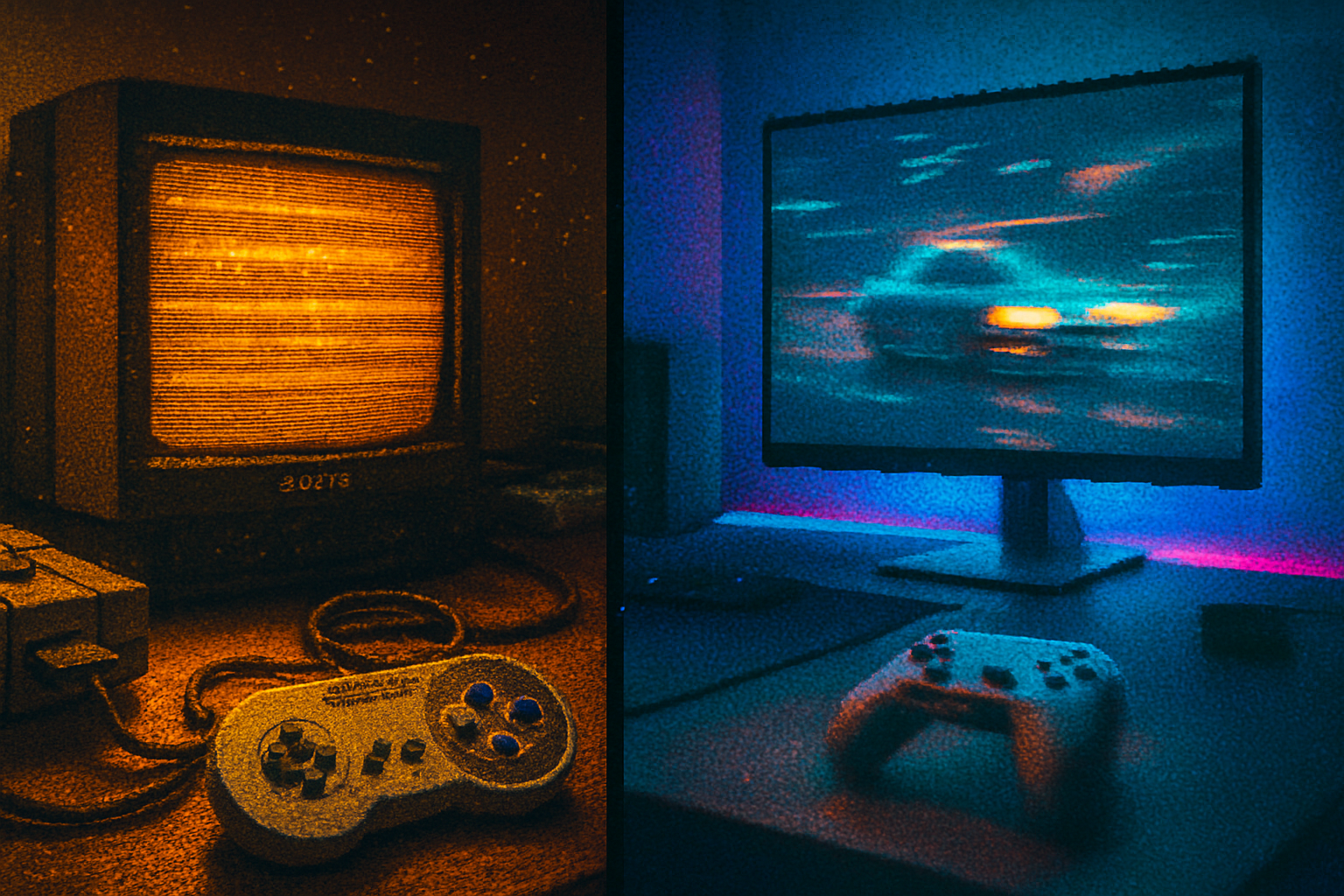
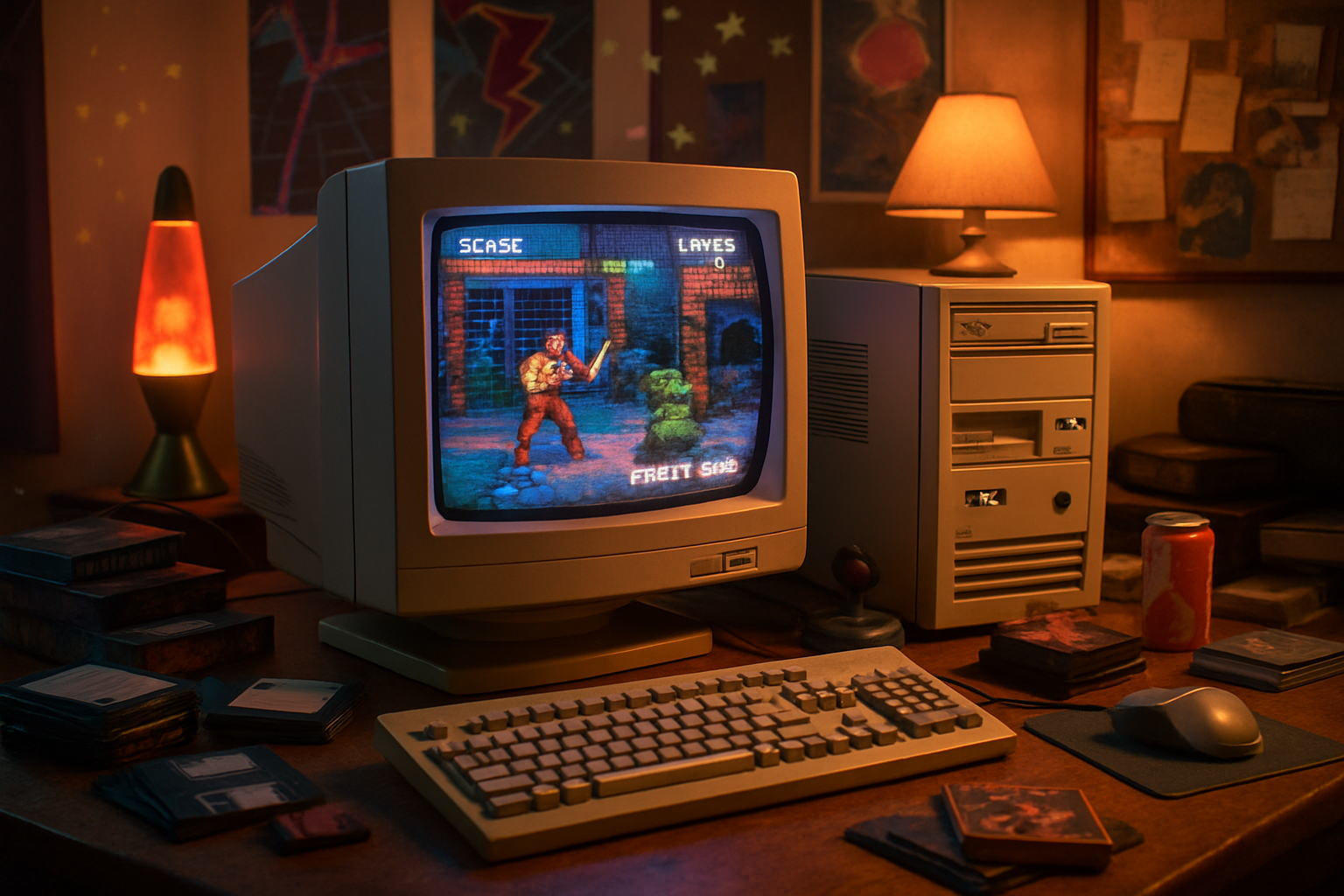
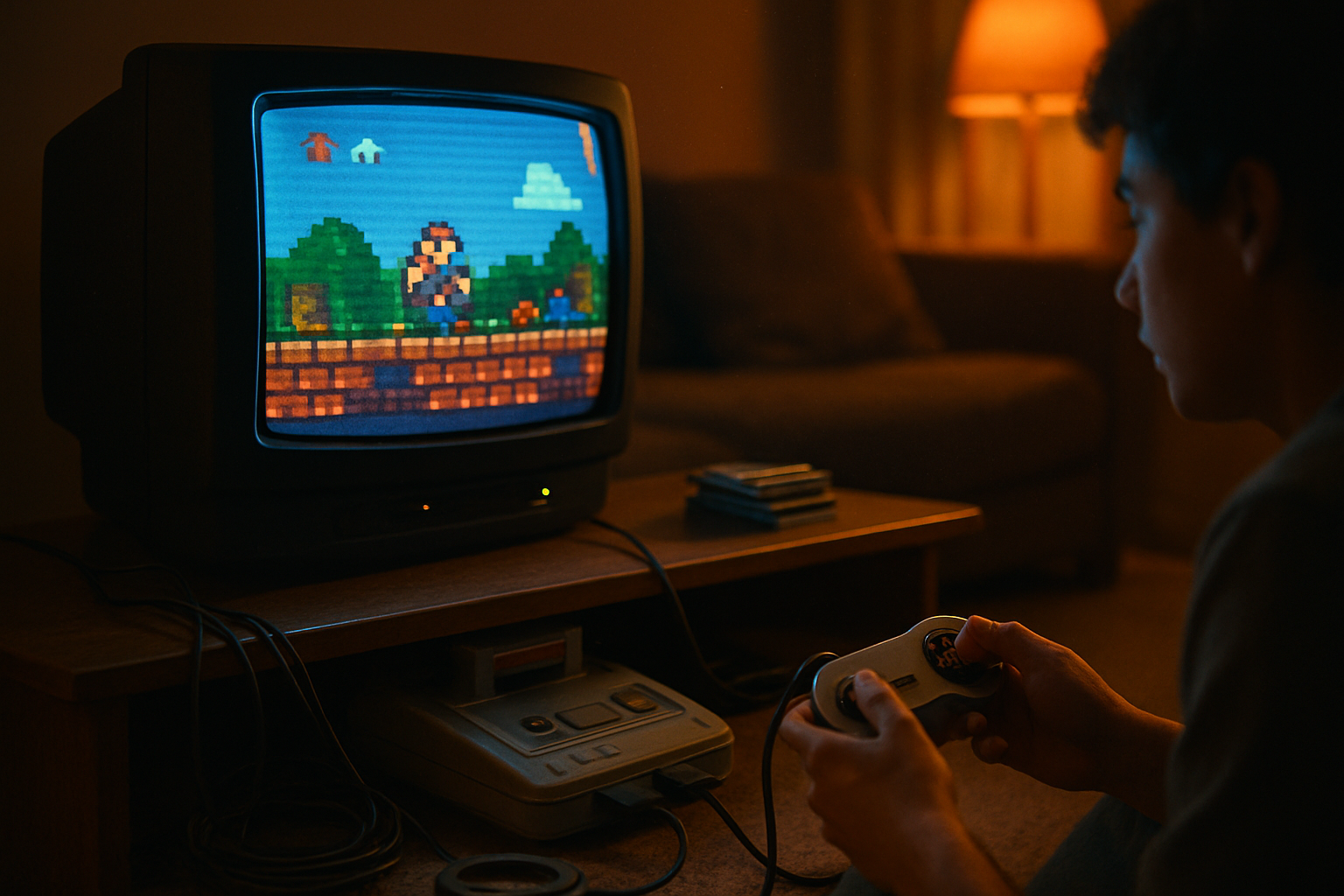
Retro gaming - Old consoles were designed for CRTs. Their sprites, dithering, and timing play naturally with a tube’s scanlines and analog inputs. Modern HDTVs upsample and blur; CRTs show the original intent. Communities and restoration shops keep them alive for accuracy and feel - not just for nostalgia but for fidelity.
- See enthusiast resources like RetroRGB for detailed guides. [https://www.retrorgb.com/]
Contemporary art installations - Artists deliberately use CRTs to exploit their materiality. Nam June Paik made television sets themselves a medium, and contemporary visual artists continue that lineage, using CRTs for sculptural, looping, and feedback works that refuse digital polish. [
Glitch and analog aesthetics - The visible imperfections of analog video - bloom, interlacing artifacts, and misconvergence - are now aesthetic primitives. Glitch artists coax these artifacts into expressive textures. [
Live VJing and electronic music - VJs and performers sometimes feed live video into CRT monitors or cameras pointed at CRTs because the tube’s refresh and phosphor decay create temporal effects - a living afterimage - that sync to beats in ways a flat-panel cannot. [
Photography and film production - For period authenticity in set dressing, CRTs are unbeatable. They sell the era with a single glow. Cinematographers and set designers still source working CRTs for low‑budget and high‑budget projects alike.
Boutique retail and hospitality - A midcentury hotel or a craft cocktail bar can hang a CRT because it communicates “tastefully retro” in one warm, humming statement. The object reads as curated rather than curated-by-AI.
The technical reasons people prefer CRTs for certain applications
Native rendering - CRTs display the source signal without the aggressive scaling, compression, or interpolation that modern displays apply.
Near-zero motion blur and low input latency - The phosphor glow and scanning process often translate into motion clarity for older game systems.
Analog color and contrast characteristics - CRT blacks are deep without the crushed detail of early LCDs, and highlights bloom instead of clip-useful for artists and photographers.
Temporal artifacts - Interlacing, flicker, and phosphor decay produce rhythmic qualities that some creators use musically or visually.
If you want the nerdy mechanics behind scanlines and why they matter, consult the scanline entry. [https://en.wikipedia.org/wiki/Scanline]
Case studies: how people actually use CRTs today
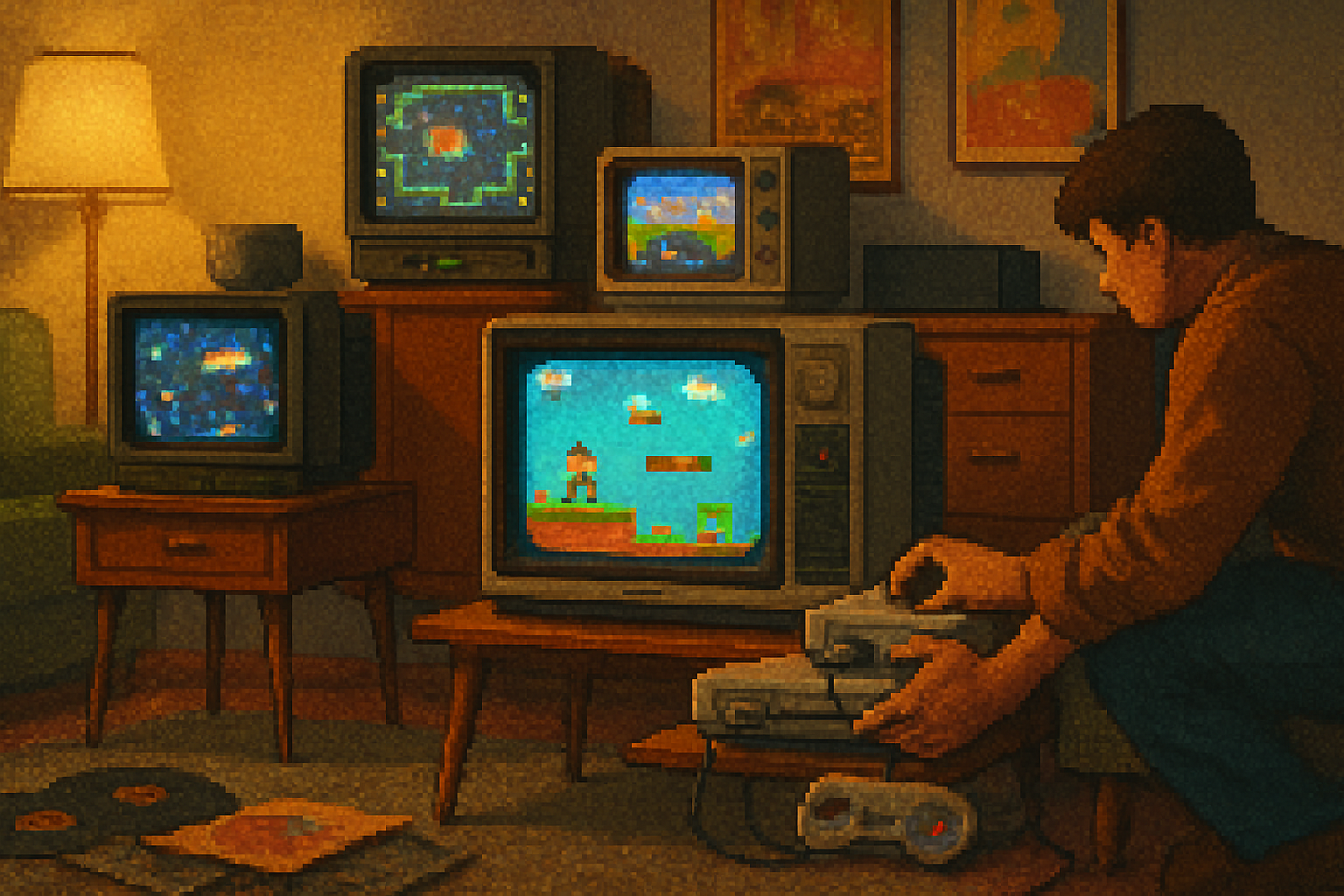
Galleries - An installation might pair several CRTs showing looped footage from different eras. The physical weight and warm glow create an intimacy that projectors and flat panels miss. Nam June Paik’s early TV sculptures remain canonical; contemporary artists echo and subvert that language.[
Museums - Electronic art collections keep CRTs functioning because the work would be altered, sometimes ruined, by modern screens. Conservation teams grapple with sourcing replacement parts and the ethics of repair.
Retro esports and speedrunning - Competitive players and retro competitions sometimes insist on CRTs. The authenticity is not merely aesthetic-it’s competitive fairness.
Fashion and advertising - Editorial shoots and brand activations deploy CRTs to connote analog cool. The prop reads without saying it: “I value craft over algorithm.”
DIY and maker culture - Artists and hobbyists repurpose CRTs into aquariums, consoles, and kinetic sculptures. Some of this is sublime; some of it is tragically misguided.
The limits: why CRTs can’t - and shouldn’t - come back wholesale
Scarcity and environmental cost - CRT glass contains lead and other hazardous materials. Recycling and disposal are regulated and expensive. The cultural love for tubes collides with ecological reality.
Maintenance - High-voltage components fail. Capacitors leak. Convergence drifts. Keeping a CRT operational takes patience and some arcane skill.
Safety - CRTs can implode if mistreated and hold dangerous voltages even when unplugged. They are not toys.
Practicality - For most uses-TV shows, streaming, office displays-modern panels are superior: lighter, more power-efficient, and higher resolution.
Because of these limits, institutions must balance authenticity against sustainability. Conservators and artists are increasingly documenting CRT‑dependent works and sometimes creating digital surrogates to preserve intent without perpetuating environmental costs.
Digital emulation: the ethics of simulation
If a CRT look can be simulated, is that good enough? Tools like scanline shaders, phosphor bloom filters, and FPGA upscalers attempt to reproduce tube behavior. Some simulations are convincing. Some are charlatans.
The ethical question tastes faintly religious. For an artwork that depends on the physical feedback of a tube-feedback that involves heat, magnetic field, and fallible electronics-a simulated version may be a translation rather than a faithful preservation. For a period film, an accurate shader might suffice.
The pragmatic approach many institutions adopt: preserve a working original where feasible, document its behavior exhaustively, and maintain a faithful digital surrogate for public-facing or long-term display.
Practical advice for using CRTs responsibly
If you buy a CRT for art or display, source it from responsible recyclers and be prepared to pay for testing and refurbishment.
For galleries - document the exact model, settings, and signal chain. Photograph the screen behavior under real use. These notes are crucial if the CRT later fails and must be replaced or emulated.
For VJs and performers - consider hybrid setups - feed a CRT into your digital rig, record the result, and keep the live tube only where it materially adds something.
For gamers - if authenticity is the point, a CRT or a high-quality FPGA scaler like those that replicate original hardware timings will serve you better than a generic HDTV.
The aesthetic argument (short and unapologetic)
People gravitate toward CRTs because they remind us that images are events, not static objects. A digital screen is polite; a tube is temperamental. It protests, it breathes, it ages. That has become a statement in an era where every image is a commodity engineered to flatter the eye and flatten the variance of experience.
To borrow an ugly but useful phrase: CRTs enforce humility on media. They introduce friction. They make you notice - the way a cracked plaster or a handwritten address does.
Conclusion
CRTs are not a tech-substitute for the future. They are a tool with very specific expressive and physical properties. Used deliberately, they add texture, historical authenticity, and even new modes of interaction to contemporary media. Used thoughtlessly, they’re a liability: heavy, hazardous, and eccentric for eccentricity’s sake.
If the last century’s televisions are back in our public spaces, it is because we are tired of images that look identical all the time. The tube’s return is a small rebellion: against uniformity, against instantaneous disposability, and in favor of the messy, noisy evidence that something was made. That is worth keeping - as long as we do it with the care it deserves.