· culture · 6 min read
The Rise and Fall of CRT Monitors: A Love Letter to the Tech That Defined a Generation
A nostalgic, technical, and cultural deep dive into cathode-ray tube (CRT) monitors - how they worked, why they dominated the 90s and early 2000s, and why they still spark fierce devotion among retro enthusiasts.
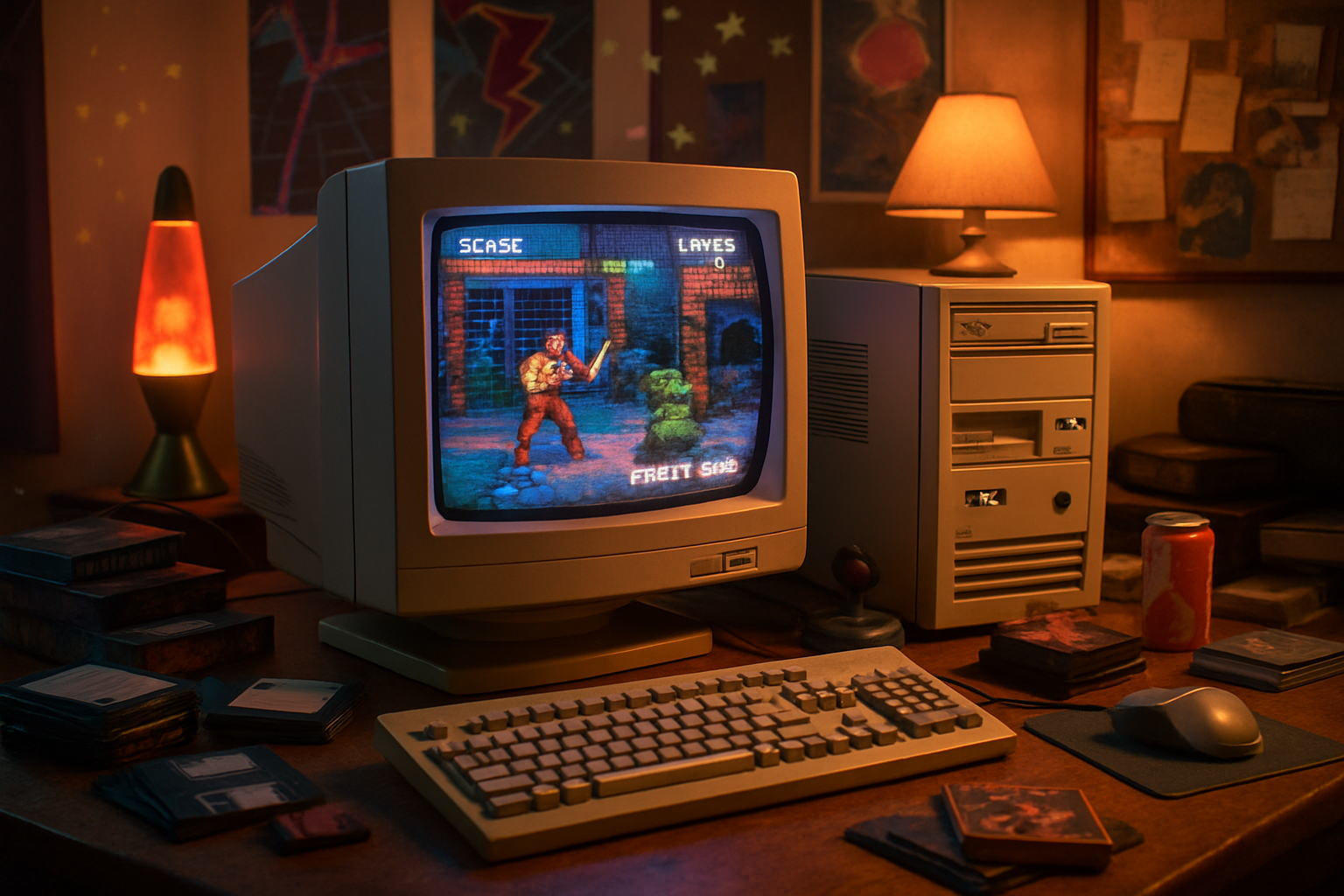
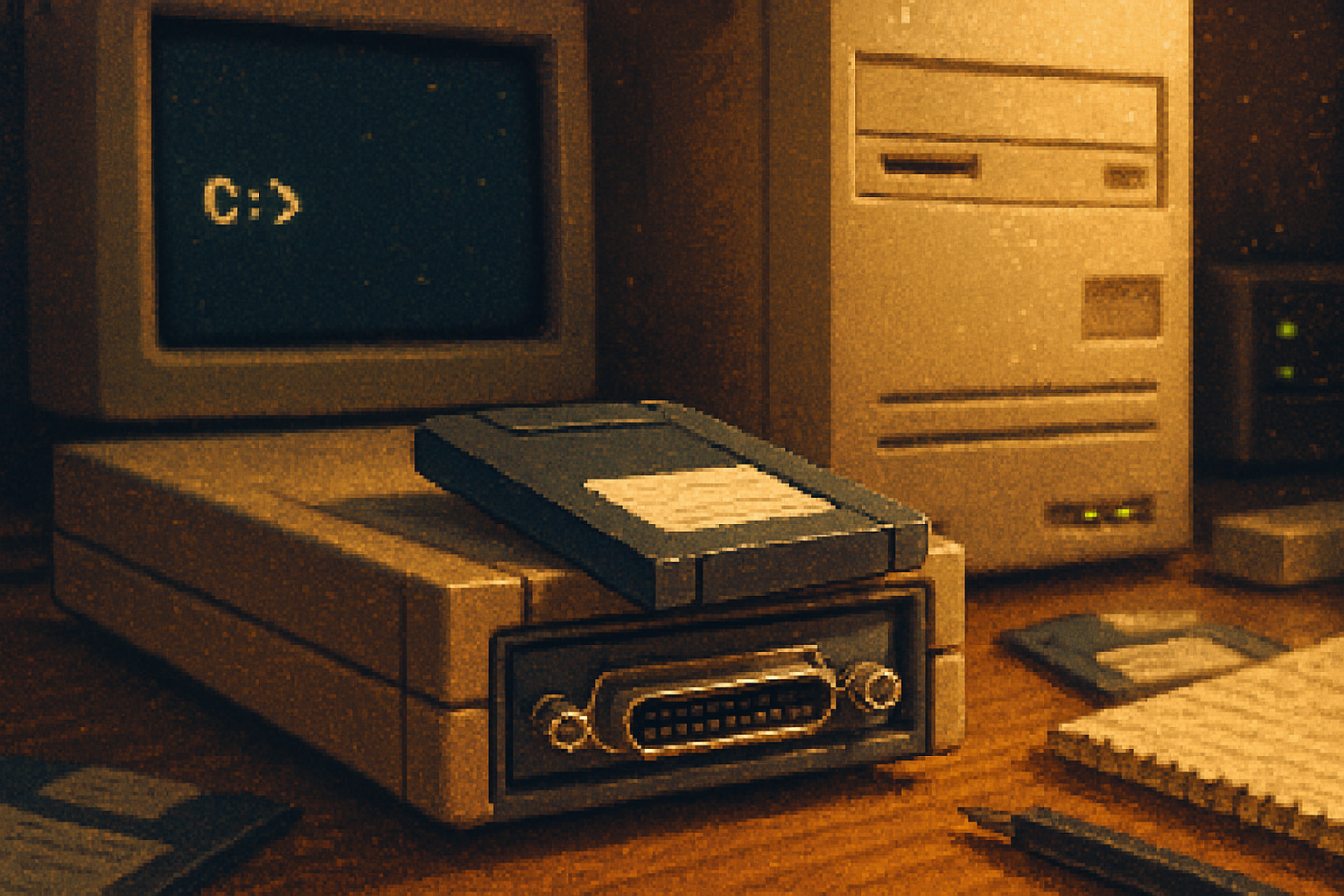
I can still hear it: a low, steady hum, like a distant refrigerator trying to be an airplane. The screen glowed with a soft, warm halo. You didn’t just boot a computer; you woke a miniature sun in a box. Adjust the vertical hold, press degauss, listen for that little metallic clunk - and the world snapped into focus.
That late-night ritual was the chorus of a generation raised on cathode-ray tube (CRT) monitors. They were heavy, hot, often beige, occasionally capricious-but they rendered games, text, and video with a character no flat-panel could mimic for decades. This is the story of how CRTs rose, why they fell, and why, decades later, they still get people misty-eyed.
From vacuum tube to visual throne
Cathode-ray technology predates television itself. The CRT-essentially a vacuum tube that paints images by firing electrons at phosphors-was the foundation of electronic displays for most of the 20th century. Over the years, innovations turned hulking experimental devices into something that could sit on your desk and show Windows 95’s pixelated glory.
- Sony’s Trinitron (1968) improved color accuracy and brightness, giving CRTs a major commercial boost and a reputation for vivid, crisp images (Trinitron).
- The arrival of standardized PC graphics modes like VGA in the late 1980s allowed software and hardware to converge on common resolutions and timings, making CRT monitors the practical choice for personal computing (VGA).
CRTs were not one thing; they were an ecosystem of glass, magnets, phosphors, and analog engineering. They were messy in the best possible way.
How a CRT actually paints a picture (without making your eyes glaze over)
Imagine an old-school fountain pen, but instead of ink it’s a beam of electrons. The CRT uses an electron gun that sweeps left-to-right and top-to-bottom like a mechanical scribe. Magnets or deflection coils steer the beam; phosphor dots on the inside of the glass glow when struck; a shadow mask or aperture grille ensures color separation.
Why does that matter? Because every pixel was the product of analog motion and chemical glow. That gave CRTs characteristics that became beloved features:
- Variable resolution - CRTs could accept many timings and resolutions without a fixed native pixel grid. A 320×240 game could look natural rather than stretched.
- Smooth scaling and “analog warmth” - low-resolution graphics were softly filtered by the phosphor glow and the electron beam, producing appealing scanlines and blending.
- Near-zero input lag and high refresh rates - CRTs responded almost instantly, which made them the display of choice for competitive gaming.
- Natural motion clarity - phosphor persistence and high refresh rates made motion feel fluid, not juddery.
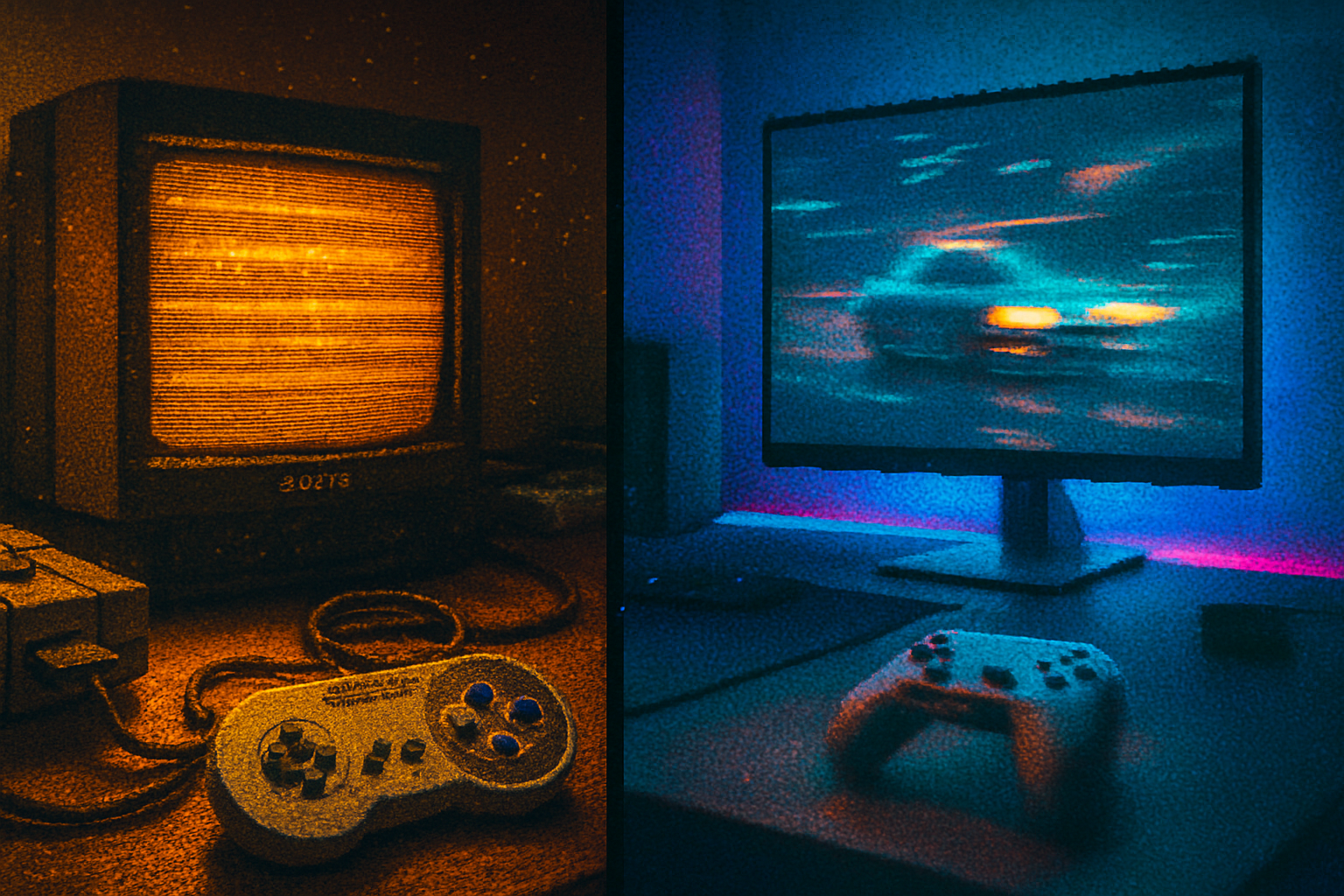
If an LCD was the perfectionist accountant-clean, precise lines, strict rules-CRTs were the impressionist who painted with light.
(For a deeper technical primer, see the cathode-ray tube overview: Cathode-ray tube).
The golden age: how CRTs shaped the 90s and early 2000s
The 1990s were a cultural hailstorm: LAN parties, dial-up modems, pixel art that mattered, and PC games that defined careers and childhoods. CRTs were the unsung stagehands.
- LAN culture and competitive gaming - Quake, Unreal Tournament, Counter‑Strike-players chased every millisecond of latency. CRTs’ fast response and high refresh rates made them indispensable to early esports.
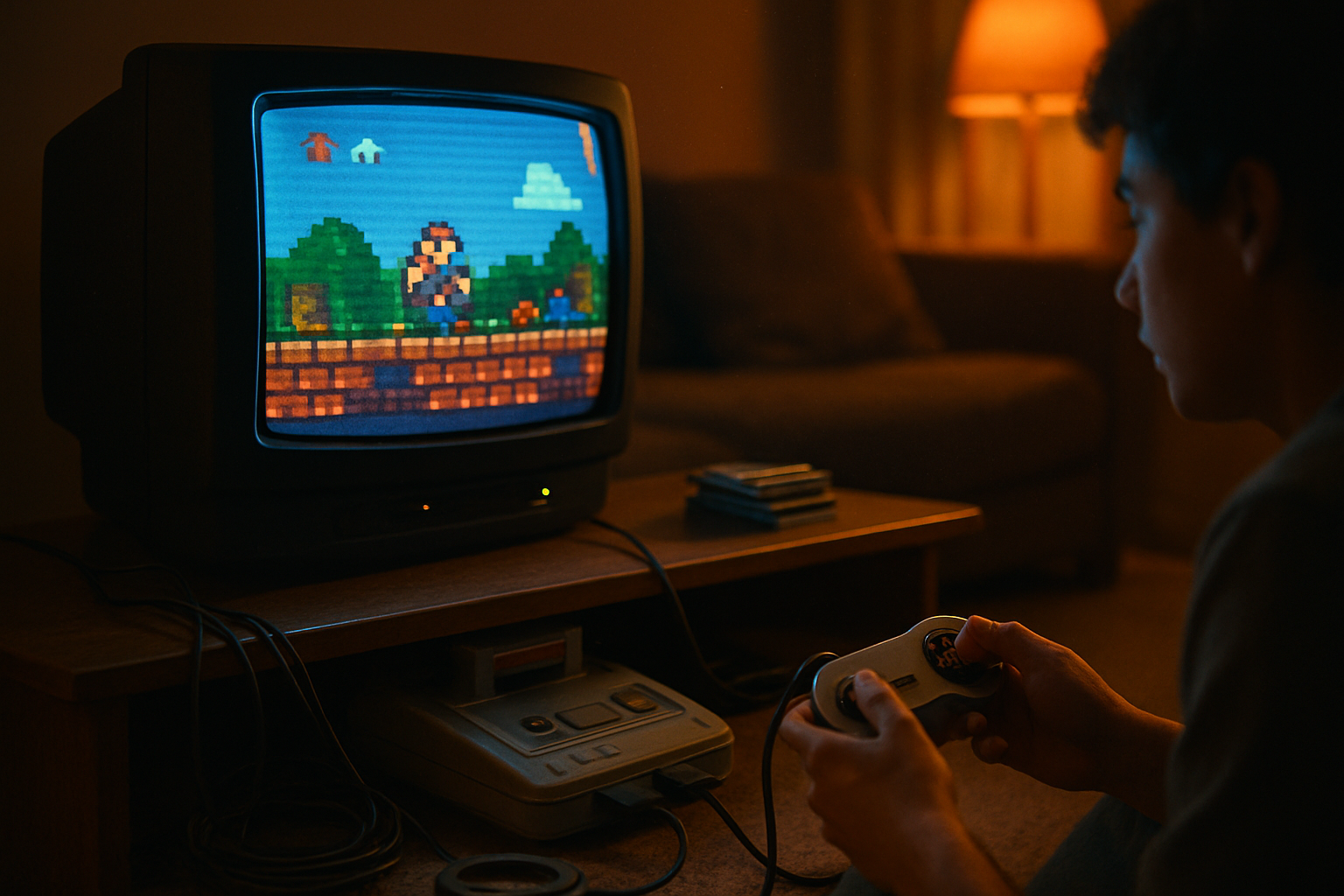
- Console aesthetics - PlayStation, N64, Sega Saturn-these systems were designed assuming composite or RGB-fed CRTs. Colors, bloom, and scanlines were part of the art direction, whether the developers intended it or not.
- Desktop computing - Text rendering on CRTs was often more legible at lower resolutions because fonts were drawn to the display’s analog characteristics.
CRTs didn’t just display content; they influenced how content was made. Artists and developers relied on the idiosyncrasies of the tube-its bloom, its scanlines, its imperfect geometry-to craft experiences that, today, can feel wrong on a modern panel.
The fall: light, thin, and merciless
If CRTs had a fatal flaw, it was their physicality. They were heavy, deep, power-hungry, and full of leaded glass that made recycling awkward. Enter liquid-crystal displays (LCDs).
Why LCDs won:
- Size and weight - Thinness was irresistible for laptops and for the aesthetic of modern homes.
- Power and heat - LCDs consumed less energy and produced less waste heat.
- Marketing - Flat became synonymous with better. Consumers wanted sleekness over whatever romance a CRT offered.
- Manufacturing scale and cost - Mass production of LCD panels drove prices down quickly (
By the mid-2000s, manufacturers were abandoning CRT lines. Retailers cleared inventory; IT departments embraced lighter monitors that fit into cubicle economies. The transition was not a gradual philosophical change so much as a market bulldozer.
Why lovers still mourn (and salvage)
If CRTs were objectively inferior in many specs-bulk, power, emissions-why do people still queue in thrift stores to rescue them? Why are there dedicated communities hunting down a 20-inch 4:3 Trinitron like it’s Excalibur?
Because CRTs did things flat panels couldn’t, and those things matter to humans more than spec sheets suggest:
- Authenticity for retro gaming - Pixel art and scanline blending that creators counted on are reproduced naturally on a CRT. Modern scalers try, and fail, to perfectly replicate the analog quirks.
- Low latency and endless refresh-rate flexibility - For speed runs and fighting games, CRTs remain the baseline.
- The sensuality of light - The warm glow, the soft falloff, the audible hum-CRT viewing was a full-sensory ritual.
- Hackability and analog signals - RGB, component, composite, S-Video, SCART-CRTs were a Swiss Army knife of inputs. Artists and musicians repurposed them for installations, synth displays, and VJ rigs.
Communities like RetroRGB and others have documented why CRTs remain prized for retro authenticity (RetroRGB). PC Gamer and similar outlets have discussed how modern panels struggle to mimic the experience (PC Gamer).
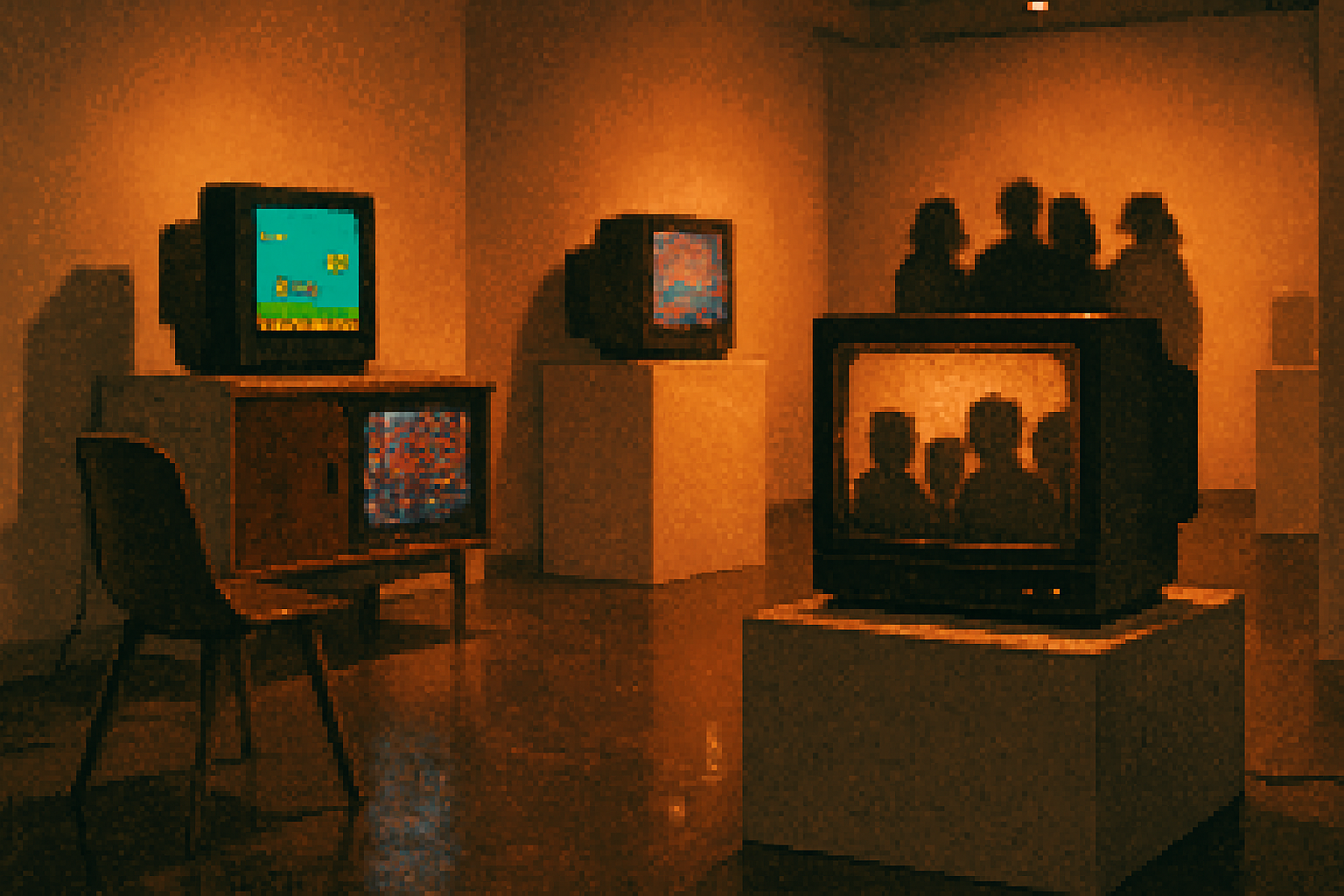
Where they still live: garages, arcades, and museums
CRTs didn’t vanish; they scattered. You’ll find them in:
- Arcades and pinball bars (those cabinets still depend on tubes).
- Retro collectors’ dens, stacked with consoles and RGB switch boxes.
- Artists’ studios where the analog bloom is a medium.
- Some specialty video and film restoration labs that use CRTs as reference displays for older content.
The aftermarket spawned scalers, converters, and even new-build arcade monitors maintained by a small but passionate industry.
The legacy: not just pixels, but habits
The story of CRTs is not purely technological. It’s cultural: how a display technology shaped user expectations, aesthetic choices, and even game design. When 3D games were built with texture resolutions and polygon budgets tuned to how a tube smeared and blended, the tube wasn’t a passive output device. It was an active co-author.
There is also a moral lesson about obsolescence and desire. The market was right: LCDs were, in most ways, better. But better is not the same as beloved. A technology can be superior and still be mourned-especially if it played a role in your private rituals, your first late-night triumphs, or the aesthetics you learned to adore.
Final thought
CRTs taught a generation to read light as texture, to judge games by their motion, and to accept a little fiddliness in exchange for character. They fell because society wanted slimmer silhouettes and lower power bills. And yet, their ghost persists - in scanlines, in fan communities, in the persistent ache to reproduce a glow that was never meant to be, technically, ideal. That ache is not nostalgia alone; it’s a recognition that technology shapes not only what we can do, but how we feel when we do it.