· culture · 7 min read
From Dusty Attics to TikTok: The Viral Resurrection of Camcorder Aesthetics
Why are teenagers scrolling on phones obsessed with footage that looks like it came from their grandparents' attic? A look at how VHS and 8mm styles migrated from analog relics into TikTok’s language - and how creators use real and simulated camcorder tools to stand out.
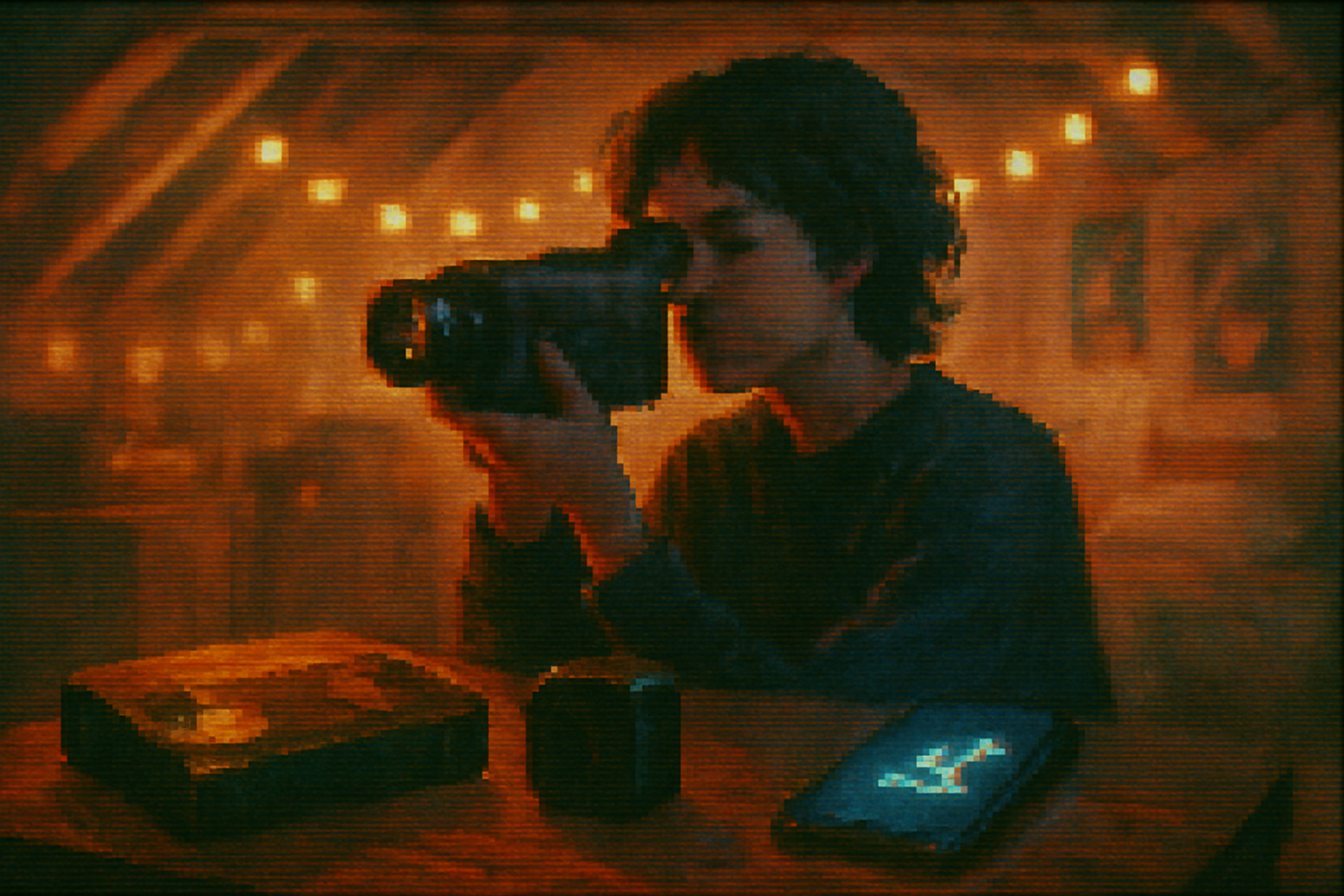
It begins with a tape in a shoebox.
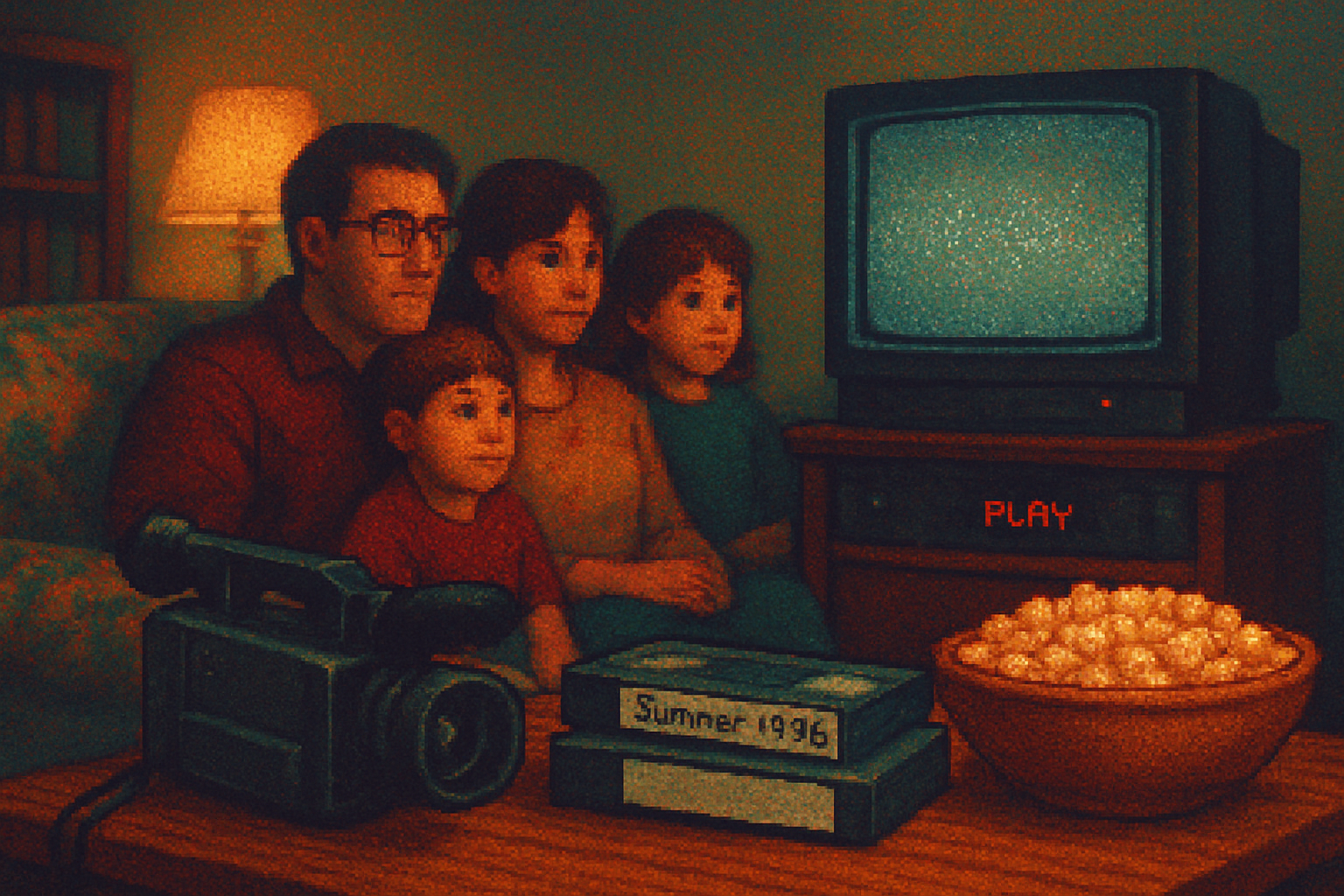
You pull it out, blow dust off the label (“Summer 1997 - Family”) and slot it into a player that crackles like an old radiator. The image jumps to life in a wash of warm, smeared color: soft scanlines, accidental light leaks, and a face half-lost in grain. For many of us that image reads as memory itself - unreliable, romantic, immediate. For TikTok, it reads as a new grammar.
The camcorder look - VHS fuzz, 8mm jitter, color bleed and all - has moved from attic detritus to mainstream visual currency. This isn’t just a filter trend. It’s a cultural argument: in an era of hyper-sharp, overproduced content, lo-fi is the new authenticity.
The anatomy of the aesthetic
If you strip the trend down to parts, you find a handful of sensory cues that our brains now map to “retro truth.”
- Soft focus and low resolution (the world looks forgiving).
- Horizontal scanlines and chroma noise (color misregistration feels tactile).
- VCR timestamp, tracking errors, and burn-in (the machine itself becomes witness).
- Light leaks, lens flare and film grain (accidental beauty over engineered perfection).
These are not accidental stylistic choices. They’re shorthand for a particular kind of memory - partial, intimate, and imperfect. Like a song’s reverb makes the singer feel closer, the camcorder aesthetic makes the viewer feel present in someone’s private past.
How the look arrived on TikTok
Two parallel currents converged: the analog revival and the platform dynamics of TikTok.
- Analog gear never fully died. There has been a steady renaissance in film photography and Super 8 filmmaking for years - witness the growth of communities around Lomography and renewed demand for disposable cameras and 16mm labs (Lomography).
- The democratization of effects. Apps like Rarevision’s VHS Camcorder let anyone shoot convincing tape-era footage with a phone (VHS Camcorder - Rarevision). That’s democratization in action: the look was no longer gated by the scarcity of working Hi8 decks.
- Platform dynamics. TikTok’s short-form format rewards instant emotional resonance. A washed-out frame with a timestamp hooks faster than a slick, 4K cinematic pan. And hashtags are literal highways - #VHS, #camcorder, #8mm have become discovery funnels for creators exploring the aesthetic (search TikTok tags like
The result: a feedback loop. People liked the lo-fi look. That produced more lo-fi content. The look then became a signifier - not of ‘retro’ alone, but of intimacy, of irony, and of crafted imperfection.
Why creators use real equipment instead of filters (and why that matters)
There are two ways to fake authenticity: superficially and convincingly. The creators who stand out usually choose the latter.
- Using real cams (Super 8, Hi8, consumer VHS camcorders) imposes constraints. Film stocks demand attention to light and framing; they force you to plan. Constraints breed creativity.
- Mechanical quirks are messy in ways software often isn’t. Real tape will glitch unpredictably. Light leaks behave like characters in the story. The result feels less ‘designed’ and more accidental - and humans are hardwired to trust the accidental.
- There’s pedigree. Shooting Super 8 or 16mm situates the creator in a lineage (amateur home movies, experimental cinema) that lends an aura of craft.
That said: simulated tools are not cheating. Apps and plugins let creators iterate fast - the same platform dynamics that reward immediacy also reward remixability. It’s common and smart to combine both: capture with a camcorder, edit in a phone app, finish with analog processing.
Who’s doing it - the kinds of creators who benefit
Call them archetypes rather than celebrity lists: the trend spans genres and motives.
- The personal vlogger who wants warmth - Teenage diaries shot on Hi8 read as earnest, not staged.
- Fashion editors and micro-designers - They re-edit runway clips into grainy nostalgia, giving new clothes a sense of provenance.
- Musicians and indie bands - Lo-fi videos feel like demo reels - intimate, raw, and emotionally immediate.
- Horror and experimental filmmakers - Tape artifacts amplify unease; glitches become scares.
- Brands and agencies - Savvy marketers use the aesthetic to simulate ‘found’ content and lower the perceived polish.
What these creators share is a calibration: they know what the look signals and they wield it deliberately.
A short how-to for creators who actually want to stand out
If you’re tired of filters that read like costume jewelry, try this practical workflow.
Choose your capture method
- Real - thrift-store VHS/S-VHS camcorders, Sony Handycam Hi8, or Super 8. Look for functional cameras; eBay and local thrift shops are gold mines.
- Hybrid - shoot on modern cameras but use analog lenses or flare attachments.
- Synthetic - use apps like Rarevision’s VHS Camcorder for fast, on-the-go work (
Embrace constraints
- Limit takes. Real tape makes you precious about moments. Digital makes you sloppy. Avoid the paradox of choice.
Mix imperfections with intention
- Add a timestamp or burn-in judiciously. Use a sound bite that matches the era (muffled audio sells nostalgia better than perfect Hi-Fi).
Edit for story, not just look
- Grain and scanlines are tools, not the film. The frame still needs rhythm - cuts, reaction shots, beats.
Consider finishing touches
- If you shot on tape, add a digital pass for color correction carefully; don’t sterilize the image. If you used an app, add a tactile element (a real tape click, a subtitle in an old-school font).
Be mindful of platform fit
- Vertical crop? Plan your frame. TikTok is unforgiving toward mismatched aspect ratios.
The cultural logic: Why our era reached back
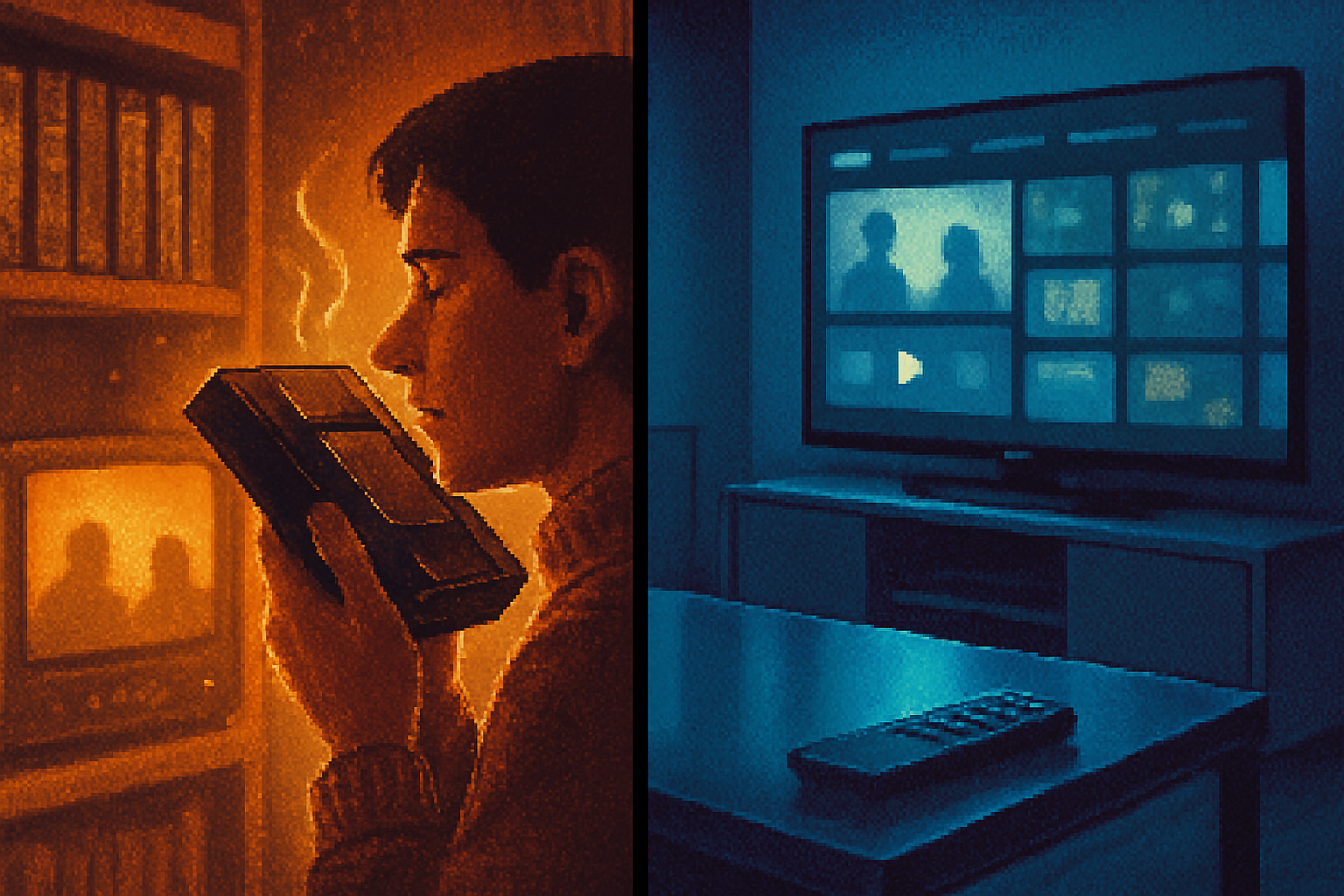
Nostalgia is not just sentimental longing. It’s a response to noise. Our feeds are saturated with carefully engineered desire - products polished within an inch of their lives. Camcorder aesthetics respond with an uneasy promise: this is not polished, but it is true.
There’s irony at play. Teens born after 2005 never lived with VCRs, yet they find the visual cues emotionally resonant. Nostalgia can be retroactive: you don’t need lived memory, only a cultural script. The camcorder look functions like a photograph of sincerity - it tells the viewer, “This was made by a person, not a marketing team.”
That’s partly why the trend persists. It’s tactileness in a cloud-native world.
The limits and the traps
- Cliché killjoy - Overuse empties the signifier. A grain overlay on meaningless content is still meaningless.
- Appropriation of context - The aesthetic occasionally sanitizes real histories. Home movies carry social and archival meaning; styling everything as ‘retro’ risks flattening that complexity.
- Accessibility - Real analog gear can be expensive, and labs for film processing are dwindling. The look can become a boutique affectation rather than a democratized grammar.
Where it goes next
Visual fashions are cyclical. In one direction, the camcorder look will continue to hybridize: augmented reality will probably weave in simulated tape artifacts that respond to user interaction. In the other, we’ll see antifilter countertrends: ultra-raw vertical video with no aestheticized polish - the new authenticity is always waiting.
Meanwhile, expect refinement. Creators are getting more literate about what the aesthetic actually does for a story. The smartest work will treat those fuzzy scanlines like punctuation - not the message itself.
Final thought
The camcorder aesthetic is not a nostalgic corpse revived for clicks. It’s a living shorthand that mixes memory, craft, and irony. In a world obsessed with resolution, some creators choose instead to resolve a different question: what makes an image feel like a memory? The answer, increasingly, is not clarity. It’s texture.
References
- VHS history and technical background: VHS - Wikipedia
- A popular app that simulates VHS capture: VHS Camcorder - Rarevision
- Analog photography communities and resources: Lomography
- Context on youth social media usage and platforms: Pew Research - Teens, Social Media & Technology (2021)
- Search TikTok for community examples: #VHS on TikTok