· culture · 6 min read
From Clunky to Chic: The Evolution of 90s Minimalism to the Current Aesthetic
A visual and cultural tour from the chunky, earnest attempts at 90s ‘minimalism’ to today’s svelte, almost invisible devices - what changed, what we lost, and what designers should steal back.
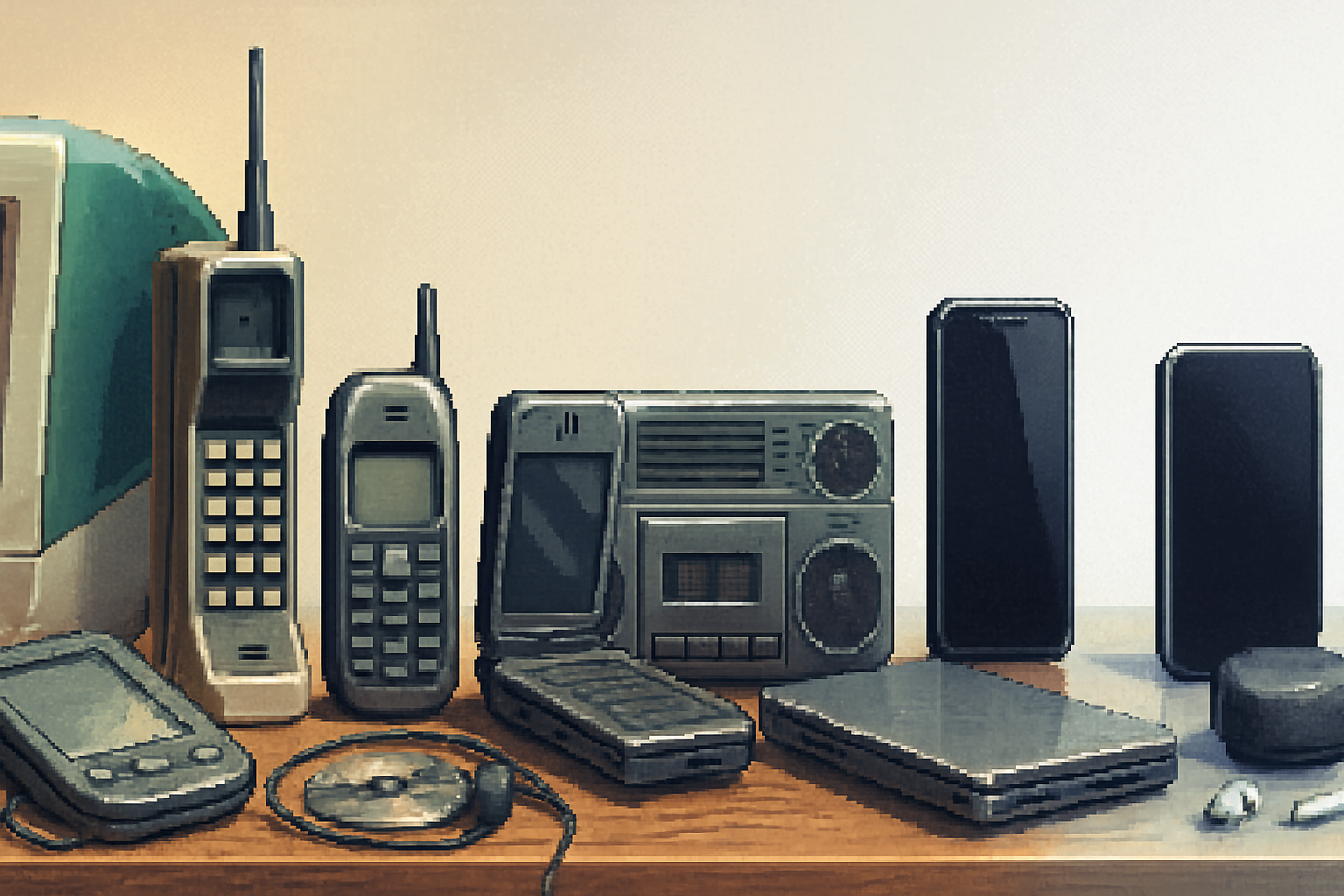
I still remember the weight of that first cellphone. It felt important-like carrying a small brick that announced you’d joined the future. It was minimalist in the sense that it had one job: connect. But it was also unapologetically massive. The 1990s tried to declutter surfaces and interfaces while technology itself was bulky, hot, and capricious. The result was a strange mix: visually restrained objects that nevertheless looked like they’d survived a wrestling match with their power supplies.
What happened between then and now wasn’t magic. It was engineering, industrial design dogma, and a ruthless obsession with shaving millimeters. This essay is a visual and conceptual journey through that transition - from the awkward charm of 90s minimalism to the near-invisible chic of today - and the lessons designers and consumers should remember before they fetishize more glass and less thought.
The 90s paradox: minimalist intentions, maximal hardware
The 90s inherited a set of aesthetic commandments: clean surfaces, the “less is more” credo of modernism, and a Japanese-influenced restraint visible in everything from architecture to electronics. Designers echoed Dieter Rams’ terse principles - “Good design is as little design as possible” - even if the technology inside forced things to be thicker, heavier, and occasionally bulbous (Dieter Rams - Wikipedia).
Examples:
- iMac G3 (1998) - An explosion of candy-colors in a sea of beige, but still relatively bulky to house CRTs and early PC components. It flipped the script by making the chassis the personality instead of hiding it (
- Nokia 3310 - A triumph of functional minimalism-simple UI, long battery life, and a chassis that refused to die. It was durable, practical, and unadorned (
- Palm Pilots and early PDAs - Clean screens and sparse interfaces. Minimal, but powered by components large enough to make the devices chunky.
The stylistic goal was clarity; the technological reality was constraint. Minimalism in the 90s often meant reducing buttons and ornament while tolerating physical heft.
Why things got thin: materials, manufacturing, and Moore’s after-party
Several forces conspired to turn chunky into chic:
- Miniaturization of components - Advances in semiconductor fabrication let CPUs, radios, and storage shrink while drawing less power.
- Display evolution - CRTs gave way to LCDs and eventually OLEDs, cutting depth and weight dramatically.
- New materials and processes - Injection-molded polycarbonates, anodized aluminum, and later glass-and-metal stacks enabled clean edges and thin profiles.
- Manufacturing precision - CNC machining, tighter tolerances, and economies of scale made razor-thin bodies not just possible but reliable.
These are engineering victories, but they had stylistic consequences. Designers could finally match minimal visual rhetoric with minimal physical presence.
Design philosophy: from object-as-hero to invisible infrastructure
Two parallel intellectual shifts matter here:
- From ornament to interface - The object stopped trying to look iconic by itself and began to prioritize the screen and experience as the central stage.
- Calm technology - Influenced by thinkers like Mark Weiser, tech moved toward being supportive background infrastructure rather than attention-grabbing spectacle (
Early minimalism celebrated a single object’s silhouette. Contemporary minimalism often celebrates the absence of that silhouette: a phone that doesn’t scream for attention, a watch that fades away until you need it.
The mistakes we repeated and the sins we inherited
Design didn’t always get better in a moral sense. The sleek look introduced new problems-and recycled old ones.
- Usability sacrificed for thinness - Buttons vanish, ports disappear, and a phone becomes harder to hold. Minimalism gone militant can confuse users.
- Planned obsolescence & repairability - Impossibly thin designs make repairs costly or impossible. The result: more waste and consumer frustration (
- Greenwashing and material opacity - A polished aluminum frame doesn’t absolve a device of toxic components or a short lifecycle. The planet notices.
- Homogenized aesthetics - The world of devices started to look the same-rounded corners, black glass, an ecclesiastical devotion to flat icons. Variety died on the altar of brand-safe minimalism.
A telling case: the iPod’s success combined a simple interface with a strong product persona, while Microsoft’s Zune (technically competent) failed to rally the same affection due to ecosystem and messaging mistakes. Sleekness alone wasn’t enough.
Case studies: what history teaches us
- Apple (iMac → iPhone) - The iMac made design visible again. The iPhone made design invisible and experience central. The pivot shows how visual minimalism without attention to software and ecosystems is hollow (
- Nokia 3310 vs modern phones - Durability and battery life beat feature-bloat for many users. Minimalism that’s also robust is underrated.
- Braun to Apple lineage - The lineage from Braun’s functionalism and Dieter Rams to Apple’s industrial language is well-documented. But copying Rams’ surface grammar without adopting values like longevity and repairability is a pale imitation (
What designers should steal back from the 90s (and what they should leave)
Steal back:
- Robust minimalism - Simplicity that strengthens function-long battery life, tangible buttons where they matter, durability.
- Honest materials - Show materials and celebrate repairability like an aesthetic choice, not an afterthought.
- Human-first UI - Minimalism that reduces cognitive load rather than hides affordances.
Leave behind:
- Thinness fetish - Millimeters do not equal meaning. Thinness that sacrifices the user or the planet is indulgent.
- Minimalism as branding veneer - Reductive visuals without ethical design are merely fashion.
Takeaways for consumers and creators
For consumers:
- Value repair scores over marketing blurbs. Check iFixit scores and manufacturer repair policies.
- Prefer design features that enhance life (battery, durability) rather than novelty trims.
For creators:
- Aim for clarity that respects the body that holds the device and the planet that feeds it.
- Treat minimalism as a tool for compassion, not a cult of form.
The last word: minimalism with a conscience
The arc from clunky 90s minimalism to our current aesthetic shows a technical triumph: we can now realize design ideals without lugging batteries like potted plants. But technical possibility is not the same as moral good. Minimalism should not be decorative asceticism. It should be a moral grammar: remove what distracts, keep what dignifies.
Designers who remember that will produce objects that are not just chic, but worthy. And consumers who demand that will make sure the next era of minimalism isn’t another shallow reboot of a style that looked smart but behaved carelessly.
Less should be more. Less should be durable. Less should be repairable. Say that three times in a world that still confuses thinness with virtue. It sounds like a slogan, but it’s also a practical instruction.