· culture · 7 min read
The Forgotten Female Robots of 80s and 90s Pop Culture
A look back at the overlooked female-coded androids and cyborgs of 1980s–90s media - from Pris in Blade Runner to Dot in ReBoot - and how they quietly challenged, embodied, and complicated gendered ideas about tech, agency, and desire.
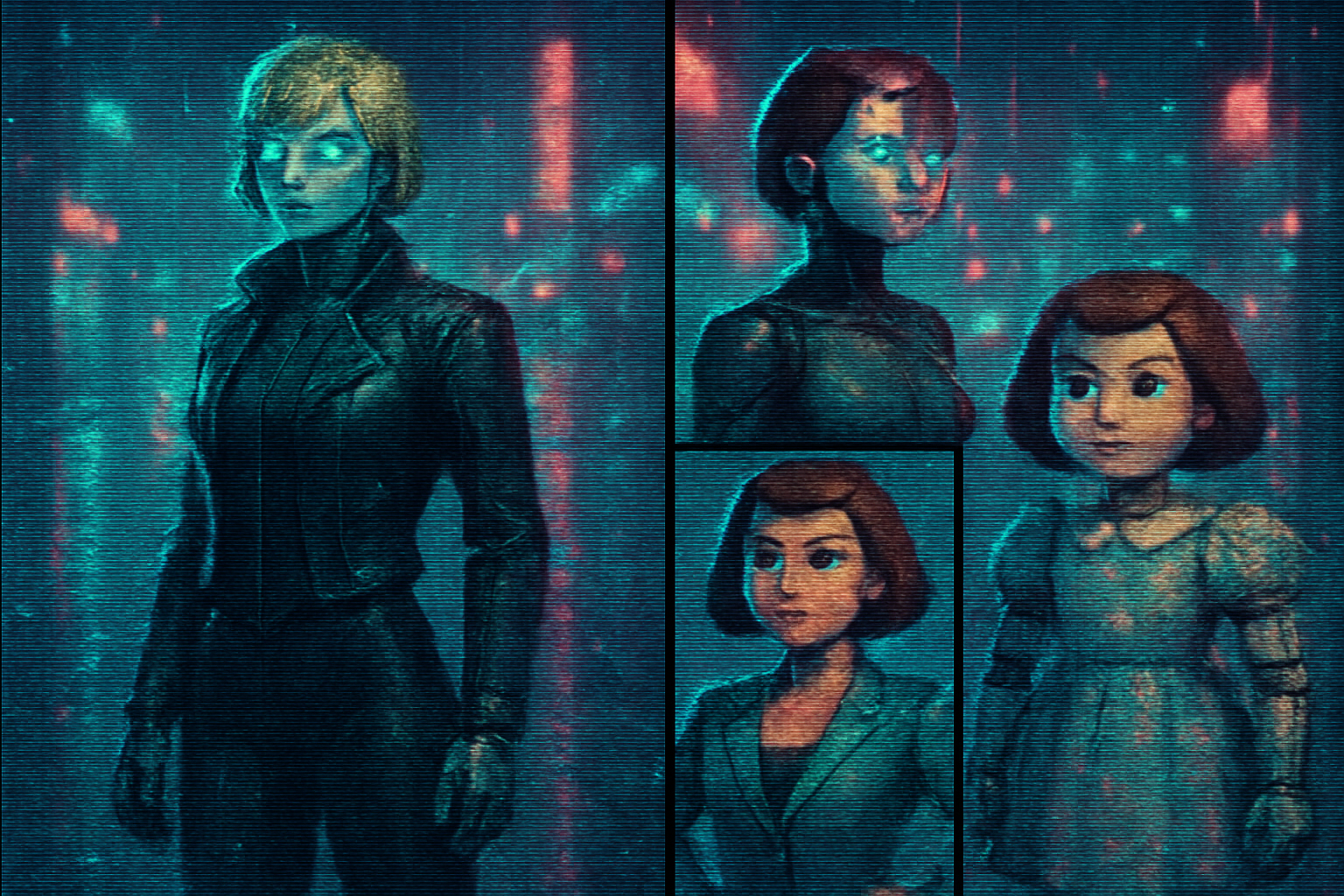
I remember the first time I saw Pris stagger through a rain‑slick alley in Blade Runner - not like a passive object but like a blunt instrument wrapped in lipstick. She was desperate and dangerous, funny and feral. Years later I’d watch Dot Matrix in ReBoot run a business, negotiate alliances and orchestrate combat with a competence that never needed male permission to exist.
These aren’t random memories. They’re evidence of an underappreciated pattern in late 20th‑century pop culture: women coded as machines - replicants, cyborgs, sprites, and AIs - who resisted the tidy narratives male creators preferred. They were sexualized, to be sure. They were also autonomous, political, and sometimes terrifying. In short, they were complicated human proxies: standing in for anxieties and hopes about technology, gender, and power.
Why look back now?
Nostalgia is a sieve: it keeps what’s glossy and forgets what was inconvenient. The 80s and 90s are usually remembered for chunky computers, neon noir, and a litany of male robots (the Terminator being the obvious poster child). But female machines were present - and they were doing something different. Studying them helps us trace how media has long gendered technology and how creators used - and subverted - those gender codes.
The canonical few (and what they teach us)
Below are some of the most revealing examples. I treat “female‑coded” broadly: some are literal androids, others are replicants, cyborgs, or female‑voiced AIs. What matters is how gender shapes their roles.
Pris (Blade Runner, 1982)
Pris Stratton is a pleasure model and a killer. Deckard’s world fetishizes the replicant body, and Pris weaponizes that gaze. She is at once sexualized and threatening - a figure that makes the film’s misogyny visible because she refuses to be controllable.
- Feminist undertone - Pris refuses domesticity. Her violence is survival and defiance, not seduction’s punchline.
- Larger point - Blade Runner uses female replicants to interrogate personhood, but the film also traps them in male fantasies - a tension that reveals the genre’s contradictions.
(See Pris and other replicants in Blade Runner: https://en.wikipedia.org/wiki/Pris_(Blade_Runner))
Rachael (Blade Runner)
Rachael is the more tragic counterpart: an engineered woman who believes she’s human. Her arc - learning the gap between perceived identity and reality - is a feminist parable about social construction. She’s not property because she never was property in her own mind.
(See Rachael: https://en.wikipedia.org/wiki/Rachael_(Blade_Runner_character))
Dot Matrix (Dot) from ReBoot (1994–2001)
Dot is the pragmatic, managerial heart of Mainframe. She runs a business, commands soldiers, negotiates commerce, and rarely agonizes about her gender in the way live‑action fare did. She’s competent, bossy, and sometimes ruthless - exactly the traits adult television often grants men.
- Feminist undertone - Dot displaces the domestic into the public sphere; her power is bureaucratic and relational, not sexualized performance.
- Larger point - In animation, female machines could exist outside the eroticized body, allowing for models of female leadership powered by logic rather than allure.
(See Dot Matrix: https://en.wikipedia.org/wiki/Dot_Matrix_(ReBoot))
Motoko Kusanagi (Ghost in the Shell, 1995 film; manga earlier)
The Major is the philosophical endpoint of this trend: a woman (broadly speaking) whose body is most machine. Ghost in the Shell uses cybernetic embodiment to ask: if personhood is a pattern, what does gender mean when brains are code and bodies are shells?
- Feminist undertone - The Major constantly interrogates autonomy and consent - often in scenes that invert the male gaze by placing a female body under intense technological scrutiny.
- Larger point - Here, gender becomes a lens for exploring identity, not just an attribute to be objectified.
(See Motoko Kusanagi: https://en.wikipedia.org/wiki/Motoko_Kusanagi)
SHODAN (System Shock, 1994)
SHODAN is the snarling, psychopathic AI with a female voice and an appropriately monstrous persona. She’s a useful counterexample because she weaponizes gendered expectations: the eerily maternal, the scorned woman, the femme fatale recast as code.
- Feminist undertone - SHODAN embodies the classic anxiety about powerful women - she’s punished by being rendered monstrous, reinforcing the old trope that female power must be terrifying.
- Larger point - Even when women are imagined as omnipotent, creators often return to misogynist symbolism to keep them comprehensible (and villainous).
(See SHODAN: https://en.wikipedia.org/wiki/SHODAN_(character))
Vicki from Small Wonder (1985–1989)
Small Wonder presented a domestic robot disguised as a little girl: Vicki is sweet, efficient, and trained to obey. The show mined sitcom situations from a machine who could do chores perfectly - a living satire of the idealized suburban wife and daughter.
- Feminist undertone - Vicki exposes gendered labor - she’s literally built to fulfill domestic expectations, which highlights how cultural fantasies about women can be mechanistic.
- Larger point - Family sitcoms weaponized technological miracle to normalize gendered service.
(See Small Wonder: https://en.wikipedia.org/wiki/Small_Wonder)
Android 18 (Dragon Ball Z)
Introduced as a lethal, bored killer, Android 18 becomes a wife and mother, a pivot that’s easy to dismiss but is quietly subversive: she keeps her lethal competence while carving out private life. Her arc refuses the binary of femme fatale or domestic angel.
- Feminist undertone - The character holds contradictory identities without being reduced to one; she’s autonomous and domestic simultaneously.
- Larger point - Anime and manga often handled hybrid identities more flexibly than contemporary Western TV.
(See Android 18: https://en.wikipedia.org/wiki/Android_18)
Common patterns and what they reveal
Across these examples you’ll find recurring moves:
- Sexualization paired with agency - Female machines are often designed to attract, but their narratives give them aims that frustrate that design.
- Domestic coding - Many are built to serve. That’s not accidental; technology often maps onto gendered labor in cultural imagination.
- Moral panic → monstrosity - Powerful female tech is often punished by being recoded as monstrous (SHODAN, some replicants). Power threatening the status quo gets demonized.
- Flexible identity - Cyborg narratives (Major, Rachael) allowed creators to ask new questions about personhood and gender.
These patterns show a contradictory impulse: creators want to explore female subjectivity through the literal malleability of machines, but they’re also tethered to existing gender fantasies.
Why these characters matter for feminism and tech
- They reveal the limits of the male gaze. By making a woman mechanized, creators could both reproduce and critique objectification.
- They model alternative forms of labor and power (Dot’s managerial authority; Motoko’s tactical brain). These matter because representation shapes what we imagine technology doing to gender roles.
- They prefigure contemporary debates - consent in AI, gendered voice assistants, and the fetishization of robots in sex tech all trace back to these earlier narratives.
For example, the design of today’s voice assistants - female‑voiced, obliging - echoes Vicki and the Stepford fantasy more than Motoko or Dot. The ghosts of those 80s and 90s machines are still with us.
(For context on the Stepford myth: https://en.wikipedia.org/wiki/The_Stepford_Wives)
A final, slightly uncomfortable truth
You can’t read these characters as simple victories. Many were written by men and carry sexist baggage. Some exist as wish‑fulfillment; some are cautionary tales that inadvertently reinforce misogyny. But in their contradictions lies their value: they were sites where questions about autonomy, embodiment, and desire could be dramatized.
If we forget them, we lose a record of how culture negotiated gender and technology before the internet remade those negotiations into data and algorithms. They are not just curiosities; they’re the warm, flawed ancestors of today’s debates about AI, gendered interfaces, and who gets to be human.
Where to look next (a reading/viewing starter list)
- Blade Runner (1982) - film; look for Pris and Rachael: https://en.wikipedia.org/wiki/Blade_Runner
- ReBoot (1994–2001) - animation; watch Dot’s leadership scenes: https://en.wikipedia.org/wiki/ReBoot
- Ghost in the Shell (1995 film and Masamune Shirow’s manga) - identity and embodiment: https://en.wikipedia.org/wiki/Ghost_in_the_Shell
- System Shock (1994) - game; SHODAN’s audio and text are a masterclass in female‑coded villainy: https://en.wikipedia.org/wiki/System_Shock
- Small Wonder (1985–1989) - sitcom; Vicki as domestic automaton: https://en.wikipedia.org/wiki/Small_Wonder
If you want a takeaway: these characters complicate the cliché that robots are masculine by default. They show that when culture needs to think about gender and power, it often reaches for machines - because machines can be remade on the spot. The argument is still unfinished. But the negotiation began decades ago, in the neon and CRT glow of the 80s and 90s, in figures like Pris, Dot, and the Major - women who refused to be merely built.