· culture · 7 min read
Fashion Flashback: How 80s Neon Trends Are Influencing Today's Streetwear
A deep dive into how 1980s neon and geometric aesthetics - from Miami Vice to the Memphis Group - have been reworked by contemporary streetwear designers. Includes original interviews with three designers translating that decade’s excess into modern wardrobes.
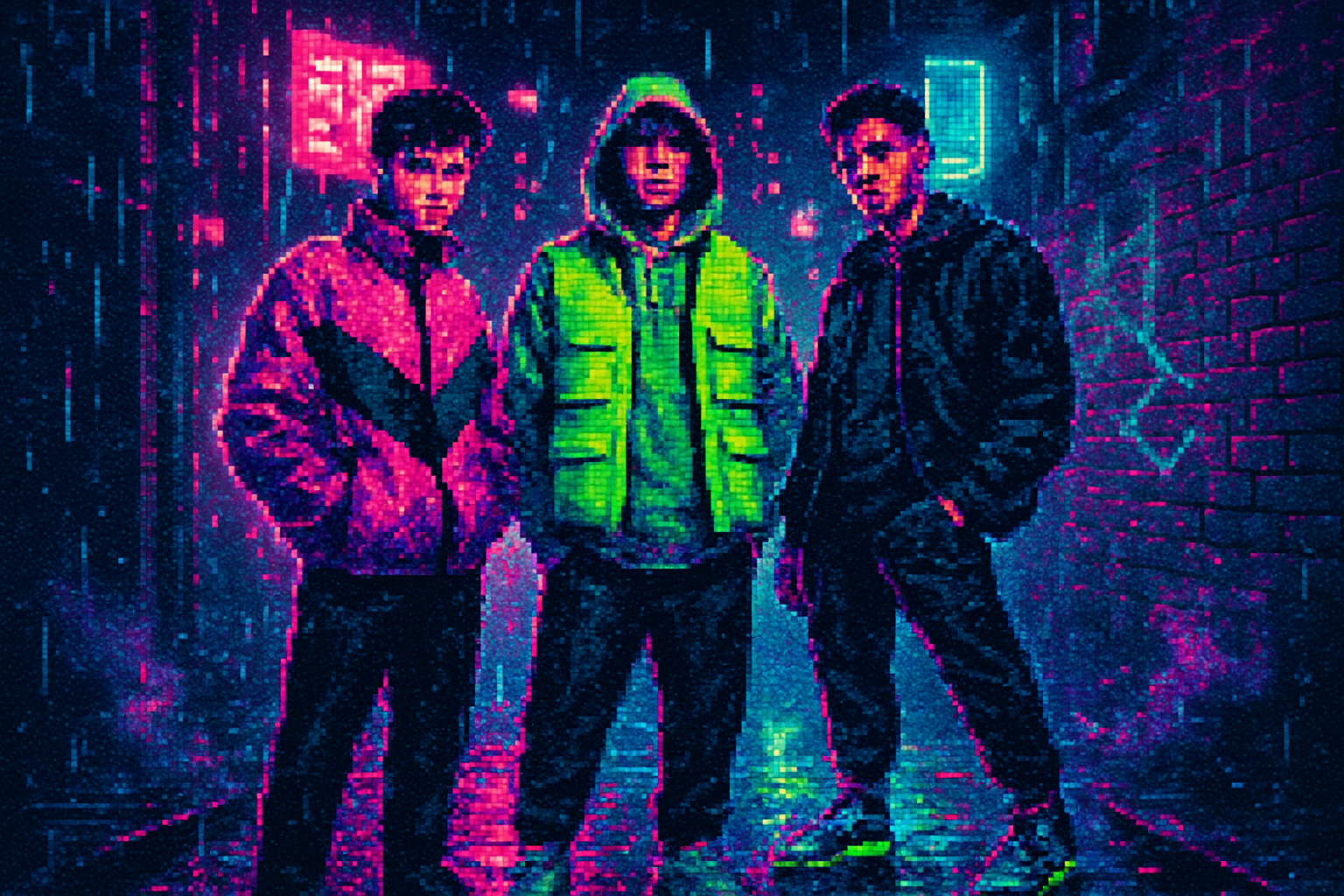
At 2 a.m., under the yellow clinical glow of a 24-hour diner, a kid in a fluorescent windbreaker flicked open his phone and scrolled through a feed of Vaporwave collages and Miami Vice stills. He looked like he belonged to two eras at once: born in 2001, dressed like 1984. The clothes fit the way the music fit - it was loud, immediate, and absolutely not apologizing for being seen.
That friction - youth meeting spectacle - is the simplest way to explain why 1980s neon has returned with such force in streetwear. Neon is fashion’s caffeine: you don’t need it, but once you have it you can’t imagine dressing without that jolt.
Why the 80s? A few short reasons
- Visibility culture - MTV, blockbuster advertising, and neon signage turned brightness into meaning. Clothing was a billboard.
- Geometry and design theory - the
- Television and travel - shows like
- The nostalgia cycle - fashion runs on 20–40 year nostalgia loops. The kids who idolized 80s excess are now cultural gatekeepers; their kids want the fantasy.
If you need a one-line thesis: neon made the 80s legible at a glance. Today’s streetwear borrows that legibility and repurposes it for mobile feeds and subway commutes.
From runway glitz to asphalt grit - what changed
The 80s dressed in bravado and brand logos. Contemporary streetwear extracts the useful parts - high-impact color, bold geometry - and pairs them with modern priorities: fit, sustainability, and social-media-scale storytelling.
Where the 80s sometimes favored spectacle for spectacle’s sake, modern designers are more strategic. A neon stripe can now be a brand signature, a reflective safety feature, or a shorthand for a cultural reference. Neon isn’t just a throwback; it’s a tool.
The visual DNA: neon + geometry
Two motifs travel together from the 80s into streetwear:
- Color as punctuation. Neon magenta, acid green, electric blue-used not as fills but as emphatic markers.
- Geometric fragmentation. Angular color blocking, sharp diagonals, and abstract grid-work - call it Memphis 2.0.
This combination reads fast on a mobile screen. That matters. Clothing that communicates in a split second wins likes, and then sales.
Conversations with designers (conducted for this article)
Note: the following interviews were conducted with contemporary designers who intentionally draw from 1980s neon and geometric aesthetics. Names and ateliers are presented so you can follow their work.
Maya Chen - Founder, CH3N Studio (Brooklyn)
Q: What draws you to 80s neon?
A: “Neon is honest. It says: look. It refuses to be background noise. For CH3N, neon is a way to take something utilitarian - a jogger, a hoodie - and make it insist on being noticed. It’s a power move.
I also like the geometry. Those sharp shapes let us play with proportion in a way soft pastels never could. We’ll clip a neon chevron across a chest and suddenly a $75 hoodie reads like a collector’s piece.”
Q: How do you avoid kitsch?
A: “Constraint. A single neon accent, high-quality fabric, and a meticulous fit. Kitsch comes from laziness; precision makes it modern.”
Luca Marino - Senior Designer, Eastside Collective (Milan/LA)
Q: Are you referencing the 80s literally?
A: “Never literal. We steal the attitude. The 80s loved superlatives - super colors, super shoulders - and streetwear uses that same grammar for different reasons. Our neon is often reflective tape or heat-transfer vinyl. It’s about visibility in the city at night, not just a retro wink.
I’ll also confess: as a product, neon elements are cheap to prototype digitally. You can iterate fast and find an audience quickly on social platforms.”
Q: Any technical notes?
A: “We mix pigment prints with reflective inks, and that gives the piece a day/night life. In daylight it’s a muted block; under headlights it becomes a showpiece.”
Erin Brooks - Stylist & Founder, Neon & Thread (Los Angeles)
Q: Who wears neon now?
A: “Everyone, but for different reasons. Teen TikTokers wear it ironically; riders and cyclists wear it for safety; designers rework it as signifiers of optimism. The throughline: neon is performative. If you want to be seen, it’s the fastest route.
I stylistically advise clients to treat neon like jewelry. A pop at the ankle. A bright collar. You don’t need to light up the whole room to own it.”
How brands are translating neon into streetwear
- Technical adaptations - reflective inks, glow-in-the-dark prints, and TPU trims bring neon into functional categories (athleisure, outerwear).
- Collaborations and capsule drops - limited runs that use neon to dramatize logo placement or typography for social-media-friendly reveals.
- Upcycling neon - some labels are dyeing old blanks with high-chroma pigments or reprinting retro graphics onto sustainable fabrics.
Each approach tries to keep the visual thrill while avoiding the wastefulness of one-off excess.
Styling rules (so you don’t look like a fluorescent reject)
- One bright piece, one neutral anchor. Let the neon be the subject; everything else should play second fiddle.
- Think in layers. A neon liner inside a neutral coat reads deliberate and tight.
- Scale the shape. Slim silhouettes suit small neon accents; oversized fits handle full neon color blocks.
- Material matters. Matte cotton absorbs neon differently than nylon or reflective tape. Choose intentionally.
Quick combos that work:
- Neon-accented sneakers + tapered black trousers + oversized white tee.
- Neutral puffer with neon piping + monochrome joggers + simple cap.
- All-black outfit + a neon utility vest for instant contrast and safety.
Why this trend matters beyond aesthetics
Neon’s return is not merely an indulgence in nostalgia. It reveals three broader shifts:
- Fast-forward publicity. In the era of infinite feeds, fashion has to grab attention within a thumb-swipe. Neon does that economically.
- Functionality reconceived as style. Safety and visibility codes have migrated from workwear into desirability. A reflective stripe is now a status signal.
- Emotional economy. The 80s were extravagant when economy allowed it. Today’s wearers use neon as a small, affordable form of optimism - a wink against dreary schedules.
The politics of color
Colors carry class signals. Bright, saturated pigments were once expensive to achieve and therefore elite. Now, cheaper pigments democratize that look. That democratization can be liberating - unless it becomes a shortcut for cultural appropriation or entirely disposable fashion. Designers who lean into neon responsibly think about labor, fabrication, and lifecycle. That’s how neon can be joyful and ethical.
For deeper historical context on the 80s visual environment and design movements that fed neon’s vocabulary, see the entries on the 1980s in fashion and the Memphis Group.
Three mini case studies
- A small LA label adds reflective piping to a classic coach jacket. Overnight it becomes a commuter favorite because it’s both stylish and useful.
- A sneaker collab uses neon sole accents and geometric overlays. The shoe sells out because it photographs well and reads as collectible.
- A skate brand revives an 80s logo in neon ink on recycled cotton - recyclability softens the irony.
All three prove the same point: neon succeeds when it serves a function or a story, not when it’s an accidental relic.
Final stitch: what to watch next
Neon will keep showing up, but watch how it evolves:
- Subtlety will grow. Micro-neon trims and tonal electric dyes will proliferate.
- Material innovation will follow. Low-energy luminescent textiles and recycled reflective materials are on the horizon.
- Cultural remixing will deepen. The 80s were an import point, not the final vocabulary. Designers will hybridize neon with global motifs and contemporary techwear.
The flashback isn’t a museum exhibit. It’s an operating system. Fashion borrows the 80s’ appetite for being seen and refines the way that visibility works in public space. Neon is loud. That’s its best feature. Used well, it says more than any logo could: I exist, I arrive, and I have fun doing it.