· culture · 7 min read
The Science of Nostalgia: Why Early Laser Pointers Hold a Special Place in Tech History
A stroll down the red-dot memory lane: how hulking HeNe pens and jittery diode pointers taught us about light, gave us theatrical power in lecture halls, and seeded technologies that run modern optics.
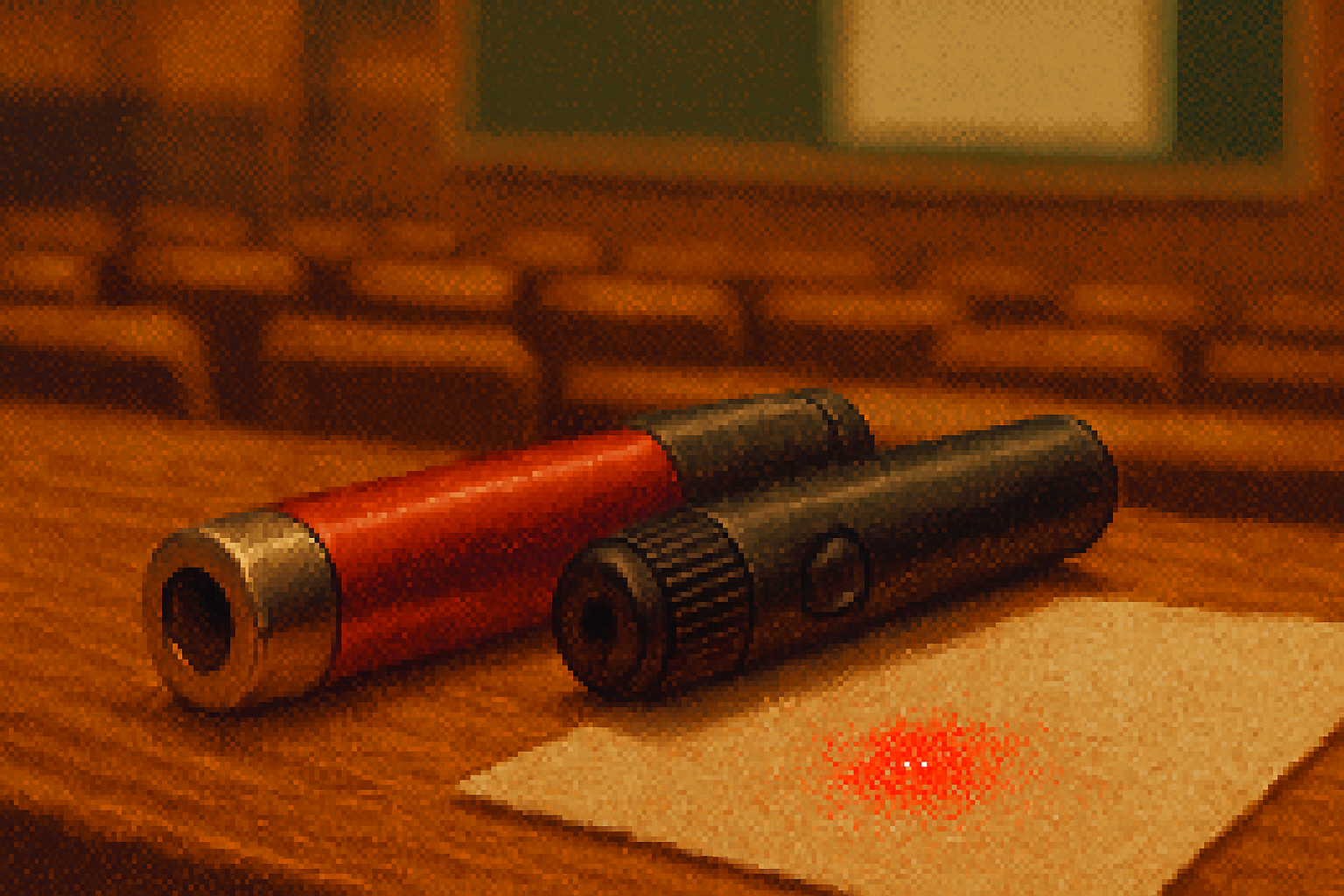
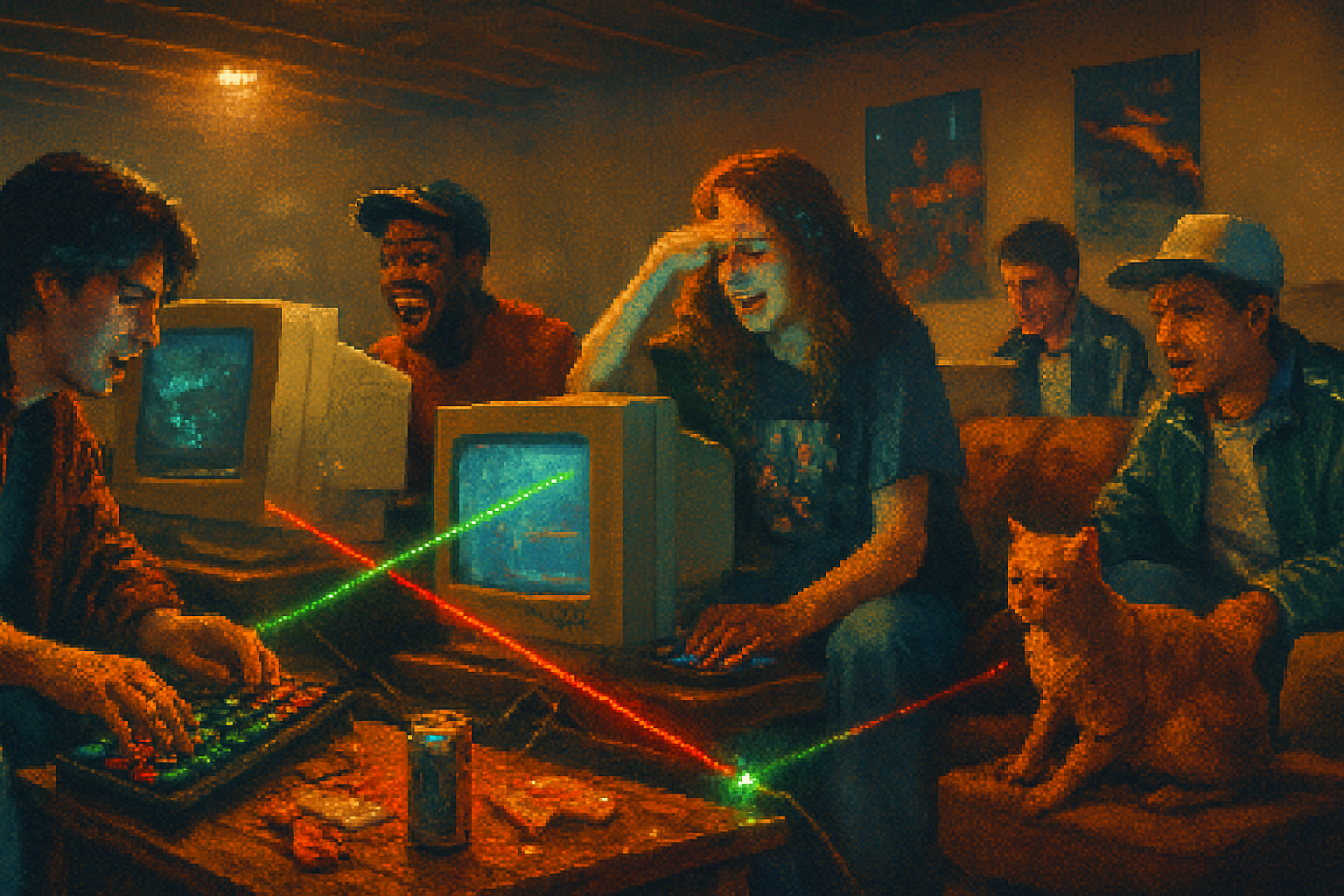
I still remember the sound - a small, confident click that felt like calling a tiny sun into being. It was 1997, a lecture hall, and the demonstrator produced a stubborn, perfectly circular red dot that made half the room swivel like obedient planets. The dot hovered, banal and magical. That single, portable point of light did something worse than illuminate a slide: it rewired how we think about lasers.
The little red dot that changed more than presentations
There is nothing inherently sentimental about an optical cavity or a population inversion. Yet early laser pointers - the HeNe pens, the first clunky diode models, the audacious green modules that later appeared - carry a disproportionate emotional freight. They were often our first intimate contact with a technology that, until then, lived in labs and science fiction: concentrated, coherent light made small enough to hold between thumb and forefinger.
Nostalgia here is not just nostalgia for plastic and chrome. It’s nostalgia for a tactile moment of power: the ability to point, to direct attention, to make the invisible visible. That psychological punch explains why these devices crowd memory: they combined sensory novelty, social ritual (lectures, meetings, shows), and a dash of forbidden play (pets, mischief, runway interruptions).
A quick science detour: what made those pointers work?
The story of laser pointers is a microcosm of 20th-century optics: invention at the bench, then relentless miniaturization.
- The first working laser was built in 1960 by Theodore Maiman - a ruby crystal pumped by intense light - proving that stimulated emission could be harnessed to produce coherent light [https://en.wikipedia.org/wiki/Theodore_H._Maiman].
- Early visible pointers used helium–neon (HeNe) gas lasers, which emit at 632.8 nm. HeNe tubes gave a beautiful, stable red beam, but they were bulky and required a few millimeters of glass and several volts to get started.
- As semiconductor technology advanced, gallium arsenide (GaAs) and aluminum-gallium-arsenide (AlGaAs) diode lasers delivered compact, efficient red emission in the 630–670 nm range. These are essentially the same family of devices that later powered CD/DVD pickups and fiber-optic links.
- Green pointers commonly used a DPSS (diode-pumped solid-state) arrangement - an infrared diode pumps a Nd:YAG (or Nd:YVO4) crystal to produce 1064 nm light, which is frequency-doubled by a KTP crystal into 532 nm green. The engineering tricks needed to fit that chain into a handheld module were impressive - and sometimes a little reckless in cheap imports.
A few technical terms worth bookmarking:
- Coherence - laser light is phase-aligned, which makes a tight, straight beam and produces interference effects like speckle. The odd shimmering or graininess you recall when shining a pointer on textured surfaces is speckle - an interference fingerprint of coherence.
- Wavelength - determines color and how our eyes perceive brightness. A green 532 nm beam looks far brighter to humans than a red 650 nm beam of the same power because our eyes are most sensitive near 555 nm.
- Divergence - real laser beams spread. Early pointers had larger divergence than modern optics - the dot widened over distance, which paradoxically made the beam appear safer and more cinematic than a razor-thin industrial laser.
Why those early designs feel so memorable - the science of memory and nostalgia
Nostalgia is triggered by cues that link the senses to autobiographical memories. Light does this vividly: a color, a narrow beam, a hum. From a neuroscience perspective, emotionally charged sensory experiences activate the amygdala and hippocampus, cementing memories into long-term storage. Nostalgic recall then recruits the orbitofrontal cortex and medial prefrontal areas, creating that bittersweet sense of “that was good.”
Early laser pointers were rich catalysts for this process:
- Novel sensory input - coherent light produces speckle and an almost touchable dot that ordinary light sources don’t.
- Social ritual - lectures, boardroom demos, and early presentations were eventized moments - shared, somewhat ceremonial.
- Simple interactive feedback - point, click, get instant attention. That feedback loop is dopamine-friendly.
Combined, these elements explain why a short-lived consumer gadget can lodge itself in cultural memory alongside mixtapes and dial-up tones.
The practical legacy: how pointers seeded modern optics
Laser pointers are not an isolated curiosity. They are an index case in a larger trend: shrinking photonics. The engineering skills and supply chains developed to make tiny, inexpensive lasers enabled larger revolutions.
- Semiconductor diode mastery - the same manufacturing expertise that made cheap red pointers also underlies optical communication (fiber lasers and transmitters), barcode scanners, and optical storage (CD/DVD/Blu-ray).
- DPSS and nonlinear optics - packing frequency-doubling technology into small modules advanced compact green lasers used now in surveying equipment and some LiDAR prototypes.
- Beam control and stabilization - early experiments with pointer optics pushed low-cost lens and collimation techniques that migrated into laser-based measurement tools and medical devices.
So when you played with a pointer, you were touching - however fleetingly - a lineage of technologies that now run the internet (fiber), autonomous cars (LiDAR), and high-precision manufacturing.
Safety, regulation, and the sobering end to carefree play
Not every technical advance ages well. As pointer power increased and cheap green modules leaked into the hobby market, a sobering fact emerged: a bright, focused point of visible light can damage retinas and distract pilots.
- The U.S. Food and Drug Administration (FDA) has long regulated laser products and sets performance standards [https://www.fda.gov/radiation-emitting-products/lasers].
- Aviation authorities track laser strikes. The FAA and other agencies reported thousands of incidents where lasers were pointed at aircraft, leading to dangerous glare and temporary visual impairment [https://www.faa.gov/air_traffic/publications/media/Laser_Report_2018.pdf].
- Because green DPSS pointers sometimes emitted significant infrared leakage or were mislabelled in power output, early 2000s–2010s saw bans and stricter enforcement on imports and sales.
The nostalgia remains, but with a caveat: the thing you loved as a child could be dangerous in ignorant hands. Sentiment doesn’t negate physics.
Anecdotes and cultural traces: a few memorable vignettes
- Lecture halls - Professors who used the pointer with the cruel elegance of a conductor. A well-placed laser dot could make a bad slide look intentional.
- Pop culture - Music videos and art installations appropriated the eerie geometry of laser dots and beams. The technology looked like stagecraft for the future.
- Mischief and wonder - Cats and toddlers discovered the magic faster than any safety briefing. A dot on the wall is a tiny, inexhaustible chaos engine.
These everyday stories are the reason the technology feels human-sized; it was as likely to be found wielded by an earnest grad student as a lab director.
What the early pointers teach us about designing lovable tech
There is a lesson in this sentimental history for designers and engineers: if you want technology to enter people’s lives memorably, combine three things:
- Sensory distinctiveness - make it feel different than the alternatives.
- Immediate, legible feedback - the red dot is literal and unambiguous.
- A social affordance - it should invite others into a shared ritual.
Early laser pointers hit all three. They were tactile, intelligible, and social. Modern product teams take note: delight is often a simple loop away.
Closing: light, memory, and the ethics of tiny suns
That red dot was a small, obedient star. It made us look and, for a while, feel clever. From a cheap novelty to a technical stepping stone for lasers in communications and sensing, early pointers occupy a rare place: both a fond memory and a real node in the history of photonics.
Nostalgia needn’t be naive. We can celebrate the wonder of that first beam while acknowledging the risks and responsibilities that come with directing light at the world. The dot on the wall was never just a toy - it was a tiny public demonstration of what engineering can do: focus power, capture attention, and change how we see things.
References
- Theodore Maiman and the first laser - https://en.wikipedia.org/wiki/Theodore_H._Maiman
- Laser pointer (history, types, safety) - https://en.wikipedia.org/wiki/Laser_pointer
- FDA - Lasers and Laser Products -
- FAA report on laser/illuminations of aircraft - https://www.faa.gov/air_traffic/publications/media/Laser_Report_2018.pdf