· culture · 6 min read
The Compaq Culture: How 90s PCs Shaped Geek Identity
How a beige box with a confident logo wired a generation of tinkers, hackers and weekend engineers into a shared identity - and why Compaq, more than most brands, became a cultural touchstone for 90s geeks.
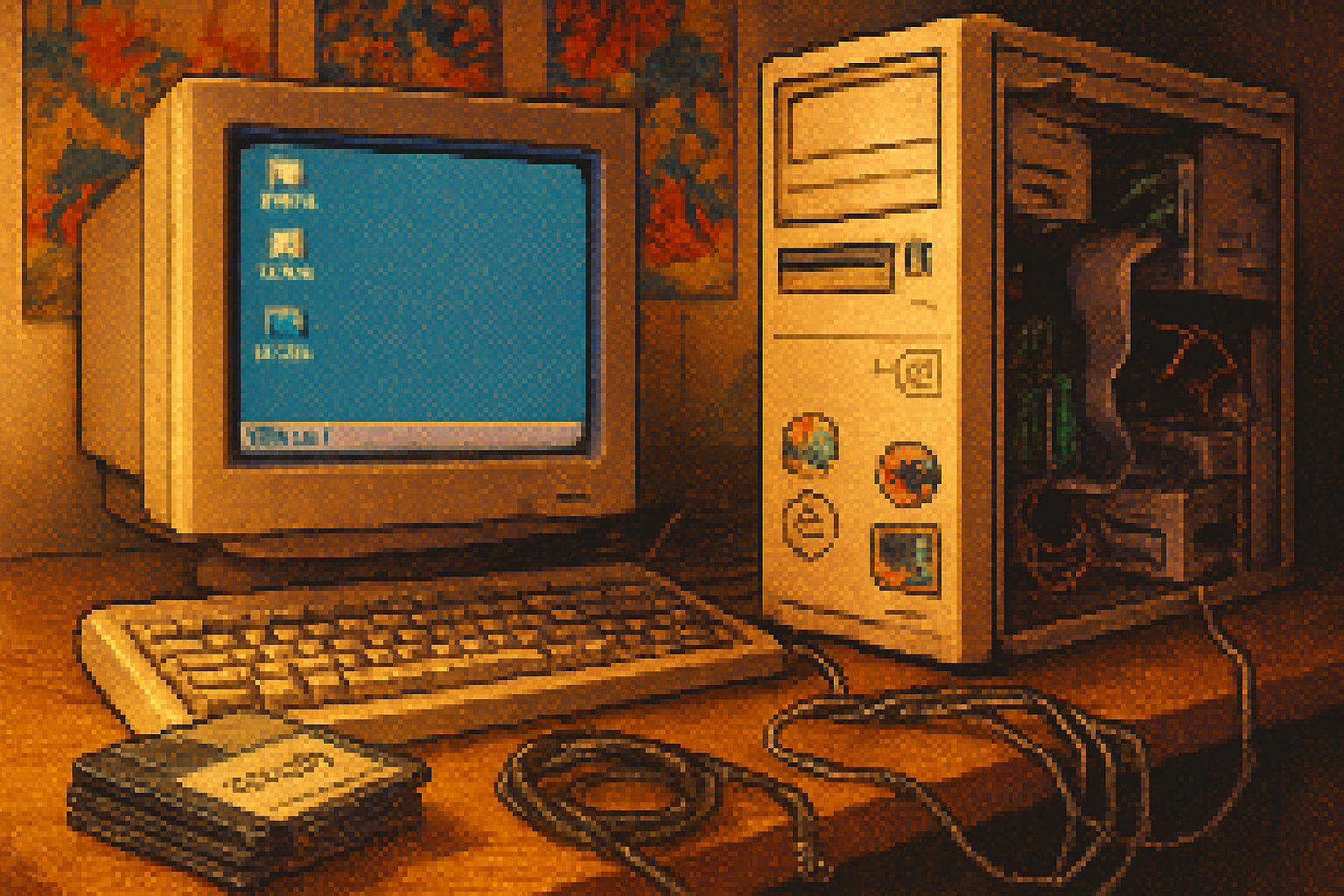
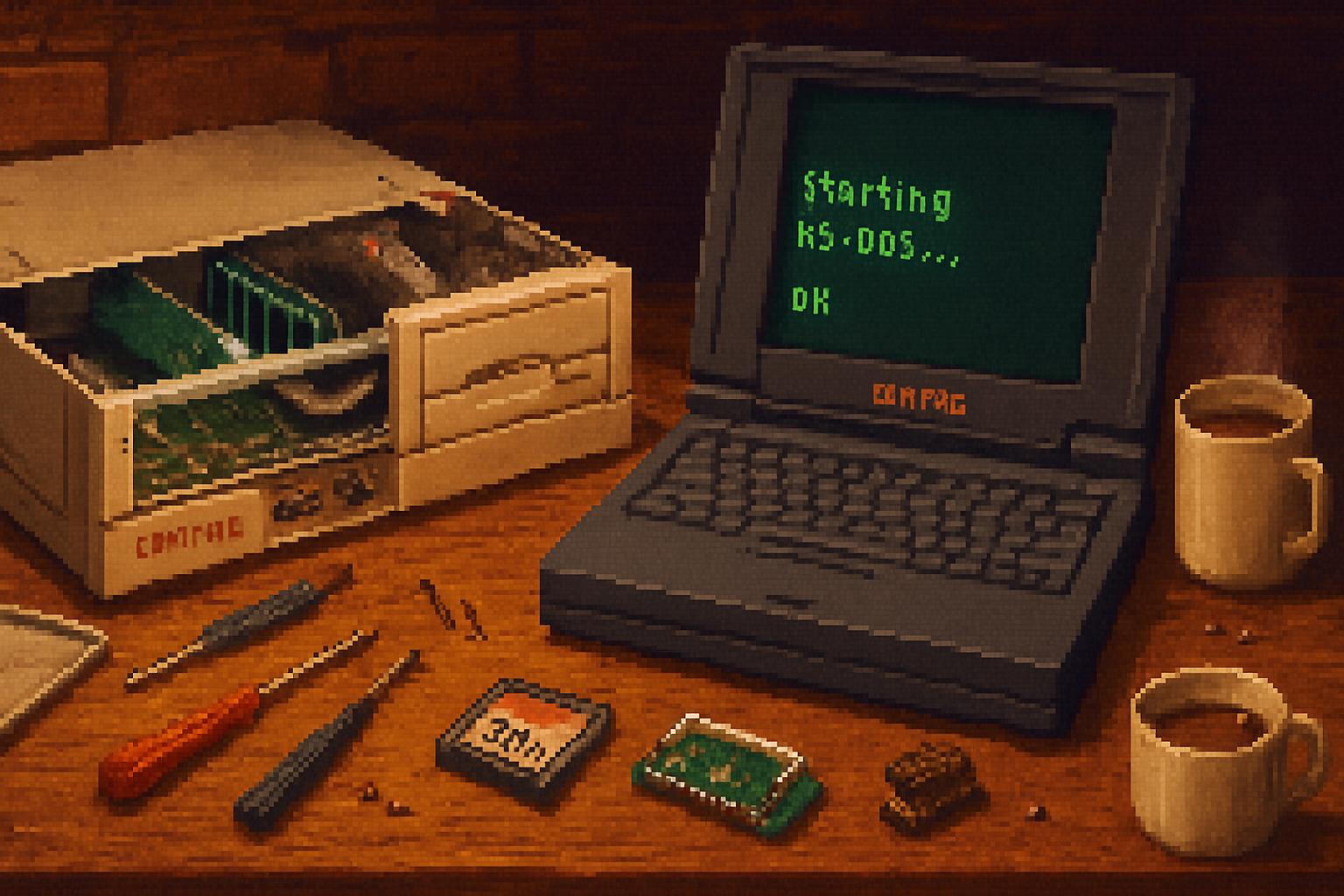
I remember the first time I lifted the lid of a Compaq. It made a sound like a small civil engineering project giving up a secret - metal, plastic, and the faint ozone smell of a machine that had lived its whole life powering a family’s first internet. Behind the floppy drives and nickel-colored ports sprawled a playground: a bank of RAM slots with their exposed gold teeth, a BIOS chip that could be coaxed, cajoled or cursed into obedience, and a stack of jumpers that felt like the combination to some private society.
That tactile moment - not the logo, not even the operating system - is where identity anchored. A Compaq meant you were allowed to pry, to experiment, to become the person who could fix the internet when it hiccuped. This is the story of how a computer company helped build a culture.
The origin story matters - but not in the way marketing wanted
Compaq was a name on the retail shelf, yes, but also a social signal. In the 90s their consumer line (Presario) and business-focused machines (Armada, Deskpro) were everywhere: school labs, magazine ads, the back of someone’s college dorm. Compaq’s advertising didn’t sell fantasy; it sold competence. It promised “this will work,” and that was a bold claim when hardware and software insisted on misbehaving.
- The brand felt engineered - crisp fonts, restrained colors, sturdy boxes.
- The machines felt serviceable - cases you could open without a ritual of proprietary screws.
For background on the company and its product lines, see Compaq’s history and the Presario and Armada pages on Wikipedia, Presario and Armada.
Why a PC brand can make an identity
Culture grows where rituals meet reputation. Compaq provided both.
Rituals
- Opening the case - swapping SIMMs, reseating the CPU heatsink, the risk of static shock and extreme pride.
- BIOS voodoo - learning about CMOS, passwords, and the blessed beep codes.
- Upgrade gossip - which 486 would drop in, how many megs of RAM were an acceptable flex.
Reputation
- Perceived reliability - Compaq had a reputation for business-grade durability - a useful brag in the era of temperamental clones.
- Retail ubiquity - you saw Compaq at CompUSA, Circuit City and university labs; ubiquity makes familiarity, familiarity fosters community.
The result was a shared lexicon: people talked about jumpers, the Presario’s removable feet, the Armada’s keyboard travel. Language binds.
Hardware as rites of passage
If identity is a garment, the Compaq was the uniform. Owning one conferred membership:
- You were the friend who could fix the modem or explain IRQ conflicts.
- You were trusted with DOS commands, with the sacred phrase “format c:” used only as a joke or ritual remedy.
- You knew how to extract a dead hard drive and wire it to another machine like a makeshift heart transplant.
These acts were small displays of competence; repeated, they became status.
Branding, design and the aesthetics of competence
Compaq never aimed to be cheeky. Their product design echoed the corporate world: conservative, functional, readable. That sober aesthetic mattered. It told the user: seriousness lives here. And for adolescents and early twenty-somethings, seriousness was attractive. The machine was a promise: if you learned it, you could make things happen.
Compare this to later laptop worship where thinness and gloss replaced the pleasures of a screw-driver. The Compaq aesthetic allowed hands-onness.
Anecdotes - small confessions from Compaq owners
Below are composite and anonymized recollections collected from people who grew up with these machines. They are meant to capture truth if not precise names.
“My first Compaq was a Presario we got in ‘98. It came with a trial copy of AOL and a stack of diskettes labeled ‘Drivers.’ My father refused to let me upgrade the RAM, so I learned to live with the wheel-of-death by cleaning up startup programs instead.” - high-schooler-turned-sysadmin.
“I bought an Armada in college and installed Red Hat on it. My roommates thought I was odd. Then I forwarded our dorm’s electrical bill spreadsheet. Suddenly people called me ‘the sysop.’ I owned that title until graduation.” - an early Linux adopter.
“Compaq helped me cheat at car races. Not directly. But the machine that ran my telemetry and stored race logs was a little Deskpro. I’d spend nights poring over logs, learning to read graphs. That was my first taste of data - and craft.” - an engineer.
“There was a dirty joy in opening a beige case and finding space. So much space. I’d add a CD-ROM, then another hard drive. It was like tetris for adults.” - an obsessive upgrader.
These memories all carry a common beat: the machine was both tool and teacher.
Community: shops, BBSes, and sticker culture
Compaq did not create the 90s internet community, but their machines were often the meeting point. Trade shops offered warranties and repair knowledge; bulletin board systems (BBS) had threads titled like “Compaq BIOS update” and “Presario overheating.” Physical stickers - vendor, ISP, LAN party - became badges.
LAN parties deserve a special shout-out. Lugging a beige tower to someone’s basement and configuring IRQs together was not merely practical; it was kinship by troubleshooting.
The turning point - corporate consolidation and identity loss
The late 90s and early 2000s saw Compaq’s identity absorbed by scale: the acquisition of Digital in 1998 and later the Hewlett-Packard takeover in 2002 shifted the brand from a distinct culture to an asset in a larger portfolio see Compaq’s corporate history. The Compaq that endorsed hands-on tinkering was diluted into the anonymous sameness of mass-market PCs.
When brands lose their edges, communities lose a rallying point. Without a distinct badge, the rituals attenuate.
Why it still matters
Nostalgia is easy. But there’s a lesson with teeth here: hardware that invites modification breeds a confident user base. The 90s Compaq taught people that computers are objects to be understood and wrestled with - not merely vessels for apps. That confidence scaled into careers: the sysadmins, devs and engineers who learned on beige boxes took those skills forward.
In other words: Compaq didn’t just sell machines. It sold permission.
Takeaways - the anatomy of a culture-forming PC brand
- Accessibility matters - cases that open, parts that swap, documentation that helps.
- Visibility matters - being present in schools and stores accelerates cultural adoption.
- Reliability matters - a machine that ‘just works’ gives users the slack to learn rather than salvage.
- Community matters - local repair shops, BBSs and LAN parties turn solitary consumption into shared practice.
Compaq’s moment has passed. The beige boxes are museum pieces. But the rituals they inspired-the eagerness to pry open a machine, the joy of making something hum-are the real relics. They live in the people who learned how to be self-sufficient with a screwdriver and a stack of diskettes.
If you grew up with one of these machines, you were handed more than a PC. You were handed a practice. And if identity is practice, then for a generation, Compaq helped them practice being geeks.
References
- Compaq - company history overview: https://en.wikipedia.org/wiki/Compaq
- Compaq Presario: https://en.wikipedia.org/wiki/Compaq_Presario
- Compaq Armada: https://en.wikipedia.org/wiki/Compaq_Armada
- Compaq portable history: https://en.wikipedia.org/wiki/Compaq_portable