· culture · 7 min read
Laser Pointer Wars: The Controversy Over the First Models and Their Primal Use in Early Geek Culture
How cheap beams of light became badges of honor at LAN parties - and why playful showmanship with early laser pointers produced injuries, angry pilots, and new rules. A sharp look at the devices, the people who wielded them, and the etiquette that finally followed.
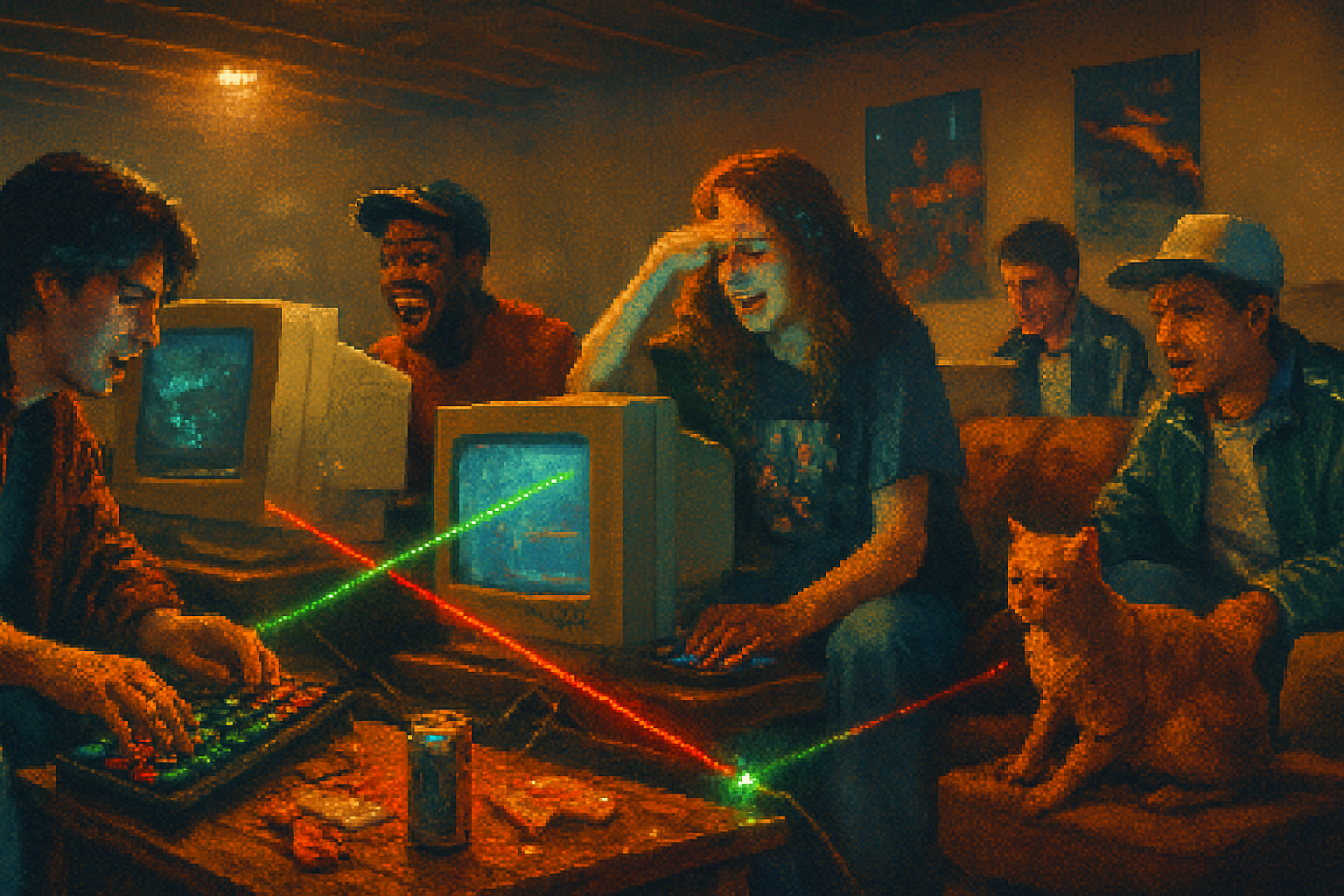
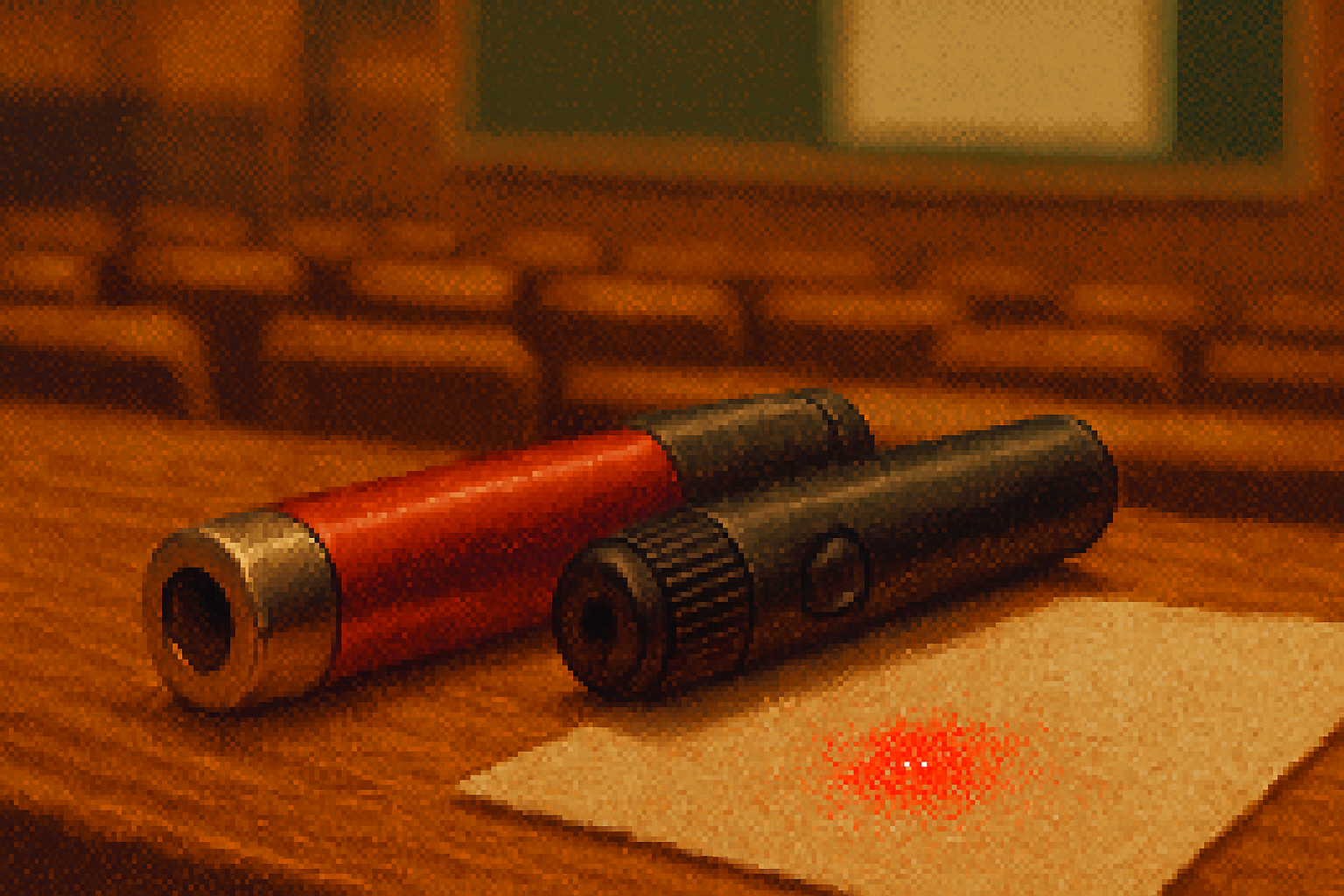
A friend once told me a story about a 2002 basement LAN party where the real competition wasn’t frag counts or fastest modem - it was who could make the fewest people scream while still looking impressive. Someone pulled out a green laser pointer. A red pointer answered. A dozen people began tracing constellations across low ceilings, cats were stunned into orbit, and somebody pointed a beam at a reflective soda can and declared victory. The night ended with a power outage and a neighbor who called the police.
That anecdote is a minor one. The larger story of laser pointers is not - and never was - just about illumination. It’s a story of toys that looked scientific, of tribal signaling at meetup culture, and of how a harmless novelty slowly became a public-safety headache.
The first beams: from lab oddity to pocket theater
Lasers as a concept have been with us since 1960. Early visible lasers in labs were helium–neon (HeNe) devices: glass tubes, a pleasing red glow, and a beam that made physicists feel both clever and slightly theatrical. Those systems were not pocket-sized, but they demonstrated a fact that caught the public imagination: a focused, coherent beam of light feels like a small, controllable bit of lightning.
Commercialization changed the math. As diode technology matured, compact visible laser modules became cheap. By the 1990s and early 2000s, inexpensive red diode pointers were common as presentation aids - and easy to repurpose. Green lasers, produced by diode-pumped solid-state (DPSS) systems, arrived later but were strikingly brighter to the human eye even at low power.
For a readable primer on how pointers and their variants developed, see the Wikipedia summary on laser pointers and the technology behind them [https://en.wikipedia.org/wiki/Laser_pointer]. For consumer safety guidance in the United States, the FDA’s practical notes on laser pointers are a good reference [https://www.fda.gov/radiation-emitting-products/home-business-and-entertainment-products/laser-pointers].
Why geeks loved them: primal uses and playful escalation
There’s a simple psychological explanation for why laser pointers fit so well into early geek gatherings:
- They are instantly theatrical. A point of light feels like an authority - you direct attention with a single motion.
- They’re cheap and portable. Any attendee could produce a beam and stake a claim to being the evening’s showman.
- They invite games. Cats, projectors, constellation games, impromptu “laser tag” gimmicks - the device is a low-friction toy with immediate payoff.
At conventions, hackathons, LAN parties, and university labs, pointers were used for:
- Presentation control and annotation (their original, boring role).
- Playful theatrics - spotlighting a friend, drawing on a projected map, or staging mock duels.
- Social signaling - bringing attention to oneself in a room of peers.
The social dynamics are obvious in hindsight. A pointer is an easy, low-cost way to perform competence and charisma. And when people perform, others compete. Hence: Laser Pointer Wars.
From dazzle to danger: when play becomes a hazard
What starts as flashing bravado can cross a line. The small, clinically cool act of pointing a beam at someone’s face quickly became normal in some circles. Several problems arose:
- Eye hazard. The retina is unforgiving. Direct or reflected beams can cause temporary flash blindness or, at higher powers, permanent damage. Even beams under legal limits can be dangerous at close range or for prolonged exposure.
- Aviation incidents. As cheaper and brighter green pointers proliferated in the 2000s, reports of lasers aimed at aircraft increased. Pilots exposed to a beam can experience glare and temporary flash blindness - dangerous during critical phases of flight. The FAA and other aviation authorities documented large spikes in reported illuminations. See FAA reporting and safety notes for more details [https://www.faa.gov/newsroom/laser-illuminations].
- Law enforcement and public nuisance. Pointers were used to distract players, camera operators, and even police officers at public events. As devices became more powerful, the stakes became legal as well as medical.
The regulatory response was predictable: more policing, import restrictions in some places, and consumer warnings. The U.S. Food and Drug Administration maintains guidance and limits for consumer laser pointers, and many countries restricted retail sales of high-powered handheld lasers because of this misuse [https://www.fda.gov/radiation-emitting-products/home-business-and-entertainment-products/laser-pointers].
The hardware arms race: cheap modifications and the lure of power
Geek culture has an ill-advised romantic streak for DIY upgrades. Where the community saw possibility, entrepreneurs and hobbyists saw profit. A cheap diode could be swapped, lenses adjusted, drivers overvolted. Green DPSS modules - which are visually much brighter even when low-power - became fashionable, but their internal frequency-doubling crystals and ancillary optics made some models unpredictable and, when cheapened, dangerously overpowered.
The consequence was a market flooded with devices whose labels promised milliwatt limits they did not respect. Importers and some vendors plainly advertised power - and with it, novelty and bravado - while skirting or ignoring safety.
This arms race is classic: a low-cost status device becomes subject to conspicuous escalation. Think flame-war threads, but with a real risk of retinal injury.
Etiquette, norms, and the rules that saved faces (and planes)
Culture adapts. As incidents mounted, gatherings evolved norms and written rules. A handful of practical etiquette points rescued many events from descending into pandemonium:
- Keep beams vertical or directed at projection surfaces only. No pointing at faces.
- Prohibit laser use in entryways, stairwells, or windows where beams might escape outdoors.
- Limit allowable power (e.g., 5 mW or less) and require labeled, commercially manufactured devices.
- Ban green DPSS modules at outdoor events or near any open sky.
- If someone points a beam at a person, eject or confiscate the device immediately.
Organizers learned to treat pointers like alcohol: tolerable in controlled measure and circumstances, destructive when left entirely unchecked.
What the controversies taught us about tech culture
The laser pointer saga is a microcosm of broader patterns in geek and maker communities:
- Tools are neutral; humans are not. A device designed as a presentation aid can be recast as a toy, a weapon, or a status symbol.
- Novelty invites play. Play invites escalation. Escalation invites regulation.
- Community norms can be more effective than laws - until public safety is threatened, at which point legal consequences arrive abruptly and without subtlety.
A charitable reading: early misuse came from ignorance and thrill-seeking, not malice. A less charitable reading: a certain performative callousness - the tendency to prioritize spectacle over others’ comfort - was always present. Both readings are true.
Practical takeaways for anyone organizing or attending gatherings
- Assume ignorance. Brief attendees on pointer rules before an event.
- Set hardware rules in advance - allowed classes, power limits, and banned types.
- Make enforcement simple and visible. A single, consistent enforcement policy beats ad hoc moralizing.
- Educate on risks - especially the aviation hazard - rather than only punishing. Awareness reduces misuse.
Conclusion: small beams, big lessons
Laser pointers began as curiosities that let ordinary people carry a piece of laboratory drama in their pockets. For a time, they were perfect props for geek gatherings: cheap, showy, and rife with mischief. Overuse, reckless modification, and the habit of pointing at whatever annoyed us turned a novelty into a public-safety problem.
The solution wasn’t a moral panic or a blanket ban so much as a cultural correction: better education, stricter rules, and a little shame applied at the right moment. The story may sound quaint now - a green beam skittering across a ceiling at a LAN party - but the consequences were not. That small shard of light taught a community an old lesson: novelty without responsibility hurts people, and spectacle without limits eventually attracts regulators.
If you’re heading to a meetup and someone waves a pointer like a wand, consider this: it’s not just light you’re handling; it’s a shorthand for attention and power. Use it like you mean it. But use it responsibly.
References
- “Laser pointer.” Wikipedia. https://en.wikipedia.org/wiki/Laser_pointer
- U.S. Food and Drug Administration - Laser Pointers. https://www.fda.gov/radiation-emitting-products/home-business-and-entertainment-products/laser-pointers
- FAA - Laser illuminations and safety information. https://www.faa.gov/newsroom/laser-illuminations