· retrogaming · 7 min read
The Evolution of Sonic: How the Genesis Games Redefined Platformers
How a blue blur, a small Japanese team, and a handful of design audacities turned platformers inside-out. A look at the Genesis Sonic trilogy’s technical innovations, level design principles, and cultural ripple effects that still shape platform games today.
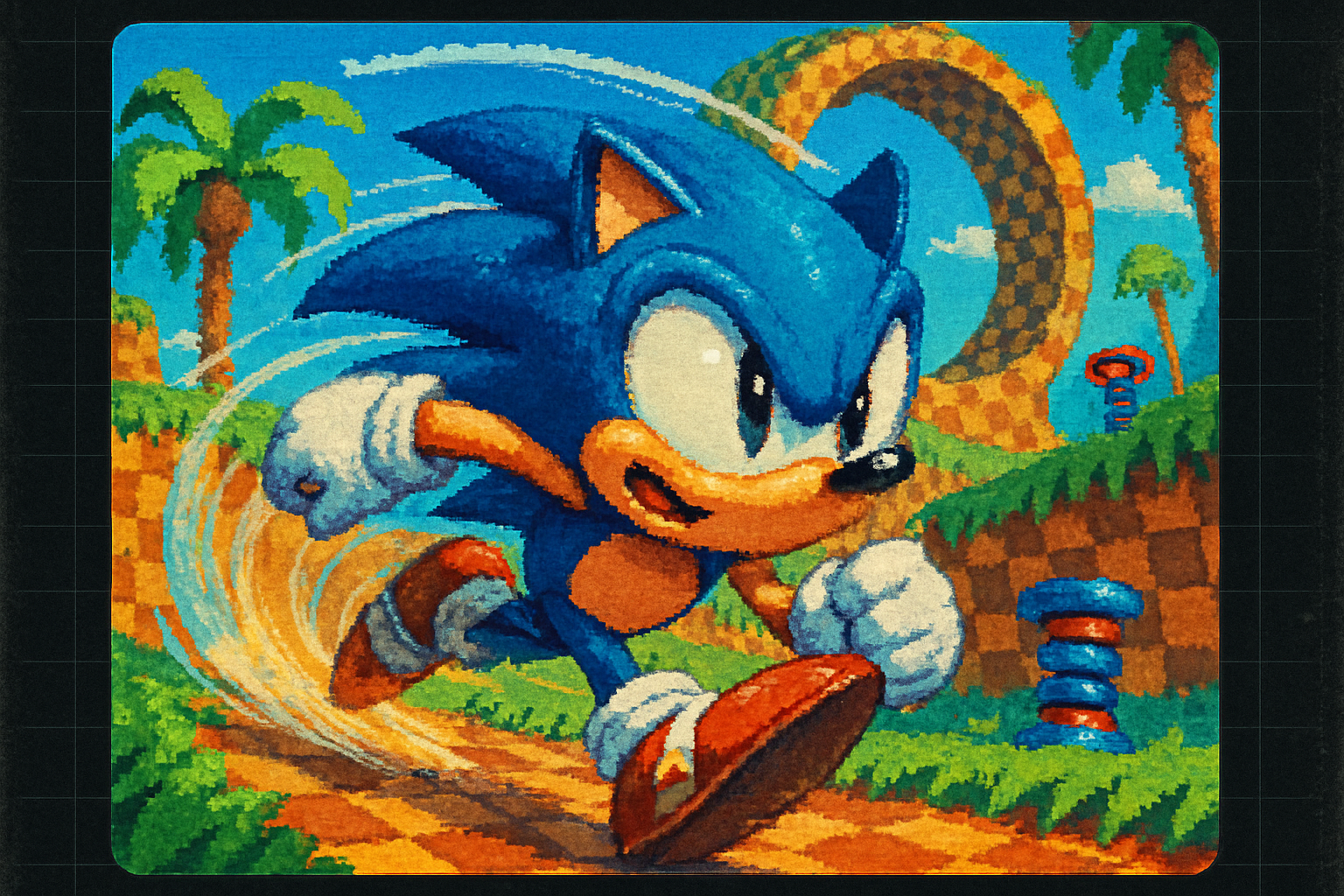
A kid in a fluorescent-lit toy store drops his jaw. The cartridge box shows a blue blur mid-run, looping through a sunlit grassland. He jams the cartridge into the Sega Genesis at home, and for the first time platforming feels like motion rather than a sequence of jumps. That feeling - speed as a design principle, momentum as the player’s partner instead of an enemy - is the story of Sonic.
Sonic didn’t arrive to replace Mario so much as to embarrass him with attitude and top speed. But beneath the neon tagline and the cartooned swagger was serious design thinking: a focused attempt to make games feel fast, fluid, and cinematic. The Genesis Sonic games (Sonic the Hedgehog, Sonic the Hedgehog 2, and Sonic 3 & Knuckles) did more than launch a mascot; they established design conventions platformers still use today.
The brief that birthed a blue blur
Sega in the late 1980s wanted a mascot to compete with Nintendo’s Mario. The brief was simple and viciously effective: make something cool, fast, and distinct. A small internal group - Sonic Team, featuring designers like Yuji Naka (programmer), Hirokazu Yasuhara (level designer), and artist Naoto Ohshima - took the brief and ran with it.https://en.wikipedia.org/wiki/Sonicthe_Hedgehog(1991_video_game)
That human detail matters. Yuji Naka’s code was the engine: a physics-and-momentum system that made acceleration feel organic rather than artificial. Yasuhara worked to lay out levels that could move between breakneck corridors and careful platforming, while Naoto Ohshima perfected the look - a mascot that read in a single glance. The rest was marketing fireworks: a campaign that framed Sonic as the antithesis of Nintendo’s staid plumber.https://en.wikipedia.org/wiki/Yuji_Naka
What Sonic changed: design principles and mechanics
Sonic’s innovations weren’t single flashy ideas but an ensemble - mechanics, level architecture, and audiovisual choices that reinforced one another.
Momentum-first physics - Unlike Mario, who often focuses on precise jumps and tight control at slow speeds, Sonic prioritized inertia. Gravity, slope, and speed interacted so that a gentle run down a hill could send the player rocketing through a loop. That interplay demanded a new kind of level design where player velocity became a resource to manage and exploit.
Rings as health and risk currency - Instead of discrete hit points or health bars, Sonic used rings - collect enough and you survive a hit; lose them all and you die. Rings are both buffer and objective, creating constant micro-decisions about safety versus speed.
Branching paths and set-piece flow - Levels were built like kinetic sculptures. Designers embedded multiple routes - a slow, platform-heavy top path, a turbocharged bottom route with springs and loops. That choice architecture rewarded replay, exploration, and speedrunning.
Checkpoints and pacing - Generous checkpoint placement and instant respawns encouraged aggressive play. You could commit to risky maneuvers because the cost of failure was low, a subtle nudge toward experimentation.
Cinematic spectacle - Loops, corkscrews, and huge foreground sprites turned levels into motion pictures. Sonic’s levels were choreographed sequences where momentum and camera work cooperated to produce thrills.
Technical cunning on the Genesis hardware
Sonic Team exploited the Sega Genesis (Mega Drive) strengths with craft. The Genesis’s Motorola 68000 CPU allowed rapid sprite manipulation and quick control responses - essential for a game whose primary feeling is speed.https://en.wikipedia.org/wiki/Sega_Genesis
The team worked around hardware limits - sprite budgets, palette constraints, and tile reuse - to create the illusion of vast, rolling landscapes. Parallax layers, large foreground elements, and carefully timed enemy placement hid technical constraints behind spectacle. Above all, the code prioritized responsive input and consistent physics; when players complained about control lag in other platformers, Sonic’s responsiveness felt revelatory.
Music and attitude: shaping a cultural icon
The soundtrack did heavy lifting. Masato Nakamura of the band Dreams Come True composed the music for the first two Genesis games; his pop sensibilities gave levels distinct identities - jaunty, eerie, triumphant - and the audio design reinforced pace.https://en.wikipedia.org/wiki/Masato_Nakamura
Then there was marketing. Sega’s campaign framed Sonic as cool and a little subversive - skateboards, sunglasses, and the contemptuous “Sega does what Nintendon’t” positioning. The combination of fast gameplay and cultural swagger turned Sonic into a 1990s icon: cartoons, toys, breakfast cereal, and an entire identity beyond the cartridge.
Iterations that mattered: Sonic 2 and Sonic 3 & Knuckles
Sonic the Hedgehog (1991) proved the core formula. Sonic the Hedgehog 2 (1992) polished it: split-screen multiplayer, the spin dash (allowing players to start at high speed instantly), and more elaborate two-player options broadened the tactical repertoire.https://en.wikipedia.org/wiki/Sonic_the_Hedgehog_2
Sonic 3 & Knuckles (1994) is the culmination of the Genesis era’s lessons. Longer, more varied levels; save features; and the infamous lock-on technology that let Sonic 3 merge with Sonic & Knuckles to become a single, sprawling experience - it was an act of design and cartridge-era showmanship.https://en.wikipedia.org/wiki/Sonic_3_and_Knuckles
These sequels did more than add features. They demonstrated a franchise’s ability to iterate on a core feel: add new tools (spin dash, shields, elemental modifiers), but never betray the sensation that defined the series.
The cultural ripples: why Sonic matters beyond nostalgia
Sonic’s influence is visible in three overlapping domains:
Mechanical legacy - Momentum-based movement, risk-as-reward collectibles, and branching routes are now standard tools in platformer design. Many modern indie platformers explicitly borrow Sonic’s physics or level logic (see titles like Sonic Mania for direct homage).
Speedrunning and emergent play - Sonic’s levels invite route optimization. The combination of branching paths and physics exploits spawned a speedrunning culture that values not just dexterity but deep knowledge of momentum and state.
Brand and attitude - Sega proved that a platformer could be a pop-cultural phenomenon. Sonic’s look, merchandising, and cross-media adaptations created a model for how games could extend into broader cultural spaces.
What modern designers still borrow from Genesis Sonic
Look at contemporary platformers and you’ll find Sonic’s fingerprints everywhere:
Physics-first design - Games that prioritize feel over pure precision inherit Sonic’s idea that control should communicate motion, not just stop-and-start jumping.
Level-as-sequence - Designers now think in terms of kinetic sequences and beats - build a climb, break it with a high-speed rush, then require a precise platforming interlude.
Risk economies - Using collectibles as both scoring and survival tools creates ongoing tension and choice.
Sound as motion - Sonic’s example showed how music and sound design could synchronize with pace to amplify perceived speed.
A few counterpoints and caveats
Sonic’s approach is not universal gospel. Momentum-heavy controls can frustrate players who want pinpoint precision. The same systems that create exhilarating runs can make tight platforming unforgiving. Many designers blend Sonic’s fluidity with Mario-style control to get the best of both worlds.
Also, the Genesis-era tricks were partly born of necessity: hardware limits forced creative solutions. When hardware freed designers, some of Sonic’s compromises fell away - but the principles remained because they were aesthetically and mechanically compelling, not merely expedient.
The shorthand legacy: what Sonic gave platformers that they keep
Sonic showed that a platformer could be about sustained motion rather than discrete actions. It taught designers that speed could be a mechanic, music a pacing tool, and level architecture a narrative of movement. The Genesis trilogy crystallized a design philosophy: make players feel like actors in a moving sequence, then give them choices within that flow.
That brief, brilliant convergence - a smart team, hardware with personality, a memorable mascot, and swaggering marketing - made Sonic more than a product. It taught an industry that tempo and momentum are legitimate languages for gameplay. Twenty-five years on, when a game makes you lean into the controller because the world is moving beneath you, that’s Sonic’s shadow across the controller.
The last time you chased a rolling loop or chose the bottom run because it looked faster, you were playing with a convention the Genesis games invented and perfected. That’s not nostalgia. It’s design inheritance.
Further reading
- Sonic the Hedgehog (1991) - development and overview: https://en.wikipedia.org/wiki/Sonic_the_Hedgehog_(1991_video_game)
- Profiles of key creators - Yuji Naka -
- Sega Genesis hardware context: https://en.wikipedia.org/wiki/Sega_Genesis
- Sonic 2 and Sonic 3 & Knuckles retrospectives: https://en.wikipedia.org/wiki/Sonic_the_Hedgehog_2, https://en.wikipedia.org/wiki/Sonic_3_and_Knuckles
- Sonic Mania (2017) as explicit homage: https://en.wikipedia.org/wiki/Sonic_Mania