· retrogaming · 6 min read
Hack or Be Hacked: How Watara Supervision Games Inspired the Indie Game Movement
The Watara Supervision was a cheap, oddball challenger to Nintendo's dominance - a little plastic provocation whose ragged library taught an accidental lesson: constraints breed invention. This piece traces how the Supervision’s aesthetics and “make-do” mechanics anticipated and continue to inform modern indie design, and points to contemporary titles that embody the same spirit.
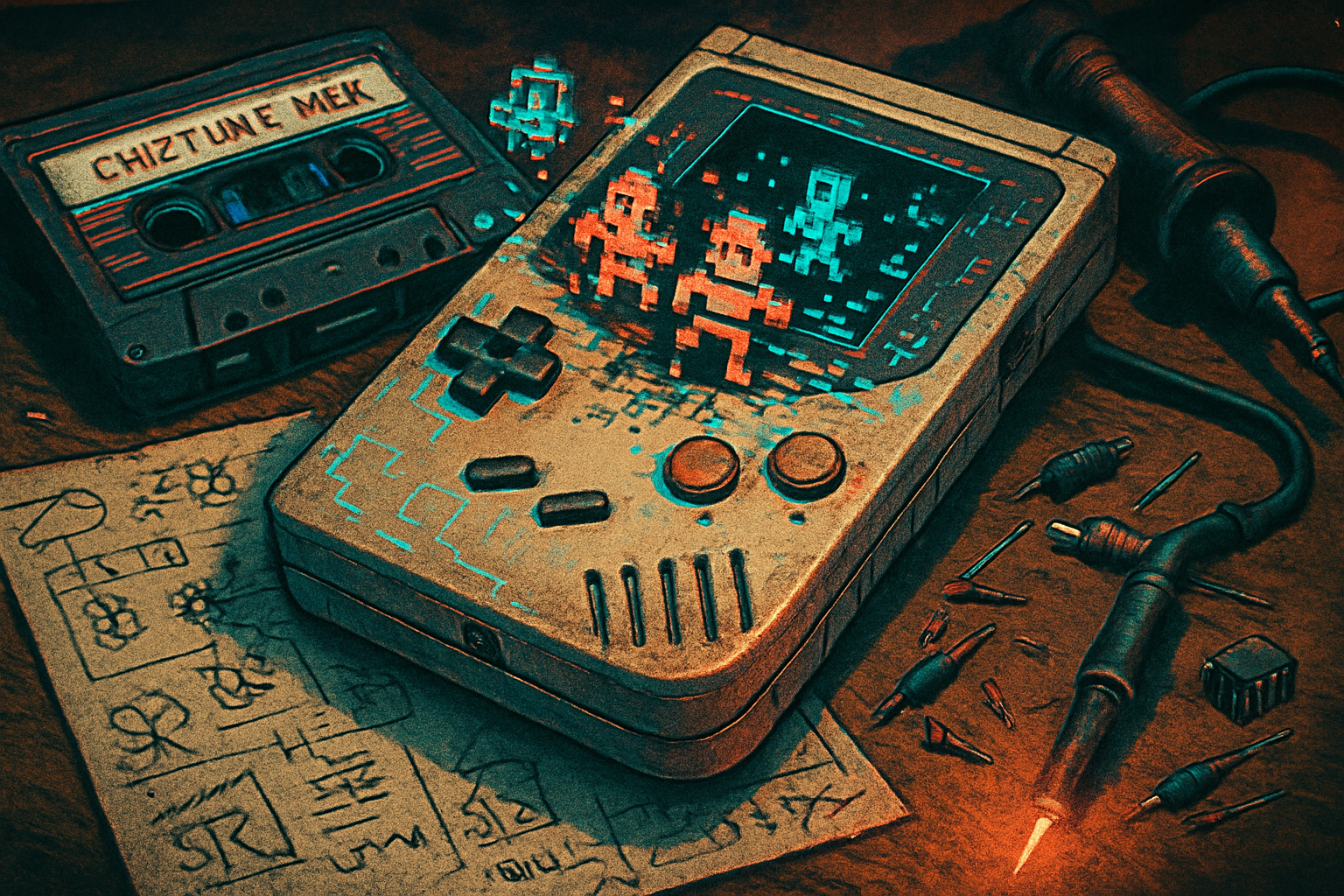
I found one under a false bottom of a thrift-store cardboard box: a beige rectangle of plastic with a scratched screen and a sticker promising “hundreds of games”. It was a Watara Supervision - the sort of machine your parents bought because it was cheaper than the alternative, and kids learned to love because it was all they had to hack.
That thrift-store relic matters because it represents a particular approach to games that videogame capital seldom advertises: if you can’t buy polish, you invent around it. You make a game that survives bad hardware, terrible screens, and small budgets - and sometimes you make something stranger and more interesting than the glossy product ever could be.
The Watara Supervision: an accidental manifesto
The Supervision (often just called the Watara Supervision) arrived as a low-cost challenger to the Nintendo Game Boy. It was cheaper, marginally less powerful, and had a library filled with awkward ports, curios, and outright experiments. Many of its cartridges were rough-hewn attempts to replicate popular arcade and console templates; many more were oddballs that displayed a certain giddy amateurism.
Two points matter for a modern reader:
- The hardware pushed designers into constraints - tiny screens, limited input, and underpowered processors made tight mechanics and clear visual language not optional but mandatory.
- The library tolerated - even encouraged - weirdness. Because the bar for release was lower, designers often shipped half-baked but original ideas rather than polished clones.
Those two features - constraint and experimentalism - are the DNA of much of indie design today.
Why a mediocre handheld matters to today’s vibrant indies
It’s tempting to claim a direct lineage from Watara to any particular indie studio. The truth is messier and more interesting: the Supervision didn’t so much beget a family tree as illustrate a methodology. Its lessons are practical and philosophical:
- Constraints as creative tools. When you have to do more with less, you discover elegant workarounds and gameplay-first thinking.
- Beauty in low fidelity. Grainy screens and limited palettes force designers to exaggerate character and shape, which can make games feel iconic instead of photorealistic.
- Permission to be weird. If the barrier to entry is low, you will see more risk-taking - the odd mechanics, the bad ports that become cult classics, the silly one-off experiments.
That ethos - hackery over production values - is what propelled the indie movement into the mainstream.
Contemporary games that wear the Supervision’s fingerprints
A direct causal line is rare, but the parallels are plentiful. Here are indie titles that embody the Supervision spirit, and how they channel that ragged, inventive energy.
Downwell - drilling into limits
Downwell is a lesson in reductionism: one button to shoot downwards, one to jump, a stark black-and-red (or black-and-white in the original aesthetic) palette, and an economy of design that makes every pixel count. It’s the sort of mechanical clarity that small-screen devices forced designers to achieve on the Supervision. Both artifacts show that tight constraints can yield ferocious gameplay.
- Reference: https://en.wikipedia.org/wiki/Downwell
VVVVVV - single-screen elegance and chiptune urgency
Tight rooms, instant respawns, and music that sounds like it was wrung from a pocket calculator - VVVVVV channels the aesthetic of handheld-era platformers. Its limited visual language and pure emphasis on moment-to-moment traversal echo the small-scope design many Supervision games adopted out of necessity.
- Reference: https://en.wikipedia.org/wiki/VVVVVV
Baba Is You - rule-bending experiments
Some Supervision cartridges shipped bizarre, rule-driven puzzles because nobody was policing the registry of “sensible game ideas.” Baba Is You inherits that spirit of rule-experimentation: mechanics are malleable, and the joy lies in syntactic play as much as in pixel-perfect inputs. It’s a reminder that cheapness can free you to think differently.
- Reference: https://en.wikipedia.org/wiki/Baba_Is_You
Anodyne - Game Boy nostalgia as texture, not fetish
Anodyne apes the look and feel of top-down, Game Boy-era adventures: limited colors, compact maps, and an aesthetic that suggests a scratched portable screen. Where Supervision developers had to design around ugly hardware, Anodyne intentionally uses those artifacts to create mood and memory. The difference between necessity and choice is subtle; the effect is similar.
McPixel and Goat Simulator - the aesthetics of joyful brokenness
These games built an audience by embracing the rudimentary, the absurd, and the deliberately half-baked. That’s a tonal cousin to the Supervision library’s oddities: when a platform systemically encouraged rough releases, some creators leaned into the brokenness and turned it into a feature.
Side note: jams, GB-constrained design, and the modern revival
Community events like the GBJam (a Game Boy–themed game jam) channel the same impulse that produced Watara’s library: limit your palette, your resolution, your controls, and see what mischief you can make. These jams surface designers who are fluent in constraint-based thinking - the core skill the Supervision forced upon its creators.
- Example jam: https://itch.io/jam/gbjam
How small studios put Supervision lessons into practice
If you’re a developer (or a designer who likes making trouble), here are actionable ways to adopt the Supervision approach without making people suffer for playtesting:
- Limit first. Reduce colors, inputs, or screen resolution during prototyping to force clarity.
- Make mechanical novelty the centerpiece. If you can’t outspend competitors on art, out-invent them in how the game behaves.
- Design for the short play session. Many Supervision titles were meant for bus rides; modern players still appreciate tight, quick loops.
- Treat bugs as design opportunities. Not all crashes are welcome, but odd emergent behaviors can be reframed as features if they’re compelling.
- Ship early. The Supervision taught that imperfect ideas find audiences when they’re interesting; polish never fixes a broken core mechanic.
The politics of low-cost creativity
There’s an uncomfortable truth behind the “we made it with nothing” romance: low-budget hardware like the Supervision existed because larger markets redirected talent and money elsewhere. Still, the insurgent culture it incubated matters. Independent creators reclaimed tactics from the cheap end of the market and turned them into a language of possibility.
It’s tempting to sentimentalize the ragged edges. Don’t. The point isn’t nostalgia for ugliness; it’s an ethical design argument: constraints focus attention on player experience rather than market optics. Designers who learned that lesson in the 1990s on scratched plastic are now running tiny studios and teaching older, richer companies how to prioritize substance over sheen.
Hack or be hacked
The modern indie scene inherits the Supervision’s most useful lie: that limitations are problems to be solved. In practice they are prompts. The Watara Supervision didn’t win the market. It did something more subversive: it normalized a way of working where odd ideas could be tried cheaply and players rewarded the brave and the weird.
The next time you see a lo-fi game with a terrible font and a brilliant mechanic, remember the little beige rectangle in that thrift store box. The Supervision was, in many ways, a training ground - not for flawless execution, but for audacity. In an industry that spends fortunes chasing simulator-level fidelity, audacity is still the cheapest, most effective hack.
References
- Watara Supervision (hardware overview): https://en.wikipedia.org/wiki/Supervision_(handheld_console)
- Downwell: https://en.wikipedia.org/wiki/Downwell
- VVVVVV: https://en.wikipedia.org/wiki/VVVVVV
- Baba Is You: https://en.wikipedia.org/wiki/Baba_Is_You
- Anodyne: https://en.wikipedia.org/wiki/Anodyne_(video_game)
- GBJam (example of constraint-driven jam culture): https://itch.io/jam/gbjam