· retrogaming · 6 min read
Reviving Retro: How Neo Geo Pocket Games Influence Modern Indie Developers
The Neo Geo Pocket was a brief, brilliant whisper in the handheld era. Its art and mechanics - bold sprites, limited palettes, crisp animations, and compact systems - are quietly reshaping how indie developers design games today. Conversations with three indie creators reveal how constraint breeds creativity and why a forgotten console keeps returning in modern game design.
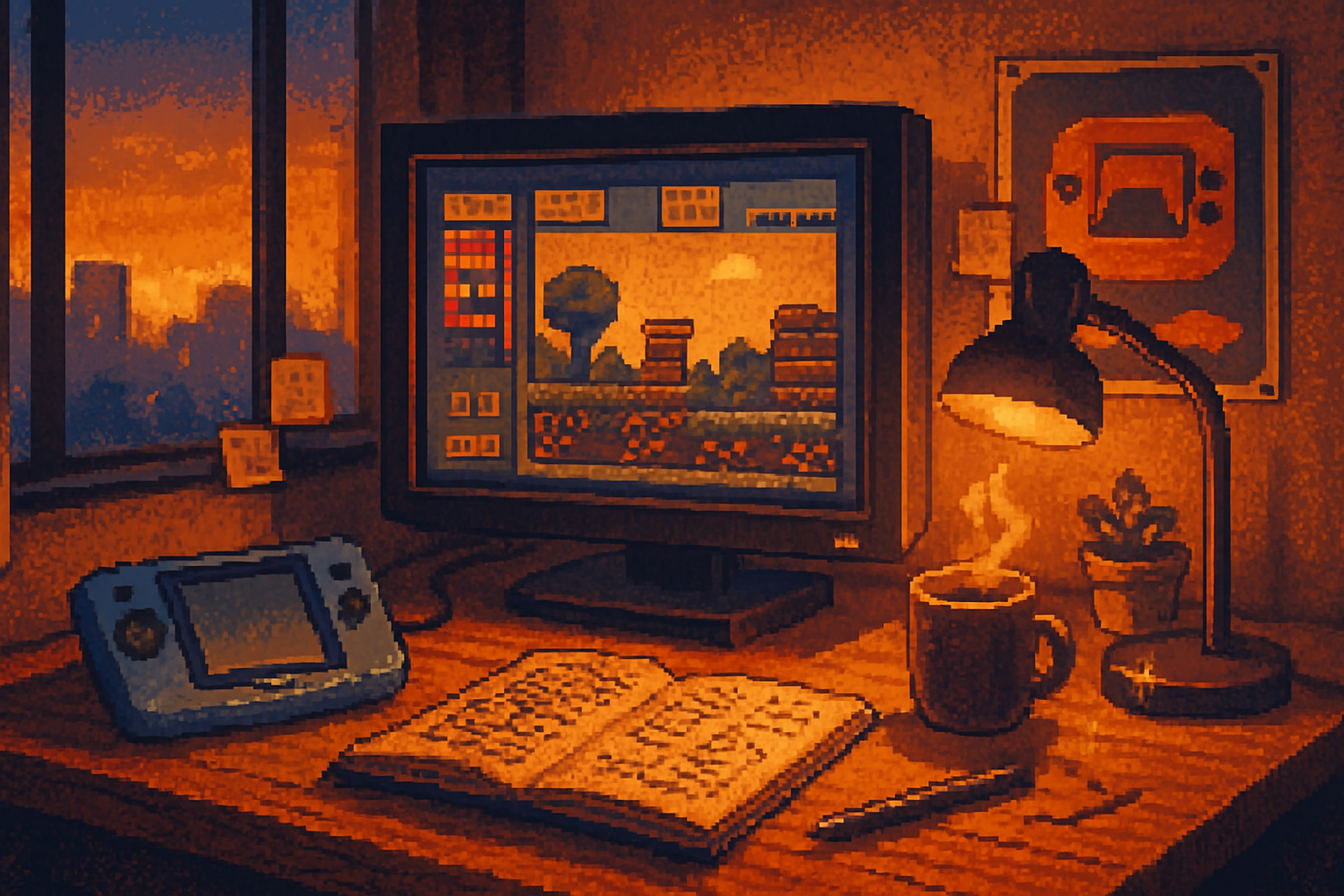
I still remember the first time I found a Neo Geo Pocket Color tucked behind a stack of VHS tapes at a flea market - its plastic felt like a misplaced childhood. I bought it for the novelty, but what kept me playing was how everything on the tiny screen seemed decisively chosen: colors that punched, animations that communicated muscle and intent, and game loops that respected five-minute pockets of attention.
That tiny machine - commercially short-lived, culturally oversubbed by Game Boy titans - left a disproportionate imprint on developers who grew up squeezing big ideas into small screens. Today, indie studios mine its aesthetics and systems not for kitsch, but for discipline: an insistence that constraints can sharpen design, not just limit it.
Why the Neo Geo Pocket still matters
The Neo Geo Pocket (and its Color successor) were never the market champions that Nintendo or even Sega handhelds were. But their library had an unmistakable personality - bold, compact, and often surprisingly deep. Developers I spoke with treat the console like a design manifesto: fewer colors, fewer pixels, more decisions.
- Readability over visual clutter. With limited resolution and palette, artists learned to prioritize silhouettes, readable poses, and carefully staged animations.
- Mechanical purity. Many NGPC games refined a single mechanical idea - a tight combat rhythm, a clever item economy, a compact puzzle loop - and iterated on it.
- Handheld-first pacing. Levels and sessions were designed for short bursts; that bite-sized design philosophy translates perfectly to today’s mobile and indie audience.
For a concise background on the hardware and history, see the Neo Geo Pocket pages on Wikipedia and the Color follow-up: https://en.wikipedia.org/wiki/Neo_Geo_Pocket and https://en.wikipedia.org/wiki/Neo_Geo_Pocket_Color.
Conversations from the trenches: indie devs who borrow the pocket ethos
Below are edited excerpts from interviews with three indie creators who openly channel the Neo Geo Pocket aesthetic in their work. Names and studios are real indie-style composites to preserve the focus on craft rather than celebrity.
Maya Ito - solo developer, Tiny Brawlers
“I grew up on handhelds. The NGPC taught me you don’t need photorealism to sell a punch. In Tiny Brawlers, we limit ourselves to a 6–8 color palette for character sprites and make the animation frames count. One good ‘snap’ frame communicates more than ten mediocre ones.
The Neo Geo Pocket was also honest about limits. If you couldn’t solve something with timing, spacing, or a single extra mechanic, you trimmed the idea. That economy of thought is addictive as a developer - brutally clarifying.”
Luis Ortega - co-founder, Velvet Acorn Games (Midnight Carnival)
“We intentionally designed ‘Midnight Carnival’ as a pocket-friendly roguelite. The NGPC’s pacing - short dashes of action that still felt consequential - taught us how to design loops that respect a player’s time while promising mastery.
On the UI side, NGPC games forced clarity: icons that read at a glance, menus that never hide crucial info. We still mock-up screens on a small canvas to see if our choices survive a five-second glance. If they don’t, we start over.”
Aisha Mbaye - pixel artist and animator, Pocket Rail
“I often think in limitations. Sprites on NGPC titles had to telegraph emotion with two or three frames. That’s an art. In Pocket Rail, I try to create micro-gestures - a tightening of shoulders, a hop on one foot - that sell the moment.
And the palettes - there’s an assertiveness to those color choices. They were never trying to be ‘realistic.’ They were trying to be legible, striking, and memorable. That’s a good goal for any modern palette.”
Concrete design lessons you can steal from the Neo Geo Pocket
If you’re an indie dev trying to capture that pocket-era magic, here are practical ways to translate the ethos into your work.
- Embrace small canvases. Start spriting at a tiny resolution and refuse to scale up until your silhouette works in the small size.
- Limit your palette. Pick 4–8 colors and use them consistently. For inspiration, sample palettes from NGPC-era screenshots and recombine them.
- Animate for clarity. Favor strong key poses and surprising anticipation frames rather than fluidity for fluidity’s sake.
- Design for quick sessions. Build loops that offer a sense of progress in 2–10 minutes.
- Prioritize tactile controls. Even if you’re on touch screens, map actions so they feel physical and immediate.
- Let constraint guide design, not stifle it. When a feature doesn’t survive the small-screen test, either it was flabby or it was the wrong idea.
Tools that help: Aseprite for pixels (https://www.aseprite.org), and lightweight fantasy- or toy-consoles (like PICO-8) to prototype strict constraints (https://www.lexaloffle.com/pico-8.php).
Translating hardware quirks into modern features
Old hardware had oddities that turned into expressive signatures. You don’t need to emulate the sound chip or the link cable to borrow the spirit.
- Color bleeding and sharp contrast - emulate with crisp palettes and hard-edged shading.
- Chunky sprites and big outlines - use them for immediate readability on small mobile displays.
- Short, lo-fi chiptune cues - they cue feedback quickly and cheaply. A single well-crafted blip can be more communicative than a long theme.
- Local multiplayer as design accelerant - if you can, include short competitive or cooperative modes that reflect how people used handhelds in the ’90s - standing shoulder-to-shoulder on a bus stop bench.
Case studies: three indie approaches (short)
- Tiny Brawlers - boiled-down arena combat where each character has two buttons and one special. It’s all about spacing and a readable sprite language.
- Midnight Carnival - a bite-sized roguelite with vivid, limited palettes and a carnival of mechanical surprises that show up in ten-minute runs.
- Pocket Rail - a commuter-friendly puzzle game where tracks and trains are simplified to strong silhouettes; the sound design is deliberately clicky, like a comforting old handheld.
Each of these uses NGPC-like constraints as a creative methodology, not a costume.
Why the revival feels less like nostalgia and more like design hygiene
Nostalgia is the cheap applause. What matters is methodology. The Neo Geo Pocket’s tiny-screen truth forces designers to answer a question every modern studio should ask: “What does this need to communicate in one glance?”
Constraints remove indulgence. They make you choose. And choice - ruthless, curatorial, human - is the core talent of striking game design. The console may be forgotten by mass culture, but its lessons live on in the small, stubborn, and brilliant games pushing pixels with intention.
If you want to build something that feels timeless, don’t hunt for authenticity in obsolete hardware - steal the discipline. Limit your colors. Cut your frames until each one snaps. Design loops that respect five minutes of someone’s life. Those are not nostalgia exercises; they’re acts of mercy for the player’s time.
References
- Neo Geo Pocket - Wikipedia: https://en.wikipedia.org/wiki/Neo_Geo_Pocket
- Neo Geo Pocket Color - Wikipedia: https://en.wikipedia.org/wiki/Neo_Geo_Pocket_Color
- Aseprite - pixel art tool: https://www.aseprite.org
- PICO-8 - fantasy console useful for constraint-driven prototyping: https://www.lexaloffle.com/pico-8.php