· retrogaming · 6 min read
Retro Revivals: How SNES Classics Inspire Today’s Indie Games
The SNES era trained designers to do more with less. From tonal EarthBound echoes in Undertale to Chrono Trigger–style JRPGs like Sea of Stars, modern indies pick up the SNES playbook-its palettes, pacing, and mechanics-and remix them into new experiences. This article traces how those classics survive, evolve, and teach today's creators.
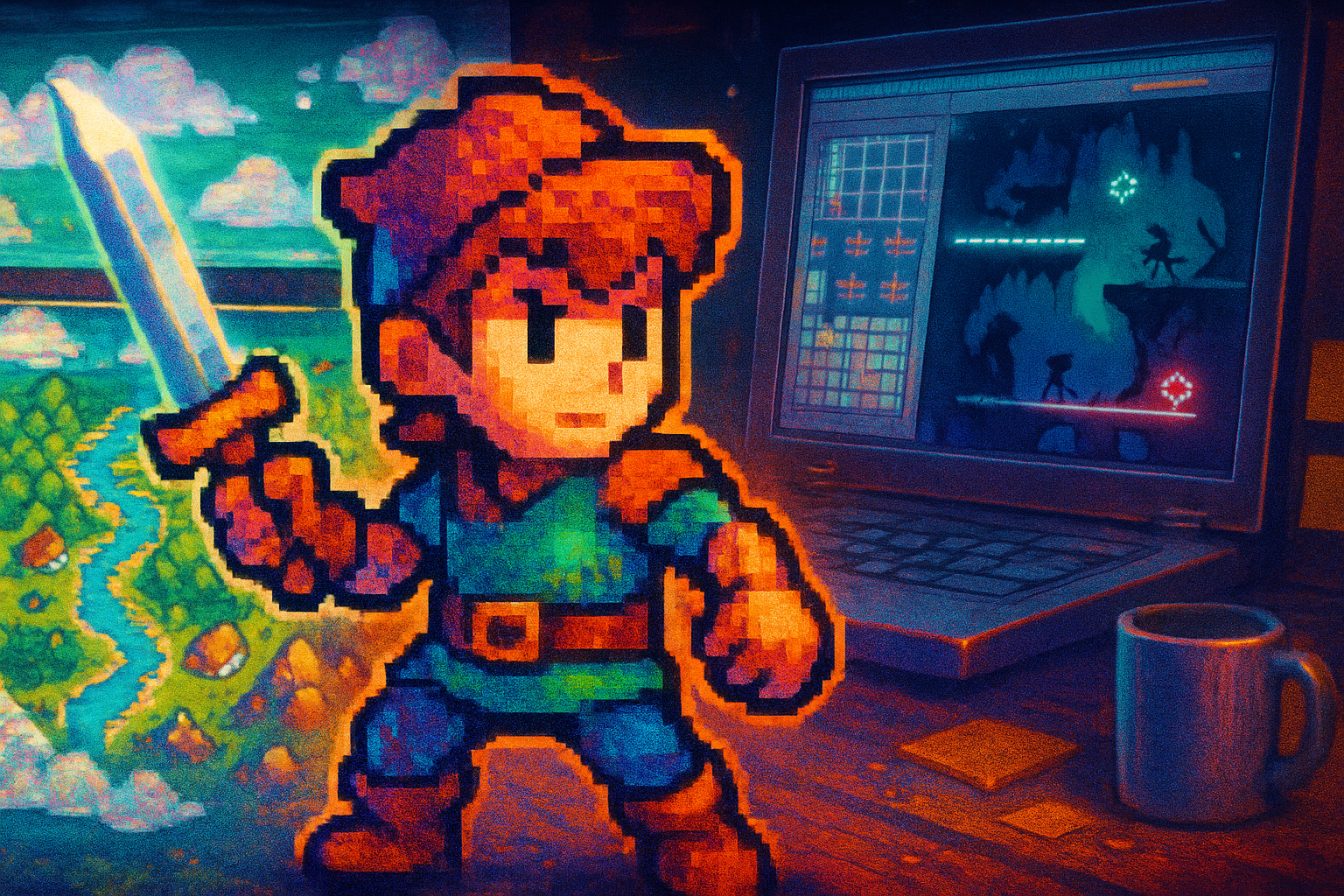
I still remember the ritual: blow on the cartridge (an act of faith), click it into the gray cradle, and wait for the title screen to bloom in impossibly bright pixels. The Super Nintendo didn’t just sell games - it taught designers the grammar of play. Those constraints became style. Those compromises became taste.
Today’s indie scene keeps returning to that grammar the way bees return to a favorite flower. Not because indie developers are nostalgic Victorians clutching locketed cartridges, but because the SNES era solved problems modern teams still wrestle with: readable visuals, tight mechanical expression, memorable melodies, and an economy of content that forces creative decisions to be meaningful.
Why the SNES DNA matters to indies
Think of SNES design like classical architecture: rules, proportions, ornamentation. The console’s technical limits-color palette, tile-based rendering, limited memory-produced a set of solutions that were elegant and legible. Indie teams, often tiny and resource-constrained, find this clarity useful. A few concrete reasons:
- Visual legibility - 16-bit sprites read at a glance. When you have one-screen encounters and small teams, clarity beats photorealism.
- Musical focus - Memorable themes written to loop and stick-these become identity.
- Tight systems - SNES-era designers pruned mechanics until each button press mattered; indies prize that same economy.
- Emotional compression - JRPGs like Chrono Trigger and EarthBound learned to produce big feelings with small scenes-perfect for indies with limited runtime.
That’s not nostalgia as fetish. It’s learning from a proven design toolkit and reinterpreting it.
How SNES classics translate - mechanics, tone, and aesthetics
Below are the main elements modern indies borrow, and how they adapt them.
1) Top-down exploration & puzzle-adjacent design (A Link to the Past → Tunic, Eastward)
The Super Nintendo perfected the top-down action-adventure: carefully telegraphed puzzles, memorable dungeons, and an economy of tools. Games like Tunic and Eastward take that template-mysterious maps, item-based gating, and environmental storytelling-but invert or compress it for smaller playtimes and different pain points (easier map reading, clearer objectives, modern save systems).
Tunic is especially instructive: it wears Zelda-like influence on its sleeve while refusing to be a pure clone. The player learns by exploration and discovery, but modern affordances (tutorial-free discovery balanced with UX polish) make the experience friendlier for new players.
2) Metroid design and the modern Metroidvania (Super Metroid → Axiom Verge)
Super Metroid showed how level design and mobility could create a single, cohesive world that rewards backtracking. Indie developers turned that into the Metroidvania: nonlinear maps, ability-driven shortcuts, and emergent navigation. Axiom Verge is a direct descendant: one developer, Tom Happ, distilled Metroid’s exploration and item progression into a modern package, layering modern mapping and checkpoint systems to respect player time.
3) JRPG architecture and narrative compression (Chrono Trigger & Secret of Mana → Sea of Stars, Chained Echoes)
SNES JRPGs are not only about turn-based combat; they teach pacing-how to interleave towns, dungeons, and cutscenes; how to make a single boss fight feel iconic. Indie projects like Sea of Stars and Chained Echoes borrow that architecture wholesale: party-based combat, overworld travel, and tightly written set-pieces-except modern teams can omit filler, shorten excessive grinding, and polish UX that older games lacked.
These indies are good examples of appropriation-as-homage. They ask: what made Chrono Trigger’s scenes sing? How do you keep the magic while cutting the padding?
4) EarthBound’s tonal risk-taking (EarthBound → Undertale)
EarthBound wasn’t the prettiest game in its era, but it was singular in attitude: oddball humor, sincere emotional beats, and a willingness to tilt the rules of its genre. Undertale is the clearest modern heir-Toby Fox’s game borrows EarthBound’s conversational tone and subversive design while adding modern meta-commentary and player-choice scaffolding. The lesson: tone can be as strong a design lever as mechanics.
5) Sprite craft and modern retrosynthesis (HD-2D and pixel revival)
The revival isn’t always literal. Square Enix’s HD-2D (seen in Octopath Traveler) mixes SNES-like pixel sprites with modern lighting and depth-of-field. Indie games rent this effect, too: pixel heroes with dynamic shadows, particle systems, and modern shaders. The result is familiar but new: nostalgia filtered through contemporary production values.
6) Music and memory
SNES sound chips trained composers to write themes that loop and lodge in the brain. Indies build on that schooling-catchy leitmotifs, acid-simple melodies that recur in different arrangements across towns and dungeons. A strong theme does more than set mood; it acts as a memory-latch for players.
Case studies: mapped influences
- Undertale - EarthBound’s tone and humor, subverted through player-choice and meta-narrative (EarthBound, Undertale).
- Axiom Verge - Metroid’s design DNA - exploration, atmosphere, and incremental ability-based access (
- Hyper Light Drifter - borrows the mood, top-down action, and desolate landscapes of Zelda/Secret of Mana while adding modern combat pacing and clarity (Secret of Mana, Hyper Light Drifter).
- Tunic - Direct nods to Link’s inventory-and-puzzle design and a deliberate choice to make discovery core to progression (The Legend of Zelda: A Link to the Past, Tunic).
- Sea of Stars and Chained Echoes - JRPG architecture that deliberately channels SNES-era pacing and combat but trims and modernizes the rough edges (Chrono Trigger, Sea of Stars, Chained Echoes).
These are not carbon copies. They are translations: the same sentence, spoken in a different accent.
What modern indies change - and why those changes matter
Indies selectively borrow SNES techniques and then update them to modern expectations:
- Accessibility and QoL - save-anywhere, difficulty options, and clearer tutorials.
- Time-to-fun - shorter playtimes, less grinding, more decisive pacing.
- UX polish - better maps, clearer icons, and responsive controls.
- Hybrid systems - mixing roguelite, metroidvania, and narrative-driven frameworks with classic templates.
This selective updating shows that the SNES legacy is not a museum exhibit but a toolkit.
Design lessons for creators (and what players should watch for)
If you’re a designer: study why SNES games made certain compromises. Ask: is this pixel art a shortcut or a deliberate style choice? Are you using a retro palette because it’s cheaper, or because it communicates faster to the player? Reuse the constraints that sharpen design and discard the ones that merely limit you.
If you’re a player: notice when a game elevates SNES lessons versus when it slavishly imitates them. The difference between homage and pastiche is whether the game understands the reason behind the rule.
The future of retro revivals
The SNES era gave us a vocabulary. Modern indies continue to speak it because the language is efficient, evocative, and surprisingly elastic. As tools get more powerful, the romance won’t end; it will mutate. We’ll get hybrids that keep the best of the old-readability, melody, mechanical clarity-while addressing the old era’s blind spots: accessibility, pacing, and respect for player time.
In other words: don’t expect the cartridge ritual to come back. Expect the design lessons carved on those cartridges to keep turning up, improved and often surprisingly relevant.
References
- EarthBound - https://en.wikipedia.org/wiki/EarthBound
- Undertale - https://en.wikipedia.org/wiki/Undertale
- Super Metroid - https://en.wikipedia.org/wiki/Super_Metroid
- Axiom Verge - https://en.wikipedia.org/wiki/Axiom_Verge
- Chrono Trigger - https://en.wikipedia.org/wiki/Chrono_Trigger
- Secret of Mana - https://en.wikipedia.org/wiki/Secret_of_Mana
- Tunic - https://en.wikipedia.org/wiki/Tunic_(video_game)
- Hyper Light Drifter - https://en.wikipedia.org/wiki/Hyper_Light_Drifter
- Sea of Stars - https://en.wikipedia.org/wiki/Sea_of_Stars
- Chained Echoes - https://en.wikipedia.org/wiki/Chained_Echoes
- Octopath Traveler / HD-2D - https://en.wikipedia.org/wiki/Octopath_Traveler