· retrogaming · 7 min read
Emulation Ethics: Is It Time to Embrace the Dark Side of SNES Gaming?
A provocative, legally informed, and morally candid exploration of SNES emulation: why people do it, why companies hate it, what the law actually allows, and a practical ethics checklist for gamers who care about preservation without pretending theft is virtue.
The cartridge in the attic
I found it under a heap of 1990s VHS tapes: a sun-faded SNES cartridge with a handwritten sticker. I blew on the contacts (because we all did), slid it in, and watched a world I’d forgotten bloom on a 4:3 CRT. Two minutes later I was knee-deep in nostalgia, and two minutes after that I was thinking: what if this game disappears again? What if the only way my kids will ever play it is through a file on my hard drive?
That tension-between preservation and property, sentiment and statute-is where the emulation debate lives. It’s small, grubby, and deliciously complicated. And for SNES fans, the question is urgent: are we guardians of culture or petty thieves wearing pixelated robes?
The short, legal primer (because rules still matter)
Law varies by country, but a few American touchstones are instructive:
- Emulators themselves (the software that mimics SNES hardware) are usually legal. Court cases like Sega v. Accolade and Sony v. Connectix demonstrate that reverse engineering for interoperability can be defensible under U.S. law when done properly. See summaries: Sega v. Accolade and Sony v. Connectix.
- ROMs (the exact game code dumped from cartridges) are typically copyrighted works. Downloading and sharing ROMs of games still under copyright is, in most jurisdictions, infringement.
- The DMCA complicates matters. Circumventing copy protections can be illegal, though periodic exemptions have been granted for preservation activities by archives and libraries. See the Library of Congress’s DMCA section for details: Copyright Office 1201 rulemakings.
- Enforcement is real. Major rights-holders-Nintendo chief among them-have pursued takedowns, site seizures, and lawsuits against large ROM distributors. Nintendo also monetizes classic titles via official rereleases and subscription services such as Nintendo Switch Online.
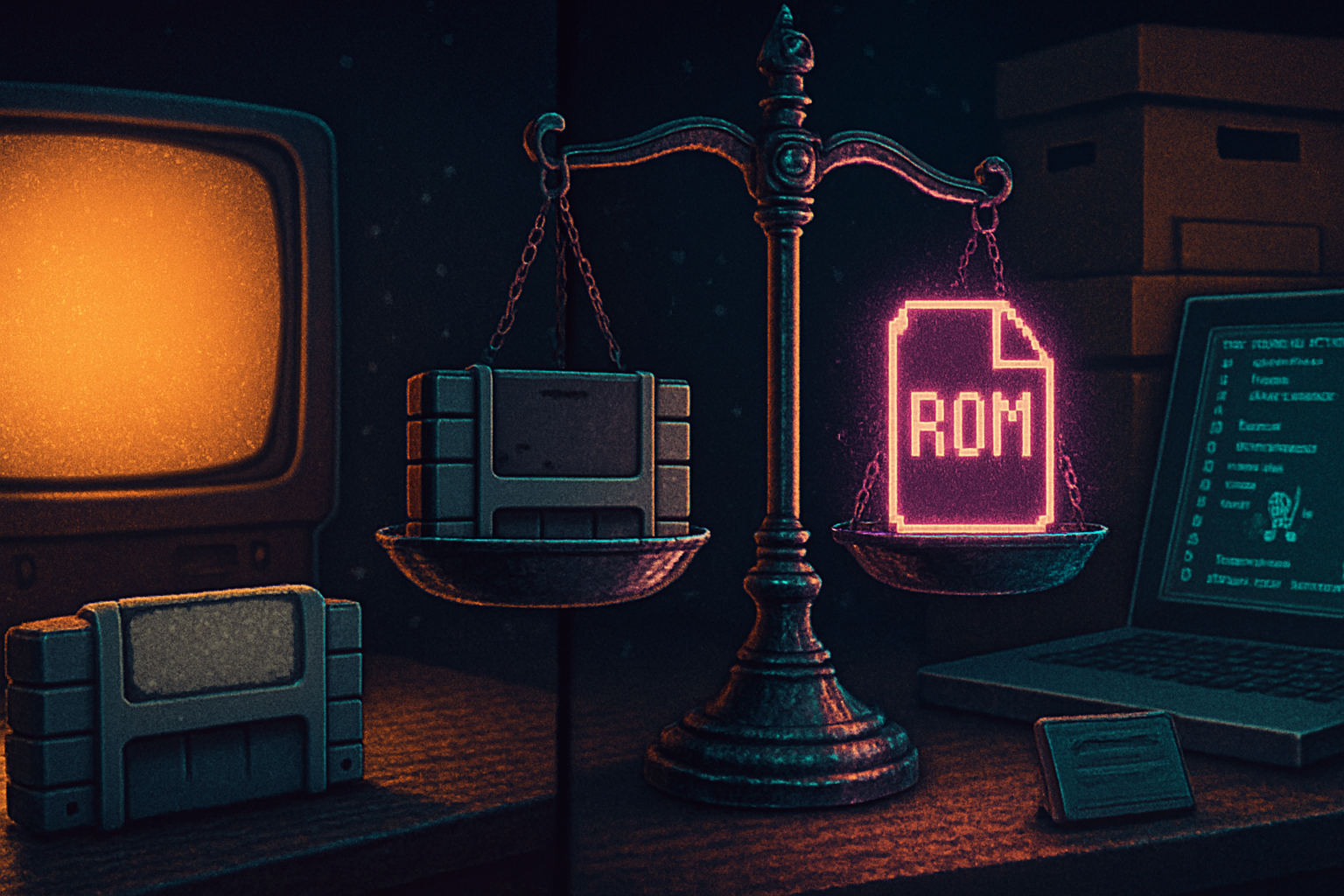
If legality is a scale, emulation sits on one pan and a very heavy unknown on the other.
Why people emulate (and why the moral case is tempting)
Because convenience and preservation are not sins.
- Access - Many SNES gems are not easily purchasable. A physical cartridge market can be expensive, flaky, or simply non-existent for rarities.
- Preservation - Physical media decays. Chips fail. Cartridges get lost. Emulators let us archive playability as well as code and save states.
- Restoration - Emulation can fix bugs, apply fan translations, or allow quality-of-life changes that original hardware didn’t permit.
- Scholarship and cultural memory - Museums, academics, and historians use emulation to study game design, music, and visual culture.
The preservation argument is persuasive because it frames emulation as archaeology: we’re not stealing artifacts to fence them; we’re making sure they aren’t erased.
The counterargument: why it looks like theft
Be blunt: downloading a ROM from a pirate site for a game that’s still sold is functionally the same as buying and reselling a stolen item in economic terms. The creators and their licensors lose potential revenue. More importantly, normalizing infringement trains a generation to treat intellectual property as optional.
- Economic harm - Even if the marginal buyer is someone who would never have paid, the aggregate impact-especially on smaller studios and rights-holders-can be real.
- Consent and control - Rights-holders should decide how and when their work is distributed. That’s part of the social contract that funds creativity.
- Slippery ethics - If preservation becomes an excuse, the moral skyline gets fuzzy. “It’s for preservation” is a convenient talisman for all sorts of questionable behavior.
The law isn’t the ethic, but it shapes it
Legal permissibility and moral permission are different. The law gives boundaries and some pragmatic cover, but ethics asks what you owe creators, the community, and future players.
Consider three ethical lenses:
- Consequentialist - Does emulation produce more good than harm? If it preserves a game that would otherwise be lost and the rights-holder is inactive, the answer can be yes.
- Deontological - Is downloading a ROM a violation of a duty to respect property and contracts? Under this view, infringement is wrong regardless of outcomes.
- Virtue ethics - What kind of person do you become by normalizing piracy? Are you cultivating stewardship or entitlement?
None of these gives a universal injunction. But they help frame responsible behavior.
A pragmatic, ethical checklist for SNES emulation
If you care about doing this without being a self-righteous kleptomaniac, follow this practical code:
- Prefer legal avenues first
- Check for official rereleases, remasters, and subscription libraries like Nintendo Switch Online, GOG, or whatever your region has.
- If you own the cartridge, aim to dump your own ROM rather than downloading one
- Personal backups are morally defensible to many, though not a guaranteed legal shield. Libraries and archives sometimes have special allowances.
- Don’t download or distribute ROMs of titles that are commercially available and actively sold
- That’s where the moral and commercial harm is clearest.
- Support preservation initiatives
- Donate to museums, archives, and organizations doing legal preservation. The Internet Archive hosts software collections and has been a major preservation hub: Internet Archive-Software Library.
- Avoid piracy under the banner of “abandonware” without research
- Many games labeled “abandonware” are still owned and protected. The label is often a public guess, not a legal status.
- Be transparent and community-minded
- If you create a dump for preservation, document provenance and make an effort to work with legitimate archives.
What companies get right (and wrong)
Nintendo’s posture is instructive: zealously protective of IP, parsimonious with official preservation. The result? The company tightens the legal screws while simultaneously monetizing nostalgia via expensive rereleases and gated services. That’s excellent for Nintendo’s bottom line and infuriating for preservationists.
There’s a lesson here: when large rights-holders neglect preservation, moral pressure rises to fill the gap-often through emulation. The predictable result is confrontation.
A few historical notes that matter
- Courts have sometimes protected emulation when the emulator was developed by clean-room reverse engineering for compatibility (see Sega v. Accolade and Sony v. Connectix).
- The DMCA’s anti-circumvention provisions have created legal risk, but the Library of Congress periodically carves out narrow exemptions for preservation activities by libraries and similar institutions. See Copyright Office 1201 rulemakings.
These precedents show the law treating emulation as a technical and policy question, not just moral panic.
The middle path: responsible emulation as activism
If you want the cultural heritage of SNES games preserved, you don’t have to fracture your ethics. Become the kind of person who nudges the ecosystem toward preservation with these habits:
- Buy what’s available. Vote with dollars when publishers re-release classics.
- Support preservation nonprofits and public-domain efforts.
- If you maintain ROMs for posterity, prioritize partnering with institutions that can legally archive and display them under controlled conditions.
- Advocate for clearer legal frameworks that recognize preservation and the public interest.
These are slow levers. They are not as instantly gratifying as downloading a ROM at 2 a.m. But they create durable change.
Parting provocation
Emulation is not a moral get-out-of-jail-free card, nor is it an unalloyed moral good. It is a tool. Like any tool, its ethics depend on who wields it and why.
If you’re playing a copy of a legitimately purchased cartridge, preserving sunk cultural capital for future students and fans, you’re on the defensible side of the line. If you’re grabbing every ROM you can find because entitlement tastes sweet, you’re not a preservationist; you’re a tourist in someone else’s labor.
Embrace the dark side only if you’re prepared to shoulder the responsibilities that come with it: care for the artifacts, support creators when you can, and fight for legal avenues that treat games as part of our cultural patrimony-not merely commodities to be consumed and forgotten.
Play responsibly. Preserve ruthlessly. Steal… only from oblivion.
References
- Electronic Frontier Foundation - Emulation resources: https://www.eff.org/issues/emulation
- U.S. Copyright Office - Rulemakings on section 1201 (DMCA exemptions): https://www.copyright.gov/1201/
- Internet Archive - Software Library (console and PC games): https://archive.org/details/softwarelibrary_pc_entertainment
- Sega v. Accolade (case summary): https://en.wikipedia.org/wiki/Sega_v._Accolade
- Sony v. Connectix (case summary): https://en.wikipedia.org/wiki/Sony_Computer_Entertainment_America_v._Connectix_Corporation
- Nintendo - Switch Online information: https://www.nintendo.com/switch/online/