· retrogaming · 7 min read
The Controversy of Rom Hacking: Reviving Classic Neo Geo AES Titles
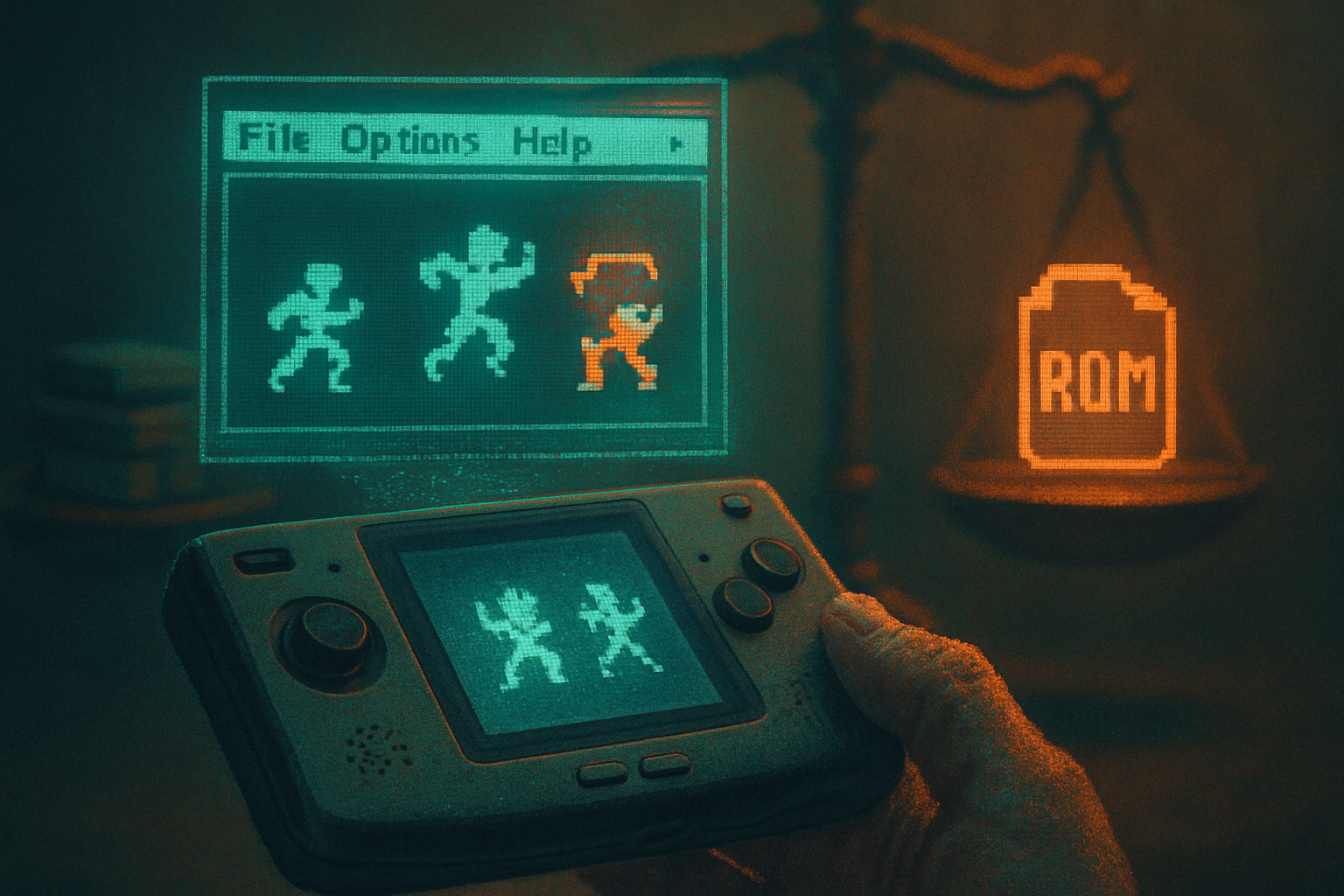
ROM hacking keeps Neo Geo's hulking sprites alive - but it lives in a moral and legal twilight. This piece interrogates the community's impulse to revive, modify, and redistribute classic AES titles, weighing cultural preservation against creators' rights and commercial realities.
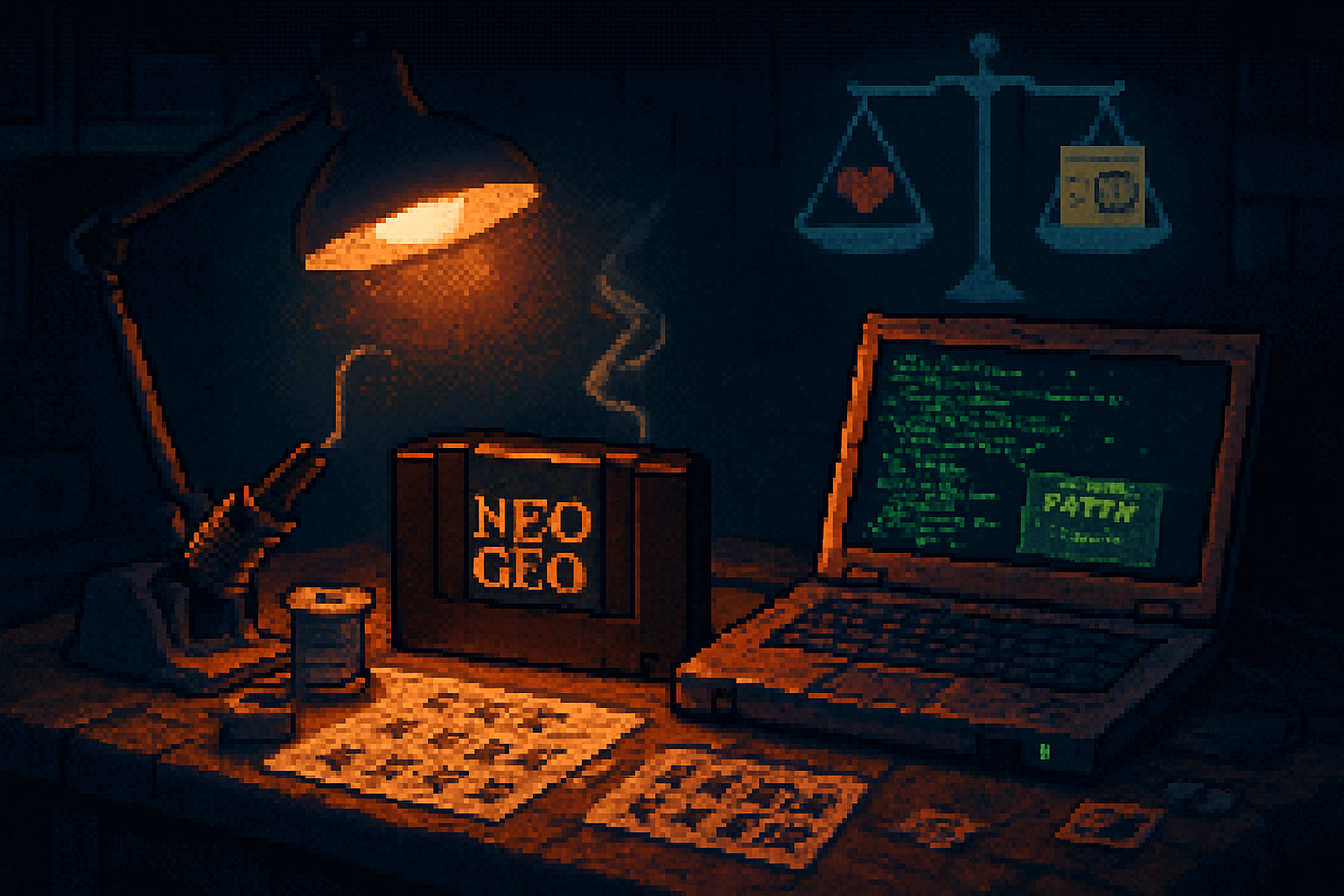
At a flea market in the rain, a man in a flat cap slid a Neo Geo AES cartridge across a folding table and said, “This thing never left the original owner.” I bought it for pocket change and spent the next week playing a game that felt both antique and impossibly modern. A month later I found, online, a fan-made patch that replaced the game’s English dialogue, removed an awkward censorship cut, and added a smeared, brilliant palette swap on the final boss - all the things I didn’t know the title needed.
This is the contradiction at the heart of rom hacking: reverence and insurgency in a single keyboard stroke. For retro enthusiasts, especially within the Neo Geo AES community, modifying and reviving old titles is an act of love. For lawyers and some creators, it’s theft. Both reactions are defensible. Neither tells the whole story.
What is rom hacking - and what makes Neo Geo special?
Rom hacking is an umbrella term: translations, bug fixes, difficulty tweaks, palette swaps, new levels, and entire fan remakes. Often the end product is distributed as a small patch (IPS/BPS) that modifies an original ROM file rather than distributing a copyrighted game outright.
The Neo Geo AES (Advanced Entertainment System) occupies an odd place in gaming history: a boutique 16/32-bit platform that bridged arcade brutality and living-room decadence, famous for its hefty cartridges and irresistibly large sprites. Its architecture is well documented, and a passionate community has sprung up around preserving, modding, and running AES and MVS (arcade) games on original hardware using flash carts and homebrew tools.
Resources like ROMhacking.net collect patches and projects across consoles and decades, and Neo Geo communities often combine technical craftsmanship with curatorial zeal: converting MVS ROMs, making bilingual releases, or even rebuilding sprites from raw sprite sheets.
- ROMhacking.net: https://www.romhacking.net/
- Neo Geo overview: https://en.wikipedia.org/wiki/Neo_Geo
Why people do it: preservation, creativity, frustration
There are three honest motives behind most Neo Geo rom hacks:
- Preservation - Original AES cartridges are rare, delicate, and pricey. Patches can breathe life into games that might otherwise degrade or disappear.
- Accessibility - Fan translations and quality-of-life fixes make games playable by new audiences.
- Creative expression - For many, modding a beloved game is the same as writing fan fiction - expansion, commentary, and affection in pixel form.
Game preservation isn’t sentimental. It’s cultural archaeology. The Internet Archive and multiple museums argue that interactive works are part of our shared heritage and should be preserved for historical study and enjoyment.
- Internet Archive: https://archive.org/
The legal gray area: patches, ROMs, and the DMCA
Here is where the romance turns legalist. In practice, rom hacks sit on a jagged edge between de facto tolerated community practice and clear copyright infringement.
Distributing the original, unmodified ROM is typically infringement. Full stop.
Distributing a patch that requires users to apply it to a legally obtained ROM is a common workaround. It’s marginally safer - but not a legal shield.
Circumventing copy protections or distributing tools that enable circumvention can violate the DMCA in the United States, irrespective of whether the resulting use might be “fair.” See the U.S. Copyright Office for DMCA basics.
DMCA basics: https://www.copyright.gov/dmca/
EFF on emulation and legal issues: https://www.eff.org/issues/emulation
The reality is messy: companies occasionally ignore fan projects, quietly appreciate them, or - famously - issue takedown notices. Nintendo’s shutdown of the fan remake AM2R and the removal of Pokemon Uranium are blunt reminders that corporate IP holders can and will act to protect their rights.
- AM2R takedown coverage: https://www.theverge.com/2016/8/26/12653686/nintendo-am2r-another-metroid-2-remake-takedown
Neo Geo rights are typically held by SNK (and its successors), and the company periodically re-releases classic titles via modern services (Hamster’s “ACA NEOGEO” series, SNK collections, etc.). When rights holders still actively monetize a back catalog, unauthorized fan remakes can be framed as direct commercial harm - even if the fan project is free.
- ACA NEOGEO (Hamster): https://en.wikipedia.org/wiki/ACA_NEOGEO
Ethical dimensions beyond the law
Law is blunt. Ethics is where nuance lives.
- Cultural value vs. creator rights - If a rom hack preserves a game that would otherwise vanish, there’s a public good. But preservation doesn’t nullify moral claims by the original creators, especially when living developers or estates want control over their work.
- Labor and recognition - Fan projects often involve months or years of unpaid work. That labor deserves respect and, where appropriate, compensation - but it also raises questions about exploitation when community-made improvements are monetized by others.
- Not all creators or companies are villainous, and not all fans are saints. Many developers appreciate fan devotion; some even hire talented modders. Others have legitimate reasons - licensing, contractual obligations, or future commercial plans - to keep tight control.
Concrete example: fan translations. Translating a Neo Geo fighting game with intricate lore into another language can double the game’s audience and academic value. But it also modifies the creator’s voice and could conflict with an official translation later released by the rights holder.
Harm and benefit: who wins, who loses
Benefits:
- Preservation and access for historians, scholars, and future players.
- Remedying localization omissions, technical bugs, and anti-consumer design choices.
- Building new talent pipelines - modders frequently become professional developers.
Harms:
- Potential loss of revenue for rights holders, particularly when hacks make rare titles widely playable.
- Misattribution and dilution of the original creator’s intent or brand.
- Legal risk for individuals; distributing complete ROMs or circumventing protections can trigger takedowns, account bans, or lawsuits.
Historically, however, some rights holders have found fan activity to be net positive: increased interest in classics can lead to official re-releases or remasters. Still, that benefit is contingent and unilateral: fans take risk; rights-holders reap most direct financial gain.
Best practices for ethical rom hacking (a working code)
If you care about the games and the people who made them, consider this pragmatic, ethically informed playbook:
- Use patches, not full-ROM redistribution. Teach users how to apply patches to legally obtained ROMs.
- Be transparent. Document what you changed and why. Credit original creators and tool authors.
- Avoid monetization. Selling a mod or a patched cart invites legal and ethical condemnation.
- Seek permission when feasible. A polite, documented outreach to the rights holder can sometimes yield a blessing or at least clarity.
- Preserve provenance. Archive your sources, development notes, and tools so future conservators can study your process.
- Consider clean-room re-implementations for serious remakes - rebuild the game without copying code or assets when possible.
- If your goal is preservation, partner with archivists or institutions rather than distributing copyrighted code widely.
These practices don’t make you bulletproof legally. They do make you harder to despise.
What creators and rights holders could do differently
If rights holders want fewer rom hacks, they could:
- Offer affordable, official digital releases on modern platforms.
- Create clear avenues for fan projects (licensing templates, mod-friendly policies, or sanctioned fan-content programs).
- Engage with preservationists and donate or archive source materials to institutions under controlled access.
Some companies have embraced this: curated re-releases, open licensing for legacy titles, and even community mod contests. The rest rely on notices and the law - and the community responds in kind.
Conclusion: a verdict of necessity, not absolution
Rom hacking is both salvage operation and insurgency. It preserves fragile cultural artifacts and sometimes improves upon them. It also rests on the uncompromising foundation of someone else’s intellectual property.
My take: the impulse is defensible. The methods are not always. We should celebrate the craftsmanship and civic-mindedness of Neo Geo modders while insisting they adopt practices that respect creators’ rights and minimize legal harm. When preservation is the aim, seek institutional partners. When creativity is the aim, demand transparency and humility.
That basement cartridge was purchased in the rain. The fan patch that later improved the game was offered for free. The game endured. That’s worth defending - but defend it responsibly, not with smug entitlement.
References
- ROMhacking.net - community resource for fan patches and projects: https://www.romhacking.net/
- Neo Geo (Wikipedia) - hardware and historical context: https://en.wikipedia.org/wiki/Neo_Geo
- U.S. Copyright Office - DMCA basics: https://www.copyright.gov/dmca/
- EFF - emulation and preservation commentary: https://www.eff.org/issues/emulation
- The Verge - Nintendo’s takedown of AM2R (an example of enforcement against fan remakes): https://www.theverge.com/2016/8/26/12653686/nintendo-am2r-another-metroid-2-remake-takedown
- Internet Archive - cultural preservation initiatives: https://archive.org/
- ACA NEOGEO (Hamster) - an example of official re-releases of Neo Geo titles: https://en.wikipedia.org/wiki/ACA_NEOGEO