· retrogaming · 7 min read
Legal Gray Areas: The Controversy Surrounding Neo Geo Pocket Color ROMs and Emulators
Neo Geo Pocket Color ROMs and emulators sit in a legal twilight: emulators can be lawful, but ROM distribution usually isn’t. This post explains the law, key cases, risks, and practical best practices for enjoying retro games without burning legal bridges.
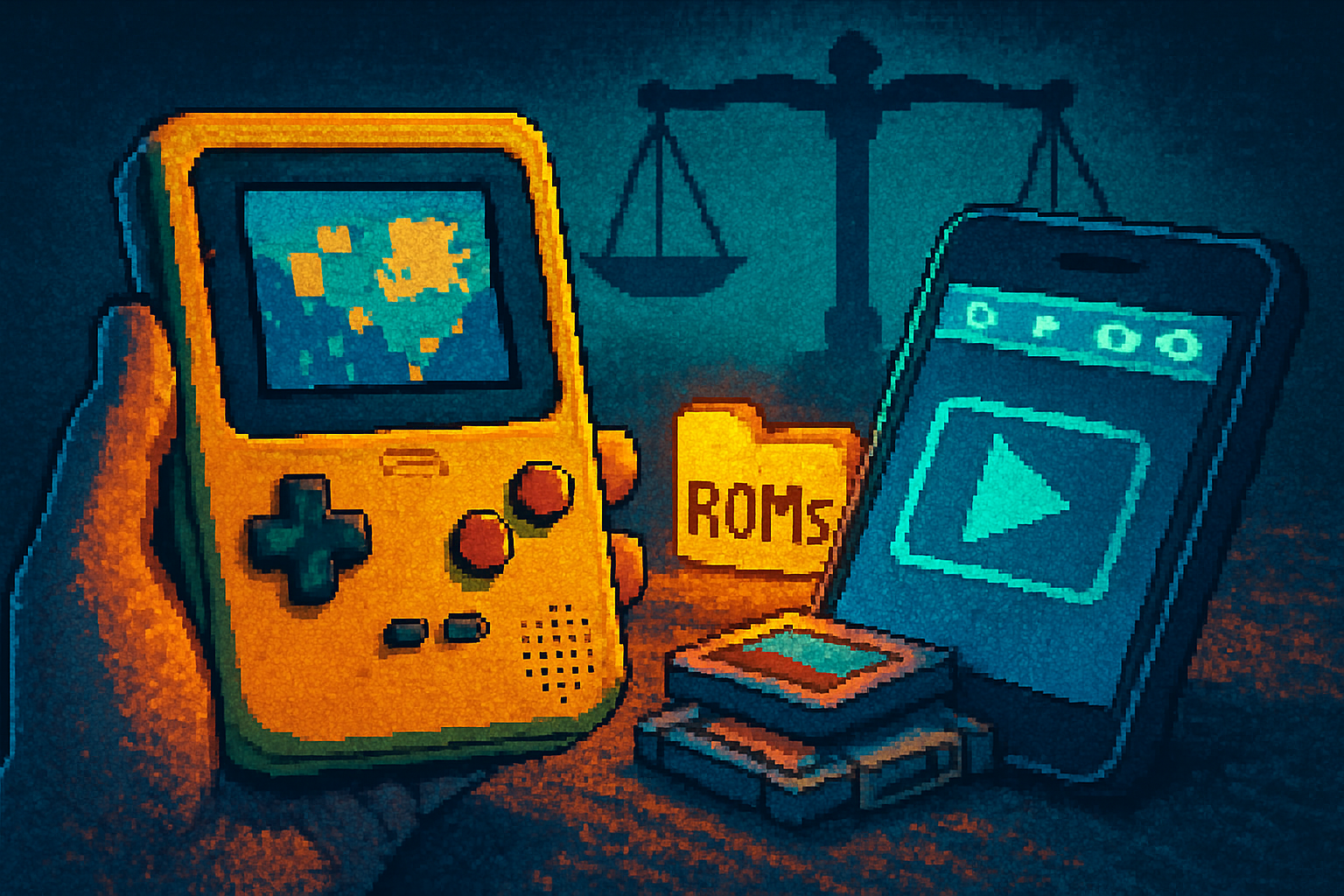
A friend once pulled a yellowed Neo Geo Pocket Color out of a shoebox and, half-joking, asked if I had “the ROMs” to play it on my phone. I laughed - then realized we were both playing a game of euphemisms. He wanted nostalgia. I wanted convenience. Neither of us wanted a lawsuit. But convenience and copyright frequently sleep in separate beds.
Why this matters: tiny cartridges, big legal fog
The Neo Geo Pocket Color (NGPC) is small hardware with a large fanbase. Its games are culturally valuable. The problem: the easiest way to play them today is often a downloaded ROM and an emulator. That combination is gloriously practical and legally precarious. Think of ROMs like physical books: owning a book doesn’t automatically let you photocopy it and hand the copies to strangers.
This post walks through the legal landscape, the important precedents, practical risks, and concrete best practices so you can enjoy retro gaming without needlessly courting trouble.
Emulators: are they legal?
Short answer: yes - usually.
Longer: emulators are software that mimic old hardware. Courts have repeatedly recognized that creating software that interoperates with existing systems can be lawful, especially when the emulator is produced without copying proprietary code. Two U.S. cases that gamers and developers point to are:
- Sega v. Accolade (1992) - reversed-engineering for compatibility was found to be a fair-use-like defense in certain circumstances. Wikipedia summary.
- Sony v. Connectix (2000) - the court found that an emulator’s creation via clean-room reverse engineering could qualify as fair use. Wikipedia summary.
Those rulings mean: building and distributing an emulator that does not include copyrighted BIOS or other proprietary code is typically legal in the U.S. and many other jurisdictions. Emulators are not inherently piratical - they are preservation and compatibility tools.
ROMs: the problem child
ROMs are digital copies of the game software stored on cartridges. Unlike emulators, ROMs are almost always copyrighted work. Unless you have permission from the rights holder, distributing or downloading ROMs is typically copyright infringement.
Important legal realities:
- “Abandonware” is not a legal defense. A game’s commercial unavailability doesn’t strip away copyright.
- Making a copy of a game you own can still be risky. Some jurisdictions recognize backups for personal use; others treat copying and distributing as infringement. Even if you own the cartridge, downloading someone else’s copy is usually still illegal.
- Distributing proprietary BIOS files or copyrighted console firmware that an emulator needs is generally illegal - the emulator may be fine, but shipping copyrighted BIOS/firmware with it can bring DMCA-style claims.
For an authoritative primer on these issues, the Electronic Frontier Foundation has useful resources on emulation and copyright: https://www.eff.org/issues/emulation
The DMCA and anti-circumvention traps
The U.S. Digital Millennium Copyright Act (DMCA) adds an extra layer. Even if copying could be argued as “fair use,” circumventing technological protection measures (TPMs) to copy games or distribute tools that enable circumvention can be unlawful under the DMCA. That’s why distributing certain BIOS images, cracking tools, or facilitating circumvention can provoke takedowns or claims even where the underlying copying might be arguable.
See the U.S. Copyright Office for official DMCA guidance: https://www.copyright.gov/legislation/dmca.pdf
Real-world risks: civil and practical consequences
- Civil suits and statutory damages - in the U.S., statutory damages for willful copyright infringement can be up to $150,000 per work, though courts rarely award that maximum in typical ROM-sharing cases. Still - the exposure is real.
- DMCA takedowns - hosting platforms will usually remove infringing content quickly after notice.
- Account and marketplace bans - selling pirated copies or even distributing ROM links can get you booted from platforms.
- Criminal liability - rare, but possible in large-scale, commercial piracy operations.
You’re unlikely to be prosecuted for casually playing a handful of games at home. But distribution, hosting, or monetizing ROM libraries is where the risk compacts and hardens.
Preservation and public interest arguments
Archivists, museums, and preservationists make strong moral and cultural arguments for ROM availability. Old games are fragile; hardware dies. Preservation is noble. It’s also a powerful persuasive argument - but not an automatic legal shield. Courts and lawmakers sometimes consider preservation in exemptions (e.g., library/archival DMCA exemptions), but those are narrow and specific.
See the EFF and Library of Congress materials about specific DMCA exemptions for more nuance.
Practical, lawful ways to enjoy NGPC games
If you want playable convenience without crossing clear legal lines, here are concrete options ranked from safest to riskiest:
- Buy official re-releases and compilations
- Support rights holders by purchasing collections or remasters when they exist. Game companies occasionally release classic handheld catalogs on modern platforms.
- Buy the physical cartridge and use it legitimately
- Play on original hardware. If you own the cartridge, you can often play legally; making and keeping a personal backup may be more defensible than downloading someone else’s dump - but check local laws.
- Use licensed digital storefronts
- Some platforms (Nintendo eShop, PlayStation Store, Steam, GOG) occasionally sell classic titles legally.
- Dump your own cartridges and use flash carts
- If you own the cartridge, using a legitimate cartridge dumper and a flash cart (hardware like EverDrive-style devices) lets you play your legally owned games on modern hardware. Don’t distribute the ROMs.
- Seek permission for preservation or academic use
- Libraries, museums, and academics sometimes arrange licenses or exemptions for preservation projects.
Actions to avoid
- Don’t upload or redistribute ROMs you don’t own the rights to. Hosting ZIPs of game archives is the legal danger zone.
- Don’t distribute BIOS images or firmware unless you have explicit permission.
- Don’t rely on the “abandonware” label as legal cover.
How to responsibly manage ROMs and preservation files (best practices)
- Keep ROMs private - If you legally dumped a cartridge you own, keep copies local and don’t publish them.
- Use checksums and provenance metadata - Store where the dump came from, date, and method. Museums and archives value provenance.
- Prefer patches - If sharing fan-made improvements, release IPS/UPS patches (which are diffs) instead of distributing full ROMs. Patches don’t contain copyrighted game code and are much safer to share.
- Separate emulator code from copyrighted assets - When developing or distributing emulators, ensure they do not include copyrighted BIOS or assets.
- Document ownership - If you’re preserving games for a collection, maintain acquisition records showing you own the cartridges.
- Respect takedown procedures - If you operate a site and receive a takedown, cooperate and consult counsel.
A short checklist before you hit ‘download’
- Do I own the original cartridge? If no, don’t download the ROM.
- Is this game officially available in a legal re-release? If yes, buy it there.
- Am I going to distribute the ROM? If yes, don’t.
- Does the emulator include BIOS or firmware I don’t have rights to? If yes, remove it.
- Is this for preservation by a recognized archive or research institution? Then secure proper permissions or exemptions.
Closing: nostalgia needs nuance
Retro gaming has the sentimental intensity of a family heirloom. You want to hear the click of the keypad and feel the joy again. That desire is understandable. But nostalgia doesn’t repeal copyright law.
Emulators are morally and often legally defensible tools. ROM distribution without permission is not. If you care about classic games - as a player, collector, or archivist - the ethical and practical route is to support legitimate re-releases, dump and use your own cartridges privately, or work with preservation organizations to secure access legally. Do the emotional labor. Pay for the parts that matter. Preserve the rest responsibly.
If you want a short, practical starter: stop downloading entire ROM archives. Buy the games you love when they’re offered. Dump cartridges you own for personal use and keep those copies private. Share patches, not ROMs.
And when in doubt: consult a lawyer. This post explains the landscape; it isn’t legal advice.
References
- Electronic Frontier Foundation - Emulation & copyright resources: https://www.eff.org/issues/emulation
- U.S. Copyright Office - DMCA (Digital Millennium Copyright Act): https://www.copyright.gov/legislation/dmca.pdf
- Sony Computer Entertainment America v. Connectix Corporation (case summary): https://en.wikipedia.org/wiki/Sony_Computer_Entertainment_America_v._Connectix_Corporation
- Sega Ent. Ltd. v. Accolade, Inc. (case summary): https://en.wikipedia.org/wiki/Sega_Ent._Ltd._v._Accolade_Inc.