· retrogaming · 7 min read
The Legality of Game Gear Emulation: What You Need to Know
A clear, provocative guide to the legal landscape of emulating Sega Game Gear games: what emulators are, when they're legal, why ROMs are the mess, and how to protect yourself while preserving gaming history.
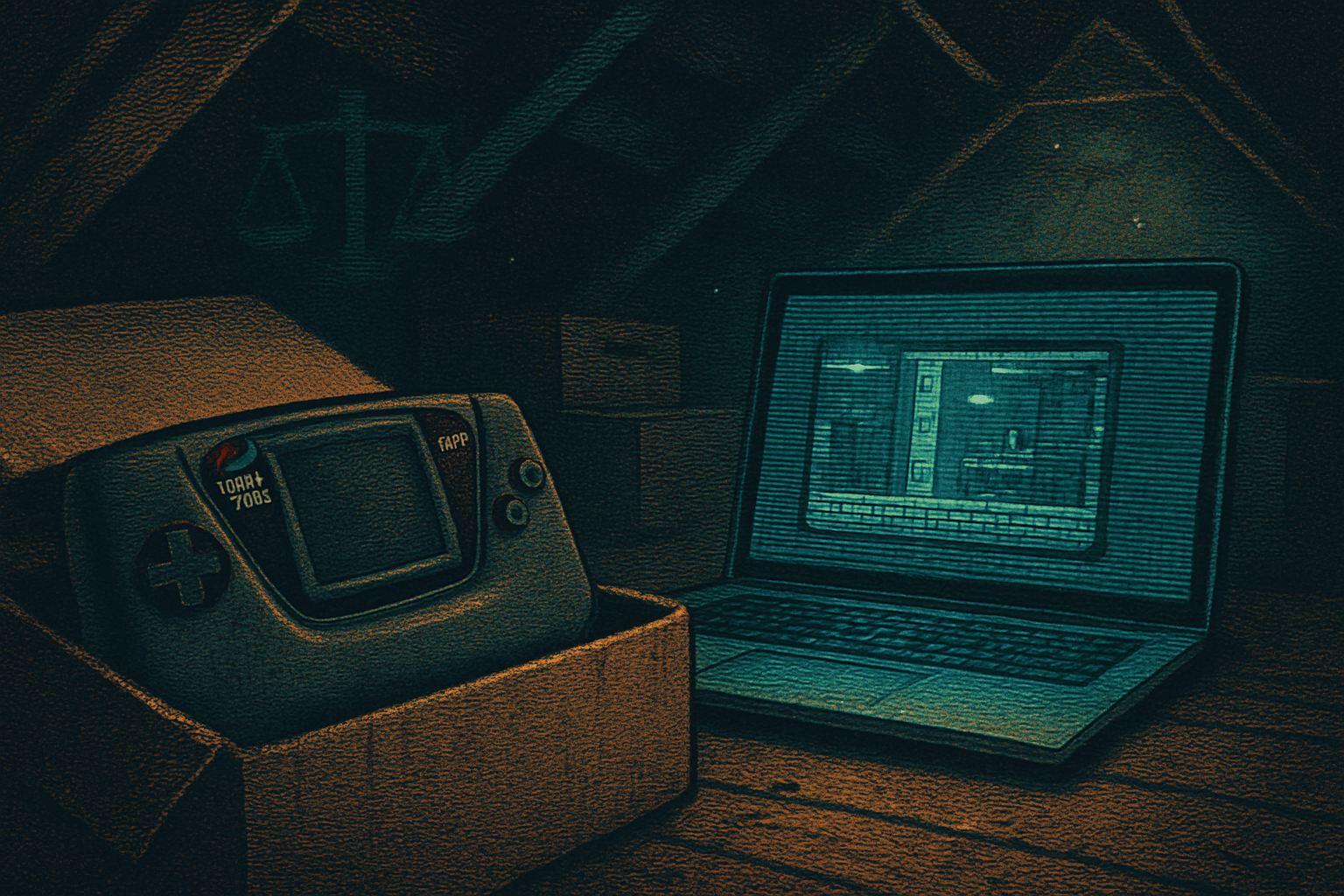
I found the Game Gear in a cardboard box behind a set of college textbooks and a VHS copy of Bill & Ted’s Excellent Adventure. It had the faint, stubborn smell of decades. I blew into the cartridge like a priest blessing an altar, and for a glorious ten seconds Sonic squinted across a tiny, washed-out screen. That nostalgia hit - instantaneous, noisy, and morally ambiguous.
If you’ve ever felt that tug - the desire to replay 1991’s pixelated joys without dragging ancient hardware out of its crypt - you’ve probably considered emulation. It’s convenient. It’s sentimental. It’s also legally complicated.
This post will cut through the platitudes and tell you what matters: when emulation is clearly legal, when it’s clearly not, and the gray zones that most gamers live in.
Quick answers up front
- Emulators themselves - pure pieces of software that mimic hardware - are generally legal in the United States and many other countries.
- ROMs (the actual game files) are usually copyrighted. Downloading ROMs you don’t own is very risky and often illegal.
- Making a digital copy of a game you own is a confusing area - sometimes tolerated, sometimes actionable. Anti-circumvention rules (the DMCA) make even legitimate backups risky.
- “Abandonware” is not a legal defense.
Now let’s unpack why.
What exactly is an emulator - and why it’s almost always legal
An emulator is a program that imitates the behavior of a console. It’s like building a tiny virtual Game Gear out of code. The law cares about copying copyrighted code, not about mimicking behavior. So long as an emulator is written from scratch (or from clean-room reverse engineering) and doesn’t include copyrighted code or proprietary BIOS/firmware copied from the console, it’s generally lawful.
This isn’t theory: courts have allowed reverse engineering when it was necessary for compatibility. See the Sega v. Accolade decision and related rulings for precedent that reverse engineering for compatibility can be fair use in certain circumstances (Sega v. Accolade - case summary). The Connectix/VM Station case also favored reverse engineering for compatibility in many respects.
So: download a clean, open-source Game Gear emulator from a reputable project and you’re probably fine on the emulator front - legally speaking.
ROMs: the messy truth
ROMs are the actual game data. They’re the intellectual property. If you don’t already own the copyrighted game in a digital form, downloading a ROM is, in almost every case, infringement.
Two key points:
- Ownership of a physical cartridge does not automatically grant you the right to download a copy from the internet. The copyright owner still controls distribution.
- Making a digital backup of a game you own is a legal gray area. U.S. statute 17 U.S.C. § 117 allows the owner of a copy of a computer program to make an essential copy, but courts have been ambiguous about how that applies to video game cartridges and ROM dumping. See the statute: 17 U.S.C. § 117.
Even if you own the cartridge, the DMCA’s anti-circumvention provisions (17 U.S.C. § 1201) can make it illegal to bypass copy protection to create a backup. The U.S. Copyright Office does grant some exemptions periodically (they’ve considered exemptions for game preservation and for jailbreaking), but these are narrow and must be renewed. See the DMCA section: 17 U.S.C. § 1201 and the Copyright Office’s materials on exemptions: U.S. Copyright Office - DMCA exemptions.
Practical takeaway: downloading ROMs you didn’t dump yourself is risky. Dumping your own cartridges is safer - but not a guaranteed legal shield.
BIOS, firmware, and other proprietary bits
Some consoles require a BIOS or firmware image for accurate emulation. Those firmware files are usually copyrighted and distributing them is typically infringing. For many retro handhelds, the cartridge itself contains what’s necessary and no separate BIOS is required; for others (e.g., PlayStation), the BIOS is proprietary and dumping/distributing it adds legal exposure.
If an emulator asks you to supply a BIOS from the console you own, the safest legal route is to dump your own BIOS and keep it private.
Abandonware and preservation: sentimental but not law
“Abandonware” is a social label, not a legal status. Publishers drop support for titles, but copyright still exists until it expires - which can be decades. Preservationists and museums have argued for stronger legal protections for archiving and scholarly access, and there are specific exemptions that sometimes apply. But don’t mistake moral desertion for legal permission.
Groups like the Internet Archive and the Video Game History Foundation are working on preservation efforts and sometimes negotiate licenses or rely on specific exemptions. See the Internet Archive’s work on software preservation for context: https://archive.org/details/software
Civil vs criminal risk: how dangerous is this, really?
- Civil - The most likely risk for the average user is a takedown notice or a civil lawsuit if you distribute ROMs widely. Companies have pursued ROM sites aggressively.
- Criminal - Criminal prosecution for downloading ROMs is rare and usually reserved for large-scale commercial piracy operations.
Sites that host vast libraries of ROMs have been shut down or forced to settle. That’s a practical warning: the people running those sites are the ones most likely to get sued. But users who download from them still expose themselves to takedowns and, in theory, civil claims.
Fair use? Don’t bet the farm.
Fair use is a flexible defense, but it’s hardly a free pass for downloading and playing older games. Courts consider purpose, nature, amount taken, and market effect. Downloading a full copyrighted game and playing it is unlikely to be characterized as fair use in most settings. For general guidance, see the U.S. Copyright Office’s fair use information: https://www.copyright.gov/fair-use/
Practical rules for gamers who want to stay on the safer side
- Use legal re-releases first. Many classic Game Gear titles have been officially re-released on modern platforms or in collections. Buying these is both legal and supportive of preservation.
- If you own the original cartridge and have technical ability, dump it yourself with hardware that reads cartridges (look for community guides and hardware like cartridge dumpers). Keep your dump private and don’t upload it.
- Prefer emulators with clear, permissive licenses (GPL, MIT, etc.) and that don’t bundle BIOS/ROM files.
- Avoid downloading ROMs from sketchy sites. The files might be illegal, malicious, or both.
- Support preservation groups and seek out legally sanctioned archives for research or historical purposes.
- If you’re distributing ROMs (especially at scale), be aware - you’re entering high-risk territory.
Preservation and the public interest
There’s a moral case - and sometimes a legal one - for preserving software as culture. Courts and lawmakers have slowly recognized the value of game preservation, and occasional DMCA exemptions and museum agreements reflect that. But progress has been cautious and partial. The law adapts far slower than our desire to replay Sonic.
Organizations like the Video Game History Foundation document and lobby for stronger legal protections for preservation; see them here: https://gamehistory.org/
A final, blunt verdict
- Emulators - generally legal when independently developed.
- ROMs - generally copyrighted; downloading unauthorized copies is risky and often illegal.
- Dumping your own cartridges lowers legal exposure but doesn’t eliminate it because of anti-circumvention law.
- Abandonware is not a legal defense.
If you want to play a Game Gear title and avoid legal gray areas: buy an official re-release, play on original hardware you personally own, or dump your own cartridges and keep the files private. If you’re interested in preservation, support institutions doing the work.
This is not legal advice. Laws differ by country and change over time. If you’re planning something that could have serious legal consequences (running a ROM site, distributing BIOS files, or commercial reuse), consult a qualified attorney.
References
- Sega Enterprises Ltd. v. Accolade, Inc. - case summary: https://law.justia.com/cases/federal/appellate-courts/F2/977/1510/449391/
- U.S. Copyright Office - Fair Use: https://www.copyright.gov/fair-use/
- 17 U.S.C. § 117 (owner’s right to make copies): https://www.law.cornell.edu/uscode/text/17/117
- 17 U.S.C. § 1201 (DMCA anti-circumvention): https://www.law.cornell.edu/uscode/text/17/1201
- Internet Archive - Software Collection: https://archive.org/details/software
- Video Game History Foundation: https://gamehistory.org/