· retrogaming · 8 min read
3DO Games on Modern Platforms: The Controversy of Emulation vs. Original Hardware
The 3DO’s short-lived brilliance lives on in cracked discs and flaky hardware. This piece explores why emulation is both salvation and provocation: the cultural need to preserve 3DO titles versus the legal and ethical thorns of copyright and anti-circumvention law - and what practical choices gamers face today.
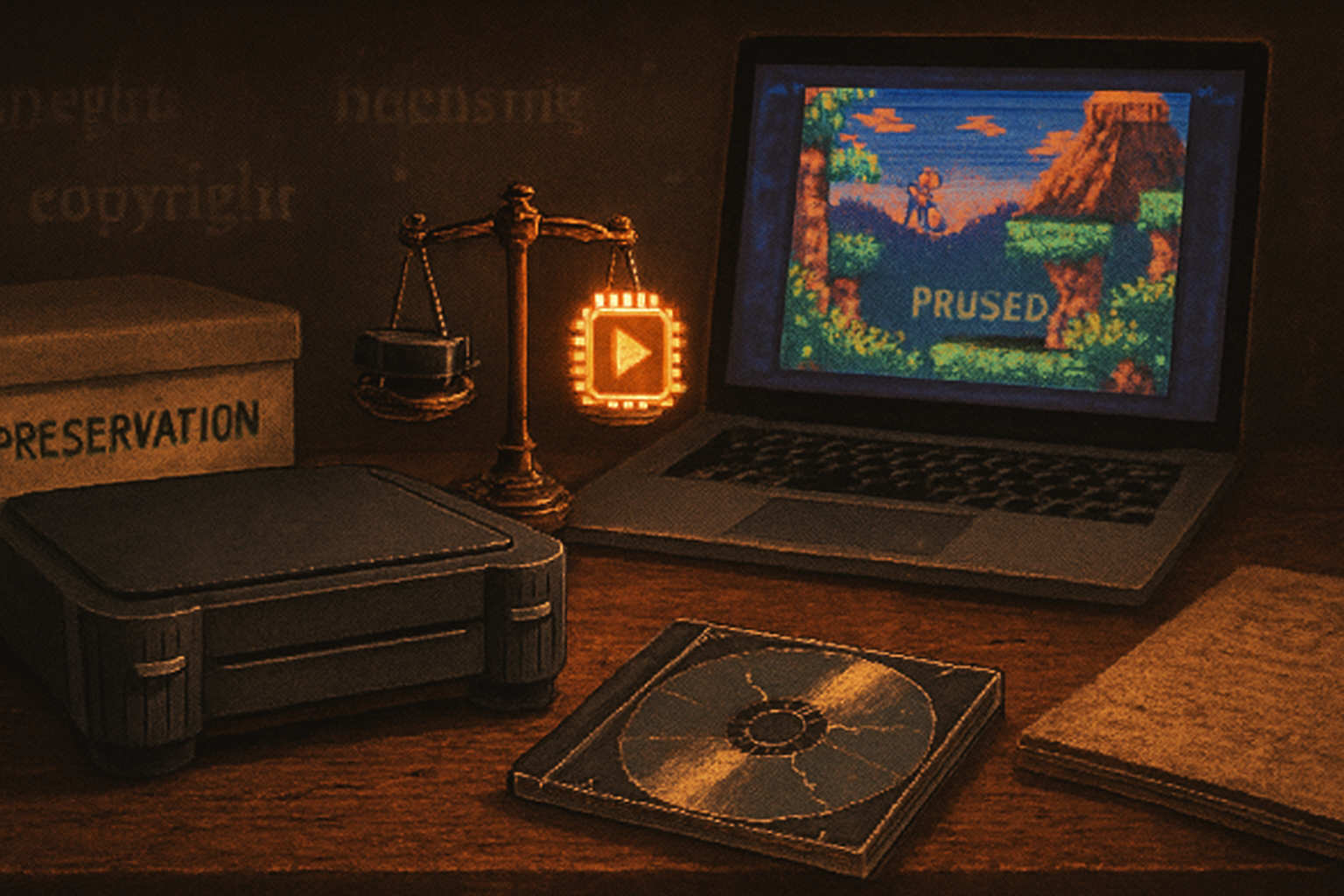
It began with a garage-sale miracle: a dusty 3DO console, its logo like a relic from a very different optimism, and a stack of jewel-case discs smelling faintly of basements and burned plastic. The person who found it booted up a game, and for thirty seconds - until the lens skipped - the past felt alarmingly alive.
That small, halting resurrection explains why the emulation debate around the 3DO is not just nerdy nostalgia. It’s about whether fragile cultural objects - discs that rot, lasers that die, companies that dissolve - are allowed to fade or are rescued by code that imitates them.
The 3DO: A glorious misfire worth saving
The 3DO Interactive Multiplayer was launched in the early 1990s and staked its identity on a weird business model: hardware made by licensees (Panasonic, GoldStar, Sanyo) and software from a catalog of third-party developers, shepherded by Trip Hawkins’ 3DO Company. The machine was expensive and short-lived, but its library contains odd, ambitious titles that never got the archival treatment of, say, SNES or Playstation classics. See the machine’s historical arc for context: 3DO Interactive Multiplayer - Wikipedia.
Why does that matter? Because the 3DO sits at a preservation crossroads:
- Its media are CD-ROMs - theoretically durable but practically vulnerable to scratches, disc rot and missing masters.
- Manufacturing lines and spare parts vanished when the platform failed.
- Rights ownership scattered as companies folded, making commercial re-release legally tangled.
That combination is a preservationist’s nightmare and an emulator’s calling card.
Emulation: oxygen for dead formats - and a provocation
Emulation is software that impersonates hardware. It lets modern computers run software written for a console that’s otherwise dying. For the 3DO, projects like FreeDO provide a virtual resurrection: testable, copyable, and distributable in a way that hardware cannot be.
The moral and practical arguments in favor of emulation are persuasive:
- Cultural preservation - Video games are evidence of a cultural moment. When markets fail to keep them available, emulation can preserve them for scholarship, restoration and enjoyment.
- Accessibility - Emulated games can be played on modern devices without hunting for brittle consoles and rare controllers.
- Technical study - Emulation permits researchers to analyze software behavior, translation work, and patches without accelerating wear on original hardware.
FreeDO is one of the long-running efforts aimed at emulating the 3DO: FreeDO.
But emulation is also a provocation. To many rights holders and publishers it is indistinguishable from piracy - unauthorized copying and distribution that may damage potential revenue streams and violate the exclusive rights to reproduce and distribute.
Copyright, DMCA and the messy law of circumvention
Here’s where the legally hairier vines wind up. In many jurisdictions copyright remains in force for decades; that means even an obscure 1994 CD is still “owned.” The United States complicates matters further with anti-circumvention rules under the DMCA (17 U.S.C. § 1201). Those rules make it illegal to bypass technological protection measures (TPMs) - even to make a personal backup of something you own in some cases.
There are exceptions. Every three years the U.S. Copyright Office conducts a rulemaking to create limited DMCA exemptions that allow museums, libraries and sometimes users to engage in certain preservation activities. These exemptions have, over time, recognized some archival and preservation uses for video games and software - but they are narrow and conditional. See the Copyright Office’s Section 1201 page for context: U.S. Copyright Office - Section 1201.
Bottom line: owning a 3DO disc does not automatically authorize you to crack, dump, distribute or download copies, particularly if doing so requires bypassing a TPM or distributing to others.
Preservationists vs. rights holders: two morally sympathetic camps
If you strip the legalese away, both sides have defensible motives.
Preservationists argue:
- Video games are cultural artifacts. Without archiving and emulation, large chunks of interactive culture will vanish.
- Commercial incentives are insufficient. If publishers don’t see profit, they won’t invest in restoring and re-releasing obscure titles.
- Emulation can be carried out responsibly - museums and libraries can hold copies under access-limited conditions, and source code or original assets can be archived for research.
Rights holders and publishers argue:
- Copyright exists to let creators and rights holders control distribution and monetize their work. Unauthorized distribution can erode incentive and income.
- Unlicensed emulation can facilitate piracy that harms live markets (remasters, re-releases, indie revivals).
- Not all emulation projects are careful; some distribute copyrighted images openly and profit indirectly.
Both sides are right and both are incomplete. Preservation is a moral good; respecting creators’ rights and marketplaces is also a moral good. The clash is about which good takes priority when they collide.
What this means for players and collectors today
If you care about playing 3DO titles on modern hardware, the landscape looks like a patchwork of practical choices and legal tightropes.
Practical options:
- Hunt original hardware. There is authenticity in the original experience, but it comes with cost and fragility. Expect flaky lasers and expensive replacements.
- Seek licensed re-releases. Some titles across retro platforms have been officially reissued. If a publisher has released a digital version, buy that - it’s the cleanest, least risky option.
- Emulation for private, lawful use. In some jurisdictions, making a backup of media you legally own may be legal; in others, anti-circumvention rules complicate this. The safest legal position is to check local law and adhere to DMCA exemptions where applicable.
- Support or use institutional preservation. Museums, libraries and archives sometimes have legal standing to preserve and provide access. Projects like the Internet Archive’s Console Living Room have attempted to make old software accessible, but such efforts face legal scrutiny and pushback.
Ethical guidelines for responsible emulation (a short code of conduct):
- Do not distribute images of games that are commercially available and actively sold by rights holders.
- Prefer emulation when no legal commercial option exists and when the goal is preservation, study or exhibition.
- Respect creators and avoid profiteering off orphan or abandoned IPs without permission.
The orphan works problem and why the 3DO is a poster child
Many 3DO titles are ‘orphan works’ - owners are hard to track down, and the cost of securing rights for re-release can exceed any commercial upside. Orphan works create a legal dead zone: culturally valuable software that cannot be legally reissued because the owner can’t be located or won’t cooperate.
The orphan problem is why emulation communities and archival institutions sometimes feel morally compelled to act outside tidy legal boundaries - because the alternative is slow cultural amnesia.
A few concrete historical examples
- Some niche 3DO titles have been documented and preserved by fans who translated, patched and made them playable on emulators. Those projects keep obscure design experiments accessible for scholars.
- The Internet Archive has created browser-playable emulations for many console titles as part of its preservation mission. This has generated debate and legal pressure, illustrating the tension between public-interest archiving and copyright enforcement: Internet Archive - Console Living Room.
These examples show the pattern: when the market fails to preserve, communities do; the law sometimes follows, sometimes resists.
Policy directions that would reduce the tension (and are politically plausible)
- Broader DMCA exemptions for noncommercial preservation by recognized cultural institutions. Narrow, carefully drawn carve-outs reduce abuse while protecting culture.
- A streamlined, low-cost mechanism for orphan works clearance, or a safe-harbor for limited noncommercial archival use when rights holders are unreachable.
- Incentives (tax breaks, grants) for publishers to release legacy catalogs rather than letting them languish.
These are not radical ideas - they are pragmatic attempts to square the circle between copyright incentives and cultural stewardship.
What to do if you love 3DO games
If you want these games preserved and playable, you can be useful in practical ways:
- Buy and promote legitimate re-releases when they appear.
- Donate to museums and archives that preserve video games.
- Share documentation - cover art, manuals, design notes, and oral histories. Those are invaluable to archivists.
- If you own originals and choose to archive them for personal use, document provenance and avoid public distribution unless you have rights.
- Lobby for sensible legal reform - contact lawmakers about DMCA exemptions and orphan works legislation.
Final accounting: which side “wins”?
No one side wins cleanly. Rights holders have legitimate claims; preservationists have compelling moral urgency. In practice, the best outcomes come from compromise: clearer legal pathways for preservation, responsible emulation practices, and more commercial goodwill toward reissuing old catalogs.
The 3DO’s fate - a bright, brief flare of ambition and then slow decay - should be a warning. If we value interactive culture, we must do better than rely on garage sales and the occasional internet enthusiast. Emulation is not a villain; it is a tool. Whether we use that tool to salvage cultural history or to facilitate theft depends on how wisely we shape law, markets and ethics.
References
- 3DO Interactive Multiplayer - Wikipedia: https://en.wikipedia.org/wiki/3DO_Interactive_Multiplayer
- FreeDO project: https://freedo.org/
- U.S. Copyright Office - Section 1201 (DMCA) rulemaking: https://www.loc.gov/copyright/1201/
- Internet Archive - Console Living Room: https://archive.org/details/consolelivingroom