· retrogaming · 7 min read
Controversial NES Games: The Titles That Pushed Boundaries
The NES wore a wholesome badge. But the 8‑bit living room was a frontline in an emergent culture war - not because of the console's own output, but because of titles that arrived, were altered, or haunted the conversation. This article traces the flashpoints - from Mortal Kombat's censored ports to Night Trap's moral panic - and shows how 1990s controversies reshaped how games are made, sold, and policed.
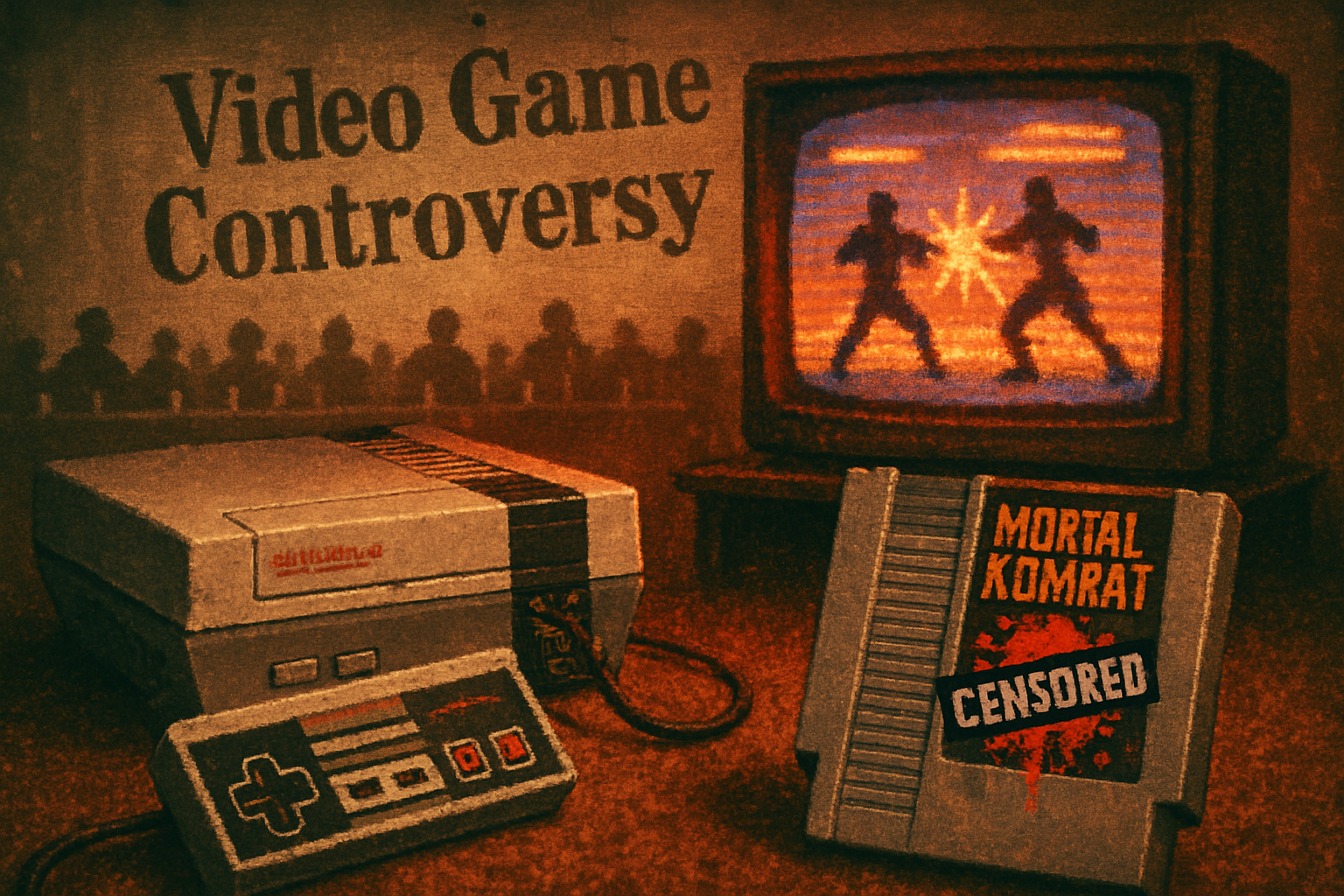
A decade before “going viral” meant meme stock prices instead of moral panics, a handful of pixelated fights and squeaky FMV clips sent grownups to congressional hearings. Picture a parent unthreading an extension cord to confiscate a cartridge. Not because the graphics were sharp - they were not - but because something about games had finally pierced the living room’s family aura.
This is the story of that piercing: how a supposedly family-friendly console ended up at the center of a cultural skirmish, how a few games became symbols more than products, and what the fallout still means.
The paradox: Nintendo’s caricature of wholesomeness and the reality of late 80s–early 90s gaming
Nintendo sold safety. The NES was marketed as toys parents could trust. That marketing wasn’t just clever - it was policy. Nintendo of America enforced strict content rules for localizations: sex, overt religious imagery, explicit gore, and, yes, swastikas, were routinely excised or softened before a game could wear the little Nintendo seal of approval.
But markets and technology are messy. Arcade developers wanted profit and edge. Third‑party publishers wanted shock value and headlines. And the new CD add‑ons and 16‑bit consoles could show more - which meant controversy migrated from what appeared on the NES to what the NES’s competitors or its ports advertised.
To understand why a pixelated punch could cause a national conversation, we need two titles as case studies: Mortal Kombat and Night Trap. One was a blood-soaked arcade sensation ported to multiple home systems. The other was a live‑action oddity that became the moral boogeyman of a generation.
Mortal Kombat: blood, pixels, and the power of a port
Mortal Kombat arrived in arcades in 1992 and did one simple, terrible thing: it made violence feel tactile. The fatalities - finishing moves that turned opponents into giblets or slabs of muscle - were shocking not because they were realistic, but because they were deliberate showmanship. Players loved them. Parents and lawmakers were appalled.
That fury escalated when Mortal Kombat was ported to home consoles. Differences between console versions crystallized the debate:
- The Sega Genesis port kept explicit blood and many fatalities (Genesis used a code to unlock gore), and that made it the talk of playgrounds and press.
- The Super Nintendo version neutered blood into “sweat” (a famously ham‑fisted localization choice) to satisfy Nintendo’s content standards.
- The NES version - a technological underdog squeezed into 8 bits - was the most drastically altered - smaller rosters, simplified moves, largely removed finishing moves and visual gore. The game still existed, but the visceral core was edited down or lost.
This spread of differing content across platforms made the point Americans were about to lecture the industry about: a game’s audience could vary wildly depending on where and how it was sold. The pixelated brutality of Mortal Kombat became a test case in whether the market could self‑police or needed external rules.
Sources and further reading: the Mortal Kombat page documents platform differences and the surrounding debate [https://en.wikipedia.org/wiki/Mortal_Kombat_(1992_video_game)].
Night Trap: campy FMV and a scandal that didn’t even run on the NES
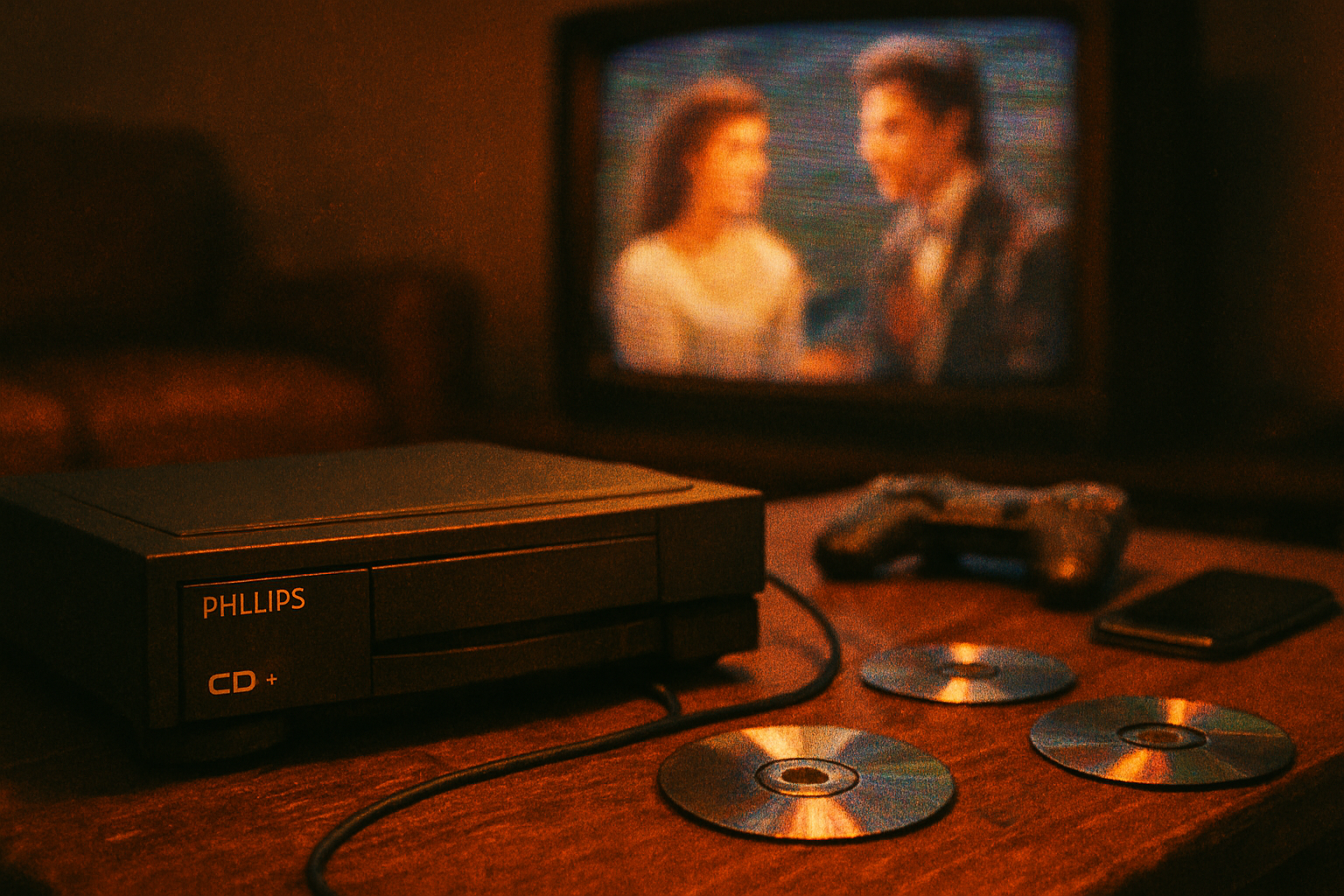
Night Trap is a cinematic curiosity. Full‑motion video (FMV) on a console? It sounded like an experiment - and looked like a late‑night cable special shot on a VHS camcorder. But its content (mild sexual innuendo, implied danger, and female characters placed in perilous situations) and its marketing became combustible when activists and some politicians framed it as exploitative.
Crucially, Night Trap was a Sega CD title - not an NES release. Yet it became part of the same national conversation. Why? Because the hearing spotlight wasn’t about platform accuracy; it was about symbols. Night Trap’s notoriety proved that a single title, even on a peripheral, could shift perceptions about the medium as a whole.
The furor around Night Trap (and other titles of the period) contributed directly to the 1993 U.S. congressional hearings on video game violence, which then helped birth the Entertainment Software Rating Board (ESRB), the industry’s attempt to avoid government regulation [https://en.wikipedia.org/wiki/Night_Trap] [https://en.wikipedia.org/wiki/1993_U.S._Senate_hearing_on_video_game_violence].
NES‑specific skirmishes: censorship by omission and localization surgery
If Mortal Kombat and Night Trap were the loudest explosions, the NES era was full of smaller but revealing conflicts. Because Nintendo controlled the seal, localizations often performed cultural surgery - sometimes with clumsy results.
Common changes included:
- Removing or altering religious icons (crosses became feathers or generic medallions).
- Excising nudity or suggestive imagery.
- Taking out explicit references to alcohol, drugs, or prostitution.
- Stripping out Axis symbols and WWII reference points.
Concrete examples: Nintendo’s localization policies led to visible changes in many titles; in some cases, imagery and plot beats were changed to avoid offending Western sensibilities. The pattern is well documented in retrospectives about Nintendo censorship and localization history [https://en.wikipedia.org/wiki/Nintendo_of_America#Content_policies] [https://en.wikipedia.org/wiki/Nintendo_censorship].
These edits weren’t mere political correctness; they shaped how a generation understood storytelling in games. A boss that once wore an armband lost historical specificity and, with it, an opportunity to confront thorny themes. That sanitization is both paternalistic and revealing: the industry believed kids were fragile, and that parents valued a visible seal of protection.
The 1993 hearings and the price of moral panic
The crescendo arrived in 1993. Senators and representatives hauled industry leaders to Washington. The spectacle was half-handed warnings, half-theatrical moralizing - and entirely consequential. The hearings put games on a national stage and framed them as a public‑health issue.
Impact:
- The ESRB was formed to provide standardized ratings and stave off legislation.
- Publishers began to factor ratings into marketing and distribution strategies.
- Platforms kept or sharpened content policies because a moral outrage headline could sink a console’s family image.
The hearings were less about any single title and more about the optics of an industry that was outgrowing its parents’ living rooms.
Further reading: the 1993 hearings and the ESRB’s origin story are summarized here [https://en.wikipedia.org/wiki/Entertainment_Software_Rating_Board].
How these controversies look today - nostalgia, reappraisal, and the strange afterlife of censorship
A few things are clear looking back:
- Mortal Kombat is now canonically a genre-defining series. Its gore is historical rather than transgressive. Modern entries aim for cinematic excess; the original controversy reads more like an ignition point than a continuing scandal.
- Night Trap is mostly remembered with a wink. It exists now as kitsch and a cautionary tale about how culture can weaponize art for headlines. Reissued versions invite ironic play rather than moral panic.
- Nintendo’s censorship policy is judged two ways. Some call it protective and formative - a reason parents trusted the Nintendo brand. Others call it paternalistic and heavy-handed, robbing games of nuance. Both readings are fair. The policy shaped the medium’s language.
The lasting institutional outcome - content ratings rather than outright bans - reflects a broader American preference: regulate by classification rather than prohibition. Games earned the right to be messy. They also had to wear labels.
Why this matters beyond nostalgia
Because games are cultural artifacts. They teach kids how to imagine conflict, heroism, sex, fear, and politics. The controversies of the late 80s and early 90s were not just about gore or bad taste; they were arguments over who gets to decide what stories games tell and how those stories reach people.
We still argue about those things. Today the tools are different - photorealistic engines, online platforms, streaming audiences - but the mechanism is the same: a title provokes, a public reacts, and the industry adjusts. Sometimes the adjustment is useful. Sometimes it’s censorship. Often it’s both.
Quick takeaways
- The NES itself was rarely the origin of major scandals; it was frequently the site of heavy editing and the family brand against which other systems were judged.
- Mortal Kombat and Night Trap functioned as catalysts - one because of visceral arcade-to-home translations; the other because of spectacle and sensationalism.
- The 1993 hearings and ESRB formation were the institutional outcomes that still shape game distribution.
If you want a neat moral: culture wars rarely start with nuance. They start with a headline, a clip, and a fear. And then the rest of us - developers, parents, lawmakers, players - spend years arguing about where to draw the lines.
References
- Mortal Kombat (1992 video game) - differences and controversies: https://en.wikipedia.org/wiki/Mortal_Kombat_(1992_video_game)
- Night Trap and the FMV controversy: https://en.wikipedia.org/wiki/Night_Trap
- 1993 U.S. Senate hearings on video game violence: https://en.wikipedia.org/wiki/1993_U.S._Senate_hearing_on_video_game_violence
- ESRB history and formation: https://en.wikipedia.org/wiki/Entertainment_Software_Rating_Board
- Nintendo censorship and content policies: https://en.wikipedia.org/wiki/Nintendo_censorship