· culture · 5 min read
The Casio Keyboard Comeback: Why Retro Synths are Making Waves Again
Cheap, plastic keyboards that once lived in toy aisles are back in studios and playlists. This piece explores how Casio's humble instruments-their quirks, presets, and sonic “flaws”-have become deliberate aesthetic choices that shape new genres and production methods.
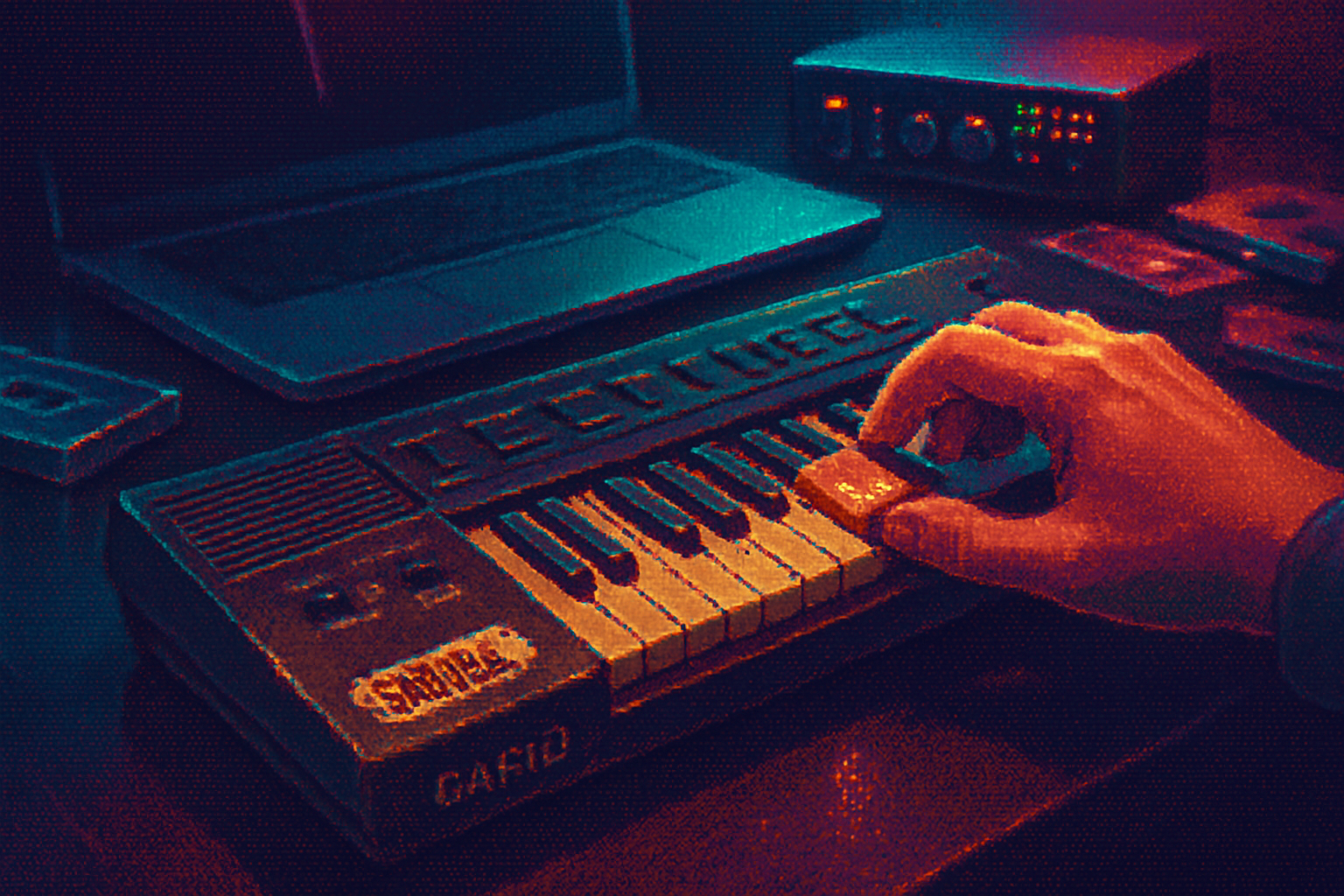
It began with a thrift-store epiphany.
A young producer, coffee in hand, leafs through a box of 1980s trivia and finds a battered Casio SK-1. It chirps a brittle piano sound, the sampling button squeaks, and for five minutes it’s just a toy. Then they press record, pitch it down, add a saturated drum loop, and the little plastic melody becomes the emotional center of a song that gets shared, remixed, and meme-ified. The rest is, in the best sense, cultural feedback.
Cheap plastic, expensive meaning
Casio didn’t set out to create art. In the 1980s the company’s mini keyboards were pragmatic: cheap, simple, and mass-produced. They were the instruments parents bought for kids and the ones that made school projects sound like space broadcasts. But the very limitations that made them toys-low-fidelity sampling, primitive digital-to-analog conversion, and canned presets-also produced unmistakable timbres. Those timbres have character. They hum, alias, and clip in ways that modern virtual instruments usually avoid.
In one instructive historical twist, a preset from a Casio MT-40 helped spawn a lineage of Jamaican dancehall rhythms that later fed global pop and hip-hop. A cheap riff became foundational, which is a neat reminder: history is often written on instruments nobody thought would matter [1].
The aesthetic logic: why producers choose “bad” sound
The comeback of Casio and similar lo-fi electronics isn’t just nostalgia. It’s an aesthetic and practical choice driven by several forces:
- Democratization - A Casio costs a fraction of a vintage synth. That low barrier makes sonic experimentation accessible to bedroom producers.
- Distinctive artifacts - Aliasing, bit-depth grain, and rough transients are recognizably evocative. They read as human and immediate in a sea of sterile precision.
- Preset culture - Those canned sounds are cultural short-hands. A particular bell tone or pad can conjure an era faster than any lyric.
- Workflow simplicity - No complex menu trees. You get sound fast, and creative decisions happen sooner.
- Viral aesthetics - Platforms like TikTok and Bandcamp reward instantly readable textures. A retro-sounding hook can cut through quickly.
Genres that love Casio: from vaporwave to hyperpop
Cheap digital timbres are woven into several contemporary genres:
- Vaporwave and its offshoots revel in 1980s/1990s consumer electronics sounds and corporate Muzak, often using loops of digital keyboards to create uncanny nostalgia [2].
- Lo-fi hip-hop and bedroom pop favor warm, slightly broken textures that sit emotionally close to the listener.
- Hyperpop and some strands of electronic pop use bright, brittle Casio-like tones for maximal contrast with glossy production.
Far from being mere pastiche, these genres use retro timbres to interrogate modern life-consumerism, memory, and the artifice of comfort.
The technical charm: what makes a Casio sound like a Casio
If you want to sound like you found your lead sound in a cereal box, know what you’re after:
- Low sample rates and low-bit samplers - give grain and grit.
- Primitive DACs and analog output stages - add hiss, nonlinearity, and personality.
- Aliasing and digital foldover - create harmonics that sound “digital” in a way that’s musically useful.
- Fixed, recognizable presets - quick identity.
Modern plugins can emulate these traits, but there’s an irreducible randomness to the physical hardware-worn pots, microphonic keys, and flaky contacts-that software struggles to reproduce convincingly.
How contemporary musicians use Casios (without sounding like a museum)
Producers today use these keyboards in surprisingly flexible ways:
- Sampling - Record a phrase, chop it, pitch it, and rebuild it into a new context.
- Re-amping - Run a Casio through pedals, tape saturation, or guitar amps to get unexpected harmonics.
- MIDI conversion - Some artists mod Casios to act as MIDI controllers, blending lo-fi tone with modern sequencing.
- Layering - Pair a Casio’s brittle bell with a warm analog pad to create a hybrid timbre that’s familiar but new.
- Micro-modding - Simple hardware hacks (adding filters, altering power supply rails) change the instrument’s personality.
And if you don’t own one, many producers opt for lo-fi or bit-reduction plugins to approximate the effect without the scavenger-hunt thrill.
Case study: a preset that changed a genre
It’s worth returning to a single clear example. The riff emanating from a Casio MT-40-originally a cheap preset-was adopted and transformed in Jamaican studio culture into a pattern that underpinned countless recordings. The story reveals something important: what matters isn’t the manufacturer or price tag, but how people adopt and adapt sounds into new practices and social economies [1].
What this means for music going forward
The Casio comeback signals a few broader shifts:
- Texture matters as much as fidelity. Listeners crave distinct sonic personalities, even if they’re technically imperfect.
- Tools shape genres. When cheap electronics become widespread, new musical grammars form around their limits.
- Nostalgia is productive. Recycling and reframing old sounds creates cultural dialogue rather than simple replication.
In short: cheap instruments democratize sonic experimentation, and cultural flows-memes, scenes, and DJs-decide which textures stick.
Practical tips for producers who want in
- Don’t fetishize the garbage. Use the unique traits where they serve emotion or identity.
- Start with sampling. Record 30 seconds and treat it like raw compost-transmute, don’t paste.
- Combine clean and dirty layers. Let a shimmering analog pad soothe a crunchy Casio lead.
- Explore physical treatment. Tape, guitar pedals, and re-amping are cheap ways to add character.
- If you can’t find the hardware, try bit-reduction, sample-rate reduction, and saturation plugins-but remember - randomness matters.
Final note: retro is not reactionary
There’s a tendency to read every revival as simple nostalgia. That’s lazy. When producers borrow Casio tones today they aren’t only longing for the past; they’re remixing it, fragmenting it, and joining it to contemporary concerns-networked attention, compressed formats, and a global mash-up of genres. The cheap plastic sounds of yesterday are now part of a new vocabulary: blunt, expressive, and very much alive.
References
[1] The story of the Casio MT-40 and its role in dancehall is well documented in music-writing outlets; see for example coverage in The Guardian: “How a cheap Casio keyboard laid the foundation for dancehall” (2013).
[2] Vaporwave and related scenes are explored in academic and popular sources; see the overview on Wikipedia: “Vaporwave”.
For technical background on specific instruments, the Casio SK-1 has a useful historical entry on Wikipedia: “Casio SK-1”.