· culture · 6 min read
Casio Love Letters: Collectors Share Their Favorite Models and Stories
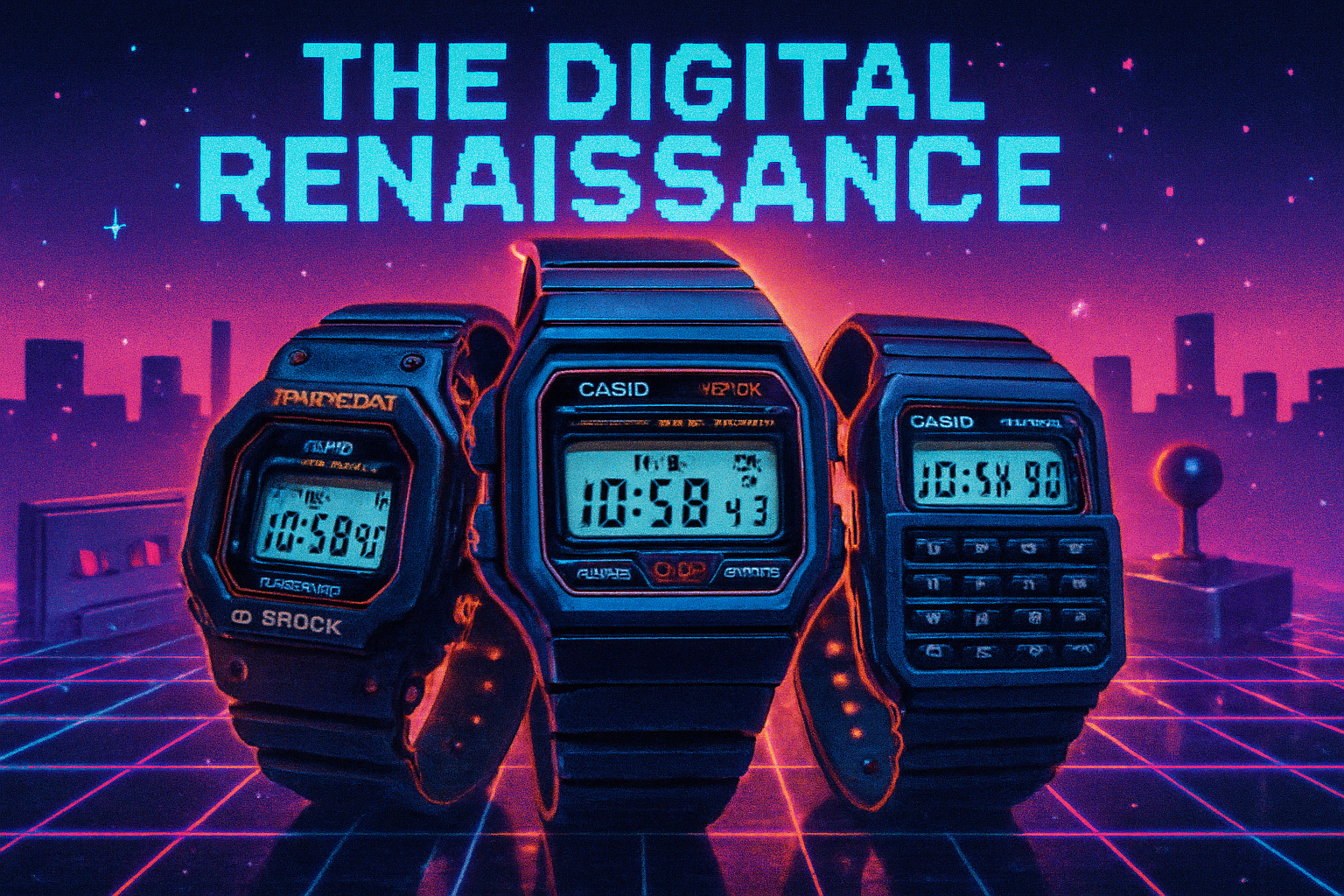
A warm, slightly sardonic tour of Casio collecting: personal stories, must-have vintage models, valuation quirks, care tips and the communities that keep these humble digital icons alive.
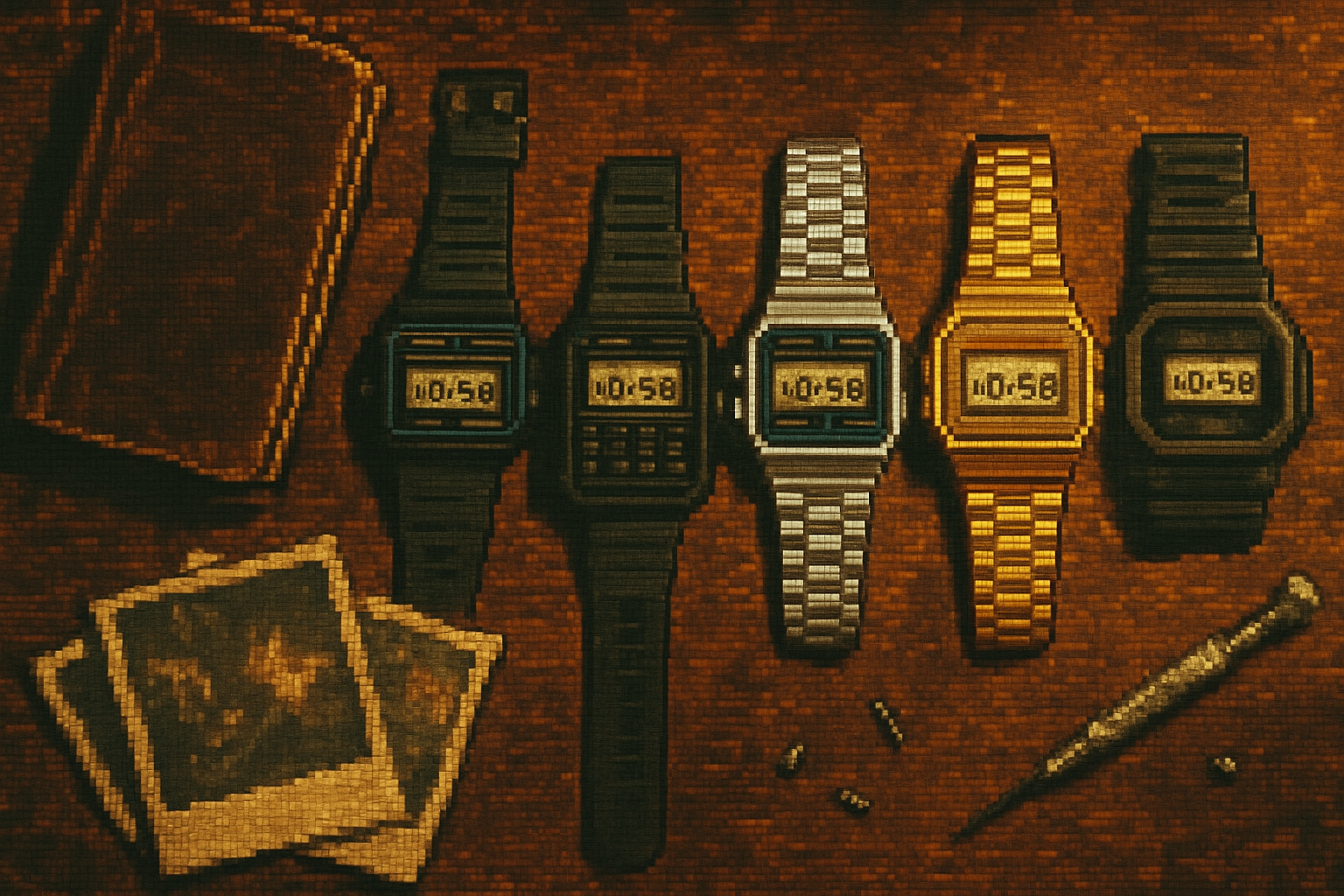
They are the watches your childhood bicycle wore out, the cheap little time-tellers that kept secret lives on wrists while your father’s Rolex sat in a safe. You didn’t think much of them then. Now you find yourself scrolling late at night, bidding on a scratched stainless steel rectangle as if it’s a family heirloom.
An evening on a sofa, a spilt cup of tea, and an A158 with a dented clasp. That was how Marta, a 34-year-old teacher in Stockholm, described the moment she realized her soft spot for Casio was not just nostalgia but a small, stubborn love. “It’s pragmatic romance,” she said. “It tells the time, it survived my teenage years, and it still fits.”
Why Casio? Because Casio is electricity’s polite cousin: small, reliable, and inoffensively brilliant. But also because cheapness masks design. The best Casios are brilliant in ways that only reveal themselves after a decade of use.
The anatomy of affection: Why collectors love Casio
Collectors speak of Casio the way some people speak about their hometowns: forgiving, stubborn, full of stories.
- Practicality as poetry. The F-91W isn’t glamorous. It’s a tiny block of efficiency - indestructible, absurdly cheap, and somehow perfect. See the model’s enduring status on its Wikipedia page.
- Design purity. Casio’s digital aesthetic - crisp LCD, purpose-built pushers, modest geometry - reads like Bauhaus for the 1980s commuter.
- Durability and repairability. These watches survive batteries, showers, bike falls and indifferent teenagers. The G-Shock line, born from an engineer’s refusal to accept fragile watches, made indestructibility a feature: G-Shock history.
- Accessibility and community. You can start a collection without remortgaging your home. That low barrier builds a strange, generous community - forums, Reddit threads, and swap meets.
Collector profiles: Short love letters from the corners of the hobby
- Marta (Stockholm) - “My dad left his F-91W in a moving box. I wore it to a job interview. I didn’t get the job but kept the watch. It still smells faintly of old paper and my father’s cologne.”
- Samir (London) - Collector of calculator and databank models. “I buy them for the user manuals. The menus. The way a watch from 1986 pretends it’s a digital Swiss Army knife.”
- Malcolm (Austin) - G-Shock obsessive. Keeps an early DW-5600C from the ’80s in a velvet box. “It lived through a roof job and a hurricane. I like survival stories.”
These snippets have a pattern: small objects, big memories.
Rare models and why they matter
Not every Casio is destined for price appreciation. But a few models have cult status - because they are novel, limited, or silly in an artful way.
- F-91W (1989). The democratic classic - ubiquitous, iconic, memetically immortal. See its cultural footprint in its Wikipedia entry.
- DW-5600 / DW-5000 series. The square-faced ancestor of modern G-Shocks. Early resin cases and original modules are prized by purists. The G-Shock origin story is evocative: G-Shock official.
- CA-53W and Databank series. Calculator and databank models feel like pocket computers for your wrist. They carry a particular 1980s optimism - cheap microprocessors trying to be everything.
- A158 / A168 (stainless steel digitals). The Milanese bracelet, the silver face - they read like ’80s office chic. The gold-plated A168WG variants are especially sought after by style-conscious collectors.
- Casiotron. One of Casio’s earliest digital watches; historically important and a museum favorite. (See Casiotron.)
- Limited collaborations. Casio’s collabs with streetwear labels and artists create brief spikes of desirability. These can be speculative - and sometimes painfully stylish.
Why value? Rarity and provenance matter. A factory-new boxed model from 1987 sells for different reasons than the identical watch with an impressively clean scuff on the bezel: one is investment, the other is biography.
The market: When Casio behaves like an art market
Casio collecting has an odd economy. Most pieces are cheap. Some - especially early G-Shocks, sealed boxed retro pieces, or rare collabs - can command impressive sums.
- Drivers of price:
- Original packaging and manuals
- Region codes and module numbers
- Uncommon colorways or limited editions
- Celebrity or historical provenance (a watch worn in a film, for example)
- Watch for bubbles. A streetwear collab can spike prices overnight and collapse just as quickly. This is not a blue-chip market (usually), it’s a community-driven market.
Useful places to keep an eye on trends: Reddit’s Casio community (r/Casio), vintage watch listings on eBay and Chrono24, and enthusiast blogs.
Caring for a vintage Casio (yes - you should care)
A digital Casio is not self-sustaining. Batteries die, seals harden, LCDs ghost.
- Batteries - Use the correct cell. Replace before corrosion begins. If you see white powder, stop. Clean carefully and consult a watchmaker.
- Seals and water resistance - Old resin gets brittle. Replace gaskets if you plan to swim.
- LCD ghosting - It’s normal with age. Some collectors accept it as patina; others seek NOS (new old stock) displays.
- Straps and bracelets - Replace with period-correct parts when possible. Aftermarket straps are fine, but they change a watch’s story.
If a watch is rare or has sentimental value, find a watchmaker familiar with quartz modules. Casio modules are simple compared to mechanical movements, but they require the right parts.
Hunting and scoring: where to find your next Casio
- eBay - Good for rare, boxed pieces - read descriptions and ask for module numbers and photos.
- Local thrift stores & flea markets - Many collectors have stories of scoring classics for a few dollars.
- Specialist Facebook groups, Discord channels, and subreddits - The community will tell you what’s authentic and what’s a knockoff.
- Official vintage reissues - Casio itself occasionally reissues retro models. Keep an eye on the
A cautionary note: Counterfeits exist, especially for stylish gold-tone models. Compare module numbers and dial fonts to reference photos.
Community, mods, and the afterlife of cheap watches
Casio fandom is not merely nostalgic; it’s creative.
- Mods - Enthusiasts swap straps, change bezels, and transplant modules. Modding is a vernacular craft: you can make a watch scream your name.
- Stories - Online threads are full of near-mythical rescues - a watch found in a drawer, resurrected with a fresh cell and a gentle polish.
- Preservation vs. use - Some collectors freeze items in display cases. Others batter them into storied relics. There is no single correct faith.
The real reason we collect Casio: smallness, honesty, memory
Luxury watches often trade in status narratives: lineage, scarce metals, and performance claims. Casio trades in humility. It is about memory and utility and a design ethic that says, “We made something that works, cheaply, and we made a lot of them.” That is its moral clarity.
Marta’s dented A158, Samir’s databank with a frayed strap, Malcolm’s hurricane-scarred DW-5600: they are not investments so much as bookmarks in other people’s lives. They are proof that things can be both disposable and deeply meaningful.
If you are starting a collection, remember one simple test: buy what you keep wearing. Prices will rise and fall. Sentiment, if you are lucky, will hold.
Further reading and resources
- Casio official site: https://world.casio.com/
- G-Shock (history and models): https://en.wikipedia.org/wiki/G-Shock
- F-91W: https://en.wikipedia.org/wiki/Casio_F-91W
- Casiotron: https://en.wikipedia.org/wiki/Casiotron
- Reddit Casio community: https://www.reddit.com/r/Casio/
You can collect for profit, but most people collecting Casio collect for the stories. And the stories are cheap, resilient, and refuse to run down.