· culture · 6 min read
Back to the Future: How Dell Shaped the Tech Landscape of the 90s
A nostalgic yet analytical look at how Dell’s direct sales model, build-to-order manufacturing, and supply-chain innovations remade the personal computer market in the 1990s - told through archival context and first-hand recollections from early adopters.
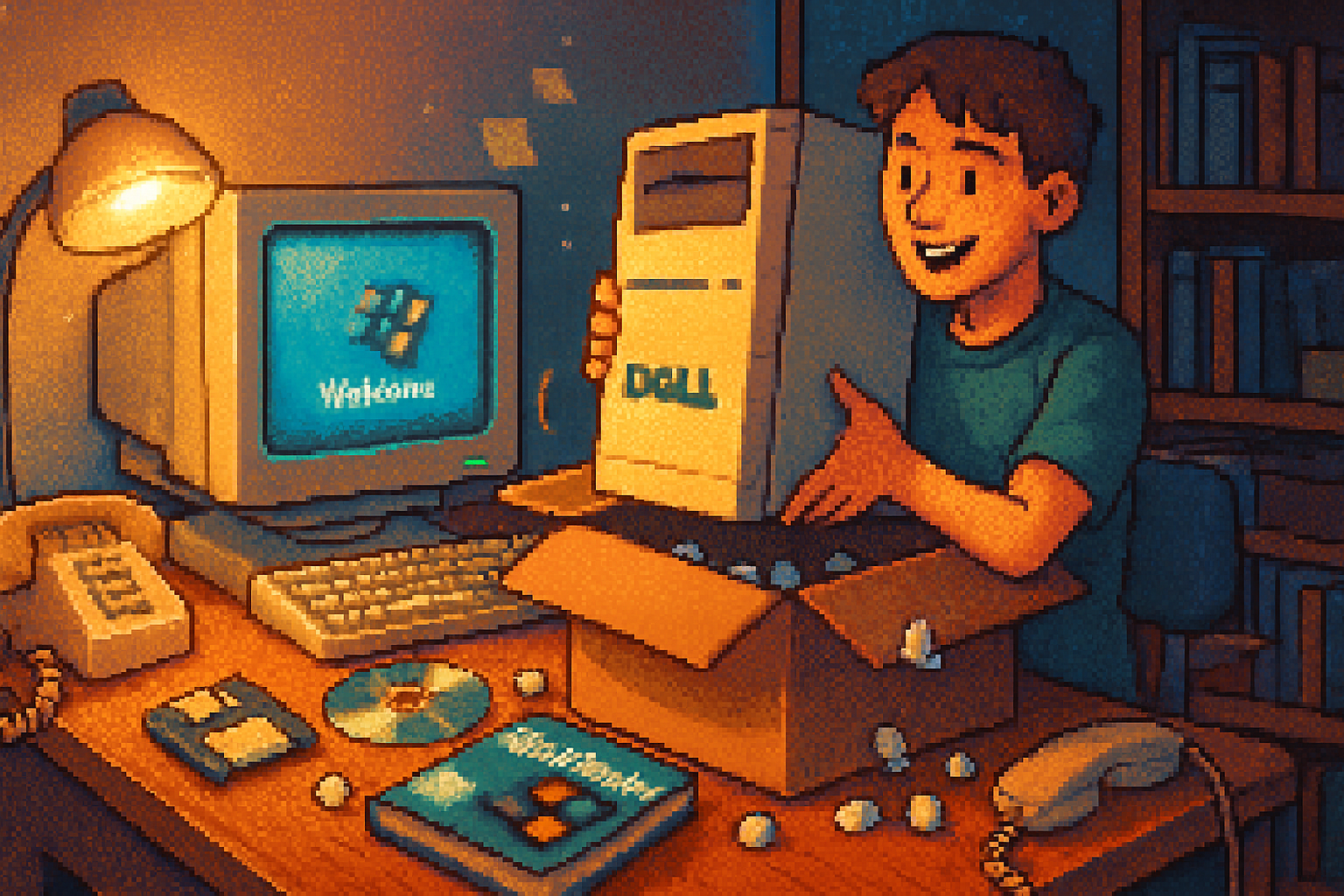
“It arrived on a Tuesday.”
When Kevin, freshly hired as a university sysadmin in 1994, says this sentence, he smiles like someone remembering a small triumph. He’d ordered a Dell over the phone - configured memory, added a larger hard drive, said yes to a monitor - and a handful of days later a boxed, custom machine arrived. The box was unglamorous. The machine inside was not. For Kevin, for dozens of small IT shops, and for a generation of first-time PC buyers, Dell turned waiting into a feature.
That simple line - “It arrived on a Tuesday” - encapsulates what Dell offered in the 1990s: speed, predictability and a feeling that the machine was yours by choice, not by shelving.
Why this matters (and why you should care)
The 1990s weren’t some quaint era of dial-up and floppy disks. They were the decade when personal computing spilled from offices into dorm rooms, living rooms and small businesses. Expectations changed. People wanted more choices, faster fulfillment and lower prices. Dell didn’t simply sell boxes. It rewired expectations about how computers could be bought, built and delivered.
This story matters because many of today’s consumer expectations - instant configuration, just-in-time fulfillment, direct-to-consumer pricing - were refined in that decade. Whether you recoil at Amazon’s logistics or applaud it, the model’s ancestry traces back to companies like Dell.
The radical obvious: direct sales and build-to-order
At the heart of Dell’s 1990s playbook was a deceptively simple idea: cut out the middleman.
- Instead of shipping large inventories to retail stores, Dell took orders directly from customers (telephone, then internet).
- Orders were routed to assembly lines that built machines to the exact specifications of the buyer - more RAM, bigger hard drive, business chipset, no modem.
- This reduced inventory costs and allowed Dell to turn inventory more quickly than rivals who stocked shelves with pre-built models.
The result was not just cheaper PCs; it was a psychological shift. Customization stopped being a niche for enthusiasts. It became a selling point for everyday buyers.
For background on Dell’s evolution and business model, see the Computer History Museum’s overview and Dell’s profile at Britannica: Computer History Museum • Britannica: Dell, Inc.
Supply chain as competitive advantage
Dell optimized what other companies treated as plumbing. The company’s finance and operations teams obsessed over lead times, supplier contracts and turnover. Lean inventory wasn’t a buzzword; it was profit.
Key effects:
- Lower working capital requirements - less cash tied up in unsold inventory.
- Rapid reaction to component price swings - Dell could adjust BOMs (bills of materials) faster than retailers.
- Tight supplier relationships - often arranged so Dell could get parts on short notice without absorbing the cost of those parts.
This is where academic praise met corporate envy. Dell became a case study in how logistics can be a moat - a durable advantage - in a hardware market that otherwise looked commoditized.
Design, marketing and the business market
Dell’s product lines were pragmatic. The OptiPlex line targeted offices. Inspiron and Dimension (later years) aimed at home users. The point wasn’t to seduce with glossy design theatrics - Dell’s machines were conservative, utilitarian and priced for ROI.
Marketing leaned on three promises:
- Configure what you need.
- Pay less than retail (by removing distributor margins).
- Get it quickly.
This approach made Dell a darling of small businesses and IT departments who prized reliability, predictable procurement and service contracts over flash.
Voices from the front lines: early adopters remember
The following vignettes are composites and anonymized recollections from early Dell customers and enthusiasts who lived through the 1990s PC boom.
Kevin - University sysadmin, 1994
“We needed five machines for the lab. Dell’s rep took the order on the phone, promised two-week delivery. The machines showed up, perfectly matched. No retail markup, no stock-outs. For a small department budget, that felt revolutionary.”
Maya - College student, 1997
“I ordered a Dell because I could pick the RAM and the hard drive. For a student on a budget, that’s everything. I remember unpacking it, feeling like I’d designed it. It was an emotional thing.”
Luis - Small business owner, 1999
“I called Dell for a quote. They talked logistics, warranties, service. They cared about how soon we could be back to selling. That consultation saved my business sleep.”
Aisha - Early PC gamer, 1998
“Other brands sold ‘gaming’ versions that were just marketing fluff. Dell let me pick a better GPU, more RAM, and the box stayed under warranty. It made building a performance machine accessible.”
These memories illuminate a larger truth: Dell sold competence and convenience as much as silicon.
The darker edges: what Dell’s model didn’t solve
No model is a panacea. Dell’s success magnified vulnerabilities:
- Margin pressure - selling closer to cost reduced per-unit margins and made Dell sensitive to price competition.
- Commoditization - as components standardized, differentiation outside price-and-service was hard.
- Customer experience - build-to-order reduced retail presence, which sometimes made touch-and-feel buying harder for casual consumers.
These trade-offs explain why Dell, like many pioneers, had to later pivot into services and enterprise solutions as hardware margins thinned.
Cultural imprint: dorms, offices and the idea of choice
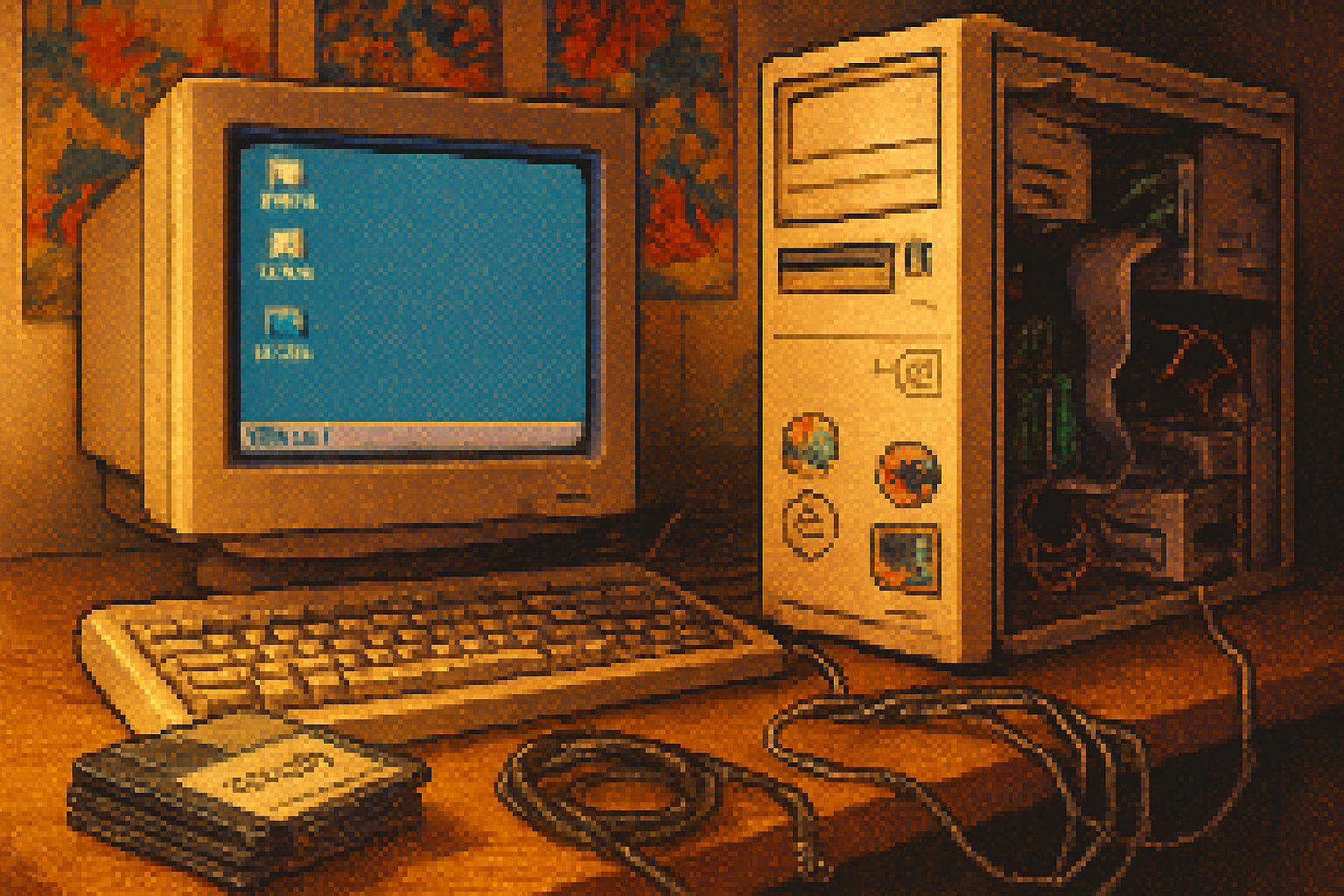
If you spent the mid-to-late 90s in a dorm room, a small office or a start-up garage, you probably remember specific machines with affection: the hum of a CRT, the clack of a mechanical keyboard, a Dell logo on a beige or black shell.
But the more lasting imprint is institutional. Dell helped entrench the expectation that technology could be ordered to spec and delivered quickly. That expectation metastasized into e-commerce and direct-to-consumer habits across industries.
Lessons that matter for founders and product people today
- Logistics is strategy. What consumers feel as convenience is often the output of ruthless operational discipline.
- Choice scales demand for service. When you let customers choose, you must also invest in supporting choices (warranty, parts, returns).
- Direct relationships with customers create data. Dell’s phone-and-order system produced early behavioral signals that could be monetized into better catalogs and sales tactics.
Those lessons remain relevant whether you’re building hardware, software or a subscription service.
Where Dell’s 90s experiment left the industry
Dell didn’t invent the PC. It didn’t invent globalization or supply-chain finance. But it took a handful of obvious ideas, executed them without vanity, and made them the default. Today’s consumer expects configurability, shipping speed and transparency. That expectation didn’t arrive out of thin air.
Dell’s story in the 1990s is a reminder: innovation is often less about a single brilliant invention and more about reimagining the plumbing beneath products so that the rest of the market is forced to adapt.
Further reading
- Dell, Inc. overview (Britannica): https://www.britannica.com/topic/Dell-Inc
- Computer History Museum - Dell Computer Corporation: https://computerhistory.org/atchm/dell-computer-corporation/
- Dell (Wikipedia) - for product timelines and references: https://en.wikipedia.org/wiki/Dell