· retrotech · 7 min read
Ask Jeeves Reimagined: A Modern Take on User-Driven Search
Reimagine Ask Jeeves for 2026: a conversational, personality-driven search that merges retrieval-augmented generation, provenance-aware answers, privacy-first personalization, and a tasteful dose of Jeevesian wit. A product blueprint, architecture, UX, and business model for a modern user-driven search service.
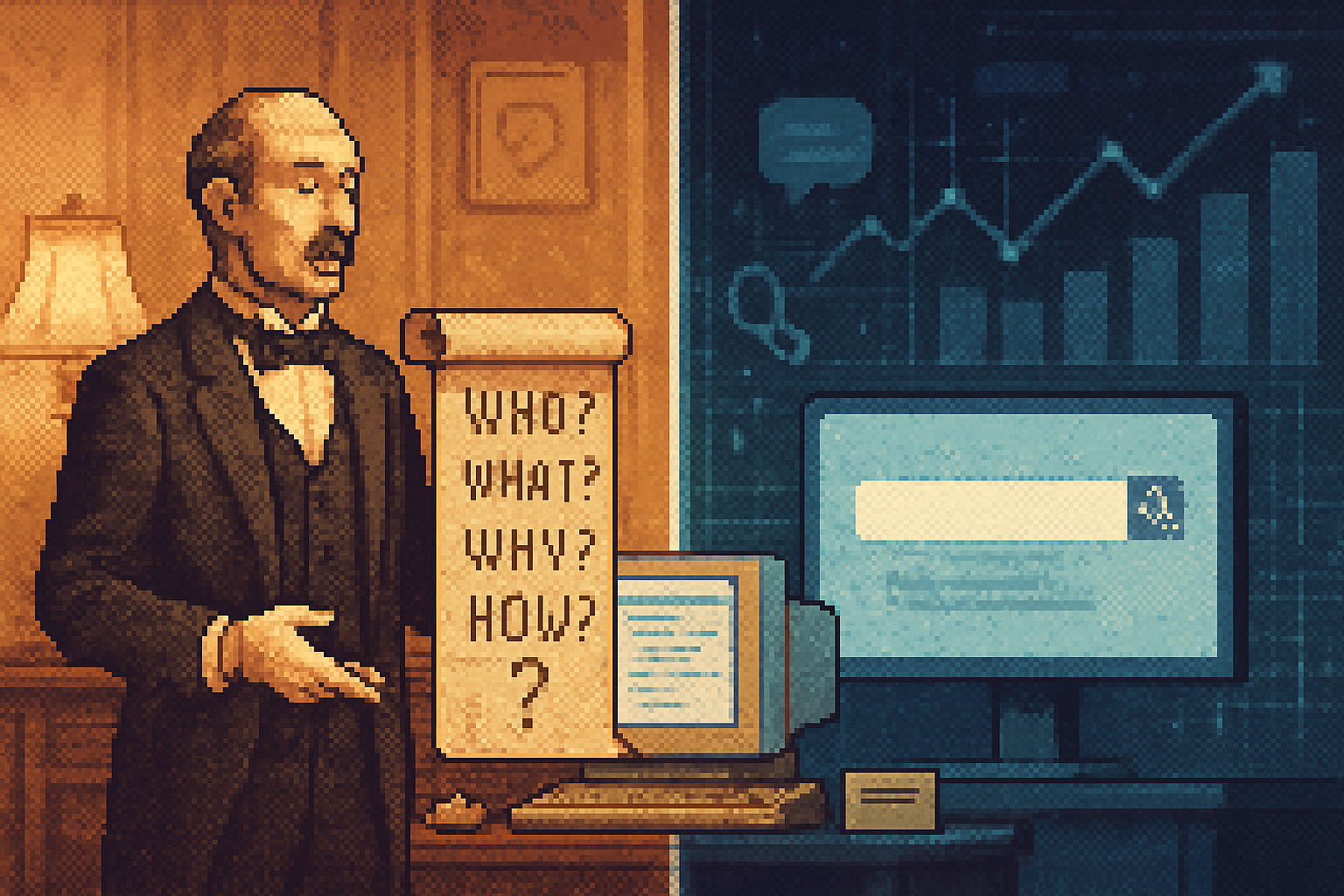
I still remember the first time I typed a full-sentence question into Ask Jeeves and felt like someone - a polite, slightly bemused valet - had leaned in and answered. It was a novelty then: search as conversation, complete with a persona and the illusion of understanding. Fast-forward twenty years and search has shrunk to ten blue links and a frantic race for SEO oxygen. We lost something important: the willingness to engage users as human beings with messy, multi-step needs.
What if we brought the butler back - but smarter, faster, and unwilling to tolerate nonsense? This is a blueprint for a modern Ask Jeeves: a conversational, trustworthy, privacy-minded search product powered by retrieval-augmented generation (RAG), vector indexes, explicit provenance, and adjustable personality. It keeps the charm of a friendly assistant while fixing the sins of today’s search and chat hybrids: hallucination, transient context, and monetization that pretends to be neutral.
The fundamental claim
People don’t want isolated answers; they want help completing tasks. Ask Jeeves reimagined is a tool that guides users through those tasks with conversation as the interface and verifiable sources as the backbone.
Why resurrect the butler? Because full-sentence questions are human-native
- Humans think in stories and tasks, not in keyword bags.
- Modern LLMs are spectacular at language but terrible at inventing facts without consequence. We need a system that pairs language fluency with retrieval and explicit sourcing.
Analogy: a search engine is oxygen. You hardly notice it - until it’s contaminated. The modern Jeeves is an oxygen filter: conversational, clarifying, and providing citations so you can breathe easy.
Core principles
- Conversation as first-class input and output
- Accept multi-turn queries, context carryover, and clarifying questions.
- Grounded answers with provenance
- Every factual claim links to sources; partial answers are labeled as such.
- Adjustable personality and tone
- Users choose from modes - Jeeves (witty/formal), Coach (directive/practical), Companion (warm/informal).
- Privacy-first personalization
- Local embeddings, opt-in memories, clear controls, and differential-privacy flavored analytics.
- Extensible tools ecosystem
- Plugins for bookings, shopping, calculators, calendars - all invoked safely with permissions.
- Transparent monetization
- Sponsored suggestions are labeled; search ads are contextual and provenance-rich.
Product vision - what the user gets
- A chat bar that accepts questions in natural language (voice too).
- Short, SMS-style answers with immediate citations and expandable sections for deep dives.
- Suggested follow-ups that anticipate intent (e.g., “Book a 6pm table?” after a restaurant rec).
- A “Why this answer?” card showing which documents, timestamps, and retrieval score contributed.
- Memory toggles - ephemeral session, device-only memory, cloud-synced profile (opt-in).
- Tone switcher - Formal Jeeves, Playful Jeeves, Direct Assistant.
Example interaction (sample dialogue)
User: “I’m in Brooklyn this weekend. Which neighborhoods are good for brunch and not too crowded?”
Jeeves: “For a relaxed brunch vibe, try Fort Greene or Park Slope - fewer tourists, better weekend espresso. Here’s a short comparison: Fort Greene - 3 cafes + quieter squares (NYT, 2023) • Park Slope - family-friendly, more options (Local Blog, 2024). Want places with reservations?”
User: “Yes, 11am, within 15 minutes by subway.”
Jeeves: “Got it. Reservable places: 1) The Copper Egg - 11am available (link) • 2) Linden Kitchen - waitlist 10–11am (link). Shall I book The Copper Egg for two?”
Notes: each claim carries sources and time-sensitive availability is verified via partner APIs or live scraping with clear latency and freshness indicators.
System architecture (high level)
- Ingestion layer - web crawl + curated publisher feeds + partner APIs. Metadata indexing (timestamps, credibility tags).
- Indexing - two parallel stores - a sparse index (BM25/Elasticsearch) for exact retrieval and a dense vector store (FAISS/Pinecone/Weaviate) for semantic matching.
- Retrieval pipeline - hybrid ranking that combines BM25 signals, dense retriever scores, recency and credibility priors.
- RAG layer - an instruction-tuned LLM (open or hosted) that conditions on retrieved snippets, tool outputs, user memory, and system prompts; outputs include structured answer + citations + suggested follow-ups.
- Tooling layer - secure, sandboxed connectors for calendars, reservations, e-commerce, calculators, etc.
- Feedback & learning - explicit thumbs, correction UI, and passive signal logging (clicks, bookings) feeding back into retrieval ranking and model fine-tuning.
Key components and references:
- Vector search - FAISS or managed vector DBs like
- RAG concept - see retrieval-augmented generation discussions:
- LLM backbone - use an instruction-tuned transformer (BERT was retrieval-focused; transformers revolutionized the field:
Handling truth, citations, and the hallucination problem
Hallucinations are not a model bug; they’re an architectural failure when the model is left to invent. Fixes:
- Always condition on retrieved passages and include those passages in the UI.
- Return provenance metadata - source URL, snippet, retrieval score, freshness.
- When confident evidence is missing, respond with constrained language - “I don’t have verified info on that - here are possible leads.” That tiny restraint will win trust.
- Use veracity classifiers and calibration layers that estimate answer confidence and surface uncertainty.
Privacy and personalization (not an afterthought)
- Default to ephemeral sessions. Memory is off until the user opts in.
- Local-first embeddings - store user vectors locally on device; only hashed/query-limited signals reach servers.
- Differential privacy and federated learning for improving models without harvesting raw user logs. See differential privacy primers: https://en.wikipedia.org/wiki/Differential_privacy
- Clear UI controls - review remembered items, delete, export.
UX patterns and design
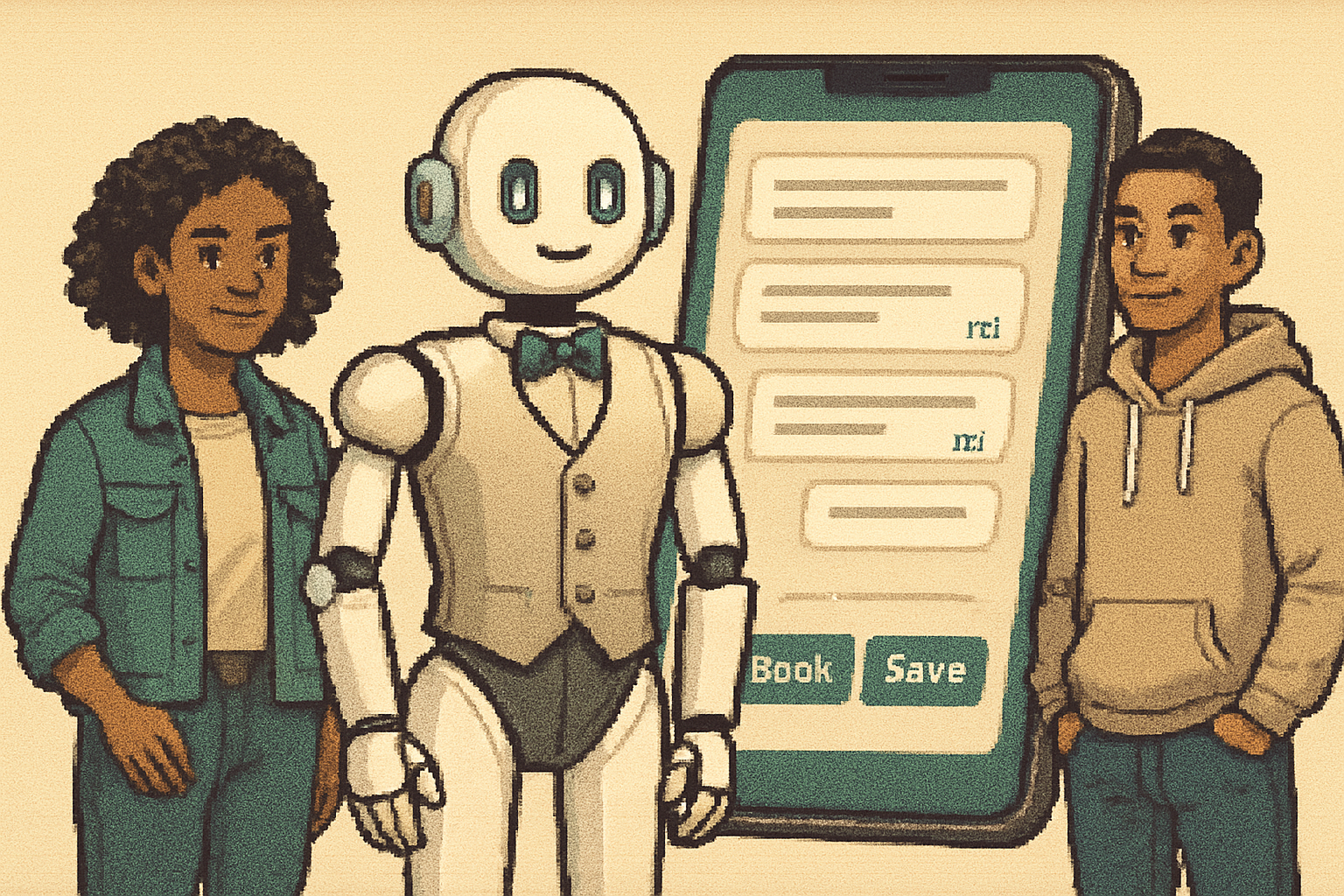
- Card-based answers with three tiers - Snippet (one-line answer), Expand (detailed response + citations), Actions (book, save, share).
- Progressive disclosure for uncertainty - color-coded confidence bars and a “why this matters” toggle.
- Memory manifest - a human-readable list of what Jeeves remembers about you and how it’s used.
- Tone control - user can pin a tone as default or change per query.
Business model - clean, sustainable, and honest
- Freemium - free conversational search with limits (daily active tasks); subscription unlocks unlimited history, higher freshness SLAs, and premium integrations.
- Transparent partnerships - sponsored listings are clearly labeled and include provenance (“Sponsored - data provided by X”).
- Developer platform - paid API access, plugin ecosystem, revenue share for booking/commerce actions.
- Enterprise package - private deployments for teams with on-prem or VPC-hosted index and fine-tuned persona.
Brand and voice - the modern Jeeves is not a caricature
Retain the politeness and wit, ditch Victorian affectations that feel fake. The persona should:
- Be trustworthy, not coy.
- Use mild wit as seasoning, not as the whole meal.
- Avoid gendering language; treat Jeeves as a well-mannered brand voice.
Example tonal slider:
- Formal Jeeves - “Certainly. Based on current listings, X is your best option.” (suits professional use)
- Playful Jeeves - “Try X - your brunch photos will thank you.” (lighter social use)
Ethical note: don’t anthropomorphize to mask system limits. Always reveal that answers are model-assisted and grounded in sources.
Metrics and experiments to run
- Core metrics - task completion rate, answer verification rate (users confirming sources), booking conversion, user retention (7/30/90 day), NPS.
- Safety metrics - hallucination rate (claims contradicted by top sources), biased-recommendation test cases, privacy leakage audits.
- A/B experiments - citations vs. no-citations, tone personalization on retention, memory opt-in wording effects.
Roadmap (practical timeline)
- 0–3 months - Core retrieval pipeline, basic conversational UI, hybrid BM25 + vector retrieval, sample RAG integration for non-sensitive domains (recipes, travel).
- 3–6 months - Provenance UI, action plugins (reservations, calendar), tone options, basic memory toggles.
- 6–12 months - Robust plugin marketplace, on-device embeddings, privacy-preserving personalization, enterprise offering, offline evaluation suite.
Hard problems and how to address them
- Real-time freshness - combine streaming partner APIs for time-sensitive queries and label freshness in the UI.
- Attribution fraud - verify partners with signatures, require publishers to expose canonical URLs and structured metadata.
- Low-latency RAG - aggressive caching, smaller distilled models for common queries, async deep-dive fetches.
- Regulation & legal - compliance with GDPR, CCPA; robust data export/delete flows.
A sample architecture diagram (verbal)
User client (web/phone) ↔ edge inference (mini LLMs + caching) ↔ retrieval layer (sparse + dense) ↔ origin content + partner APIs ↔ core LLM for synthesis ↔ provenance & action layer (book, buy) ↔ feedback & analytics (privacy-filtered)
Final argument - why this matters
Search currently oscillates between austere link lists and glib chatbots that invent. Humans need a third way: conversational search that is both fluent and accountable. Ask Jeeves, properly modernized, can be that middle path - a service that treats queries as conversations, sources as first-class citizens, and privacy as a default. The result won’t just be nostalgia; it will be a better model of digital help: human-scale, credible, and useful.
If you believe search should be less like a marketplace and more like a well-run household, bring back the butler - but give him a data center, a vector index, and a healthy contempt for bad citations.
References
- Ask Jeeves - historical context: https://en.wikipedia.org/wiki/Ask.com
- Retrieval-augmented generation: https://en.wikipedia.org/wiki/Retrieval-augmented_generation
- The Transformer architecture (foundation of modern LLMs): https://arxiv.org/abs/1706.03762
- Differential privacy primer: https://en.wikipedia.org/wiki/Differential_privacy
- FAISS (vector search library): https://github.com/facebookresearch/faiss