· retrogaming · 6 min read
Why the Sega Saturn is the Ultimate Retro Console for Collectors
The Sega Saturn’s strange failure at retail left behind one of the richest, weirdest back catalogs of the 1990s - a collector’s paradise of low-run RPGs, exquisite shoot ’em ups, Japan-only oddities, and show-stopping box art. Here’s why serious retro collectors prize the Saturn above other consoles and how to hunt the best pieces without getting played.
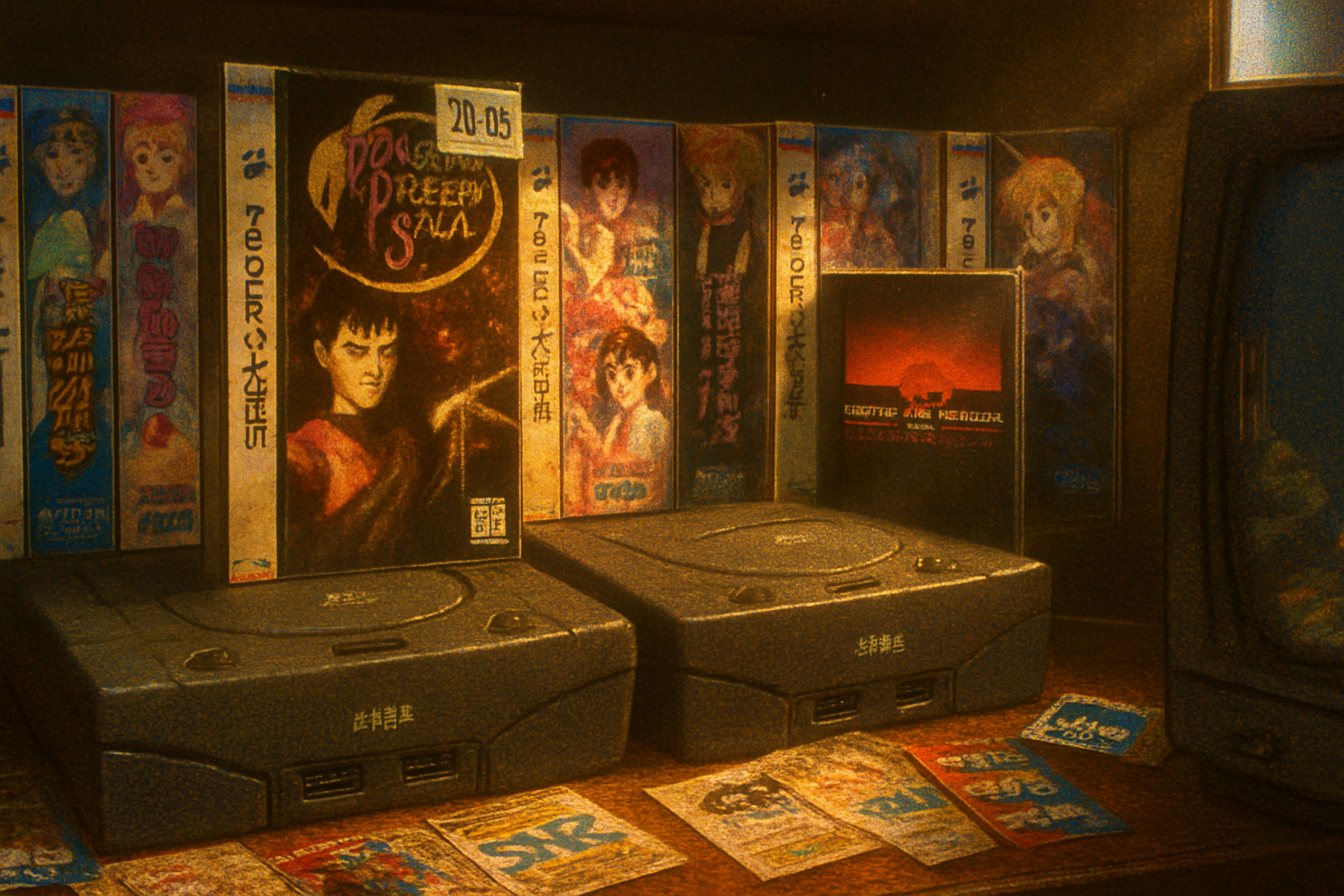
It begins like this: a sleepy weekend flea market, a cardboard box of dusty discs, and a kid who shrugs. “It’s probably Sega,” he says, and drops what later proves to be a mint copy of Panzer Dragoon Saga back into the box with unconcern. He will not live this down.
That scene - almost folkloric among retro collectors - captures the Saturn’s paradox. It flopped in the mainstream. It lived large in the arcades. And because many of its best games never saw large print runs outside Japan, the Saturn’s library became a cache of scarce artifacts: breathtaking, idiosyncratic, and lucratively desirable.
The brief life and enduring mystique
The Sega Saturn launched in 1994 (Japan) and 1995 (North America), built around a complicated, multi-processor architecture that rewarded arcade-level skill and punished sloppily ported 3D engines Sega Saturn - Wikipedia. Developers who learned its quirks produced titles that often felt like nothing else on consoles at the time - brutally technical shmups, lush, hand-crafted 2D work, and RPGs with a seriousness bordering on the religious.
But the commercial story was messy: poor marketing decisions, hardware complexity that scared many Western developers, and the arrival of the Sony PlayStation combined to limit the Saturn’s mainstream success. That commercial failure is the reason collectors now have such fertile ground. Low sales = low print runs = high scarcity.
What makes Saturn items prized by collectors
Rarity and limited prints
- Several high-quality Saturn titles were produced in small quantities outside Japan, especially Western RPGs and niche genres. This scarcity drives collector demand and prices - sealed or complete-in-box copies of standout titles can fetch impressive sums PriceCharting - Panzer Dragoon Saga.
Region exclusives and imports
- Japan-only releases, especially in genres like visual novels and bullet hell shooters, are often never localized. Serious collectors chase these imports for unique gameplay and art, and the added mystique of a language barrier.
Distinctive art direction
- The Saturn era arrived when cover and manual art still mattered. Many titles feature watercolor, airbrush, and hand-drawn illustrations that read like gallery pieces. For a collector, the box and manual aren’t packaging - they’re part of the object’s soul.
Deep niche genres
- The Saturn’s catalogue is a shrine to shmups, experimental RPGs, and late-era 2D design. Games like Radiant Silvergun and Panzer Dragoon Saga aren’t just good - they occupy a specific, high-craft niche in game history Radiant Silvergun - Wikipedia Panzer Dragoon Saga - Wikipedia.
Hardware variants and bundles
- Early model vs. later model (Model 1 vs Model 2), region stickers, special edition bundles, and promotional items add layers for completionists. Some international bundles shipped with extras - strategy guides, postcards, and even soundtrack CDs - that now surface as prized rarities.
Iconic collector-cases (short and shamefully pricey)
Panzer Dragoon Saga (1998)
- A cinematic, top-tier RPG praised for its design and storytelling, and notorious for a small Western print run. Complete-in-box copies routinely command collector-level prices Panzer Dragoon Saga - PriceCharting.
Radiant Silvergun (1998)
- A technical masterpiece from Treasure that redefined bullet-hell design; the Saturn release, and its relative scarcity, have made it a holy grail among shmup collectors Radiant Silvergun - Wikipedia.
Burning Rangers, Dragon Force, and azimuths of Japanese-only shooters
- Titles that never saw huge Western print runs but are culturally significant in Japan have become import staples for collectors.
The emotional part: nostalgia with an edge
Nostalgia is not just a fuzzy feeling. It’s an identity claim. Saturn collectors aren’t only reclaiming a console; they’re curating a version of the 1990s that acknowledges the weirdness - the arcade-to-console conversions, the over-designed manuals, the earnest JRPGs that refused to be streamlined.
That edge makes Saturn collecting less about uniform mainstream hits and more about stories, oddities, and objects that feel personally chosen. You don’t collect a Saturn to keep up with friends; you collect a Saturn because you like the uncomfortable, the beautiful, and the rare.
The market - unpredictable, but understandable
Retro game prices behave like luxury watches with pixel art: scarcity, provenance, and condition determine value. Useful resources like PriceCharting and auction histories show how certain Saturn titles appreciate quickly after renewed interest or a revival in critical reappraisal PriceCharting - Sega Saturn games.
Expect volatility: a high-profile re-release or a remaster announcement can temporarily depress interest in originals, then spike it again when collectors revalue the authentic artifacts.
Practical tips for Saturn collectors (so you don’t get played)
Prioritize completeness
- A disc-only Saturn game is a bargain; a boxed, manualed, and stickered copy is where the real value - and joy - is.
Learn regions and codes
- Japanese cartridges have different region codes, and many games are region-locked. Import knowledge is mandatory for serious collectors.
Check laser health and model differences
- Discs wear. Model 1 and Model 2 consoles differ in outputs and reliability; learn which one suits your play goals. S-video or RGB mods can vastly improve picture quality for CRT/monitor collectors.
Beware of repros and modern reproductions
- While less prevalent than for NES or SNES, Saturn repro discs and fake boxes exist. Compare spine labels, manual paper stock, and disc silkscreens against verified references.
Use price-tracking and bidding history
- Sites like PriceCharting plus eBay sold-history searches are your best friends when valuing purchases.
Shop smart - mix markets
- Use eBay, Yahoo Japan (with a proxy), specialist shops, and conventions. Good finds still happen in flea markets and thrift stores - and that’s part of the romance.
Why the Saturn is more than an investment
Collectors often start for financial reasons and stay for narrative reasons. The Saturn rewards both: it’s an appreciating asset class for the patient, and a museum of creative responses to hardware limits. Its strangled mainstream life gave developers space to experiment, and those experiments produced objects that feel uniquely alive.
If you want a mass-market nostalgia hit, buy a NES and be done with it. If you want objects that sting a little when you look at them - boxes that smell faintly of old glue and adventure, discs that took risks no one else would fund - then the Sega Saturn is your console.
Quick checklist before you pull the trigger
- Is the copy complete? (box, manual, inserts)
- What region is it, and do you have the means to play it?
- Has the seller provided disc photos and spine/serial labels?
- Are you buying sealed for investment or loose to play?
Collecting is, at its best, an argument you make with objects. The Sega Saturn is an eloquent, fractious argument - one that insists excellence needn’t be popular to be priceless.
References
- Sega Saturn - Wikipedia: https://en.wikipedia.org/wiki/Sega_Saturn
- Panzer Dragoon Saga - Wikipedia: https://en.wikipedia.org/wiki/Panzer_Dragoon_Saga
- Radiant Silvergun - Wikipedia: https://en.wikipedia.org/wiki/Radiant_Silvergun
- PriceCharting - Sega Saturn games and values: https://www.pricecharting.com/console/saturn/games