· retrogaming · 7 min read
The Controversial Revival: Are Atari 7800 Emulators Eroding the Value of Original Hardware?
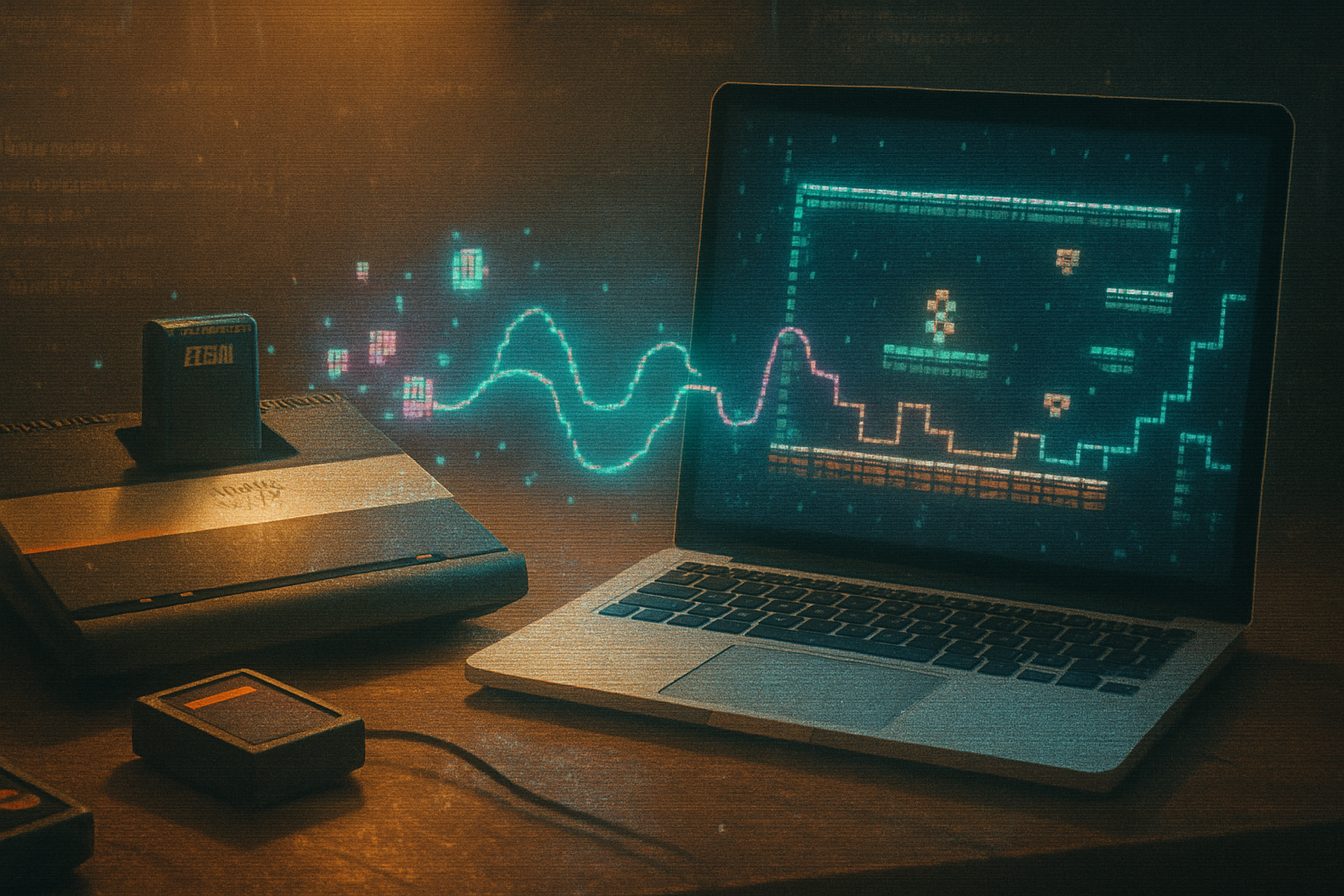
As emulators make Atari 7800 games playable on phones and PCs, collectors and developers argue about whether that convenience is preserving or pulverizing the market for original consoles and cartridges. This article untangles the claims, the data, and the feelings behind the debate.

A swap meet in late autumn: under an oil-stained folding table, a genteel pile of cartons sits beside an immaculate, sealed Atari 7800. The seller-mid‑50s, T‑shirt with the classic Atari logo-lets two teenagers hold the unopened box while he scrolls through a phone showing the same games running on an emulator. One teen shrugs: “Why would anyone pay for that box when I can play all this on my laptop?” The seller’s face hardens in a way that makes it clear this is not merely commerce. It’s identity.
A tiny machine, a huge moral argument
That scene, banal and familiar to anyone who’s ever watched old hardware trade hands, captures the tension at the heart of the Atari 7800 debate. On one side: collectors, dealers and purists who treat consoles and cartridges as artifacts-scarcity, provenance, and tactile ritual matter. On the other: gamers and archivists who see emulation as the practical and ethical response to a fragile cultural record.
Before we untangle who’s right, some quick grounding.
What is the Atari 7800, and what do we mean by “emulator”?
- The Atari 7800 is Atari’s mid‑80s attempt to reclaim console ground after the crash; it offered backward compatibility with the 2600 and a library of cartridges of varying quality and rarity (Wikipedia - Atari 7800).
- A video game emulator is software that mimics hardware so software (ROMs) can run on modern machines; projects like MAME have made emulation central to preservation efforts (Wikipedia - Video game emulator, MAME).
With those definitions out of the way: the question isn’t purely technical. It’s economic, ethical, and psychological.
The case for “emulators erode value”
Collectors and some sellers make a simple, intuitive claim: when you can play a game perfectly on a phone, buyers are less willing to pay for the cracked plastic cartridge. That claim has several threads:
- Substitution effect - a free or cheap digital alternative reduces demand for the physical good, lowering prices.
- Loss of exclusivity - sealed or rare cartridges derive part of their value from limited supply; widespread ROM circulation erases the scarcity premium.
- Market signaling - when top influencers and streamers use emulators, the perceived prestige of owning originals diminishes.
On the face of it, those are valid economic mechanisms. Price tracking sites show that many Atari 7800 cartridges rarely reached blockbuster prices to begin with, but rarity and condition still move the needle for certain items (PriceCharting - Atari 7800).
And then there is the moral dimension: some collectors treat ROM distribution as theft not just of property, but of an enthusiast culture built around authentic play and display.
The counterargument: emulation can increase value and preserve culture
If the above were the whole story, we’d expect every retro console market to be depressed by emulation. We don’t. The reality is messier.
- Discovery effect - emulation lowers the barrier to entry. A kid who discovers a forgotten 7800 gem in an emulator might become a collector-driving demand for the real thing. Emulation often functions like a sampling platform.
- Preservation premium - when original hardware is rare and deteriorating, digital access keeps games playable. That preservation can increase the desirability of intact physical copies for museums and serious collectors.
- Complementarity - many hobbyists want the authentic tactile experience-joystick, cartridge insertion, CRT glow-that emulation cannot fully replicate. Emulators provide convenience, not always the full ritual.
Moreover, some empirical market behaviors contradict a simple erosion story: increased mainstream attention to retro gaming-often via emulation-has coincided with rising prices for some category items. Nostalgia can be a demand amplifier.
What developers and homebrew creators say
The modern scene around the 7800 is not frozen in 1986. Homebrew developers still write games for the system, and emulators are frequently essential tools in development. Arguments from that community typically emphasize:
- Emulators accelerate development and testing cycles; without them, indie creators would face higher costs.
- Distribution - homebrew creators benefit from being discoverable through digital platforms, though many also sell physical cartridges or reproduction boards to collectors.
- Ethics - many homebrew developers prefer their work to remain on legitimate physical releases when possible, but often prioritize exposure and preservation over monetization.
The developer relationship with emulation is thus pragmatic: emulation is a tool and a distribution channel, not necessarily a death knell.
Legal and ethical landmines
- ROM legality is messy. Owning a dumped ROM of a game you own is considered a grey area in many jurisdictions; distributing ROMs without rights is usually infringing.
- Emulation itself is legal; dumping and sharing copyrighted ROMs typically isn’t. Preservation organizations and archivists have argued for narrow exceptions for preservation, but the law lags the practice.
These legal ambiguities feed the cultural argument: when something is scapegoated as “killing” a market, the real issue is often the absence of clear, affordable legal avenues for access and acquisition.
Cold economics - what data we have (and don’t)
Hard, causal data tying emulator availability to falling console prices is scarce. Retro markets are small and influenced by many confounders:
- Supply shocks (resurfacing of warehouse caches)
- Nostalgia cycles driven by media, reissues, and influencers
- Parallel supply from reproductions and FPGA clones
PriceCharting and other trackers show long tails: most 7800 cartridges remain inexpensive; a few titles and sealed systems fetch collector premiums. Correlation between emulator popularity and price changes exists in anecdotes, but it’s not a tidy, one‑directional story.
The nuance: emulation, scarcity, and signaling can coexist
Think of emulation as oxygen: invisible, necessary in many contexts, and occasionally blamed when houses burn down. The presence of a playable ROM doesn’t automatically kill physical value; sometimes it sustains interest that keeps hardware markets alive.
Two real‑world phenomena complicate the doom narrative:
- Reproductions and FPGA systems - hardware clones and FPGA platforms (e.g., the MiSTer ecosystem) offer hardware‑accurate play and have created a parallel market where demand for original hardware can remain or even increase due to renewed interest in authenticity.
- Curated physical releases - small publishers release limited edition cartridges for classic systems. These are often aimed at collectors and can command high prices regardless of ROM availability.
Practical policy and market solutions
If your goal is to preserve gaming history while maintaining healthy markets for originals, a few pragmatic measures help:
- Support legal preservation initiatives - libraries and museums should be empowered to archive ROMs under clear preservation exceptions.
- Foster transparent marketplaces - verified provenance, grading, and reputable sellers reduce fraud and make the collector market healthier.
- Encourage hybrid models - give homebrew authors and rights holders clear paths to monetize (or permit) digital distribution while offering premium physical editions for collectors.
- Promote hardware fidelity options - FPGA clones and licensed reissues let purists buy modern hardware that replicates the original experience without draining museum pieces.
Final diagnosis - who’s right?
The simplest answer is: both sides. Emulators change the market, but they do not uniformly erode the value of original Atari 7800 hardware. They democratize access, accelerate preservation, and often increase the audience for a system that might otherwise be forgotten. They also create substitutes that can depress prices for certain, usually less‑fetishized items.
The ethical and cultural questions are real. But blaming emulation alone for declining prices is a form of scapegoating: it ignores changing tastes, the logistics of scarcity, the role of collectors as storytellers, and the lack of legal frameworks for preservation.
If you love originals, keep buying, keep cleaning, and keep telling the stories that make those boxes worth more than their plastic. If you love games and want them saved, support reputable preservation efforts and advocate for clear legal pathways. We need both impulses-curation and access-because a hobby that cannibalizes its own history will have nothing left to collect or to emulate.
References
- Atari 7800 - Wikipedia: https://en.wikipedia.org/wiki/Atari_7800
- Video game emulator - Wikipedia: https://en.wikipedia.org/wiki/Video_game_emulator
- MAME - Official: https://www.mamedev.org/
- AtariAge community: https://www.atariage.com/
- PriceCharting - Atari 7800 pricing and trends: https://www.pricecharting.com/console/atari-7800