· retrogaming · 7 min read
Beyond the Pixels: The Evolution of Atari 7800 Emulators and Their Impact on Retro Gaming
How an underdog 1980s console found a second life in software: a technical and cultural tour of Atari 7800 emulators, from crude ROM runners to cycle‑exact preservation tools that keep gaming history honest.
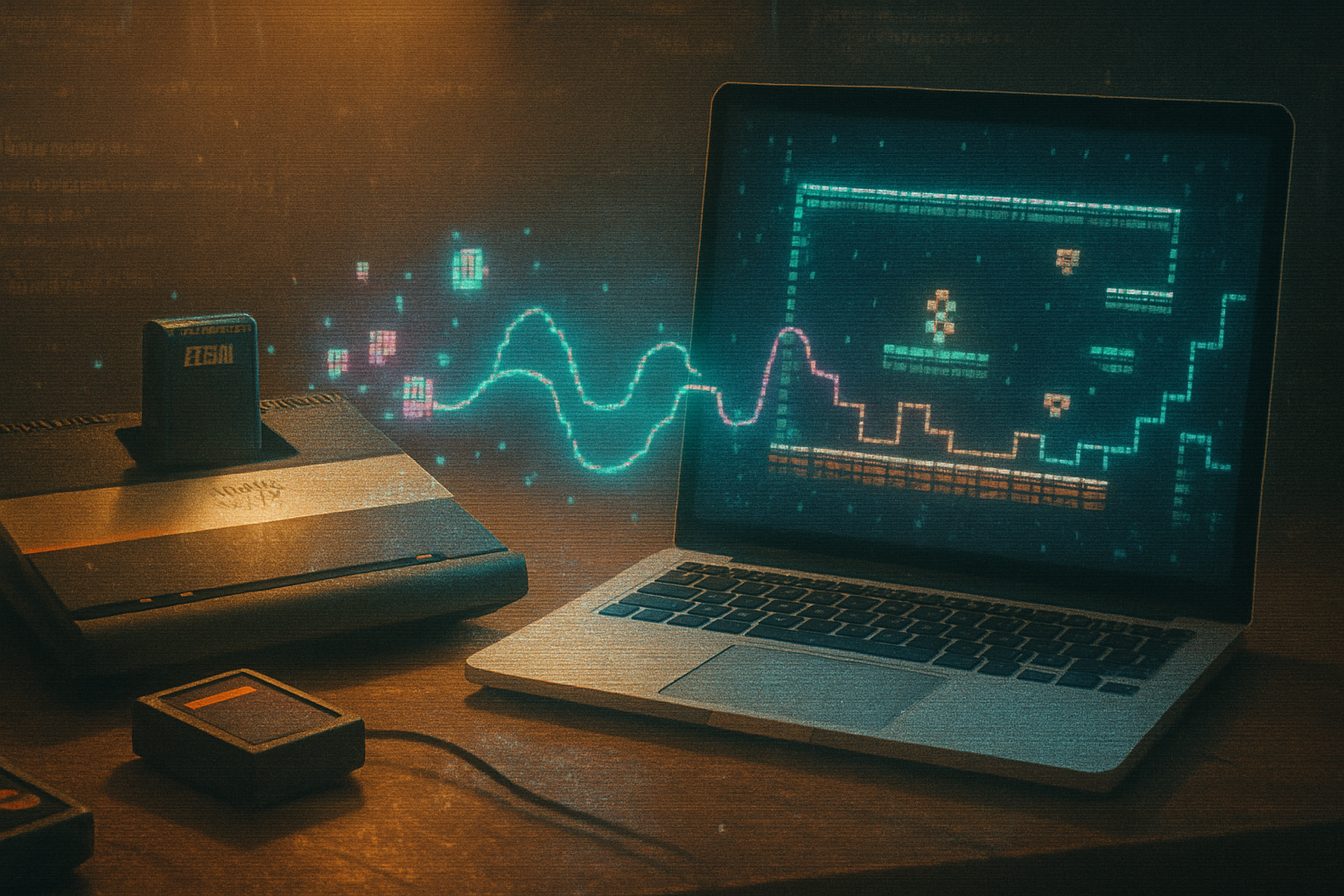
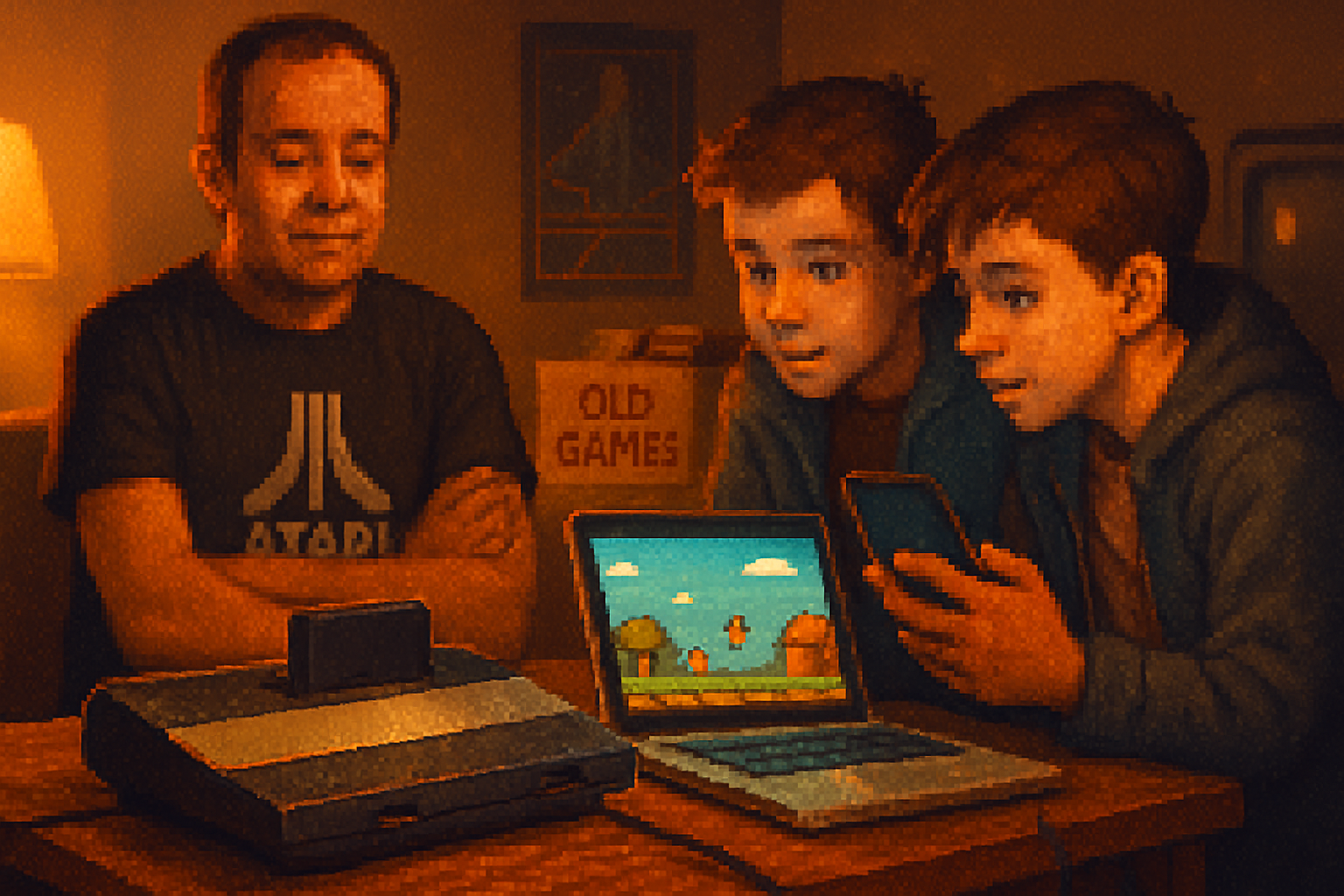
They used to call it “just another Atari” - a skeletal console with barbed wire graphics and a stubborn chip called MARIA. The Atari 7800 arrived into a market already dazzled by the NES, swept aside by marketing muscle and retail real estate. And yet here we are, decades later, watching those same polygonal sprites live on with a dignity their original release never enjoyed.
What follows is a kind of archeology: not of bones, but of bytes. The story of Atari 7800 emulation is technical, often petty, occasionally heroic, and very human. It is about enthusiasts who refused to let glitches and lost time signatures erase a piece of cultural memory. It’s also about the arms race between convenience and accuracy - between playing a game and preserving the thing as it actually behaved in 1986.
A quick history: the 7800’s awkward adolescence
The Atari 7800, released in the mid-1980s, tried to split the difference: backward compatibility with Atari 2600 titles while adding the MARIA graphics chip for more colorful, higher‑resolution games. It shipped late, with spotty marketing, and never achieved the market penetration of its competitors - but it left a technical footprint that makes emulation both possible and maddeningly fiddly.
For a concise overview of the hardware and its context, see the Atari 7800 Wikipedia entry: https://en.wikipedia.org/wiki/Atari_7800.
From ROM runners to respectability: the stages of emulator evolution
Emulation rarely improves in a straight line. It staggers, backtracks, and occasionally makes quantum leaps when someone decides “unfinished” is not good enough.
Early era (1990s–early 2000s) - Emulators were primarily convenience tools. They focused on running ROMs, getting sprites on screen, and reproducing the basic game loop. Timing was loose, audio was approximate, and palette differences were tolerated. These programs were often snapshots of guessed behavior rather than exact reproductions.
Middle era (2000s–2010s) - As emulation communities matured, priorities shifted toward accuracy. Developers started tackling bank switching schemes, PAL/NTSC timing differences, and the 7800’s dual‑personality (MARIA graphics + TIA compatibility). Projects like MAME brought disciplined, documented approaches to many systems, including the 7800 family (see MAME’s project:
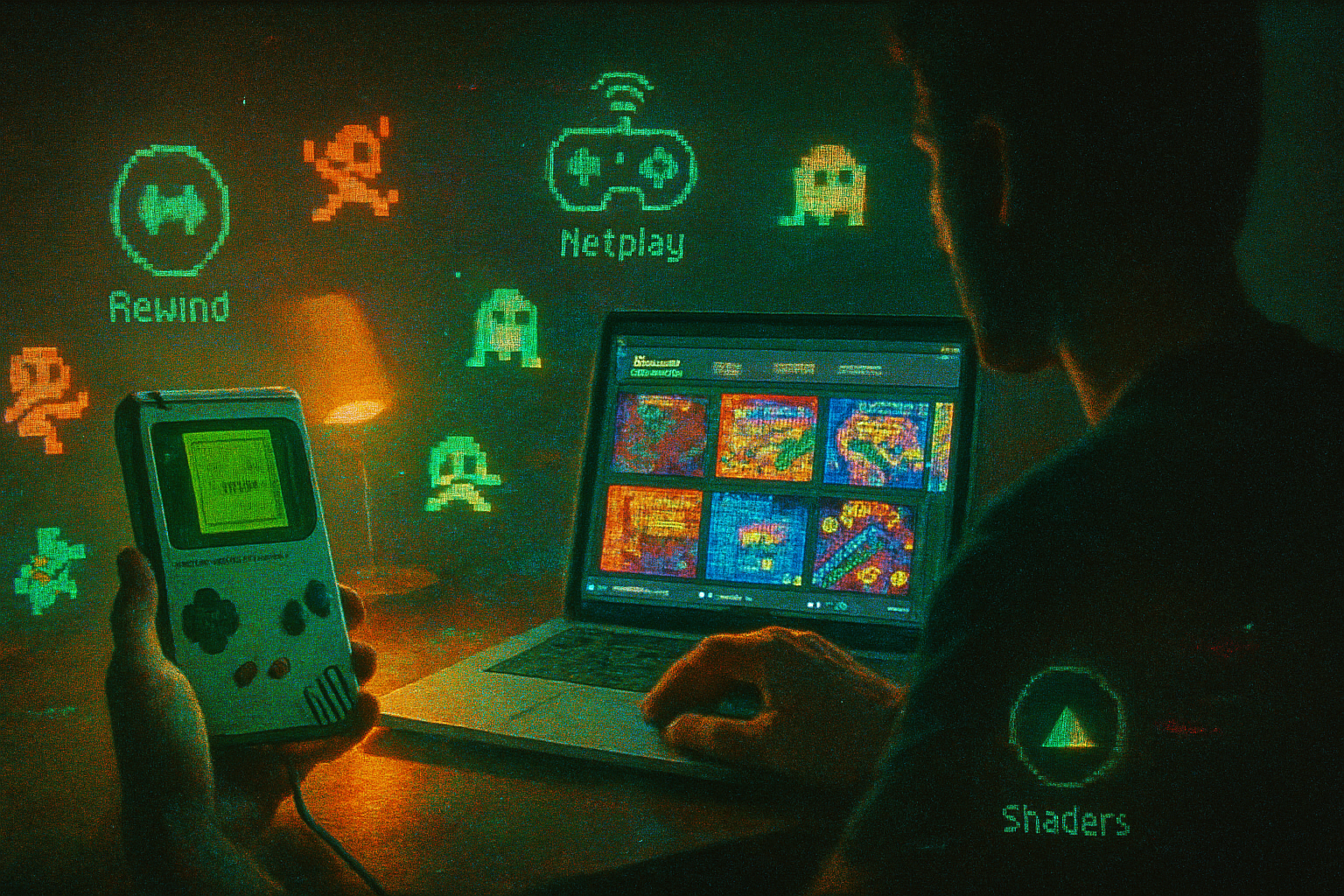
Modern era (2010s–present) - Cycle-exact emulation, detailed audio reproduction, and faithful input latency reproduction became goals, not luxuries. Emulators now model hardware idiosyncrasies - scanline timing, off‑by‑one sprite behaviors, and the precise interactions between MARIA and the 2600 TIA. Preservation projects also began archiving prototypes, unreleased ROMs, and homebrew catalogs, often coordinated through community hubs such as AtariAge (
Why the Atari 7800 is harder to emulate than it looks
On paper, the 7800’s architecture is tidy. In practice, a few stubborn realities make faithful emulation a technical meditation on chaos:
- MARIA graphics chip - MARIA is not a simple tile-based GPU. It streams object data and relies on precise timing to place sprites and lines. Slight discrepancies in timing result in visually incorrect frames.
- Backward compatibility - The 7800 can behave like a 2600 when asked. That means an emulator must often switch emulation modes mid-frame and reproduce quirks of two different chips (MARIA and the TIA/2600 subsystem).
- Cartridge mappers and bank switching - Different cartridges used different schemes to address more memory or include extra hardware. Emulating every mapper is a never‑ending cataloging exercise.
- Video and audio timing (NTSC vs PAL) - Regional differences affect game speed and rendering. Emulating the correct framerate, scanline timing, and CPU clock rate is essential for an authentic experience.
These complexities pushed the emulation community toward two important technical concepts: high-level emulation (HLE) and low-level/cycle-exact emulation (LLE).
HLE vs. LLE: the tradeoffs
- HLE (High-Level Emulation) - Easier to develop, faster to run, and often “good enough” for casual play. HLE fakes behaviors - it implements higher-level results of a hardware action without simulating the low-level operations.
- LLE (Low-Level / Cycle-Exact Emulation) - Simulates the hardware at the timing level, often down to individual CPU cycles and scanline behavior. This is far more accurate but much harder to write and more demanding to run.
For preservation, LLE is the gold standard. For convenience, HLE still has its place.
Concrete technical breakthroughs that mattered
A few practical advances moved Atari 7800 emulation from sloppy to scholarly:
- Documentation and reverse engineering - As developers documented MARIA’s behavior, previously mysterious visual bugs could be fixed. Community-sourced writeups and hardware teardowns turned guesswork into reproducible models.
- Mapper databases - Collecting and implementing the many cartridge mappers eliminated title-specific hacks and made emulators more robust.
- Cycle-accurate audio modeling - Accurate audio required reproducing the way the system mixed MARIA and TIA output and how CPU timing affected sound registers.
- Test ROMs and regression suites - Like unit tests for the console, these ROMs lock down expected behavior and prevent regressions when emulators evolve.
- Integration into multi-system projects (e.g., MAME) - This brought more rigorous engineering practices, continuous testing, and better archival discipline.
References and further reading on preservation and emulation techniques can be found at the MAME project (https://www.mamedev.org/) and the Emulation General wiki (https://emulation.gametechwiki.com/).
The cultural side: preservation, homebrew, and community
Emulation is never just code. It’s a cultural practice: part museum, part flea market, and part lab. For the 7800, emulators enabled:
- Preservation of lost and fragile media - Cartridges degrade; labels peel. ROM dumps stored in digital archives prevent games from disappearing.
- Homebrew development - Communities on AtariAge and elsewhere revived interest in the platform and created new titles that often pushed the hardware in surprising ways. Emulators lowered the barrier to entry for both players and developers.
- Historical research - Fans and scholars can study prototypes and revisions. Courts of code formed around what a game “should” have looked like.
The Internet Archive and AtariAge have been crucial to this ecosystem; they host both community research and playable artifacts (see https://archive.org/ and https://www.atariage.com/).
Legal and ethical tightropes
If emulation were a playground, law would be the playground monitor with a clipboard and a taste for dramatic rule‑making. The preservation impulse often runs up against intellectual property law and commercial interests.
- ROM distribution is legally fraught. Even when the intention is preservation, distributing copyrighted ROMs without permission remains illegal in many jurisdictions.
- Manufacturers sometimes release official collections (curated re-releases on modern platforms), which help preservation but can also sanitize history by excluding prototypes and regional variants.
Ethically, many in the preservation community adopt a simple rule: preserve first, litigate later. That posture has saved countless artifacts, but it also generates uncomfortable legal exposure.
Hardware re-creation: when software isn’t enough
Software emulation solves many problems but not all. Some purists argue that only re-creating the original logic in silicon (or in FPGA fabric) truly preserves the hardware’s behavior. FPGA projects such as MiSTer demonstrate that it’s possible to implement console logic in hardware-representative cores. These cores run on dedicated hardware, often eliminating the timing ambiguities of general-purpose CPUs.
FPGA recreations bridge the gap between authenticity and practicality. They are not a replacement for emulation projects - they are complementary tools in the preservation toolkit. See the MiSTer project for an example of FPGA work that targets many retro systems: https://misterfpga.org/.
Why emulators matter beyond nostalgia
Because every generation invents its own forgetting. Modern consoles are tightly curated, online-only, and actively curated by corporations that decide which titles remain accessible. Emulators - and the communities that make them - act as an immunization against corporate amnesia.
Practical impacts:
- Education - Emulators let engineers and computer scientists study hardware design patterns and timing constraints.
- Cultural scholarship - Media studies and game history rely on access to playable artifacts.
- Creativity - Homebrew scenes and ROM hacks are a form of fan scholarship and novel artistic practice.
If you think of games as the cultural equivalent of movies or books, then emulators are the film archives and libraries.
The future: more accurate, more legal, more visible
Expect several concurrent trends:
- More cycle‑exact emulators and better test suites, driven by both enthusiasts and professional preservationists.
- Continued growth in FPGA recreations, offering a hardware‑adjacent path to faithful reproduction.
- Increasing pressure to resolve legal limbo via official re-releases, licensing deals, or preservation exceptions in law.
- A richer scholarly conversation about what preservation means - whether we save the code, the experience, or both.
Final notes (the bit you can tinker with)
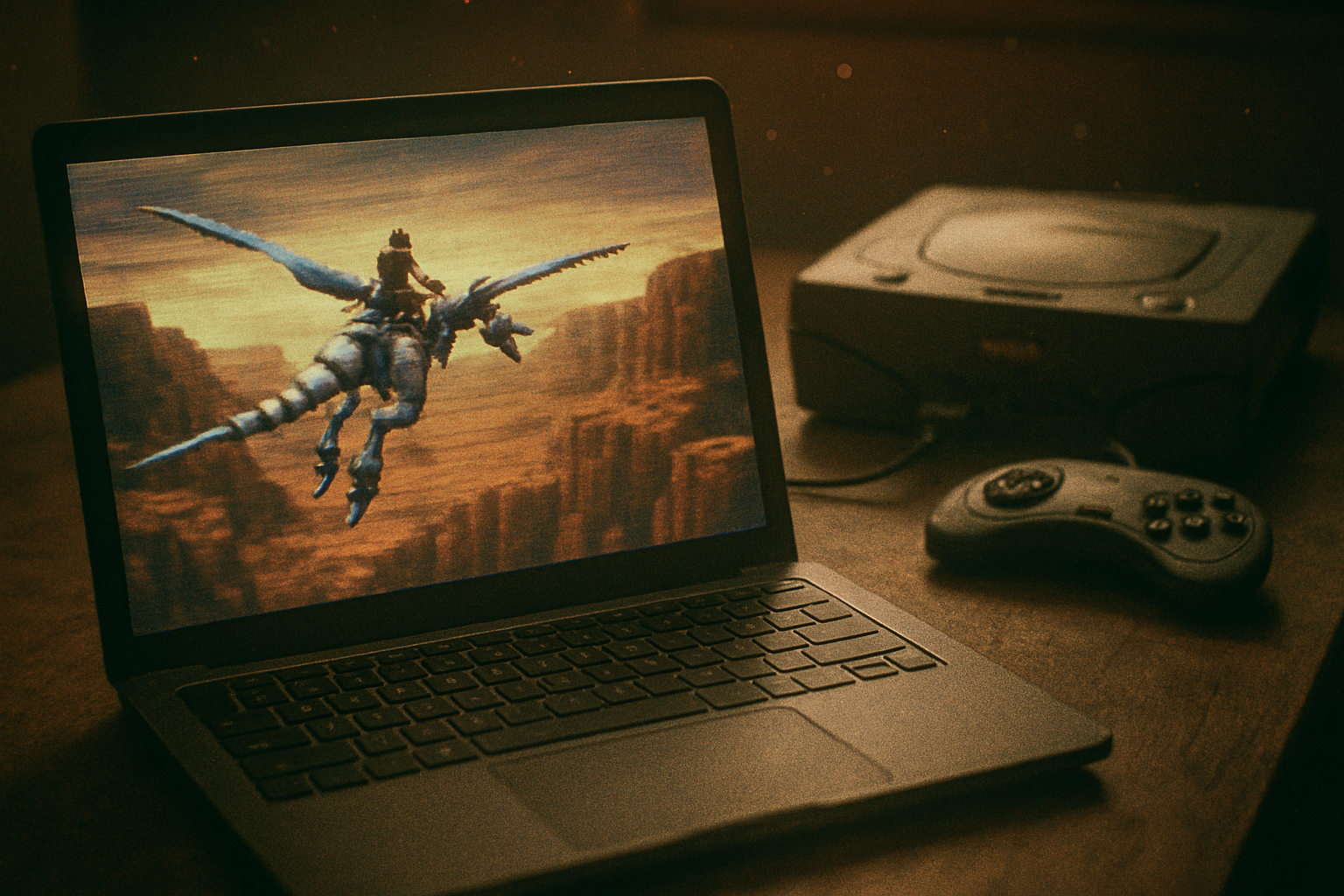
The Atari 7800’s story is a small parable about memory. Pixels are easy. Timing and behavior are harder. The emulator community, stubborn and fastidious, has turned what could have been a footnote into a living chapter of gaming history. If you boot a 7800 game today and feel a small, misplaced thrill - that is preservation doing the work it was always supposed to do.
For further technical curiosity and community resources:
- Atari 7800 hardware and history (Wikipedia): https://en.wikipedia.org/wiki/Atari_7800
- MAME - multi-architecture emulator and preservation project: https://www.mamedev.org/
- AtariAge - community, homebrew scenes, and documentation: https://www.atariage.com/
- Internet Archive - software preservation collections: https://archive.org/details/softwarelibrary_atari7800
- Emulation General - practical emulation documentation: https://emulation.gametechwiki.com/