· culture · 6 min read
Why PalmPilot Users Miss the Simplicity of Analog Life
A humorous and earnest look at why the humble PalmPilot - with its Graffiti pen, HotSync cradle and single-purpose charm - still haunts modern users. We examine how today's multi-headed devices reshaped our habits and propose a pragmatic 'PalmPilot mindset' to reclaim clarity without living in 1997.
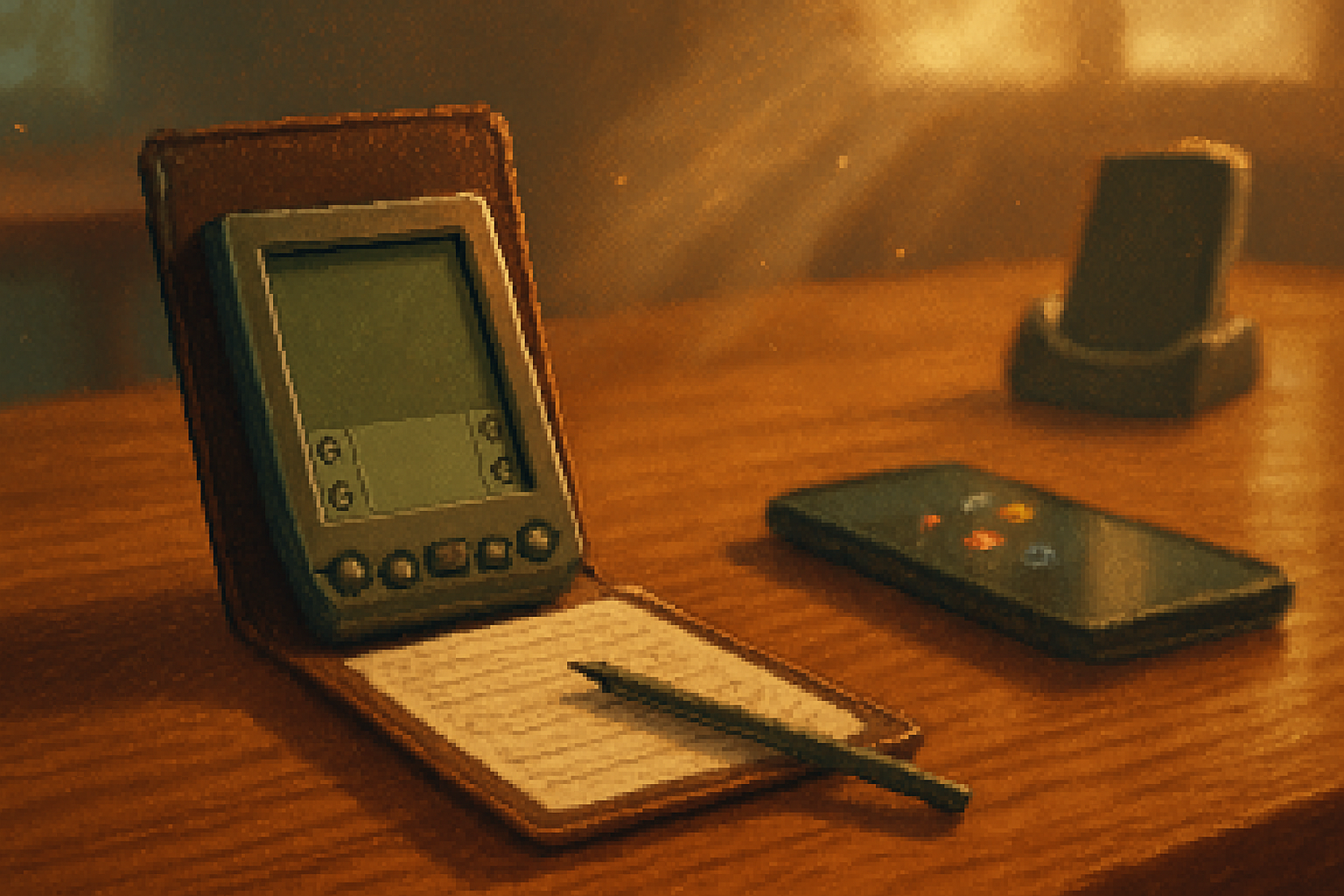
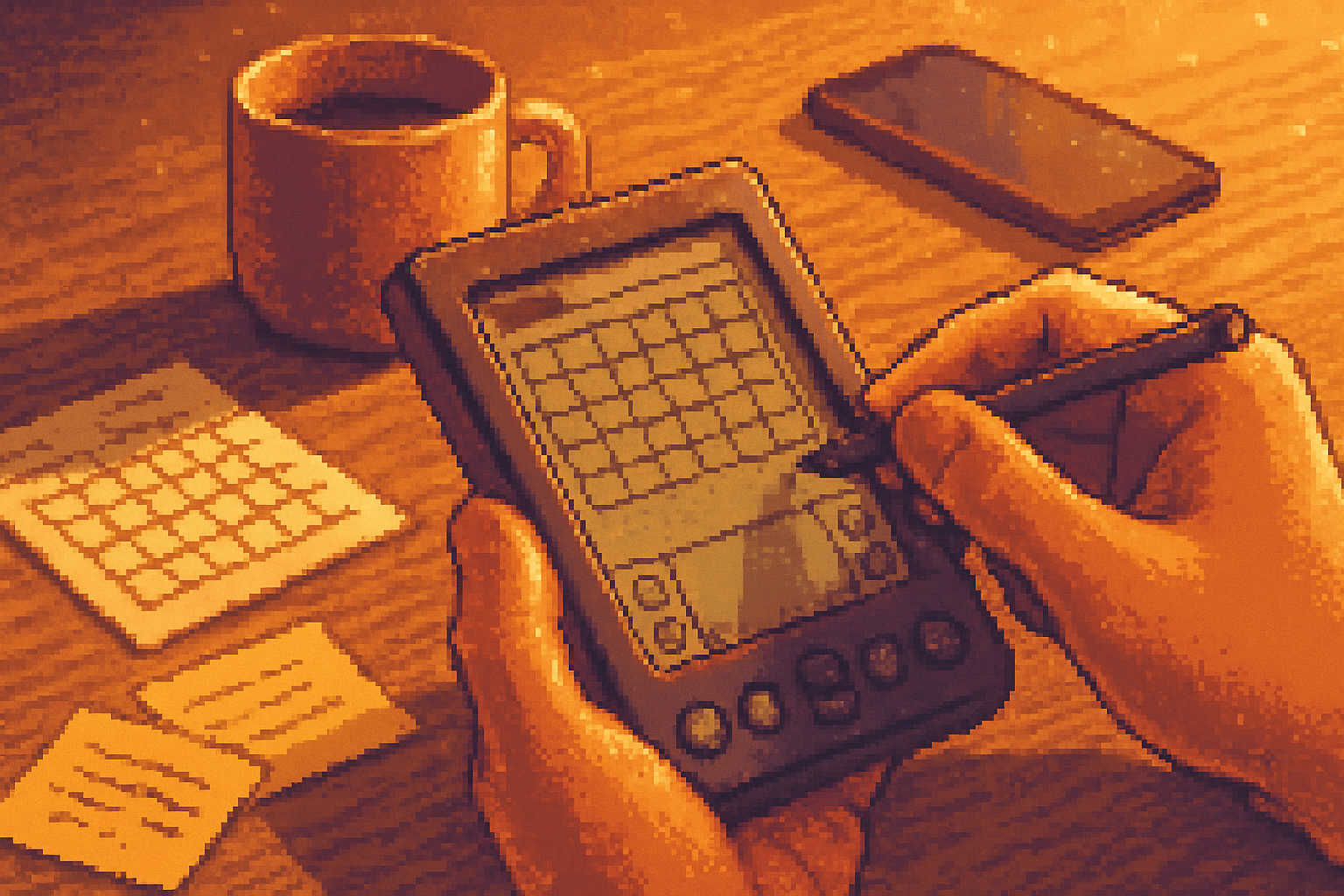
The coffee shop went quiet when someone pulled a small, slightly battle-scarred rectangle from a jacket pocket. It wasn’t a sleek new phone. It clicked. A stylus tapped. A tiny calendar page scrolled. People laughed first - then leaned in. That thin moment of analog ritual, the HotSync pride and the deliberate tap of a stylus, is why millions of former PalmPilot users still talk about their old devices with the kind of affection usually reserved for first cars and bad first loves.
We remember the PalmPilot not because it was perfect. We remember it because it did three useful things and refused to pretend to do the rest. That refusal is the point.
A brief history (because context is delicious)
The PalmPilot hit the market in 1996 and, for a while, perfectly captured the promise of personal digital assistants (PDAs): a tiny organizer with contacts, a calendar, notes and a to-do list - and a charming, slightly aggressive handwriting system called Graffiti. It synched with your desktop using a cradle called the HotSync, and the ritual of plugging it in at the end of the day felt like closing a ledger. Palm (company) - Wikipedia
That single-purpose discipline mattered more than aesthetic nostalgia. The PalmPilot taught you to externalize only enough of your life to keep the noise down. It was a constrained, efficient prosthetic for memory and scheduling.
What the PalmPilot taught us (and what we keep missing)
Think of the PalmPilot as a very strict assistant. It would do a handful of things well and ignore everything else. That constraint shaped habits:
- Deliberate externalization - You put birthdays, appointments and a handful of notes into one place. You trusted it. You checked it.
- Ritualized review - HotSync wasn’t an accidental convenience; it was a closure ritual. Ending the day meant reconciling your paper and digital lives.
- Friction as virtue - The stylus, the limited storage, the lag - all of it prevented over-collection. If it wasn’t important, you probably didn’t enter it.
Constraints produced clarity. The PalmPilot did not ask you to choose a theme, an emoji or a cloud permission. It didn’t interrupt you. It was, perversely, a humane device.
How modern devices shredded that simplicity
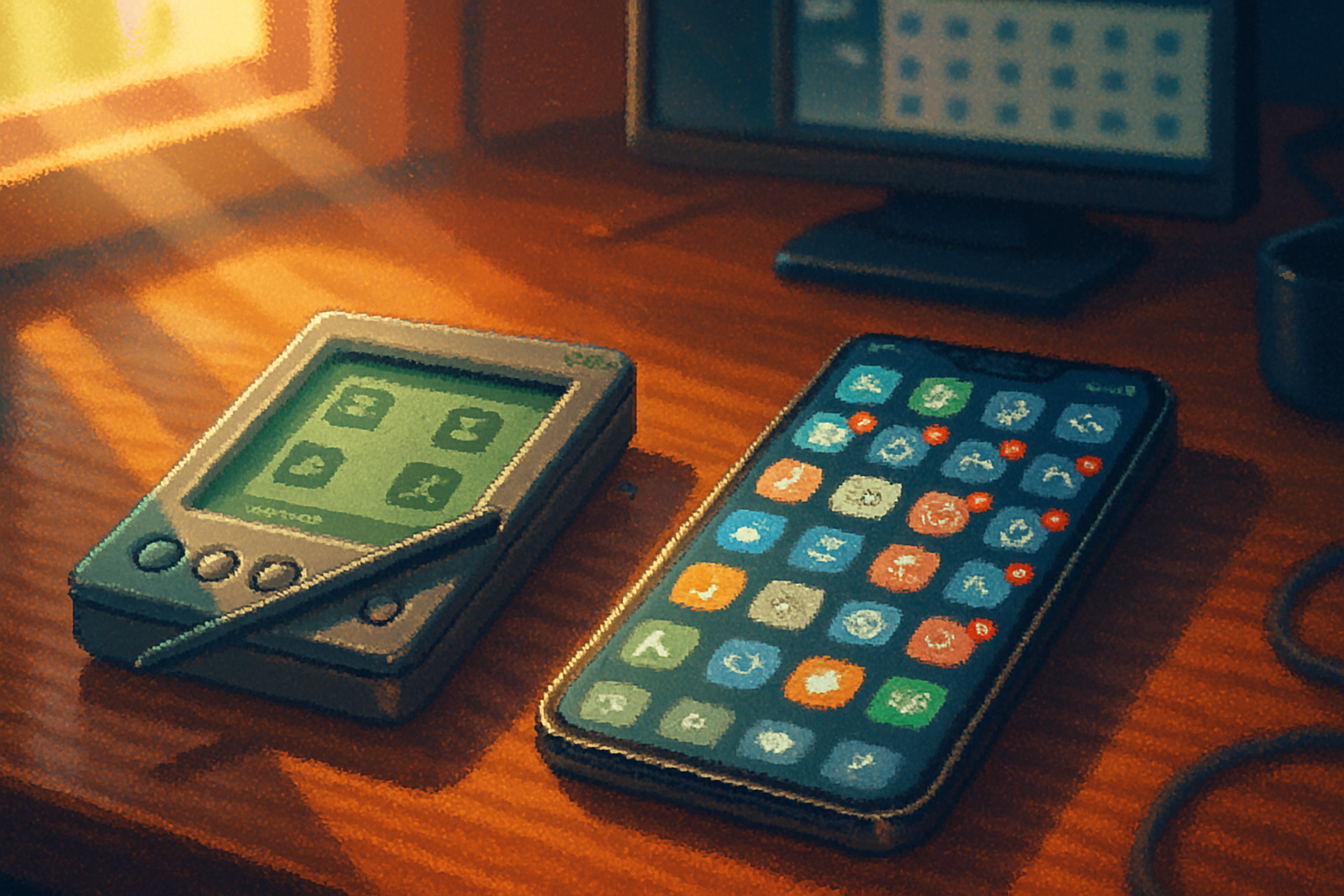
Your smartphone is a heroic design achievement. It is also an overambitious Swiss Army knife that decided it could be a blender. Since the PalmPilot era we’ve added:
- Notifications that demand immediate cognitive rent.
- Unlimited storage for every ephemeral thought, photo and receipt.
- App stores that encourage collecting tools like someone hoards kitchen gadgets.
- Constant background synchronization that transforms private thoughts into ambient noise.
These affordances are not neutral. They shape behavior. The cost is not hypothetical: researchers like Gloria Mark have shown how interruptions and context switching reduce productivity and increase stress in knowledge work (The Cost of Interrupted Work - Mark et al., 2008). In plain terms: multitasking is expensive. Your attention is not infinitely divisible.
The result? We externally scaffold more and attend less. Our calendars are dense but gaze-scattered. Our inboxes become archives of indecision. On modern devices, the signal-to-noise ratio collapses.
Are we romanticizing a past that never existed?
Yes, nostalgia polishes rough edges. The PalmPilot did suffer from low storage, tiny screens and infuriating Graffiti mistakes. But nostalgia isn’t lying when it points to a real design lesson: useful constraints help people organize better.
That doesn’t mean returning to a PDA-only lifestyle. It means borrowing the PalmPilot’s restraint.
The ‘PalmPilot mindset’ - practical ways to reclaim simplicity
You can - and should - keep your smartphone. But you can also steal the PalmPilot’s discipline. Here are practical, non-hysterical steps that echo that older device’s virtues:
- Embrace a single source of truth. Pick one calendar and one task list. Disable the rest. Synchronize only when necessary.
- Ritualize a daily sync. Close the day with a five-minute reconciliation - what happened, what didn’t, what’s next. Treat it like HotSync - a moment of tidy closure.
- Limit capture points. Stop saving everything. Use a single quick-capture method (a tiny notebook, a single notes app) and empty it weekly into your system.
- Cull notifications aggressively. If a buzz won’t prevent a bodily harm or a legal disaster, it can wait.
- Use friction as a feature. Turn off instant upload, remove distracting apps from your home screen, use grayscale or app timers. Friction slows the avalanche and restores judgment.
- Time-block and protect deep work. Techniques like the Pomodoro Technique or scheduled “no-sync” windows mimic the PalmPilot’s focus.
- Keep an analog backup. A cheap paper planner or index cards afford a tactile clarity that pixels sometimes obscure.
Concrete examples - how this looks in real life
- Instead of a dozen calendars (work, personal, kids, the gym), combine the essentials into one view and hide the rest.
- Replace a torrent of 20-minute chat threads with a single end-of-day summary email or a weekly digest.
- Trade endless apps for a single-purpose tool that mirrors the PalmPilot’s economy - contacts, appointments, notes, tasks - one place, one mental model.
Will adopting these tricks actually make you calmer?
Probably. The evidence is sensible and consistent: fewer interruptions, clearer rituals, and constrained capture reduce overload. You won’t become a saint. But you’ll trade the illusion of hyperproductivity for the reality of finishing more important things.
Think of it like diet: depriving yourself of dessert doesn’t mean you’ve discovered virtue. But swapping out a dozen daily sugar hits for one good dark piece of chocolate every evening will improve your life. The PalmPilot was that piece of chocolate.
Conclusion - nostalgia as a design critique
We don’t miss the PalmPilot because it was retro-cute. We miss it because it embodied a design ethic that’s rarer now: give people just enough tool to do the job, then let them be. The modern smartphone is a miracle and a torment. We can admire both facts without consenting to all their consequences.
For most of us the answer isn’t to bury our phones. It’s to borrow the PalmPilot’s attitude: fewer, clearer inputs; a daily ritual of closure; friction where needed; and a stubborn refusal to treat every ping as an emergency.
There is comfort in limits. There is dignity in finishing. The PalmPilot didn’t make life simple; it simply insisted that simplicity be earned. That insistence is worth copying.
References
- Palm, Inc. - Wikipedia: https://en.wikipedia.org/wiki/Palm,_Inc.
- The Cost of Interrupted Work - Gloria Mark et al. (2008): https://www.ics.uci.edu/~gmark/chi08-mark.pdf
- Getting Things Done (GTD) - Wikipedia (for background on review rituals): https://en.wikipedia.org/wiki/Getting_Things_Done
- Pomodoro Technique - Wikipedia: https://en.wikipedia.org/wiki/Pomodoro_Technique