· culture · 6 min read
A Love Letter to PalmPilot: The Best Features We Wish Would Return
A wistful, witty tribute to the PalmPilot - the small device that taught us how to manage lives without lives managing us. Remembering Graffiti, HotSync, the stylus, and the wonderfully undistracted simplicity we miss.
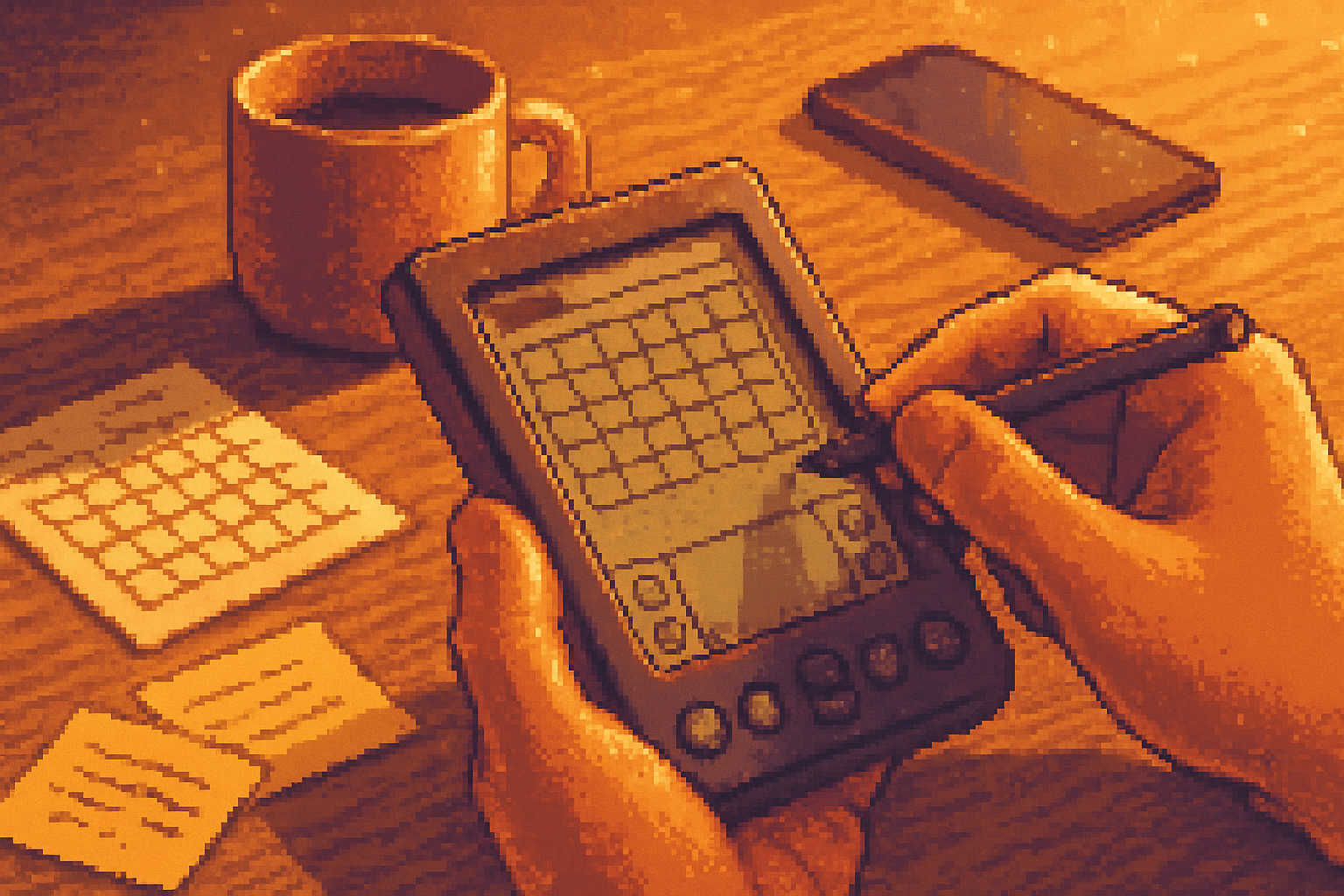
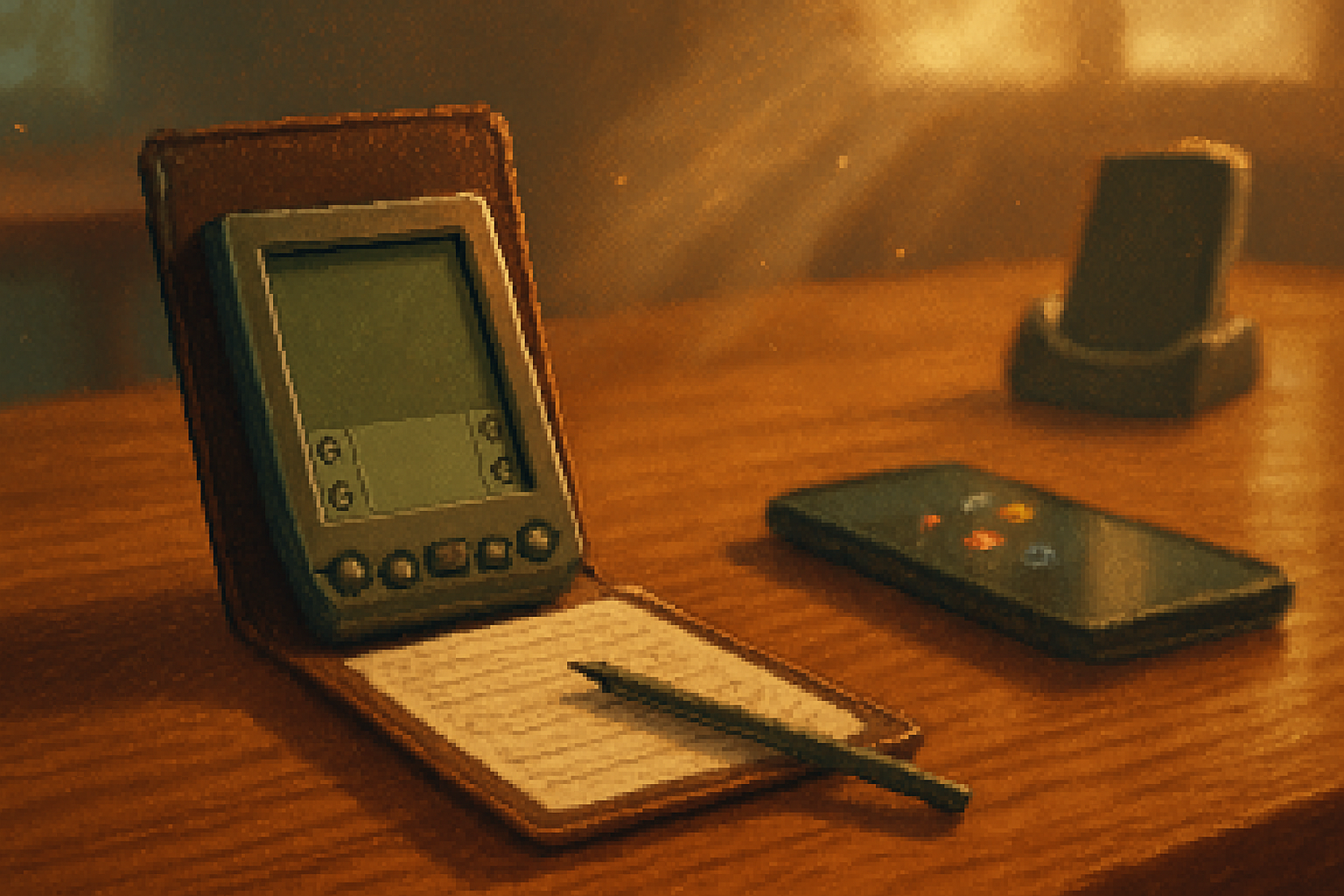
I remember waking on a red-eye flight, lights dimmed, the person next to me asleep, and me tapping away on a tiny rectangle like it contained a secret. The PalmPilot’s stylus slid across the screen with a slow, satisfying authority. I wrote a phone number in a single cramped stroke and the device - as if reading my mind - understood. That handshake between hand and machine felt intimate. It was small. It was honest. It got things done.
This isn’t just nostalgia. It’s an argument. We live in an era of hyper-capable devices that behave like clever but mendacious butlers: gorgeous, talkative, and eager to sell you something while they listen to everything you say. The PalmPilot was a different beast - a blunt, practical instrument that had the courtesy to be useful without pretending to be deep. Here are the features I still daydream about, and why their absence matters.
Why the PalmPilot still matters
The PalmPilot wasn’t cool because it was the most powerful. It was beloved because it did the right things well. It respected time. It respected attention. It made you feel competent.
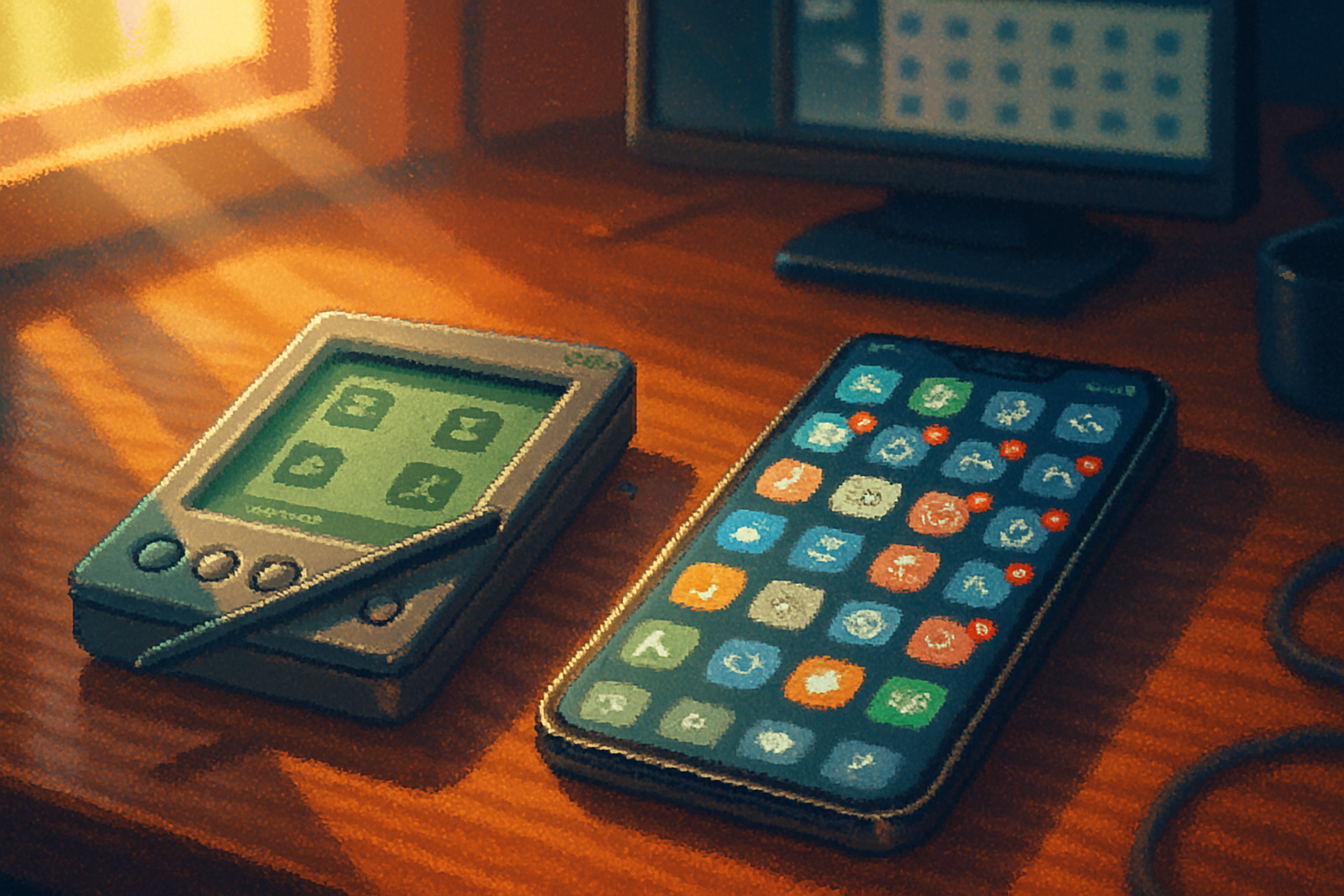
Compare that to modern phones: brilliant theatres of attention-sapping distractions. Today’s devices are more like Swiss department stores - endless aisles, flashy signs, somebody always hawking something. The PalmPilot was a Swiss Army knife with one razor-sharp blade: practical utility without pretense.
The features we wish would return
Below are the PalmPilot’s most ennobling habits. They’re small; their effects were large.
1) Graffiti - handwriting recognition that actually respected your handwriting
Graffiti turned my messy scrawl into reliable input. It wasn’t magic. It was thoughtful constraint: a simple, learnable alphabet that traded universality for speed. You could enter text without hunting a keyboard and without a predictive text engine second-guessing you.
Why we miss it:
- It honored muscle memory. You wrote; it translated.
- It was private and local - no cloud parsing your grocery list.
A modern take worth stealing: a stylus-first handwriting layer that’s fast, offline, and forgiving - not a machine-learning oracle demanding consent forms.
(If you want the geeky origin story, see the device page on PalmPilot and the writeup on Graffiti.)
2) HotSync - physical, simple synchronization
Plug the cradle in. Click. The little modem of our lives would dutifully copy contacts and calendar entries to your desktop. No cloudy metaphors. No opaque background sync that eats your battery and your privacy.
Why we miss it:
- It created a tangible feeling of backup and control.
- It respected bandwidth and battery; sync happened on our terms.
Imagine a modern “HotSync” for the privacy-minded: an easy local-first backup that syncs over USB or LAN with a single, satisfying action. No servers, no subscription.
3) The stylus & tactile buttons - deliberate input, not accidental doomscrolling
The stylus made interaction deliberate. The hardware buttons were unapologetically mapped to function: Calendar, Address, To-do. Press a button, you arrive. No swipes through a hall of mirrors.
Why we miss it:
- It reduced accidental interactions.
- It encouraged focused tasks - you chose the tool and used it.
Today’s phones assume everything should be a swipe, a gesture, a notification. Sometimes you just want a mechanical click and immediate submission.
4) The PIM that didn’t pretend to be a social network
Palm’s Address Book, Date Book, To-Do, and Memo Pad were tools, not platforms. They didn’t nudge, algorithmize, or gamify your life. They held your appointments and contact info with the dignity of a small notebook.
Why we miss it:
- Information felt owned by you.
- There were no attention predators in your calendar.
Bring this back with modern UX: local-first PIM apps, modular exportable data, and no permission creep.
5) Predictable battery life & replaceable cells
Remember the simple joy of replacing batteries and getting your device back to full life in ten seconds? PalmPilots often lasted for days on small cells. They rewarded minimalism.
Why we miss it:
- No overnight anxiety about a dying device.
- Design choices favored efficiency over spectacle.
A modern compromise: long-life e-ink-like modes, user-replaceable batteries, and gracious low-power designs that don’t demand nightly worship.
6) The shareware spirit - small developers, big ideas
Before app stores metastasized into every platform’s bloodstream, Palm had a thriving shareware scene. Tiny developers shipped clever utilities - sometimes free, sometimes cheap - that solved narrow, human-sized problems.
Why we miss it:
- Innovation came from small bets.
- Apps felt earnest, not optimized for ad impressions.
What to revive: curated, fee-free distribution channels that reward craftsmanship over installs.
Anecdotes (because this was personal)
My father used his Palm as a talisman. He would flip open its cover like a man checking his watch. When his memory thinned, the Date Book felt like a tether to competence. He never once asked what the cloud was.
A friend used Graffiti to write shopping lists so ferocious that the single-letter abbreviations alone intimidated the store clerk. She’d scribble “Mlk” like an incantation and the device never judged.
I once HotSynced at a cafe’s power strip, proud and absurd, like a witness to a ritual. People on laptops glanced over, bemused. Synchronization, in those days, came with the faint perfume of dignity.
These are small stories. They’re not tech specs. They are why a tiny rectangle felt like an ally.
What returning these features would mean
- Privacy restored - Offline handwriting and local sync would put data back where it belongs - with the person who created it.
- Attention reclaimed - Hardware affordances and minimal UIs reduce distraction.
- Durability & fairness - Longer battery life and user-repairable hardware would push back against planned obsolescence.
- A better developer ecosystem - Rewarding small, focused apps over armies of attention-hungry behemoths.
The PalmPilot didn’t solve everything. It crashed sometimes. Its monochrome screen was humble. But it got the ergonomics of life management right: little tools, clear affordances, human-scale decisions.
A final, contrarian plea
We should stop worshipping omnipotence and start reinstating constraints that help us live better. The PalmPilot’s genius was not that it could do less; it was that what it did, it did quietly and well.
Bring back the stylus that respects handwriting. Bring back the sync that respects your boundaries. Build local-first PIMs that treat your calendar like a small, private diary - not a billboard.
If modern devices must be telescopes and theatres, let them keep a small pocket for the humble notebook: fast to open, quick to use, and profoundly private. That pocket once existed. It was simple, it was human, and for anyone who has ever loved a tiny computing object with a stylus, it’s still worth missing.
References
- PalmPilot - https://en.wikipedia.org/wiki/Palm_Pilot
- Graffiti (Palm OS handwriting) - https://en.wikipedia.org/wiki/Graffiti_(Palm_OS)